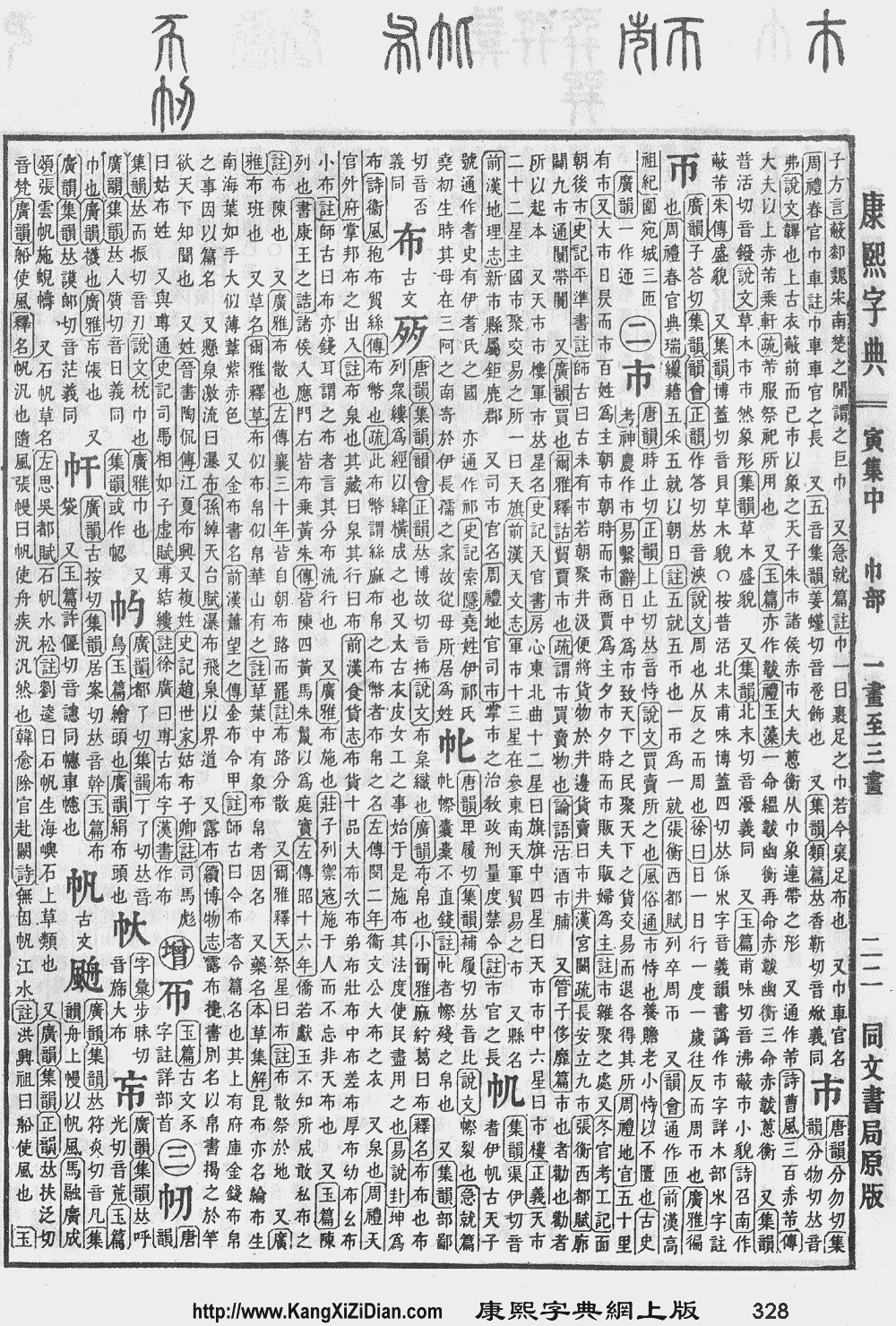
See also , and

Translingual

Etymology

Simplified from . Compare from .

Han character

(radical 50 +2, 5 strokes, cangjie input 中中中月 (LLLB))

  1. commander, commander-in-chief

References


↑Jump back a section

Cantonese

Hanzi

(jyutping seoi3, Yale seui3)


↑Jump back a section

Hakka

Hanzi

(Guangdong sai3 [Meixian])


↑Jump back a section

Mandarin

simpl.
trad.

Etymology

Cognate with Old Tibetan སྲིད (srid, commander, leader)

Pronunciation

Modern varieties

  • Modern Standard Chinese:
    • IPA: /ʂu̯aɪ̯˥˩/
    • Pinyin: shuài
    • Zhuyin: ㄕㄨㄞˋ
    • Wade-Giles: shuai4
    • Gwoyeu Romatzyh: shuay
    • Tongyong Pinyin: shuài
    • Latinxua Sin Wenz: shuai


Ancient pronunciations


Noun

(simplified, Pinyin shuài (shuai4), traditional )

Note: The following definitions are listed in a roughly chronological order. The definitions frequently occurring in Modern Standard Chinese are marked with †.

  1. (military) to command, to lead (and give orders to), to designate
    上下。 ——《管子·问篇》
    If the king appoints respected officers as commanders, there will be harmony in the military.
  2. †to lead, to guide
  3. (to be a) role model, example
  4. to follow, to adhere to
    帅教 (to follow guidance)
  5. rapid, sharp, sudden
    帅然 (suddenly, rapidly), 帅尔 (rapidly)
  6. commander-in-chief, marshal
  7. officialdom, senior officials
  8. †(of a person or a thing) leader, guider, leading factor
  9. (Xiangqi) marshal, the chief piece
  10. (colloquial) (of men) handsome, good-looking, hot
    (to be very good-looking), 帅哥 (handsome guy)
  11. (colloquial) elegant, beautiful, splendid, impressive
  12. a surname

Compounds

  • 大元帅 (dàyuánshuài)
  • 将帅 (jiàngshuài)
  • 领帅 (lǐngshuài)
  • 帅才 (shuàicái)
  • 帅长 (shuàicháng)
  • 帅臣 (shuàichén)
  • 帅乘 (shuàichéng)
  • 帅从 (shuàicóng)
  • 帅导 (shuàidǎo)
  • 帅道 (shuàidào)
  • 帅甸 (shuàidiàn)
  • 帅尔 (shuàiěr)
  • 帅伏 (shuàifú)
  • 帅服 (shuàifú)
  • 帅府 (shuàifǔ)
  • 帅哥 (shuàigē)
  • 帅教 (shuàijiào)
  • 帅阃 (shuàikǔn)
  • 帅厉 (shuàilì)
  • 帅然 (shuàirán)
  • 帅使 (shuàishǐ)
  • 帅示 (shuàishì)
  • 帅首 (shuàishǒu)
  • 帅司 (shuàisī)
  • 帅台 (shuàitái)
  • 帅先 (shuàixiān)
  • 帅行 (shuàixíng)
  • 帅性 (shuàixìng)
  • 帅意 (shuàiyì)
  • 帅繇 (shuàiyáo)
  • 帅由 (shuàiyóu)
  • 帅垣 (shuàiyuán)
  • 帅座 (shuàizuò)
  • 帅职 (shuàizhí)
  • 统帅 (tǒngshuài)
  • 元帅 (yuánshuài)
  • 主帅 (zhǔshuài)

See also

  • (shuì, "shawl, mantelet") - may be used interchangeably; forms the character etymology of 帥.
  • (shuài, "to lead") - may be used interchangeably
  • (jiàng, "officer")

↑Jump back a section

Min Nan

(POJ sòe)

Pronunciation

  • IPA: [tsan˥˧]
    • (Amoy) sue31, sui31

↑Jump back a section

Wu

Pronunciation

  • (Shanghai) (Taihu Wu): se3, sa3
  • (Suzhou) (Taihu Wu) se阴去(523)
↑Jump back a section

Read in another language

This page is available in 6 languages

Last modified on 12 March 2013, at 22:50