
禅
| ||||||||
Translingual edit
| Traditional | 禪 |
|---|---|
| Simplified | 禅 |
| Japanese | 禅 |
| Korean | 禪 |
Glyph origin edit
Simplified from 禪.
- Simplified from 禪 (示 → 礻 and 單 → 单) (2 strokes on top of phonetic) in simplified Chinese.
- Simplified from 禪 (示 → 礻 and 單 → 単) (3 strokes on top of phonetic) in Japanese shinjitai.
Han character edit
禅 (Kangxi radical 113, 示+8 in Chinese, 示+9 in Japanese, 12 strokes in Chinese, 13 strokes in Japanese, cangjie input 戈火金田十 (IFCWJ), composition ⿰礻単(J) or ⿰礻单(G))
References edit
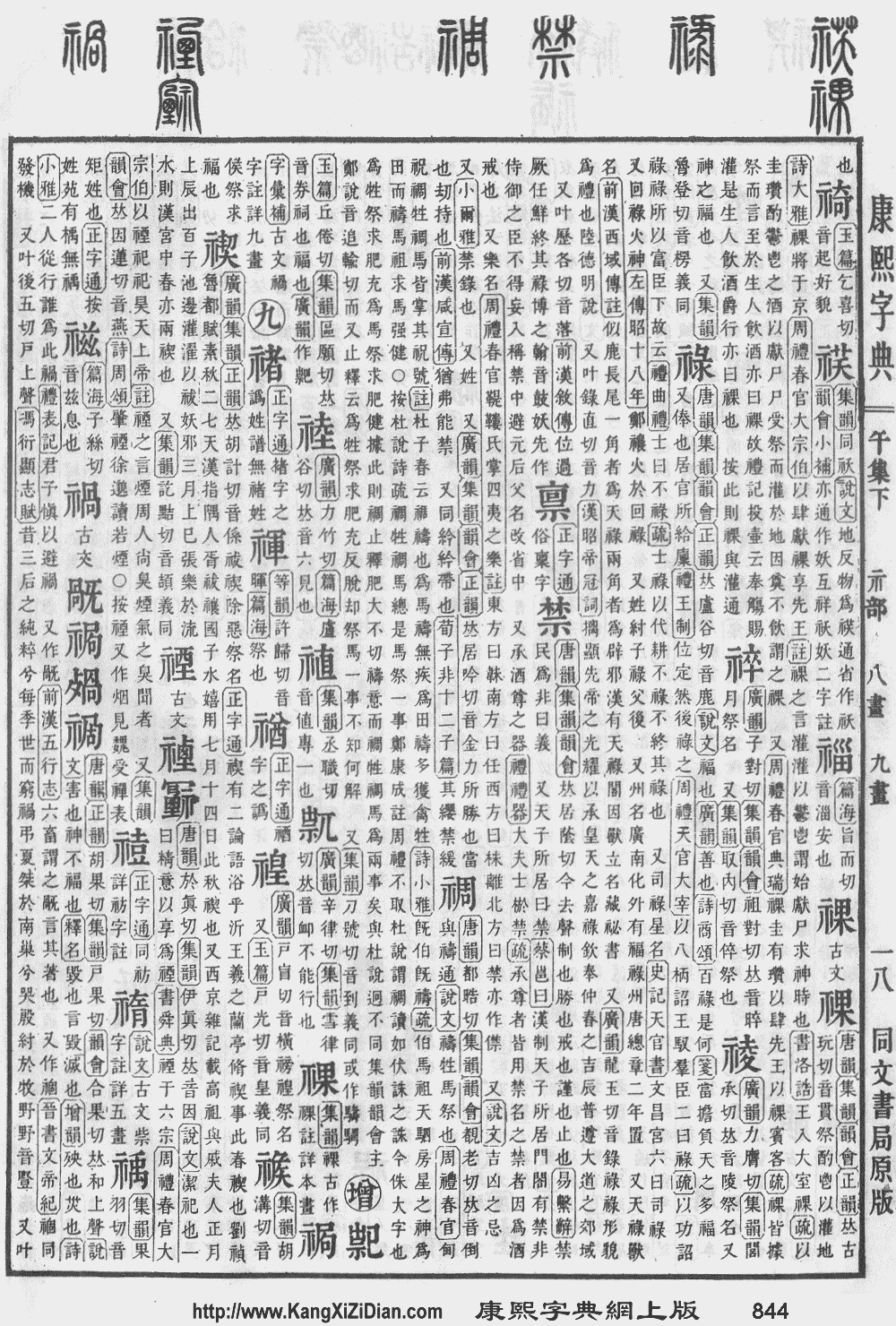
- Kangxi Dictionary: not present, would follow page 844, character 17
- Dai Kanwa Jiten: character 24787
- Dae Jaweon: page 1265, character 8
- Hanyu Da Zidian (first edition): volume 4, page 2402, character 7
- Unihan data for U+7985
Chinese edit
| For pronunciation and definitions of 禅 – see 禪 (“dhyana; deep meditation; contemplation; Buddhist doctrine; Buddhist teachings; etc.”). (This character is the simplified and variant form of 禪). |
Notes:
|
Japanese edit
| 禅 | |
| 禪 |
Kanji edit
禅
(common “Jōyō” kanji, shinjitai kanji, kyūjitai form 禪)
- Chinese emperor sacrifice ceremony
- Chinese emperor abdicating the throne
- meditative concentration
- dhyana, Zen Buddhism
Readings edit
- Go-on: ぜん (zen, Jōyō)
- Kan-on: せん (sen)
- Kun: しずか (shizuka, 禅)←しづか (siduka, 禅, historical); ゆずる (yuzuru, 禅る)←ゆづる (yuduru, 禅る, historical)
- Nanori: さとり (satori); ゆずり (yuzuri)←ゆづり (yuduri, historical)
Compounds edit
Compounds
Etymology edit

| Kanji in this term |
|---|
| 禅 |
| ぜん Grade: S |
| on’yomi |
| Alternative spelling |
|---|
| 禪 (kyūjitai) |
Shortened from 禅那 (zenna, “Zen meditation practice”), from Middle Chinese 禪那 (MC dzyen na), a transliteration of Sanskrit ध्यान (dhyāna, “profound meditation”).[1][2][3][4][5] Compare Pali jhāna.
Pronunciation edit
Noun edit
- (Buddhism) dhyana-samadhi: This term needs a translation to English. Please help out and add a translation, then remove the text
{{rfdef}}. - (Buddhism) the disciplines and doctrine of Zen Buddhism
- Short for 座禅 (zazen): a sitting position in a Zen meditation
Derived terms edit
Derived terms
Proper noun edit
- (Buddhism) Short for 禅宗 (Zenshū): Zen Buddhism
- a surname
Descendants edit
References edit
- ^ “禅”, in 日本大百科全書:ニッポニカ (Nippon Dai Hyakka Zensho: Nipponica, “Encyclopedia Nipponica”)[1] (in Japanese), Tōkyō: Shogakukan, 1984
- ^ Matsumura, Akira (1995) 大辞泉 (in Japanese), First edition, Tōkyō: Shogakukan, →ISBN
- ^ “禅”, in 世界大百科事典 第2版 (Sekai Dai-hyakka Jiten Dainihan, “Heibonsha World Encyclopedia Second Edition”)[2] (in Japanese), Tōkyō: Heibonsha, 1998
- ↑ 4.0 4.1 4.2 Matsumura, Akira, editor (2006), 大辞林 (in Japanese), Third edition, Tōkyō: Sanseidō, →ISBN
- ^ “禅”, in ブリタニカ国際大百科事典 小項目事典 (Buritanika Kokusai Dai Hyakka Jiten: Shō Kōmoku Jiten, “Encyclopædia Britannica International: Micropædia”)[3] (in Japanese), Tōkyō: Britannica Japan Co., Ltd., 2014
Korean edit
Hanja edit
禅 • (seon) (hangeul 선, revised seon, McCune–Reischauer sŏn, Yale sen)