还
See also 還
Translingual
| Stroke order | |||
| Stroke order | |||
Etymology
Han character
还 (radical 162 辵+4, 8 strokes, cangjie input 卜一火 (YMF))
References
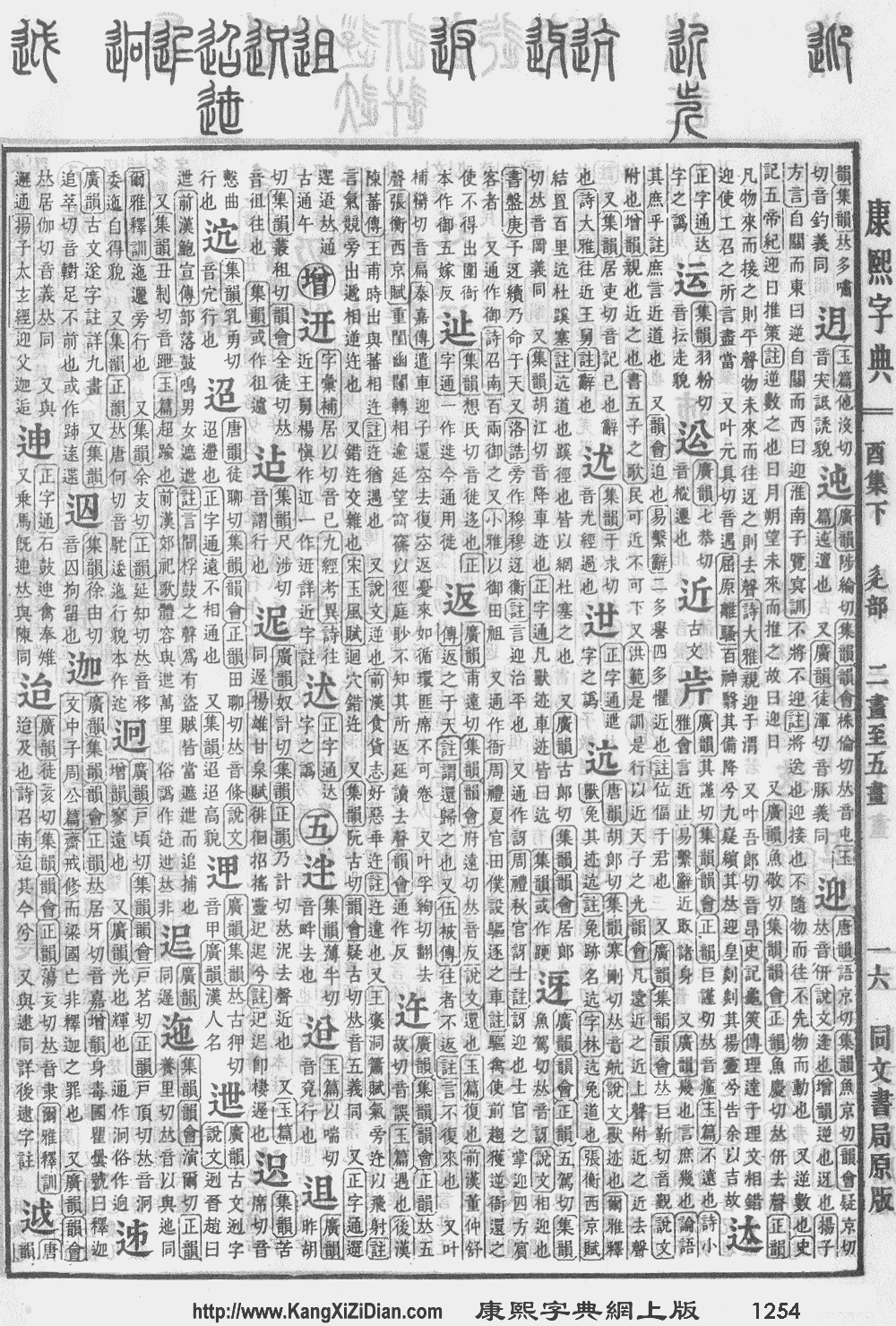
- KangXi: not present, would follow page 1254, character 17
- Dai Kanwa Jiten: character 38771
- Dae Jaweon: page 1737, character 19
- Hanyu Da Zidian: volume 6, page 3818, character 14
- Unihan data for U+8FD8
Mandarin
Pronunciation
-
audio (file)
Hanzi
还 (traditional 還, pinyin hái (hai2), huán (huan2), Wade-Giles huan2)
1) [hái]
- still, yet; indicates that the phenomenon or observation still exists or the action is still ongoing
- even more; indicates an increase from a certain level or a supplement
- (before adjectives, mostly positive) passably, (surprisingly) quite
- (often in rhetorical questions) indicates condition and contrast; even
- indicates unexpectedness; really
- indicates past events; emphasising earliness
2) [huán]
- to return to a place, to go back to a place
- 还家 (to return home), 还乡 (to return to one's hometown), 还原 (to return to the original state, [chem] to reduce), 还俗 (to resume secular life)
- to return an object, to give back
- to do or give something in return
- 还嘴 (to retort), 还手 (to hit back), 还礼 (to present a gift in return), 还击 (to fight back), 还价 (to make a counter-offer buying price)
- 以眼还眼,以牙还牙
- (literally) an eye for an eye and a tooth for a tooth; tit for tat
- a surname
Read in another language
This page is available in 10 languages