
鰐
| ||||||||
Translingual edit
Han character edit
鰐 (Kangxi radical 195, 魚+9, 20 strokes, cangjie input 弓火口口尸 (NFRRS), composition ⿰魚咢)
References edit
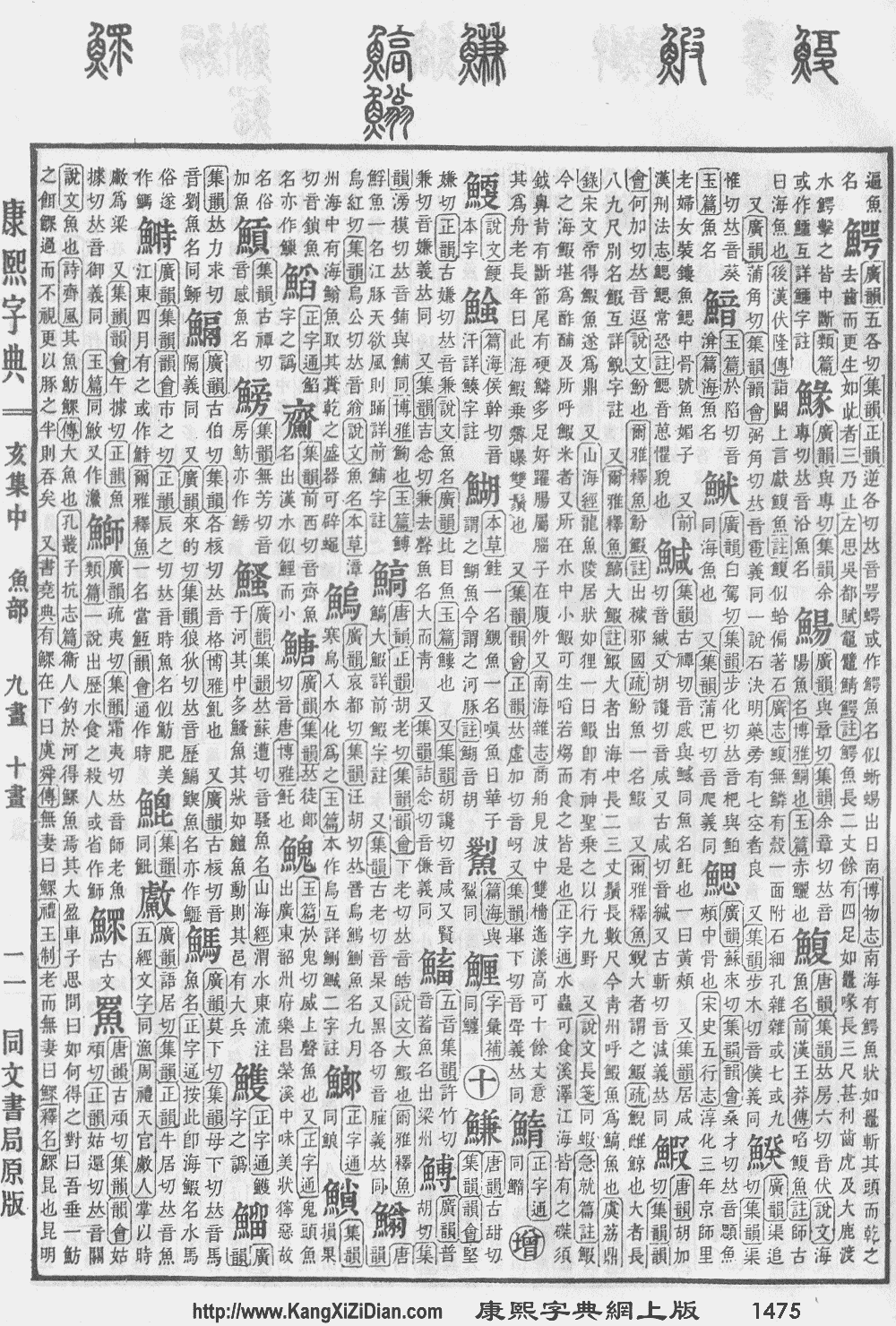
- Kangxi Dictionary: page 1475, character 1
- Dai Kanwa Jiten: character 46337
- Dae Jaweon: page 2006, character 28
- Hanyu Da Zidian (first edition): volume 7, page 4701, character 18
- Unihan data for U+9C10
Chinese edit
Glyph origin edit
| Old Chinese | |
|---|---|
| 斥 | *ŋ̊ʰjaːɡs, *ŋ̊ʰjaːɡ |
| 訴 | *sŋaːɡs |
| 泝 | *sŋaːɡs |
| 愬 | *sŋaːɡs, *sŋreːɡ |
| 遡 | *sŋaːɡs |
| 塑 | *sŋaːɡs |
| 溯 | *sŋaːɡs |
| 遻 | *ŋaːɡs |
| 柝 | *tŋ̊ʰaːɡ |
| 鶚 | *ŋaːɡ |
| 諤 | *ŋaːɡ |
| 齶 | *ŋaːɡ |
| 鍔 | *ŋaːɡ |
| 遌 | *ŋaːɡ |
| 崿 | *ŋaːɡ |
| 偔 | *ŋaːɡ |
| 堮 | *ŋaːɡ |
| 湂 | *ŋaːɡ |
| 鱷 | *ŋaːɡ |
| 噩 | *ŋaːɡ |
| 咢 | *ŋaːɡ |
| 鑩 | *ŋaːɡ |
| 鄂 | *ŋaːɡ |
| 鰐 | *ŋaːɡ |
| 萼 | *ŋaːɡ |
| 愕 | *ŋaːɡ |
| 顎 | *ŋaːɡ |
| 朔 | *sŋraːɡ |
| 槊 | *sraːwɢ |
| 蒴 | *sraːwɢ |
| 坼 | *tŋ̊ʰraːɡ |
| 拆 | *tŋ̊ʰraːɡ |
| 逆 | *ŋraɡ |
| 屰 | *ŋraɡ |
| 縌 | *ŋraɡ |
| 蝷 | *reːɡ |
Definitions edit
| For pronunciation and definitions of 鰐 – see 鱷 (“crocodilian; crocodile; alligator”). (This character is a variant traditional form of 鱷). |
Japanese edit
| 鰐 | |
| 鱷 |
Kanji edit
(uncommon “Hyōgai” kanji, shinjitai kanji, kyūjitai form 鱷)
Readings edit
Compounds edit
- 鰐魚 (gakugyo): crocodilian; large, dangerous fish
- 鰐淵寺 (gakuenji): a Tiantai Buddhist temple in Shimane Prefecture
Etymology edit


| Kanji in this term |
|---|
| 鰐 |
| わに Hyōgaiji |
| kun’yomi |
From Old Japanese. Derivation uncertain. Appears in the Kojiki in ambiguous reference to a kind of sea creature (possibly sharks[1] or crocodiles). The sense of crocodile clearly appears in the Wamyō Ruijushō dictionary (938) with an explanation of “having four legs like a turtle and a three-foot mouth with sharp teeth.”
Various theories exist regarding the term's origin, such as an alteration of 鬼 (oni, “demon, devil”), or an abbreviation of 海主 (watanushi, “sea master, sea god”).
Pronunciation edit
Noun edit
- ワニ: crocodilian (crocodile, alligator, gavial)
- 1999 October 17, “クロコダイラス [Crocodilus]”, in Booster 5, Konami:
- 知恵を持ちさらに狂暴化したワニ。かたいうろこで攻撃をはじく。
- Chie o mochi sara ni kyōbōka shita wani. Katai uroko de kōgeki o hajiku.
- A frenzied crocodilian who’s actually quite intelligent. He repels attacks with his hard scales.
- 知恵を持ちさらに狂暴化したワニ。かたいうろこで攻撃をはじく。
- (obsolete) a shark or other large and dangerous fish
- 898–901, Shinsen Jikyō, volume 9, page 2:
- 鰐 五各反 和尓
- (please add an English translation of this quotation)
Usage notes edit
As with many terms that name organisms, this term is often spelled in katakana, especially in biological contexts (where katakana is customary), as ワニ.
Derived terms edit
- 鰐の口 (wani no kuchi): "the alligator's mouth" → an extremely dangerous place or situation
- 鰐口 (waniguchi): a crocodile's or alligator's mouth; a terrible rumor; someone with a physically large mouth; a wide bronze bell rung with a rope and hung at shrines; part of a Japanese saddle; (slang) the female genitalia; (slang) a coin purse
- 鰐口草 (waniguchisō): a perennial plant in the lily family, possibly related to Polygonatum
- 鰐鮫 (wanizame): an alligator or crocodile; a shark or other large dangerous fish
- 鰐千鳥 (wanichidori):a crocodile bird or Egyptian plover, Pluvianus aegyptius
- 鰐足 (waniashi): knock knees, bowlegs
- 鰐皮 (wanigawa): crocodile or alligator skin or hide
- 鰐鱶 (wanibuka): an alligator or crocodile; a shark or other large dangerous fish
- 白鰐 (shirowani): a sand tiger shark, Carcharias taurus
- 大鰐鮫 (ōwanizame): a smalltooth sand tiger, Odontaspis ferox
- 水鰐 (mizuwani): a crocodile shark, Pseudocarcharias kamoharai
Idioms edit
References edit
- Shōjū with Kyōto Daigaku Bungakubu Kokugogaku Kokubungaku Kenkyūshitu (898–901) Shinsen Jikyō (Zōteiban) (in Japanese), Kyōto: Rinsen, published 15 December 1967, →ISBN.
Korean edit
Hanja edit
鰐 • (ak) (hangeul 악, revised ak, McCune–Reischauer ak, Yale ak)
Synonyms edit
Compounds edit
See also edit
- 鯢 (예, ye) salamander