Translingual
edit
Stroke order
Alternative forms
edit
艹 ( as top component in Han characters ) 䒑 ( non-classical form ) Han character
edit
艸 Kangxi radical 140, 艸 +0, 6 strokes, cangjie input 山山 (UU ) or 難山山 (XUU ), four-corner 22447 , composition ⿰䶹 屮 )
Kangxi radical #140, ⾋ Shuowen Jiezi Usage notes
edit
In the Kangxi Dictionary there are 1,902 characters (out of 40,000) that use this radical, making this the most commonly used radical. Derived characters
edit
References
edit
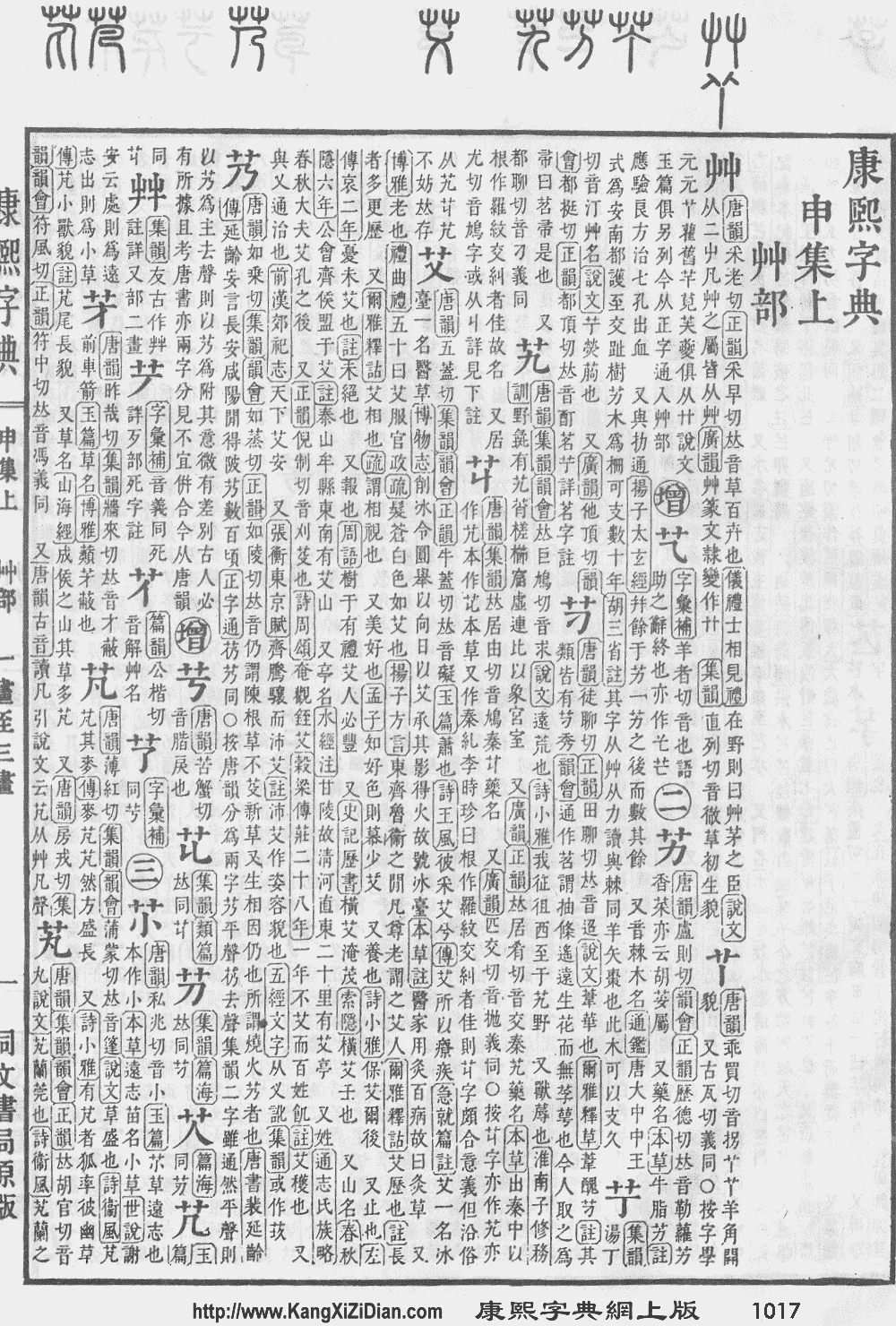
Kangxi Dictionary: page 1017 , character 1
Dai Kanwa Jiten: character 30638
Dae Jaweon: page 1475, character 6
Hanyu Da Zidian (first edition): volume 5, page 3172, character 1
Unihan data for U+8278
Glyph origin
edit
Pictogram (象形 grass blades.
Definitions
edit
For pronunciation and definitions of 艸 – see 草 herbaceous plant; herb ; weed ; wort ; grass ; forb ; Used in names of some woody plants; etc.”). This character is an ancient form of 草
Japanese
edit
艸 • (cho )hangeul 초 revised cho, McCune–Reischauer ch'o, Yale cho)
This term needs a translation to English. Please help out and add a translation , then remove the text {{rfdef }}. Vietnamese
edit
Han character
edit
艸 : Hán Nôm thảo cỏ
This term needs a translation to English. Please help out and add a translation , then remove the text {{rfdef }}.