Translingual
edit
Stroke order
Han character
edit
数 Kangxi radical 66, 攴 +9, 13 strokes, cangjie input 火女人大 (FVOK ), four-corner 98440 , composition ⿰娄 攵 )
Derived characters
edit
Related characters
edit
Further reading
edit
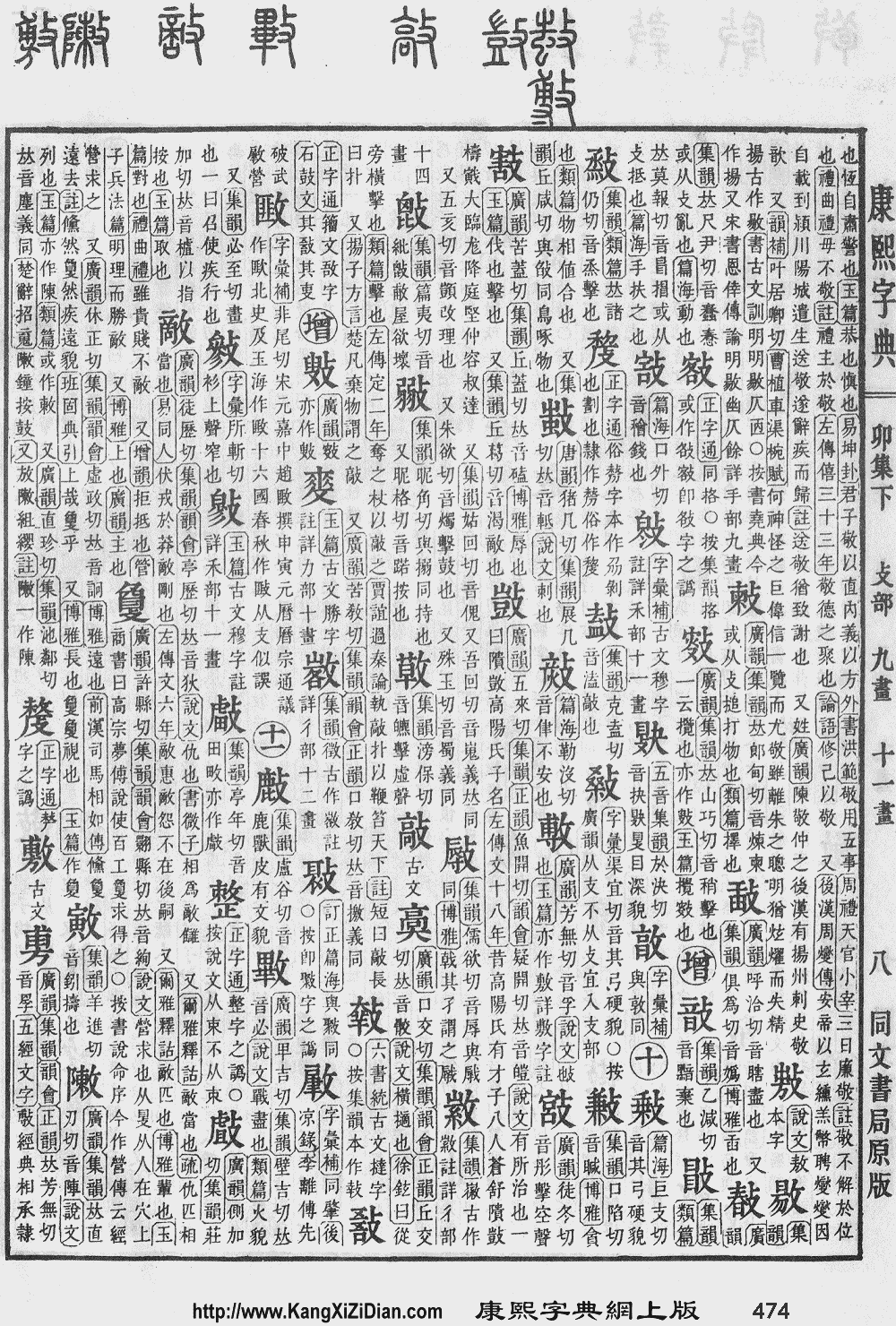
Kangxi Dictionary: not present , would follow page 474 , character 13
Dai Kanwa Jiten: character 13319
Dae Jaweon: page 827, character 26
Hanyu Da Zidian (first edition): volume 2, page 1470, character 19
Unihan data for U+6570
Glyph origin
edit
Unorthodox variant of 數 Ming dynasty . Simplified from 數 婁 娄
Definitions
edit
For pronunciation and definitions of 数 – see 數 count ; to enumerate ; to be reckoned as; etc.”). This character is the simplified and variant form of 數 Notes:
References
edit
Japanese
edit
数
(grade 2 “Kyōiku” kanji , shinjitai kanji, kyūjitai form 數 )
Readings
edit
Go-on しゅ ( shu ) ←しゆ ( syu historical ) ; そく ( soku ) Kan-on す ( su Jōyō † ) さく ( saku ) ; しょく ( shoku ) ←しよく ( syoku historical ) Kan’yō-on すう ( sū Jōyō ) Kun かぞえる ( kazo eru数える Jōyō ) ←かぞへる ( kazo feru数へる historical ) ; かず ( kazu 数 Jōyō ) せめる ( se meru数める ) ; しばしば ( shibashiba 数 ) Compounds
edit
Etymology 1
edit
Alternative spelling
數 ( kyūjitai )
Pronunciation
edit
数( かず ) • (kazu
number ; amount
人( ひと ) の数( かず ) hito no kazu number of people夜( よ ) 空( ぞら ) の星( ほし ) の数( かず ) yozora no hoshi no kazu the number of stars in the night sky Derived terms
edit
Etymology 2
edit
Alternative spelling
數 ( kyūjitai )
From Middle Chinese 數 MC srjuX| srjuH
Pronunciation
edit
数( すう ) • (sū
( mathematics ) number Derived terms
edit
Derived terms
数( すう ) 学( がく ) ( sūgaku “ mathematics ” ) 数( すう ) 字( じ ) ( sūji ) 数( すう ) 式( しき ) ( sūshiki ) 数( すう ) 値( ち ) ( sūchi ) 数( すう ) 的( てき ) ( sūteki ) 数( すう ) 独( どく ) ( sūdoku “ sudoku ” ) 数( すう ) 量( りょう ) ( sūryō ) 奇( き ) 数( すう ) ( kisū ) 偶( ぐう ) 数( すう ) ( gūsū ) 件( けん ) 数( すう ) ( kensū ) 軒( けん ) 数( すう ) ( kensū ) 口( こう ) 数( すう ) ( kōsū ) 算( さん ) 数( すう ) ( sansū ) 実( じっ ) 数( すう ) ( jissū “ real number ” ) 除( じょ ) 数( すう ) ( josū ) 乗( じょう ) 数( すう ) ( jōsū ) 整( せい ) 数( すう ) ( seisū “ integer ” ) 多( た ) 数( すう ) ( tasū ) 対( たい ) 数( すう ) ( taisū “ logarithm ” ) 丁( ちょう ) 数( すう ) ( chōsū ) 坪( つぼ ) 数( すう ) ( tsubosū ) 定( てい ) 数( すう ) ( teisū “ constant ” ) 人( にん ) 数( ずう ) ( ninzū ) , 人( にん ) 数( ず ) ( ninzu ) 年( ねん ) 数( すう ) ( nensū ) 端( は ) 数( すう ) ( hasū ) 複( ふく ) 数( すう ) 復( ふく ) 数( すう ) ( fukusū ) 変( へん ) 数( すう ) ( hensū “ variable ” ) 枚( まい ) 数( すう ) ( maisū ) 自( し ) 然( ぜん ) 数( すう ) ( shizensū “ natural number ” ) 助( じょ ) 数( すう ) 詞( し ) ( josūshi “ counter word” ) 複( ふく ) 素( そ ) 数( すう ) ( fukusosū “ complex number ” )
数( すう ) • (sū-
several
数( すう ) 百( ひゃく ) 人( にん ) sū hyakuninseveral hundred peopleDerived terms
edit
Etymology 3
edit
Alternative spelling
數 ( kyūjitai )
For pronunciation and definitions of 数 – see the following entry.
(This term, 数 , is an alternative spelling of the above term.)
References
edit
数 (eumhun 셀 수 ( sel su ) )
Alternative form of 數 ( “ Hanja form? 수 ( “ number ” ) .” ) References
edit
Zonmal.com Hanja Dictionary (존말닷컴 한자사전/漢字辭典 ) (2002-2005). [1] Vietnamese
edit