
点
| ||||||||
Translingual edit
| Stroke order | |||
|---|---|---|---|

| |||
| Stroke order | |||
|---|---|---|---|

| |||
| Japanese | 点 |
|---|---|
| Simplified | 点 |
| Traditional | 點 |
Etymology edit
Simplified from 點 (黑 → 灬). Note that 黑 changed from being on the left to being 灬, underneath. Compare 黙 (from 默), which retains the 里, and 黒, which is the simplification in isolation.
Current form is graphically 占 + 灬.
Han character edit
点 (Kangxi radical 86, 火+5, 9 strokes, cangjie input 難卜口火 (XYRF) or 卜口火 (YRF), composition ⿱占灬)
Derived characters edit
Descendants edit
- Simplification: 奌
References edit
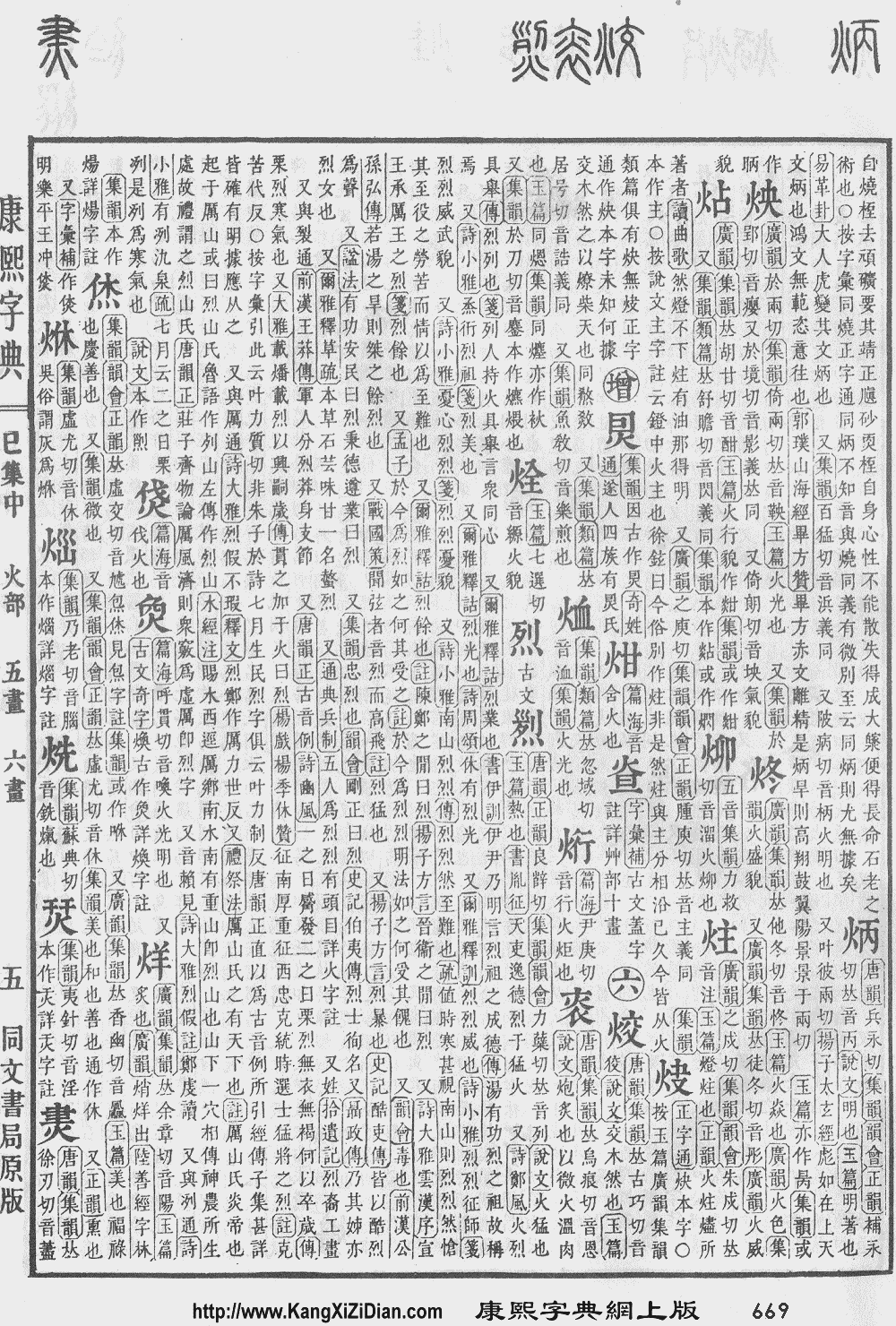
- Kangxi Dictionary: not present, would follow page 669, character 10
- Dai Kanwa Jiten: character 18980
- Dae Jaweon: page 1078, character 15
- Hanyu Da Zidian (first edition): volume 3, page 2198, character 7
- Unihan data for U+70B9
Chinese edit
| For pronunciation and definitions of 点 – see 點 (“dot; spot; speck; place; point; spot; etc.”). (This character is the simplified and variant form of 點). |
Notes:
|
Japanese edit
| 点 | |
| 點 |
Kanji edit
点
(grade 2 “Kyōiku” kanji, shinjitai kanji, kyūjitai form 點)
Readings edit
- Go-on: てん (ten, Jōyō)←てん (ten, historical)←てむ (temu, ancient)
- Kan-on: てん (ten, Jōyō)←てん (ten, historical)←てむ (temu, ancient)
- Kun: さす (sasu, 点す); たてる (tateru, 点てる); ちょぼ (chobo, 点)←ちよぼ (tyobo, 点, historical); つける (tsukeru, 点ける); とぼす (tobosu, 点す); ともす (tomosu, 点す); ぼち (bochi)
Compounds edit
Compounds
Etymology edit
| Kanji in this term |
|---|
| 点 |
| てん Grade: 2 |
| on’yomi |
| Alternative spelling |
|---|
| 點 (kyūjitai) |
From Middle Chinese 點/点 (temX, “point”).
Pronunciation edit
Counter edit
- items or goods
Noun edit
References edit
Korean edit
Hanja edit
点 (eum 점 (jeom))
References edit
- Supreme Court of the Republic of Korea (대한민국 대법원, Daehanmin'guk Daebeobwon) (2018). Table of hanja for personal names (인명용 한자표 / 人名用漢字表, Inmyeong-yong hanja-pyo), page 37. [1]