Translingual
edit
Stroke order
Stroke order
Stroke order
Alternative forms
edit
糹 (纟 )(When used as a left radical component in Chinese) Han character
edit
糸 Kangxi radical 120, 糸 +0, 6 strokes, cangjie input 女戈火 (VIF ), four-corner 22903 , composition ⿱幺 小 )
Kangxi radical #120, ⽷ Shuōwén Jiězì radical №467 Derived characters
edit
Appendix:Chinese radical/糸 𫩹 , 𡋔 , 𭓂 , 𢏛 , 𢬡 , 𣴍 , 𭮑 , 𫋼 , 𦕱 , 𫊺 , 𧧈 , 𮚄 , 銯 , 𮮷 , 𡀚 , 𨗰 , 𧪬 , 𣞿 , 𨘺 𠛩 , 𠬹 , 𡱏 , 䒺 , 𣑇 , 𥥮 , 萦 , 𫳲 , 𦦆 , 𮫅 , 㬧 , 辮 , 𦹴 , 乿 , 𢾰 , 𣪺 , 顈 , 颣 (纇 ), 䘗 , 彝 , 彞 References
edit
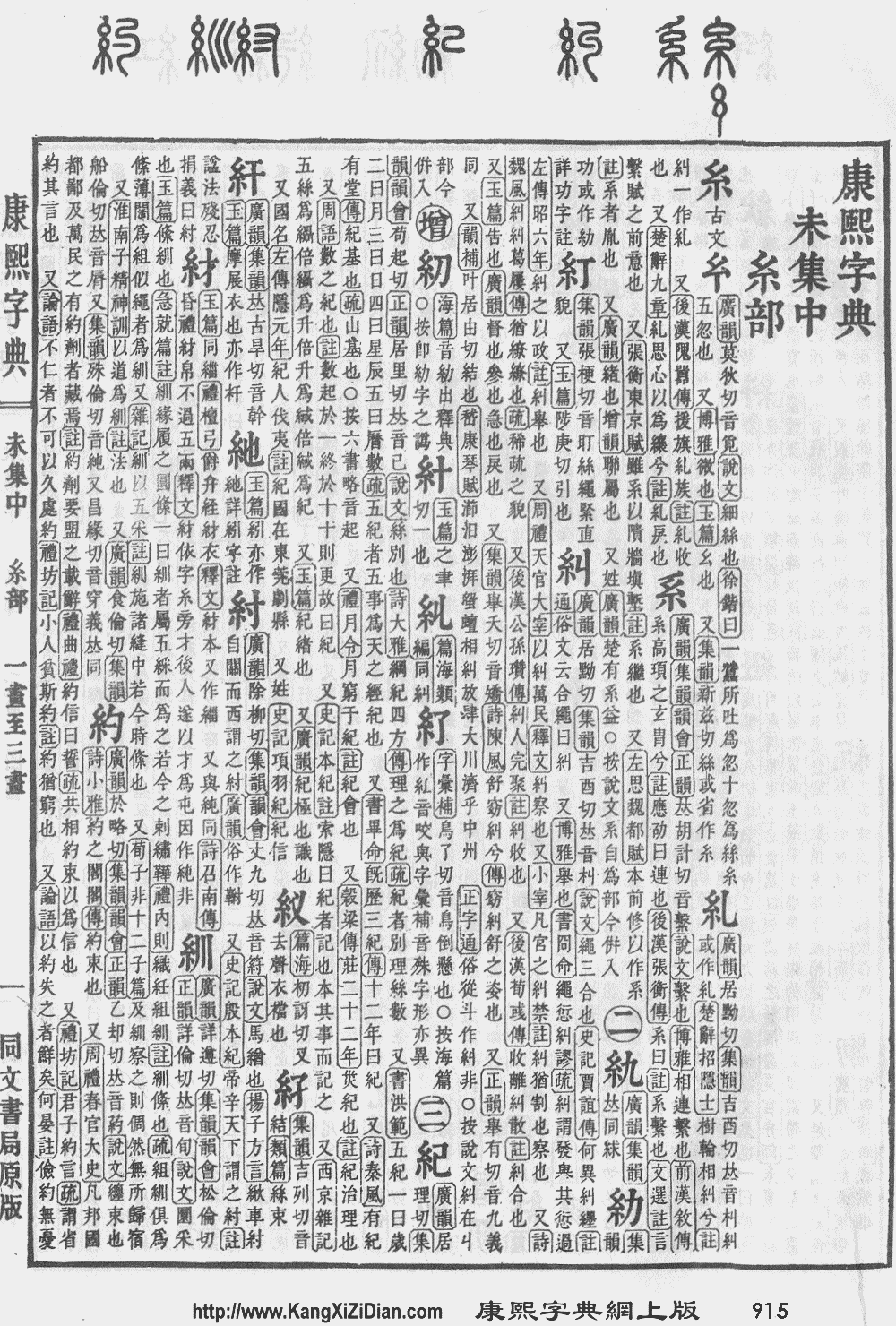
Kangxi Dictionary: page 915 , character 1
Dai Kanwa Jiten: character 27221
Dae Jaweon: page 1341, character 36
Hanyu Da Zidian (first edition): volume 5, page 3361, character 1
Unihan data for U+7CF8 Usage notes
edit
When used as a radical component on the left, Japanese Kanji and Korean Hanja use a compressed form of 糸 (with 小 亅 丨 Kangxi dictionary . In traditional Chinese and Vietnamese chữ Hán , the standard written form of the radical is 糹 simplified Chinese the radical is written 纟
Glyph origin
edit
Pictogram (象形 skein of silk.
Etymology 1
edit
Pronunciation
edit
Zhengzhang system (2003)
Character
糸
Reading #
1/1
No.
9024
Phonetic
糸
Rime
錫
Rime
0
Corresponding
覓
Old
/*meːɡ/
Definitions
edit
糸
† thin silk † A length unit, equal to the width of five parallel threads of silk. Etymology 2
edit
For pronunciation and definitions of 糸 – see 絲 silk ; items made from woven silk ; etc.”). This character is a variant form of 絲
Japanese
edit
糸 (eumhun 가는 실 멱 ( ganeun sil myeok ) )
This term needs a translation to English. Please help out and add a translation , then remove the text {{rfdef }}. Okinawan
edit
Vietnamese
edit
糸 : Hán Nôm mịch
This term needs a translation to English. Please help out and add a translation , then remove the text {{rfdef }}. References
edit