
莫
| ||||||||
Translingual edit
Han character edit
莫 (Kangxi radical 140, 艸+7, 11 strokes in traditional Chinese and Korean, 10 strokes in mainland China and Japanese, cangjie input 廿日大 (TAK), four-corner 44430, composition ⿱艹旲 or ⿱䒤大)
Derived characters edit
- 嗼, 塻, 嫫, 𡻟, 幙, 慔, 摸, 漠, 獏, 暯, 膜, 模, 氁, 㷬, 𭷱, 𬎇, 𮂓, 瞙, 糢, 𮖪, 縸(𫄲), 蟆, 謨(谟), 貘, 𧷸, 𨢢, 鏌(镆), 𩌧, 饃(馍), 䮬, 𩻁, 𪍤(𬹍), 𠢓, 鄚, 𮍅, 𪅐
- 寞, 𢊗, 瘼, 𩄻, 鬕, 募, 𠻚, 墓, 𡖶, 𡠜, 幕, 摹, 暮, 㱳, 慕, 𬑤, 蟇, 謩, 驀(蓦), 𡈗
References edit
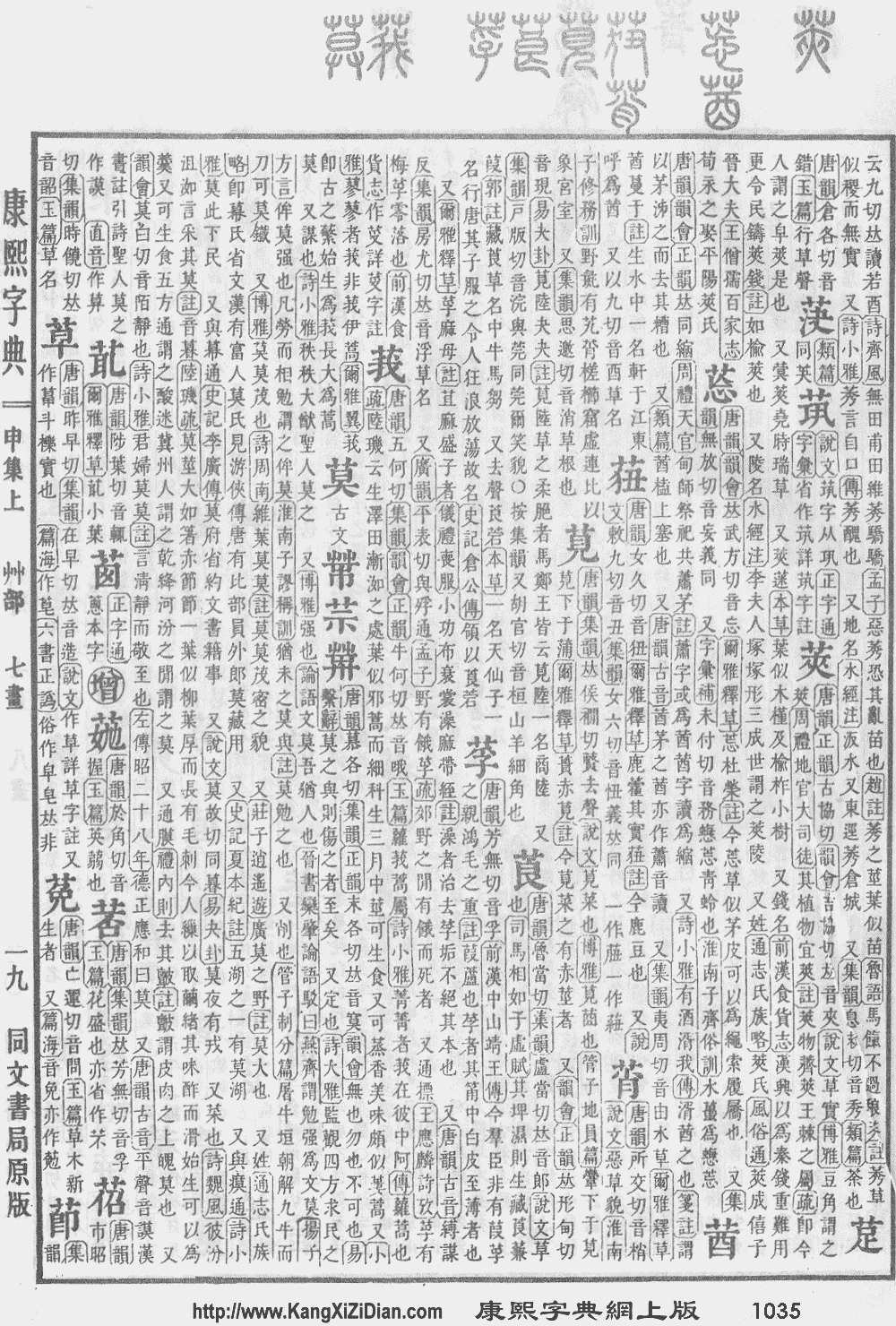
- Kangxi Dictionary: page 1035, character 13
- Dai Kanwa Jiten: character 31078
- Dae Jaweon: page 1494, character 13
- Hanyu Da Zidian (first edition): volume 5, page 3217, character 15
- Unihan data for U+83AB
Chinese edit
Glyph origin edit
| Historical forms of the character 莫 | ||||
|---|---|---|---|---|
| Shang | Western Zhou | Warring States | Shuowen Jiezi (compiled in Han) | Liushutong (compiled in Ming) |
| Oracle bone script | Bronze inscriptions | Chu slip and silk script | Small seal script | Transcribed ancient scripts |

|

|

|

|

|
Pictogram (象形) – the sun (日) sinking into the bushes (屮); dusk. Original form of 暮 (OC *maːɡs, “dusk”).
The bottom was later distorted into 大.
Etymology 1 edit
| trad. | 莫 | |
|---|---|---|
| simp. # | 莫 | |
| alternative forms | 𦶛 𦱤 䒬 | |
From 無 (OC *ma, “there is no”) + distributive suffix *-k (Schuessler, 2007).
Pronunciation edit
Definitions edit
莫
- (literary) none; nothing; not anything
- (literary or dialectal Mandarin, dialectal Cantonese, Gan, Hakka, Eastern Min, Xiang) do not; don't; must not
- 莫做聲!/莫做声! [dialectal Mandarin] ― Mò zuòshēng! [Pinyin] ― Keep quiet! (literally, “Don't make a sound!”)
- 莫細膩。 [Eastern Min, trad.]
- mŏ̤h-sá̤-nê / [moʔ⁵⁻²¹ (s-)lɛ²¹³⁻⁵³ nˡɛi²⁴²] [Bàng-uâ-cê / IPA]
- Don't be too polite. / Make yourself at home.
莫细腻。 [Eastern Min, simp.]- 你莫腿囉。/你莫腿啰。 [Xiang] ― nyi3 mo6 tei3 lo [Wiktionary] ― You don't joke.
- 發生火災莫驚慌/发生火灾莫惊慌 ― fāshēng huǒzāi mò jīnghuāng ― Don't be panicked when conflagration happens
- particle indicating a rhetorical question
- a surname
Synonyms edit
Compounds edit
- 一籌莫展/一筹莫展 (yīchóumòzhǎn)
- 八莫 (Bāmò)
- 公莫舞
- 兵機莫測/兵机莫测
- 切莫 (qièmò)
- 半籌莫展/半筹莫展
- 噬臍莫及/噬脐莫及
- 干將莫邪 (gānjiāng-mòyé)
- 廣莫門/广莫门
- 廣莫風/广莫风
- 後悔莫及/后悔莫及 (hòuhuǐmòjí)
- 德音莫違/德音莫违
- 悔之莫及 (huǐzhīmòjí)
- 愛莫之助/爱莫之助
- 愛莫能助/爱莫能助 (àimònéngzhù)
- 折莫
- 敢莫是
- 望塵莫及/望尘莫及 (wàngchénmòjí)
- 杖莫如信
- 概莫能外 (gàimònéngwài)
- 欽佩莫名/钦佩莫名
- 沉冤莫白
- 無適無莫/无适无莫
- 玄妙莫測/玄妙莫测
- 百口莫辯/百口莫辩 (bǎikǒumòbiàn)
- 百喙莫辯/百喙莫辩 (bǎihuìmòbiàn)
- 百思莫解
- 百身莫贖/百身莫赎
- 百辭莫辯/百辞莫辩
- 相視莫逆/相视莫逆
- 真偽莫辨/真伪莫辨
- 眾寡莫敵/众寡莫敌
- 神機莫測/神机莫测
- 神祕莫測/神秘莫测 (shénmìmòcè)
- 神鬼莫測/神鬼莫测
- 萬夫莫敵/万夫莫敌
- 萬夫莫當/万夫莫当
- 窮寇莫追/穷寇莫追
- 罪莫大焉
- 舉世莫比/举世莫比
- 莫三比克 (Mòsānbǐkè)
- 莫不 (mòbù)
- 莫不是 (mòbùshì)
- 莫之與京/莫之与京 (mòzhīyǔjīng)
- 莫予毒也 (mòyúdúyě)
- 莫余毒也 (mòyúdúyě)
- 莫可名狀/莫可名状
- 莫可奈何
- 莫名 (mòmíng)
- 莫名其妙 (mòmíngqímiào)
- 莫報萬一/莫报万一 (mò bào wànyī)
- 莫大 (mòdà)
- 莫如 (mòrú)
- 莫展一籌/莫展一筹
- 莫干山 (Mògān Shān)
- 莫得
- 莫怪
- 莫愁
- 莫愁湖
- 莫措手足
- 莫教
- 莫敢是
- 莫敢誰何/莫敢谁何 (mògǎn-shuíhé)
- 莫斯科 (Mòsīkē)
- 莫明其妙 (mòmíngqímiào)
- 莫是
- 莫曼斯克
- 莫此為甚/莫此为甚
- 莫比
- 莫測/莫测 (mòcè)
- 莫測高深/莫测高深 (mòcègāoshēn)
- 莫當/莫当 (mòdāng)
- 莫知所措
- 莫知所為/莫知所为
- 莫知所謂/莫知所谓
- 莫耳 (mò'ěr)
- 莫若 (mòruò)
- 莫衷一是 (mòzhōngyīshì)
- 莫衷壹是
- 莫說/莫说
- 莫辨楮葉/莫辨楮叶
- 莫逆 (mònì)
- 莫逆之交 (mònìzhījiāo)
- 莫逆之友
- 莫逆之契
- 莫逆交
- 莫過/莫过
- 莫道
- 莫邪 (Mòyé)
- 莫難道/莫难道
- 莫非 (mòfēi)
- 莫須有/莫须有 (mòxūyǒu)
- 莫顯/莫显
- 莫高 (Mògāo)
- 莫高窟 (Mògāokū)
- 著莫
- 落莫 (luòmò)
- 諱莫如深/讳莫如深 (huìmòrúshēn)
- 變化莫測/变化莫测 (biànhuàmòcè)
- 變幻莫測/变幻莫测 (biànhuànmòcè)
- 遮莫
- 針餌莫減/针饵莫减
- 錯莫/错莫
- 門高莫對/门高莫对
- 雌雄莫辨
- 鞭長莫及/鞭长莫及 (biānchángmòjí)
- 高深莫測/高深莫测 (gāoshēnmòcè)
- 鬼神莫測/鬼神莫测
- 鬼神莫窺/鬼神莫窥
Etymology 2 edit
| trad. | 莫 | |
|---|---|---|
| simp. # | 莫 | |
| alternative forms | ||
Contraction of 毋愛/毋爱 (m̄-ài).
Pronunciation edit
Definitions edit
莫 (Southern Min)
Synonyms edit
Etymology 3 edit
| trad. | 莫 | |
|---|---|---|
| simp. # | 莫 | |
Pronunciation edit
Definitions edit
莫
- † Original form of 暮 (mù, “dusk; late”).
- † a kind of vegetable
- 彼汾沮洳,言采其莫。 [Pre-Classical Chinese, trad. and simp.]
- From: The Classic of Poetry, c. 11th – 7th centuries BCE, translated based on James Legge's version
- Bǐ Fén jǔrù, yán cǎi qí mù. [Pinyin]
- (please add an English translation of this usage example)
Compounds edit
References edit
- “莫”, in 漢語多功能字庫 (Multi-function Chinese Character Database)[1], 香港中文大學 (the Chinese University of Hong Kong), 2014–
Japanese edit
Kanji edit
莫
(“Jinmeiyō” kanji used for names)
Readings edit
Korean edit
Hanja edit
- This term needs a translation to English. Please help out and add a translation, then remove the text
{{rfdef}}.
Vietnamese edit
Han character edit
莫: Hán Việt readings: mạc (
莫: Nôm readings: mác[1][2][3][4][5][6], mạc[1][2][5][6], mếch[1]
- This term needs a translation to English. Please help out and add a translation, then remove the text
{{rfdef}}.