pray
See also: Pray
English edit
Etymology 1 edit
From Middle English preien, from Anglo-Norman preier, from Old French preier, proier (French prier), from Latin precārī, from prex, precis (“a prayer, a request”), from Proto-Italic *preks, from Proto-Indo-European *preḱ- (“to ask, woo”).
Cognate via Indo-European of Old English frignan, fricgan, German fragen, Dutch vragen. Compare deprecate, imprecate, precarious.
Pronunciation edit
Verb edit
pray (third-person singular simple present prays, present participle praying, simple past and past participle prayed)
- (religion) To direct words, thoughts, or one's attention to a deity or any higher being, for the sake of adoration, thanks, petition for help, etc.
- Muslims pray in the direction of Mecca.
- 1905, Lord Dunsany [i.e., Edward Plunkett, 18th Baron of Dunsany], The Gods of Pegāna, London: [Charles] Elkin Mathews, […], →OCLC:
- Pray to the small gods and hope that they may hear thee. Yet what mercy should the small gods have, who themselves made Death and Pain; or shall they restrain their old hound Time for thee?
- 2021 January 13, Bethan McKernan, “Turkey drought: Istanbul could run out of water in 45 days”, in The Guardian[1]:
- The critically low level of rainfall in the second half of 2020 – approaching 50% year on year for November – led the religious affairs directorate to instruct imams and their congregations to pray for rain last month.
- To humbly beg a person for aid or their time.
- (obsolete) To ask earnestly for; to seek to obtain by supplication; to entreat for.
- 1598–1599 (first performance), William Shakespeare, “Much Adoe about Nothing”, in Mr. William Shakespeares Comedies, Histories, & Tragedies […] (First Folio), London: […] Isaac Iaggard, and Ed[ward] Blount, published 1623, →OCLC, [Act V, scene i]:
- I know not how to pray your patience.
- To wish or hope strongly for a particular outcome.
- She is praying that the Red Sox will win tonight.
- (obsolete) To implore, to entreat, to request.
- 1596, Edmund Spenser, “Book VI, Canto IX”, in The Faerie Queene. […], London: […] [John Wolfe] for William Ponsonbie, →OCLC, stanza 7:
- They prayd him sit, and gave him for to feed
Such homely what as serves the simple clowne,
That doth despise the dainties of the towne […]
- 1890, James George Frazer, The Golden Bough, volume 2, page 370:
- In time of drought the Abchases of the Caucasus sacrifice an ox to Ap-hi, the god of thunder and lightning, and an old man prays him to send rain, thunder, and lightning, telling him that the crops are parched.
- 2021, Yang di-Pertuan Agong, “Schedule”, in Emergency (Essential Powers) (No. 2) Ordinance 2021[2], page 31:
- I humbly pray to the Honorable Court for the order for the removal of the publication which contains fake news to be granted.
Derived terms edit
Related terms edit
Translations edit
to petition a higher being
|
to beg humbly for aid
|
to talk to God
|
- The translations below need to be checked and inserted above into the appropriate translation tables. See instructions at Wiktionary:Entry layout § Translations.
Translations to be checked
|
Etymology 2 edit
Ellipsis of I pray you, I pray thee, whence also prithee.
Adverb edit
pray (not comparable)
- (archaic or formal) Please; used to make a polite request
- pray silence for…
- 1815 December (indicated as 1816), [Jane Austen], chapter 8, in Emma: […], volumes (please specify |volume=I to III), London: […] [Charles Roworth and James Moyes] for John Murray, →OCLC:
- "Pray, Mr. Knightley," said Emma, who had been smiling to herself through a great part of this speech, "how do you know that Mr. Martin did not speak yesterday?"
- 1840 April – 1841 November, Charles Dickens, “Chapter the Tenth”, in The Old Curiosity Shop. A Tale. […], volume I, London: Chapman and Hall, […], published 1841, →OCLC:
- Pray don’t ask me why, pray don’t be sorry, pray don’t be vexed with me!
- 1845, Frederick Marryat, “Chapter XXI”, in The Mission:
- Well, Major, pray tell us your adventures, for you have frightened us dreadfully.
- 1892, Arthur Conan Doyle, The Adventure of the Engineer's Thumb:
- Thank you. I am sorry to have interrupted you. Pray continue your most interesting statement.
- Alternative form of pray tell (“I ask you (insincerely)”)
- 20 September 2013, Martina Hyde, “Is the pope Catholic?”, in The Guardian[3]:
- He is a South American, so perhaps revolutionary spirit courses through Francis's veins. But what, pray, does the Catholic church want with doubt?
Middle English edit
Verb edit
pray
- Alternative form of preie
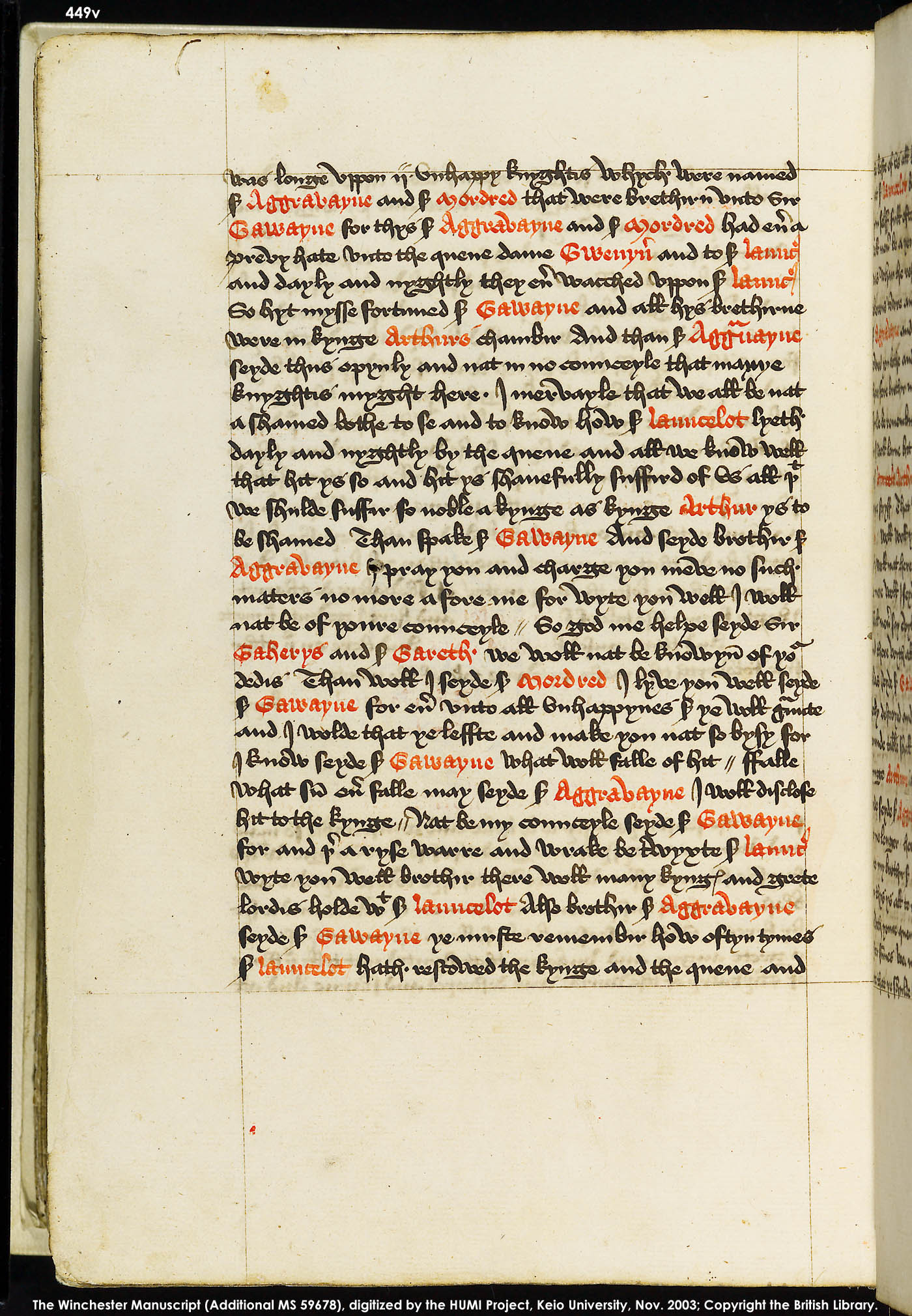
- 1470–1483 (date produced), Thom̃s Malleorre [i.e., Thomas Malory], “[Morte Arthur]”, in Le Morte Darthur (British Library Additional Manuscript 59678), [England: s.n.], folio 449, verso, lines 15–18:
- Than ſpake ẜ Gawayne And ſeyde brothir · ẜ Aggravayne I pray you and charge you meve no ſuch · maters no more a fore me fro wyte you well I woll nat be of youre counceyle //
- Then spoke Sir Gawain, and said, “Brother, Sir Agrivain, I pray you and charge you move not such matters any more before me, for be ye assured I will not be of your counsel.”