
鮓
See also: 鲊
| ||||||||
Translingual edit
Han character edit
鮓 (Kangxi radical 195, 魚+5, 16 strokes, cangjie input 弓火人尸 (NFOS), four-corner 28311, composition ⿰魚乍)
References edit
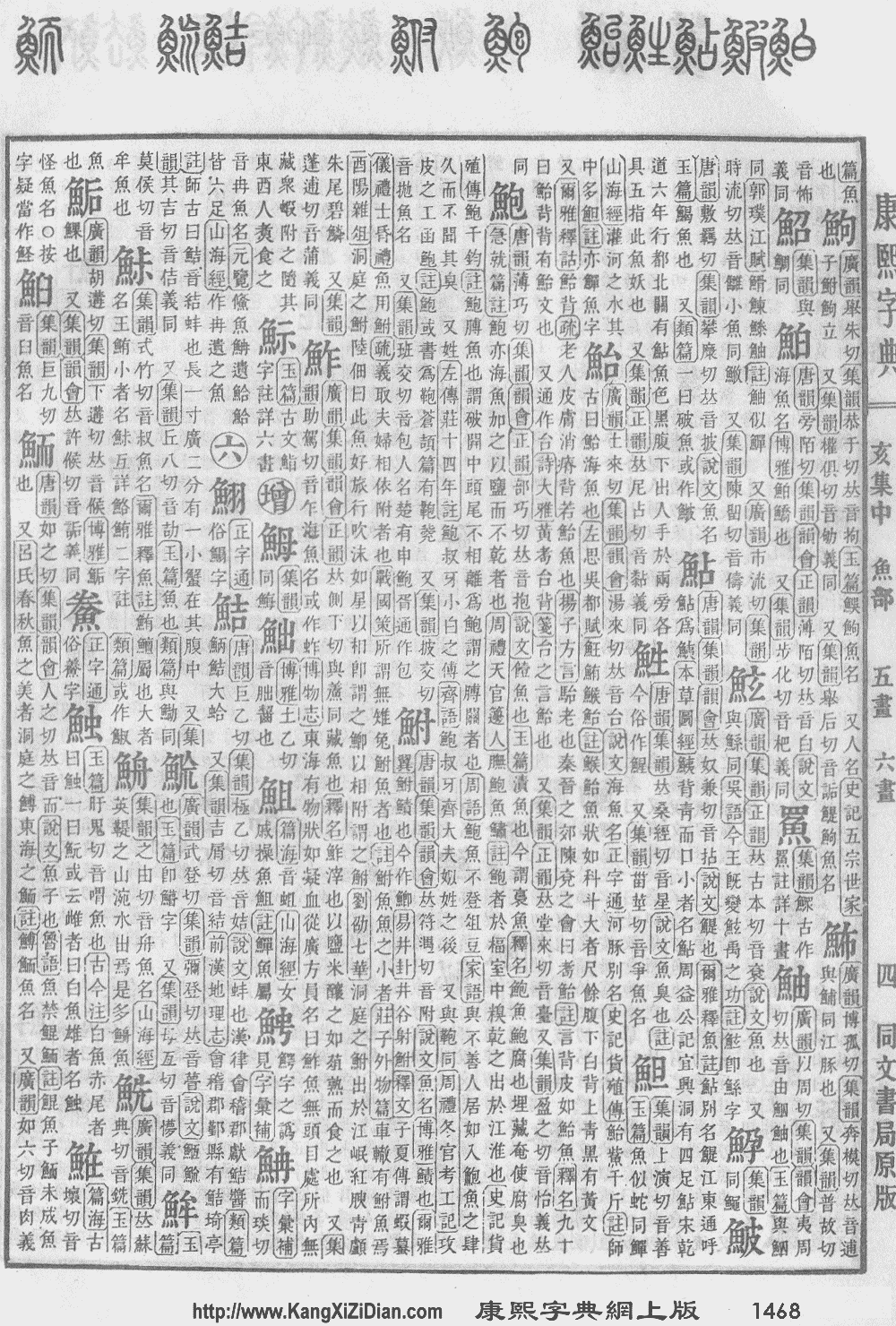
- Kangxi Dictionary: page 1468, character 16
- Dai Kanwa Jiten: character 46076
- Dae Jaweon: page 2001, character 22
- Hanyu Da Zidian (first edition): volume 7, page 4681, character 15
- Unihan data for U+9B93
Chinese edit
Etymology 1 edit
| trad. | 鮓 | |
|---|---|---|
| simp. | 鲊 | |
| alternative forms | 䱹/𬶣 鮺/鲝 𩻢 | |
Pronunciation edit
Definitions edit
鮓
Compounds edit
Etymology 2 edit
| trad. | 鮓 | |
|---|---|---|
| simp. | 鲊 | |
| alternative forms | 渣 | |
Pronunciation edit
Definitions edit
鮓
Compounds edit
References edit
- “鮓”, in 漢語多功能字庫 (Multi-function Chinese Character Database)[1], 香港中文大學 (the Chinese University of Hong Kong), 2014–
Japanese edit
Kanji edit
鮓
Readings edit
Definitions edit
| Kanji in this term |
|---|
| 鮓 |
| すし Hyōgaiji |
| kun’yomi |
| For pronunciation and definitions of 鮓 – see the following entry. | ||
| ||
| (This term, 鮓, is an alternative spelling of the above term.) |
References edit
- Doi, Tadao (1603–1604) Hōyaku Nippo Jisho (in Japanese), Tōkyō: Iwanami Shoten, published 1980, →ISBN.
- Minamoto, Shitagō with Kyōto Daigaku Bungakubu Kokugogaku Kokubungaku Kenkyūshitu (931–938) Shohon Shūsei Wamyō Ruijushō: Honbunhen (in Japanese), Kyōto: Rinsen, published 1968, →ISBN.
Korean edit
Hanja edit
鮓 (eum 자 (ja))
- This term needs a translation to English. Please help out and add a translation, then remove the text
{{rfdef}}.
Vietnamese edit
Han character edit
- This term needs a translation to English. Please help out and add a translation, then remove the text
{{rfdef}}.