Translingual
edit
| Stroke order
|

|
Alternative forms
edit
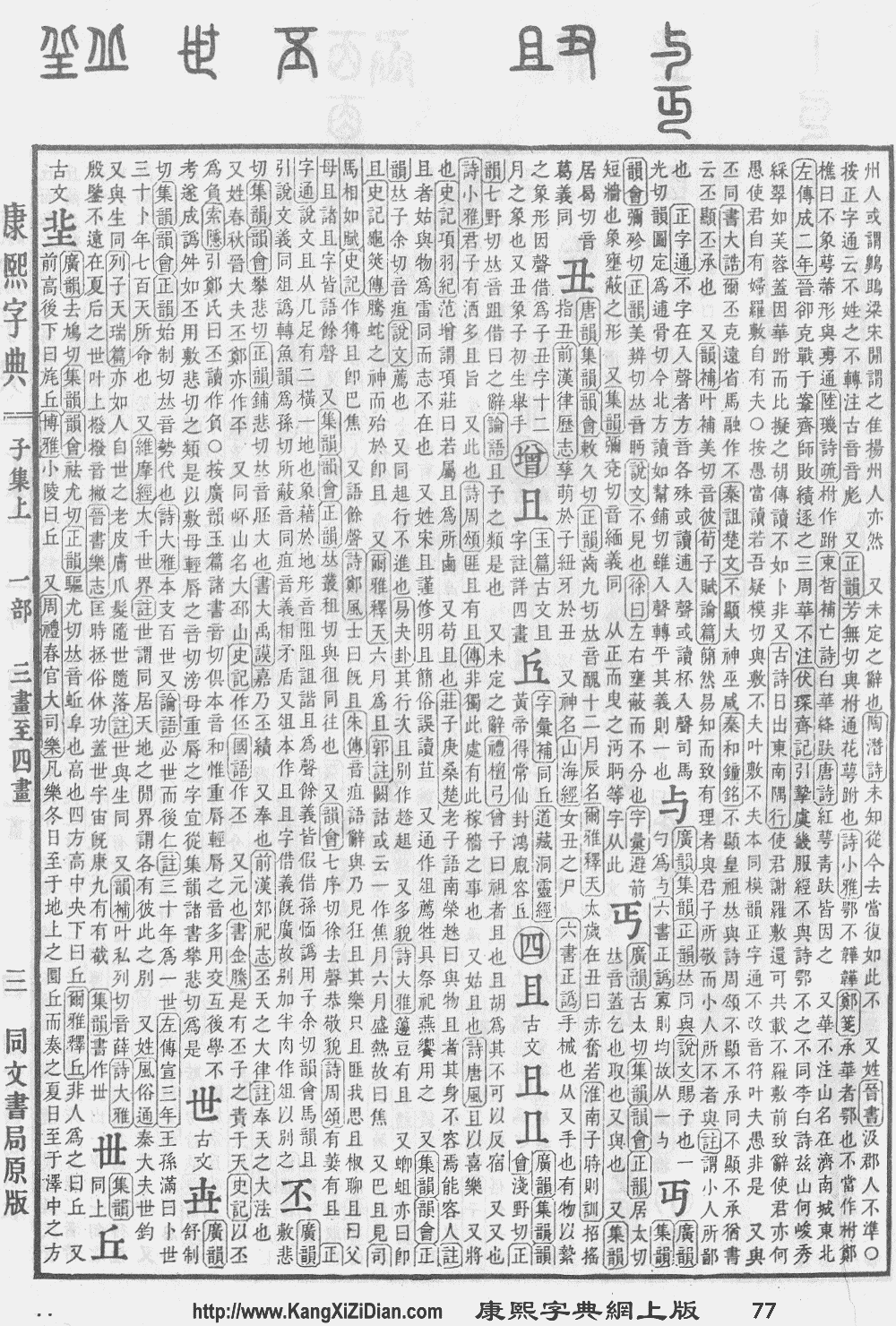
- In the historical Kangxi dictionary, this character is written with four strokes: ⿱⺊⿹𠃌一
- In modern Japanese, the character is written slightly differently, with the final 一 stroke extending across ㇉.
Han character
edit
与 (Kangxi radical 1, 一+2 in Chinese, 一+3 in Korean, 3 strokes in Chinese, 4 strokes in Korean, cangjie input 卜尸一 (YSM), four-corner 21407 or 21127, composition ⿹⿺㇉一一(GHKTV) or ⿻⿺㇉一一(J))
Derived characters
edit
- 𠇐, 屿, 𫹮, 𭤰, 玙, 𪾟, 𨊮, 𮡤, 𫚈, 欤, 写, 㝍, 𥫣, 𡴃, 𢌱, 𢗓, 𢪓, 𢮠
- 𠚻 (Exception: Only for Taiwan character form which contains ⿰与刂. Mainland China character form contains ⿰⿱𠂉刁刂 instead)
Related characters
edit
Descendants
edit
References
edit
- Kangxi Dictionary: page 77, character 1
- Dai Kanwa Jiten: character 20
- Dae Jaweon: page 154, character 1
- Hanyu Da Zidian (first edition): volume 1, page 5, character 3
- Unihan data for U+4E0E
Glyph origin
edit
Definitions
edit
For pronunciation and definitions of 与 – see 與 (“to give; to offer”).
(This character is the simplified and variant form of 與). |
| Notes: |
Japanese
edit
与
(common “Jōyō” kanji, shinjitai kanji, kyūjitai form 與)
- bestow, impart, award, grant, give
- participate in
- provide
- cause
- gift
- godsend
Readings
edit
- Go-on: よ (yo, Jōyō)
- Kan-on: よ (yo, Jōyō)
- Kun: あたう (atau, 与う)←あたふ (atafu, 与ふ, historical); あたえ (atae, 与え)←あたへ (atafe, 与へ, historical); あたえる (ataeru, 与える, Jōyō)←あたへる (ataferu, 与へる, historical); あたゆ (atayu, 与ゆ); あずかる (azukaru, 与かる)←あづかる (adukaru, 与かる, historical); あずかる (azukaru, 与る)←あづかる (adukaru, 与る, historical); くみす (kumisu, 与す); くみする (kumisuru, 与する)
- Nanori: とも (tomo); ゆ (yu)
Compounds
edit
Vietnamese
edit
Han character
edit
与: Hán Nôm readings: dữ, dự, đử
- This term needs a translation to English. Please help out and add a translation, then remove the text
{{rfdef}}.
References
edit