
第
| ||||||||
Translingual edit
| Stroke order | |||
|---|---|---|---|

| |||
Han character edit
第 (Kangxi radical 118, 竹+5, 11 strokes, cangjie input 竹弓中竹 (HNLH), four-corner 88227, composition ⿱𥫗𢎨)
Derived characters edit
References edit
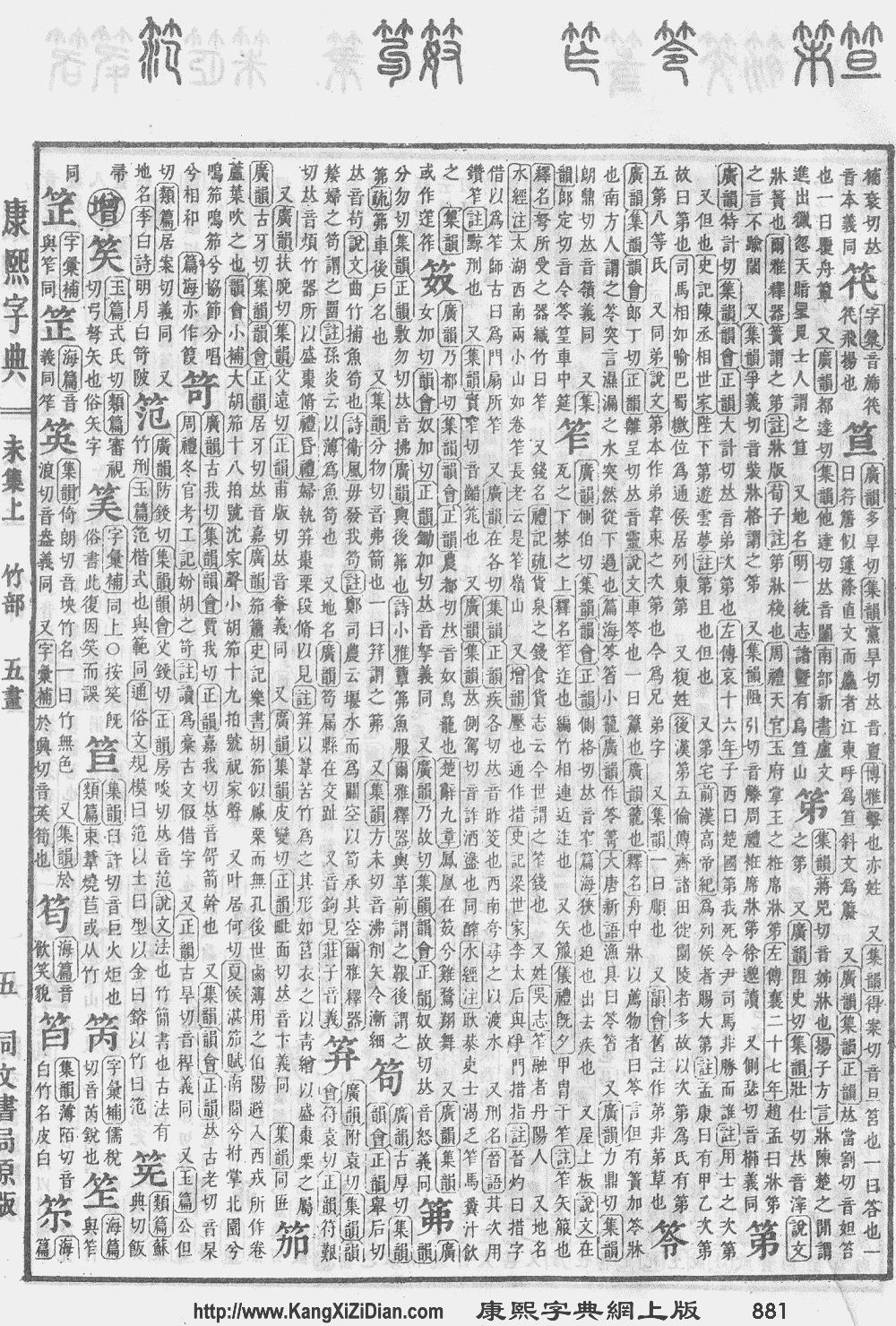
- Kangxi Dictionary: page 881, character 4
- Dai Kanwa Jiten: character 25943
- Dae Jaweon: page 1308, character 20
- Hanyu Da Zidian (first edition): volume 5, page 2959, character 9
- Unihan data for U+7B2C
Chinese edit
| trad. | 第 | |
|---|---|---|
| simp. # | 第 | |
| alternative forms | 弟 苐 | |
Glyph origin edit
Phono-semantic compound (形聲/形声, OC *diːls) : semantic 𥫗 (“bamboo”) + phonetic 弟 (OC *diːlʔ, *diːls). 竹 here refers to the bamboo strips used for writing (e.g. accounting, classification) in ancient times. See also 等.
Alternatively, may have originally been written 弟.
Etymology 1 edit
Karlgren (1956: 14) connects this word with → tī 梯 ‘ladder’.
Pronunciation edit
Definitions edit
第
- sequence; number
- grade; degree
- (historical) rank in the imperial examinations
- Ordinal number marker, used before a number to make the number ordinal.
- a surname
Compounds edit
- 三元及第
- 上第 (shàngdì)
- 下第 (xiàdì)
- 不第 (bùdì)
- 伊凡第三
- 伊凡第四
- 別第/别第
- 劉蕡下第/刘𰱟下第
- 印第安人 (yìndì'ānrén)
- 及第 (jídì)
- 及第花
- 名第
- 品第 (pǐndì)
- 天下第一 (tiānxiàdìyī)
- 宅第 (zháidì)
- 寒第
- 居第
- 府第 (fǔdì)
- 得第
- 拜恩私第
- 擢第
- 昏第
- 書香門第/书香门第 (shūxiāngméndì)
- 次第 (cìdì)
- 治第
- 潭第
- 狀元及第/状元及第
- 甲第 (jiǎdì)
- 甲第星羅/甲第星罗
- 甲第連雲/甲第连云
- 登甲第
- 登第
- 私第 (sīdì)
- 科第
- 第一 (dì-yī)
- 第一人
- 第一人稱/第一人称 (dì-yī rénchēng)
- 第一個/第一个 (dì-yī gè)
- 第一名 (dìyīmíng)
- 第一國際/第一国际 (Dì-yī Guójì)
- 第一夫人 (dì-yī fūrén)
- 第一志願/第一志愿 (dì-yī zhìyuàn)
- 第一性徵/第一性征 (dì-yī xìngzhēng)
- 第一手 (dìyīshǒu)
- 第一把手 (dìyībǎshǒu)
- 第一次 (dì-yī cì)
- 第一步
- 第一波
- 第一流
- 第一火線/第一火线
- 第一炮
- 第一版
- 第一現場/第一现场 (dì-yī xiànchǎng)
- 第一眼
- 第一等
- 第一線/第一线 (dìyīxiàn)
- 第一義/第一义
- 第一要緊/第一要紧
- 第一遭
- 第一順位/第一顺位
- 第七艦隊/第七舰队
- 第三世界 (Dì-sān Shìjiè)
- 第三人稱/第三人称 (dì-sān rénchēng)
- 第三國際/第三国际 (Dì-Sān Guójì)
- 第三地
- 第三梯隊/第三梯队
- 第三者 (dìsānzhě)
- 第三醫學/第三医学
- 第九藝術/第九艺术
- 第二世界 (Dì-èr Shìjiè)
- 第二代
- 第二性徵/第二性征 (dì-èr xìngzhēng)
- 第二把手
- 第二春 (dì'èrchūn)
- 第二職業/第二职业
- 第二課堂/第二课堂
- 第五 (dì-wǔ)
- 第五縱隊/第五纵队 (dì-wǔzòngduì)
- 第八藝術/第八艺术
- 第六感 (dìliùgǎn)
- 第四世界
- 第四審/第四审
- 第四臺/第四台 (dìsìtái)
- 第宅
- 等第
- 簪纓門第/簪缨门第
- 聯科及第/联科及第
- 落第 (luòdì)
- 角巾私第
- 諾曼第/诺曼第 (Nuòmàndì)
- 進士及第/进士及第 (jìnshì jídì)
- 邸第
- 鄂圖第一/鄂图第一
- 門第/门第 (méndì)
- 門第高/门第高
- 開第/开第
- 闔第光臨/阖第光临
- 陳第/陈第
- 高第
Etymology 2 edit
Contraction of 第二 (dai6 ji6, “second”).
Pronunciation edit
Definitions edit
第
Compounds edit
Etymology 3 edit
Contraction of 第一 (tē-it, “first”).
Pronunciation edit
Definitions edit
第
- (Quanzhou and Xiamen Hokkien) most
Synonyms edit
Descendants edit
Others:
- → Khmer: ទី (tii)
Further reading edit
- “Entry #7716”, in 臺灣閩南語常用詞辭典 [Dictionary of Frequently-Used Taiwan Minnan] (overall work in Mandarin and Hokkien), Ministry of Education, R.O.C., 2023.
Japanese edit
Kanji edit
第
Readings edit
Prefix edit
| Kanji in this term |
|---|
| 第 |
| だい Grade: 3 |
| on’yomi |
| Alternative spelling |
|---|
| 㐧 (ryakuji) |
- ordinal marker, often with affix 号
- 第2号
- dai-ni gō
- The 2nd
- 第13話
- dai-jūsan wa
- Chapter 13
- 第2号
Compounds edit
Korean edit
Etymology edit
From Middle Chinese 第 (MC dejH).
| Historical readings |
|---|
|
Pronunciation edit
- (SK Standard/Seoul) IPA(key): [t͡ɕe̞(ː)]
- Phonetic hangul: [제(ː)]
- Though still prescribed in Standard Korean, most speakers in both Koreas no longer distinguish vowel length.
Hanja edit

第 (eumhun 차례(次例) 제 (charye( 次例 ) je))
Compounds edit
Compounds
References edit
- 국제퇴계학회 대구경북지부 (國際退溪學會 大邱慶北支部) (2007). Digital Hanja Dictionary, 전자사전/電子字典. [1]
Vietnamese edit
Han character edit
- This term needs a translation to English. Please help out and add a translation, then remove the text
{{rfdef}}.