
字
| ||||||||
| ||||||||
Translingual edit
| Stroke order | |||
|---|---|---|---|

| |||
| Stroke order | |||
|---|---|---|---|

| |||
Han character edit
字 (Kangxi radical 39, 子+3, 6 strokes, cangjie input 十弓木 (JND), four-corner 30407, composition ⿱宀子)
Derived characters edit
References edit
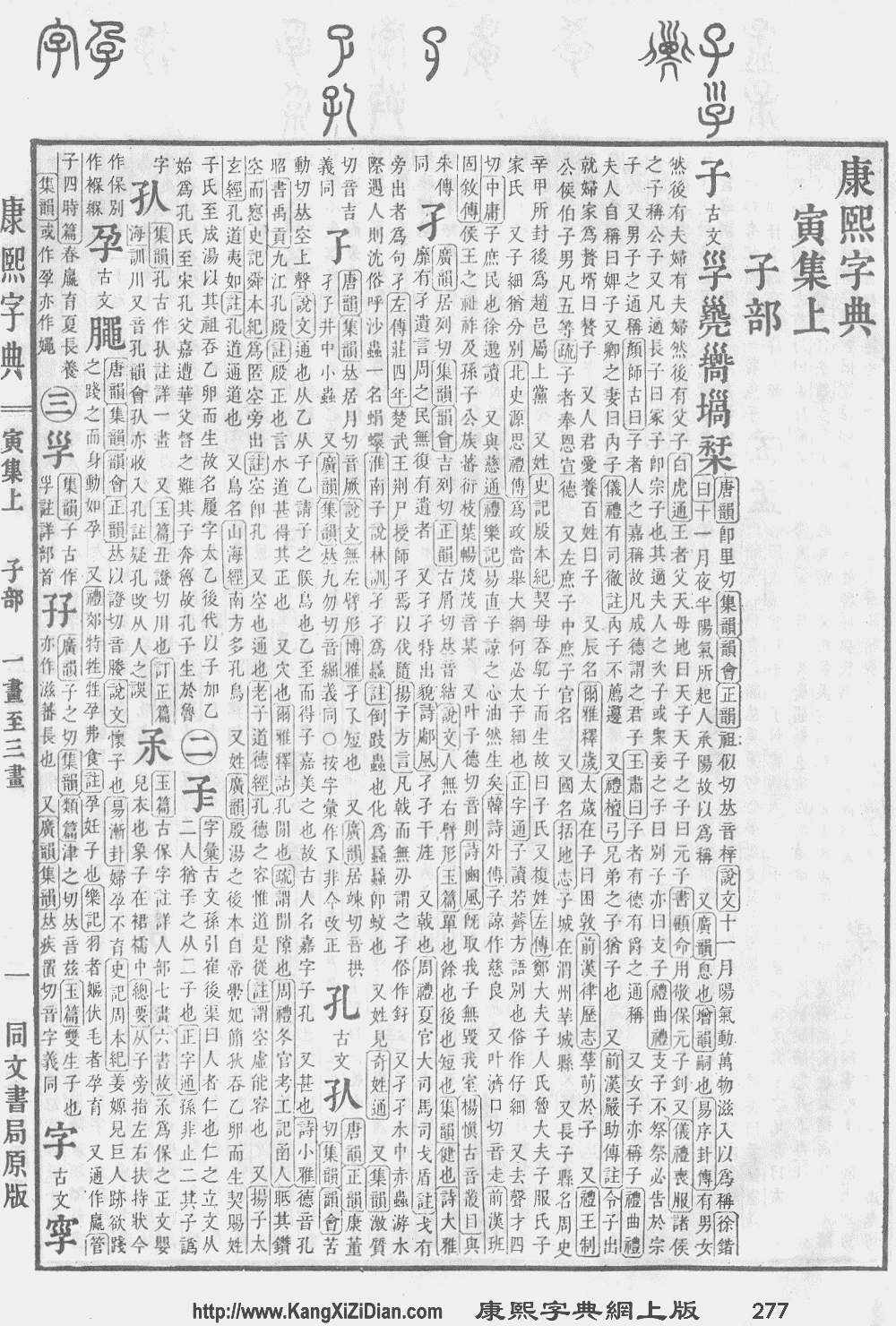
- Kangxi Dictionary: page 277, character 18
- Dai Kanwa Jiten: character 6942
- Dae Jaweon: page 545, character 7
- Hanyu Da Zidian (first edition): volume 2, page 1010, character 2
- Unihan data for U+5B57
Chinese edit
| simp. and trad. |
字 | |
|---|---|---|
Glyph origin edit
| Historical forms of the character 字 | |||||
|---|---|---|---|---|---|
| Shang | Western Zhou | Spring and Autumn | Warring States | Shuowen Jiezi (compiled in Han) | Liushutong (compiled in Ming) |
| Bronze inscriptions | Bronze inscriptions | Bronze inscriptions | Qin slip script | Small seal script | Transcribed ancient scripts |

|

|

|

|

|

|
Phono-semantic compound (形聲/形声, OC *zlɯs) : semantic 宀 (“roof”) + phonetic 子 (OC *ʔslɯʔ, “child”).
Etymology edit
From Proto-Sino-Tibetan *tsa ~ za (“child; to give birth; to take care; to be kind”). Related to:
- 子 (OC *ʔslɯʔ, “child, son”) (also its phonetic component)
- 慈 (OC *zɯ, “to be kind, loving”)
- 滋 (OC *ʔsɯ, “to nourish, to grow”)
- 詞 (OC *ljɯ, “word, term”)
- 辭 (OC *ljɯ, “word, from testimony”)
Original sense (1): “to become pregnant, to give birth to, to nurture, to love” has essentially become obsolete. The sense (2) “letter, character” is either from a different root or a derivation from the sense “to produce, to generate”.
Cognate with Tibetan ཚ་བོ (tsha bo, “nephew”), Tibetan ཚ་རུས (tsha rus, “descendant”), Tibetan བཙའ (btsa', “to give birth to; to guard”), Tibetan མཛའ (mdza', “kind, peaceful, friendly”) (Quan, 1996), Burmese စာ (ca, “writing, letter”).
Pronunciation edit
Definitions edit
字
- letter; symbol; character, especially a Chinese character (Classifier: 個/个 m c; 隻/只 c)
- word; term; wording; diction
- (computing) word
- handwriting; writing
- (historical) courtesy name; Chinese-style name (a name traditionally given to Chinese males at the age of 20 and females at the age of 15)
- (historical) to style; to give someone a courtesy name
- (calligraphy) style of handwriting; printing type
- (calligraphy) (a calligrapher's) calligraphy work
- written letter; message; correspondence
- receipt; contract; slip
- pronunciation of a character; pronunciation
- (colloquial) side of a coin with written characters; tails
- (Cantonese, Min, Malaysia, Singapore) five minutes (derived from the locations of 1 to 12 on a clock face) (Classifier: 個/个 m c)
- † to give birth to; to deliver a baby; to bring into the world
- † to be pregnant; to be carrying a baby
- † (historical, of a girl) to be betrothed; to be allowed to marry
- † to bring up; to raise; to rear (a child)
- (obsolete or Guzhang Waxiang) to love; to cherish; to care very much for
- 子弗祗服厥父事,大傷厥考心;于父不能字厥子,乃疾厥子。 [Classical Chinese, trad.]
- From: The Book of Documents, circa 4th – 3rd century BCE
- Zǐ fú zhī fú jué fù shì, dà shāng jué kǎo xīn; yú fù bùnéng zì jué zǐ, nǎi jí jué zǐ. [Pinyin]
- The son who does not reverently discharge his duty to his father, but greatly wounds his father's heart, and the father who can (no longer) love his son, but hates him.
子弗祗服厥父事,大伤厥考心;于父不能字厥子,乃疾厥子。 [Classical Chinese, simp.]- 禮也者,小事大、大字小之謂。事大在共其時命,字小在恤其所無。 [Classical Chinese, trad.]
- From: Commentary of Zuo, c. 4th century BCE, translation from Zuozhuan: Commentary on the "Spring and Autumn Annals" (2017), by Stephen Durrant, Wai-yee Li and David Schaberg
- Lǐ yě zhě, xiǎo shì dà, dà zì xiǎo zhī wèi. Shì dà zài gōng qí shímìng, zì xiǎo zài xù qí suǒwú. [Pinyin]
- By definition, ritual propriety means that the lesser serve the greater and the greater care for the lesser. Serving the greater consists of respecting timely commands from them. Caring for the lesser consists of showing concern about the things that they lack.
礼也者,小事大、大字小之谓。事大在共其时命,字小在恤其所无。 [Classical Chinese, simp.]
- (Luxi Waxiang) to envy; to be jealous of; to admire
- † to educate; to teach; to instruct
- † to govern; to administer
- a surname
Synonyms edit
| Variety | Location | Words |
|---|---|---|
| Formal (Written Standard Chinese) | 字 | |
| Mandarin | Beijing | 字兒 |
| Taiwan | 字 | |
| Yantai (Muping) | 字 | |
| Wanrong | 字 | |
| Xi'an | 字 | |
| Lanzhou | 字兒 | |
| Guilin | 字 | |
| Singapore | 字 | |
| Cantonese | Guangzhou | 字 |
| Hong Kong | 字 | |
| Singapore (Guangfu) | 字 | |
| Gan | Lichuan | 字 |
| Hakka | Meixian | 字 |
| Northern Min | Jian'ou | 字 |
| Eastern Min | Fuzhou | 字 |
| Southern Min | Xiamen | 字 |
| Singapore (Hokkien) | 字 | |
| Chaozhou | 字 | |
| Singapore (Teochew) | 字 | |
| Leizhou | 字 | |
| Haikou | 字 | |
| Wu | Shanghai | 字 |
| Ningbo | 字 | |
| Wenzhou | 字 | |
Compounds edit
- 一字一板 (yīzìyībǎn)
- 一字一淚/一字一泪 (yīzì yī lèi)
- 一字一珠 (yīzì yī zhū)
- 一字不差
- 一字不忘
- 一字不提
- 一字不苟
- 一字不識/一字不识
- 一字之師/一字之师 (yīzìzhīshī)
- 一字兒/一字儿
- 一字千金 (yīzìqiānjīn)
- 一字半句
- 一字師/一字师
- 一字王
- 一字眉 (yīzìméi)
- 一字褒貶/一字褒贬 (yīzì-bāobiǎn)
- 一字髯
- 一言半字
- 丁字 (dīngzì)
- 丁字兒/丁字儿
- 丁字尺 (dīngzìchǐ)
- 丁字帶/丁字带
- 七字法
- 丁字腳/丁字脚
- 丁字褲/丁字裤 (dīngzìkù)
- 丁字路 (dīngzìlù)
- 丁字鋪/丁字铺
- 上口字 (shàngkǒuzì)
- 三字獄/三字狱
- 三字經/三字经 (sānzìjīng)
- 不可名字
- 不字
- 不成字
- 不易一字
- 不留一字
- 不立文字
- 不著一字
- 丙字法
- 中國字/中国字 (zhōngguózì)
- 中國文字/中国文字
- 之字路 (zhīzìlù)
- 九經字樣/九经字样
- 五字訣/五字诀
- 京字頭/京字头 (jīngzìtóu)
- 人物字號/人物字号
- 令字旗
- 以字行 (yǐzìxíng)
- 俗字 (súzì)
- 倒八字眉 (dàobāzìméi)
- 倒八字鬚/倒八字须
- 借字 (jièzì)
- 倒字
- 倒灶八字
- 傳音快字/传音快字
- 內八字腳/内八字脚 (nèibāzìjiǎo)
- 兩腳寫字/两脚写字
- 八字 (bāzì)
- 八字全帖
- 八字宮眉/八字宫眉
- 八字帖 (bāzìtiě)
- 八字打開/八字打开
- 八字眉 (bāzìméi)
- 八字腳/八字脚 (bāzìjiǎo)
- 八字軍/八字军
- 八字門/八字门 (Bāzìmén)
- 八字鬍/八字胡 (bāzìhú)
- 八字鬍鬚/八字胡须
- 六字頭/六字头
- 冒字頭/冒字头 (màozìtóu)
- 冷字 (lěngzì)
- 別字/别字 (biézì)
- 利字當頭/利字当头
- 刻字 (kèzì)
- 刺字 (cìzì)
- 包字頭/包字头 (bāozìtóu)
- 匠字框
- 區字框/区字框 (qūzìkuàng)
- 十字 (shízì)
- 十字坡
- 十字架 (shízìjià)
- 十字溝/十字沟 (Shízìgōu)
- 十字繡/十字绣 (shízìxiù)
- 十字花押
- 十字花科 (shízìhuākē)
- 十字街 (shízìjiē)
- 十字街頭/十字街头
- 十字路 (shízìlù)
- 十字路口 (shízìlùkǒu)
- 十字軍/十字军 (shízìjūn)
- 十字鎬/十字镐 (shízìgǎo)
- 千字文 (Qiānzìwén)
- 卷字頭/卷字头
- 反字框 (fǎnzìkuàng)
- 反字頭/反字头
- 叫字號/叫字号
- 古文字 (gǔwénzì)
- 合八字
- 合同文字
- 吐字 (tǔzì)
- 名字
- 同字框 (tóngzìkuàng)
- 周字框 (zhōuzìkuàng)
- 咬字 (yǎozì)
- 咬字兒/咬字儿
- 咬字眼兒/咬字眼儿
- 咬文嚼字 (yǎowénjiáozì)
- 問字/问字
- 單字/单字 (dānzì)
- 單體字/单体字
- 四字頭/四字头 (sìzìtóu)
- 回字
- 國字/国字 (guózì)
- 國字框/国字框 (guózìkuàng)
- 國音字母/国音字母
- 圖畫文字/图画文字
- 垛字
- 外八字腳/外八字脚 (wàibāzìjiǎo)
- 多音字 (duōyīnzì)
- 大字 (dàzì)
- 大字報/大字报 (dàzìbào)
- 大字本 (dàzìběn)
- 天字號/天字号
- 天文數字/天文数字 (tiānwén shùzì)
- 奇字
- 套畫押字/套画押字
- 如字 (rúzì)
- 字元 (zìyuán)
- 字典 (zìdiǎn)
- 字勢/字势
- 字匠
- 字句 (zìjù)
- 字字珠玉
- 字字珠璣/字字珠玑 (zìzìzhūjī)
- 字孤
- 字學/字学
- 字學舉隅/字学举隅
- 字帖
- 字幕 (zìmù)
- 字幕匣
- 字幕機/字幕机
- 字彙/字汇 (zìhuì)
- 字形 (zìxíng)
- 字挾風霜/字挟风霜
- 字據/字据 (zìjù)
- 字數/字数 (zìshù)
- 字斟句酌
- 字書/字书 (zìshū)
- 字林 (Zìlín)
- 字根
- 字條/字条 (zìtiáo)
- 字模 (zìmó)
- 字樣/字样 (zìyàng)
- 字樣學/字样学
- 字正腔圓/字正腔圆 (zìzhèngqiāngyuán)
- 字母 (zìmǔ)
- 字畫/字画 (zìhuà)
- 字盤/字盘
- 字相學/字相学
- 字眼 (zìyǎn)
- 字眼兒/字眼儿 (zìyǎnr)
- 字符 (zìfú)
- 字紙/字纸 (zìzhǐ)
- 字紙簍/字纸篓 (zìzhǐlǒu)
- 字義/字义 (zìyì)
- 字腳/字脚
- 字號/字号
- 字裡行間/字里行间 (zìlǐhángjiān)
- 字說/字说
- 字諭/字谕
- 字謎/字谜 (zìmí)
- 字譜/字谱 (zìpǔ)
- 字跡/字迹 (zìjì)
- 字通
- 字鑑/字鉴
- 字面 (zìmiàn)
- 字音 (zìyīn)
- 字頭/字头 (zìtóu)
- 字體/字体 (zìtǐ)
- 宋體字/宋体字 (sòngtǐzì)
- 官話字母/官话字母
- 實字/实字
- 寫字/写字 (xiězì)
- 寫字兒/写字儿
- 寫字樓/写字楼 (xiězìlóu)
- 寫字檯/写字台 (xiězìtái)
- 寶字/宝字
- 小字 (xiǎozì)
- 小字報/小字报
- 小字本
- 小字輩/小字辈
- 尖團字/尖团字
- 工字鋼/工字钢 (gōngzìgāng)
- 工尺字兒/工尺字儿
- 希臘字母/希腊字母
- 帥字旗/帅字旗
- 平話字/平话字 (pínghuàzì)
- 康熙字典 (Kāngxī Zìdiǎn)
- 延字心 (yánzìxīn)
- 形聲字/形声字 (xíngshēngzì)
- 待字
- 待字閨中/待字闺中 (dàizì guīzhōng)
- 後起字/后起字 (hòuqǐzì)
- 惜字
- 手字兒/手字儿
- 手指字母
- 手頭字/手头字
- 打字 (dǎzì)
- 打字員/打字员 (dǎzìyuán)
- 打字帶/打字带
- 打字排版
- 打字機/打字机 (dǎzìjī)
- 打字紙/打字纸
- 批八字
- 拉丁字母 (Lādīng Zìmǔ)
- 拆字 (chāizì)
- 押字
- 拆字格
- 抹牌道字
- 拆牌道字
- 拆白道字
- 拼字 (pīnzì)
- 挑字眼兒/挑字眼儿
- 拼音字母 (pīnyīn zìmǔ)
- 拼音文字 (pīnyīn wénzì)
- 捉字蝨/捉字虱
- 排字 (páizì)
- 摳字眼兒/抠字眼儿 (kōuzìyǎnr)
- 撫字/抚字 (fǔzì)
- 撿字紙/捡字纸
- 放屁文字
- 敲字邊/敲字边 (qiāozìbiān)
- 數字/数字 (shùzì)
- 數字係數/数字系数
- 數字唱片/数字唱片
- 數目字/数目字 (shùmùzì)
- 文字 (wénzì)
- 文字交
- 文字傳播/文字传播
- 文字學/文字学 (wénzìxué)
- 文字獄/文字狱 (wénzìyù)
- 文字畫/文字画
- 文字飲/文字饮
- 文從字順/文从字顺
- 方塊字/方块字 (fāngkuàizì)
- 方字
- 易字
- 春山八字
- 有效數字/有效数字 (yǒuxiào shùzì)
- 有音無字/有音无字 (yǒuyīnwúzì)
- 木字旁 (mùzìpáng)
- 木活字
- 本字 (běnzì)
- 析字
- 柳字
- 楔形文字 (xiēxíng wénzì)
- 標準字體/标准字体
- 橫羅十字/横罗十字
- 橫行文字/横行文字
- 檢字/检字 (jiǎnzì)
- 檢字法/检字法
- 正字 (zhèngzì)
- 正字標記/正字标记
- 正字法 (zhèngzìfǎ)
- 正字通 (Zhèngzìtōng)
- 正體字/正体字 (zhèngtǐzì)
- 死字
- 死文字
- 段字旁 (duànzìpáng)
- 毛筆字/毛笔字
- 永字八法 (yǒng zì bā fǎ)
- 沒字碑/没字碑
- 泉幣文字/泉币文字
- 泥活字
- 洋名字
- 活字 (huózì)
- 活字典 (huózìdiǎn)
- 活字本
- 活字版
- 涅字
- 測字/测字 (cèzì)
- 減字/减字
- 漢字/汉字 (hànzì)
- 漢字改革/汉字改革
- 漢隸字源/汉隶字源
- 火字旁 (huǒzìpáng)
- 煮字
- 無字天書/无字天书 (wúzì tiānshū)
- 煮字療飢/煮字疗饥
- 照相打字
- 熟字 (shúzì)
- 爪字頭/爪字头 (zhǎozìtóu)
- 片紙隻字/片纸只字
- 片言一字
- 片言隻字/片言只字
- 片語隻字/片语只字
- 玄字頭/玄字头
- 璽印文字/玺印文字
- 瓜字初分
- 生字 (shēngzì)
- 生辰八字 (shēngchén bāzì)
- 田字面 (tiánzìmiàn)
- 畏兀字
- 異用字/异用字 (yìyòngzì)
- 異體字/异体字 (yìtǐzì)
- 畫一字/画一字
- 畫十字/画十字
- 畫字/画字
- 疊字/叠字 (diézì)
- 病字旁 (bìngzìpáng)
- 癸字號/癸字号
- 登字頭/登字头 (dēngzìtóu)
- 白字 (báizì)
- 白字戲/白字戏
- 白紙黑字/白纸黑字 (báizhǐhēizì)
- 白話字/白话字 (báihuàzì)
- 皿字底 (mǐnzìdǐ)
- 目不識字/目不识字
- 盲字 (mángzì)
- 相字
- 真字 (zhēnzì)
- 破字
- 破音字
- 破體字/破体字
- 萬字/万字 (wànzì)
- 立字兒/立字儿
- 竹字頭/竹字头 (zhúzìtóu)
- 笄字
- 箭頭文字/箭头文字
- 簡化字/简化字 (jiǎnhuàzì)
- 簡化漢字/简化汉字
- 簡字/简字 (jiǎnzì)
- 簡字譜錄/简字谱录
- 簡體字/简体字 (jiǎntǐzì)
- 簽字/签字 (qiānzì)
- 簽字筆/签字笔
- 米字旁 (mǐzìpáng)
- 紅十字會/红十字会 (Hóngshízìhuì)
- 紇字不識/纥字不识
- 紅字黑押/红字黑押
- 累增字
- 細字/细字 (xìzì)
- 絕對數字/绝对数字
- 練字/练字 (liànzì)
- 繁體字/繁体字 (fántǐzì)
- 羅馬字母/罗马字母 (Luómǎ Zìmǔ)
- 羅馬數字/罗马数字 (luómǎ shùzì)
- 羊字旁 (yángzìpáng)
- 美術字/美术字 (měishùzì)
- 習字/习字 (xízì)
- 老字號/老字号 (lǎozìhào)
- 老字頭/老字头 (lǎozìtóu)
- 聯綿字/联绵字 (liánmiánzì)
- 聯綿字典/联绵字典
- 舉字底/举字底 (jǔzìdǐ)
- 花字
- 草字 (cǎozì)
- 草字彙/草字汇
- 草字頭兒/草字头儿
- 藍十字會/蓝十字会
- 藝術字/艺术字 (yìshùzì)
- 蘭字頭/兰字头
- 虎字頭/虎字头 (hǔzìtóu)
- 虛字/虚字
- 虛字對/虚字对
- 蟲字旁兒/虫字旁儿
- 蟹行文字
- 衣字旁 (yīzìpáng)
- 表字 (biǎozì)
- 表形文字
- 表意文字 (biǎoyì wénzì)
- 表音文字 (biǎoyīn wénzì)
- 襯字/衬字 (chènzì)
- 西字頭/西字头 (xīzìtóu)
- 見字/见字
- 言字旁 (yánzìpáng)
- 許字/许字
- 認字/认字 (rènzì)
- 說文解字/说文解字 (Shuōwén Jiězì)
- 諷刺文字/讽刺文字
- 諱字/讳字
- 識字/识字 (shízì)
- 識文斷字/识文断字 (shíwénduànzì)
- 識文談字/识文谈字
- 讀書識字/读书识字 (dúshū shízì)
- 象形文字 (xiàngxíng wénzì)
- 貞卜文字/贞卜文字
- 負字頭/负字头
- 貿易赤字/贸易赤字 (màoyì chìzì)
- 賣卜測字/卖卜测字
- 賣字/卖字
- 賣字號/卖字号
- 赤字 (chìzì)
- 赤字財政/赤字财政
- 赤字預算/赤字预算
- 足字旁 (zúzìpáng)
- 車字旁/车字旁 (chēzìpáng)
- 載酒問字/载酒问字
- 輕聲字/轻声字
- 逐字逐句 (zhúzìzhújù)
- 連綿字/连绵字 (liánmiánzì)
- 道字
- 道字號/道字号
- 那字旁 (nàzìpáng)
- 酉字牌
- 金字塔 (jīnzìtǎ)
- 金字招牌 (jīnzì zhāopái)
- 金字旁 (jīnzìpáng)
- 金融赤字
- 釘頭文字/钉头文字
- 鉛字/铅字 (qiānzì)
- 鉛字合金/铅字合金
- 銀字/银字
- 銀字兒/银字儿
- 銷字/销字
- 錯別字/错别字 (cuòbiézì)
- 錦字/锦字
- 錯字/错字 (cuòzì)
- 錦字書/锦字书
- 鍊字/炼字
- 鐵十字/铁十字
- 鑄字/铸字
- 闕字/阙字
- 陳八字/陈八字 (Chénbāzì)
- 隹字邊/隹字边 (zhuīzìbiān)
- 隻字/只字
- 隻字不提/只字不提 (zhīzìbùtí)
- 隻字片言/只字片言
- 隻字片語/只字片语
- 雁字
- 難字/难字 (nánzì)
- 雨字頭兒/雨字头儿
- 雪字底 (xuězìdǐ)
- 電子字典/电子字典
- 電腦打字/电脑打字
- 青字底 (qīngzìdǐ)
- 音標文字/音标文字
- 音節文字/音节文字 (yīnjié wénzì)
- 音素文字 (yīnsù wénzì)
- 領字/领字
- 顏字/颜字
- 題字/题字 (tízì)
- 風字頭/风字头 (fēngzìtóu)
- 飄字/飘字
- 食字
- 馬雅文字/马雅文字
- 駢字/骈字 (piánzì)
- 駢字類編/骈字类编 (Piánzì Lèibiān)
- 髒字兒/脏字儿
- 髦字頭/髦字头 (máozìtóu)
- 魔術數字/魔术数字
- 鳳字框/凤字框
- 黑字倒閉/黑字倒闭
- 點字/点字 (diǎnzì)
- 點指畫字/点指画字
- 點紙畫字/点纸画字
- 龍蛇字/龙蛇字
Descendants edit
Others:
- → Proto-Tai: *ɟɤ:ᴮ (“name”)
- → Vietnamese: chữ (“script; letter; writing; word”), chửa (“to be pregnant”)
References edit
- “字”, in 漢語多功能字庫 (Multi-function Chinese Character Database)[2], 香港中文大學 (the Chinese University of Hong Kong), 2014–
Japanese edit
Kanji edit
Readings edit
Etymology 1 edit
| Kanji in this term |
|---|
| 字 |
| じ Grade: 1 |
| goon |
From Middle Chinese 字 (MC dziH).
Pronunciation edit
Noun edit
Derived terms edit
- 永字 (eiji)
- 十字 (jūji, “cross”)
- 字解 (jikai)
- 字義 (jigi, “the meaning of a word”)
- 字源 (jigen, “the construction of a character”)
- 字体 (jitai, “font or lettering”)
- 字典 (jiten, “character dictionary”)
- 字母 (jibo, “letter (of the alphabet)”)
- 漢字 (kanji, “Chinese characters”)
- 漢字返し (kanjigaeshi, “kanji repeater”)
- 文字 (moji, “letter, character, or ideograph”)
- 字引 (jibiki, “dictionary”)
- 数字 (sūji, “numeral or number”)
- 字訳 (jiyaku)
- 二字 (niji, “two characters”)
- 大字 (daiji, “a large character”)
Counter edit
Etymology 2 edit
| Kanji in this term |
|---|
| 字 |
| あざな Grade: 1 |
| kun’yomi |
From Old Japanese. First attested in the Nihon Shoki of 720 CE.[3]
Pronunciation edit
Noun edit
- courtesy name
- nickname
- a section of a village
Etymology 3 edit
| Kanji in this term |
|---|
| 字 |
| あざ Grade: 1 |
| kun’yomi |
Shortened form of azana above.
Pronunciation edit
Noun edit
Derived terms edit
References edit
- ↑ 1.0 1.1 1.2 Matsumura, Akira, editor (2006), 大辞林 (in Japanese), Third edition, Tōkyō: Sanseidō, →ISBN
- ↑ 2.0 2.1 2.2 NHK Broadcasting Culture Research Institute, editor (1998), NHK日本語発音アクセント辞典 [NHK Japanese Pronunciation Accent Dictionary] (in Japanese), Tōkyō: NHK Publishing, →ISBN
- ^ “字”, in 日本国語大辞典 (Nihon Kokugo Daijiten, “Nihon Kokugo Daijiten”)[1] (in Japanese), concise edition, Tōkyō: Shogakukan, 2000
Korean edit
Etymology edit
From Middle Chinese 字 (MC dziH).
| Historical readings |
|---|
|
Pronunciation edit
- (SK Standard/Seoul) IPA(key): [t͡ɕa̠]
- Phonetic hangul: [자]
Hanja edit

Compounds edit
- 글자 (글字, geulja)
- 적자 (赤字, jeokja)
- 한자 (漢字, hanja)
- 숫자 (數字, sutja)
- 동자 (同字, dongja)
- 속자 (俗字, sokja)
- 본자 (本字, bonja)
- 고자 (古字, goja)
- 약자 (略字, yakja)
- 파자 (破字, paja)
- 자구 (字句, jagu)
- 자음 (字音, ja'eum)
- 자형 (字形, jahyeong)
- 흑자 (黑字, heukja)
- 자의 (字義, jaui)
- 서자 (書字, seoja)
- 자학 (字學, jahak)
- 채자 (採字, chaeja)
- 오자 (誤字, oja)
- 자훈 (字訓, jahun)
- 자원 (字源, jawon)
- 자서 (字書, jaseo)
- 국자 (國字, gukja)
- 점자 (點字, jeomja)
- 자림 (字林, jarim)
- 정자 (正字, jeongja)
- 자모 (字母, jamo)
- 자휘 (字彙, jahwi)
- 팔자 (八字, palja)
- 자막 (字幕, jamak)
- 활자 (活字, hwalja)
- 자간 (字間, jagan)
- 와자 (訛字, waja)
- 각자 (刻字, gakja)
- 자보 (字譜, jabo)
- 자면 (字面, jamyeon)
- 음자 (音字, eumja)
- 자체 (字體, jache)
- 주자 (鑄字, juja)
- 자수 (字數, jasu)
- 차자 (借字, chaja)
- 만자 (卍字, manja)
- 문자 (文字, munja)
- 자해 (字解, jahae)
- 천자문 (千字文, cheonjamun)
- 간체자 (簡體字, gancheja)
- 번체자 (繁體字, beoncheja)
- 항렬자 (行列字, hangnyeolja)
- 십자수 (十字繡, sipjasu)
- 십자가 (十字架, sipjaga)
- 십자군 (十字軍, sipjagun)
- 적십자 (赤十字, jeoksipja)
References edit
- 국제퇴계학회 대구경북지부 (國際退溪學會 大邱慶北支部) (2007). Digital Hanja Dictionary, 전자사전/電子字典. [4]
Vietnamese edit
Han character edit
Compounds edit
References edit
- Thiều Chửu : Hán Việt Tự Điển, Hà Nội, 1942
- Trần Văn Chánh: Từ Điển Hán Việt NXB Trẻ, Ho Chi Minh Ville, 1999
- Vũ Văn Kính: Đại Tự Điển Chữ Nôm, NXB Văn Nghệ, Ho Chi Minh Ville, 1999