
虫
| ||||||||
| ||||||||
Translingual edit
| Stroke order | |||
|---|---|---|---|

| |||
Han character edit

虫 (Kangxi radical 142, 虫+0, 6 strokes, cangjie input 中一戈 (LMI), four-corner 50136, composition ⿱中⿰㇀丶)
- Kangxi radical #142, ⾍.
Derived characters edit
- Appendix:Chinese radical/虫
- 𭂌, 𠙍, 𫩮, 𡘗, 独, 𢘷, 𢫼, 浊, 𨹁, 𨒷, 𣆣, 𣑺, 𣭦, 烛, 𤙕, 𦚭, 𭺟, 䂈, 𪿛, 𧙽, 𬗌, 触, 𧳃, 赨, 𫏪, 鉵, 𮨩, 𮩿, 䶚
- 𠛿, 㰩, 䳋, 𭜫, 茧, 𤼭, 萤, 𬝋, 𦳶, 𫢀, 𦸞, 𩭃, 𠣜, 𭕛, 痋, 閩(闽), 繭, 虄
References edit
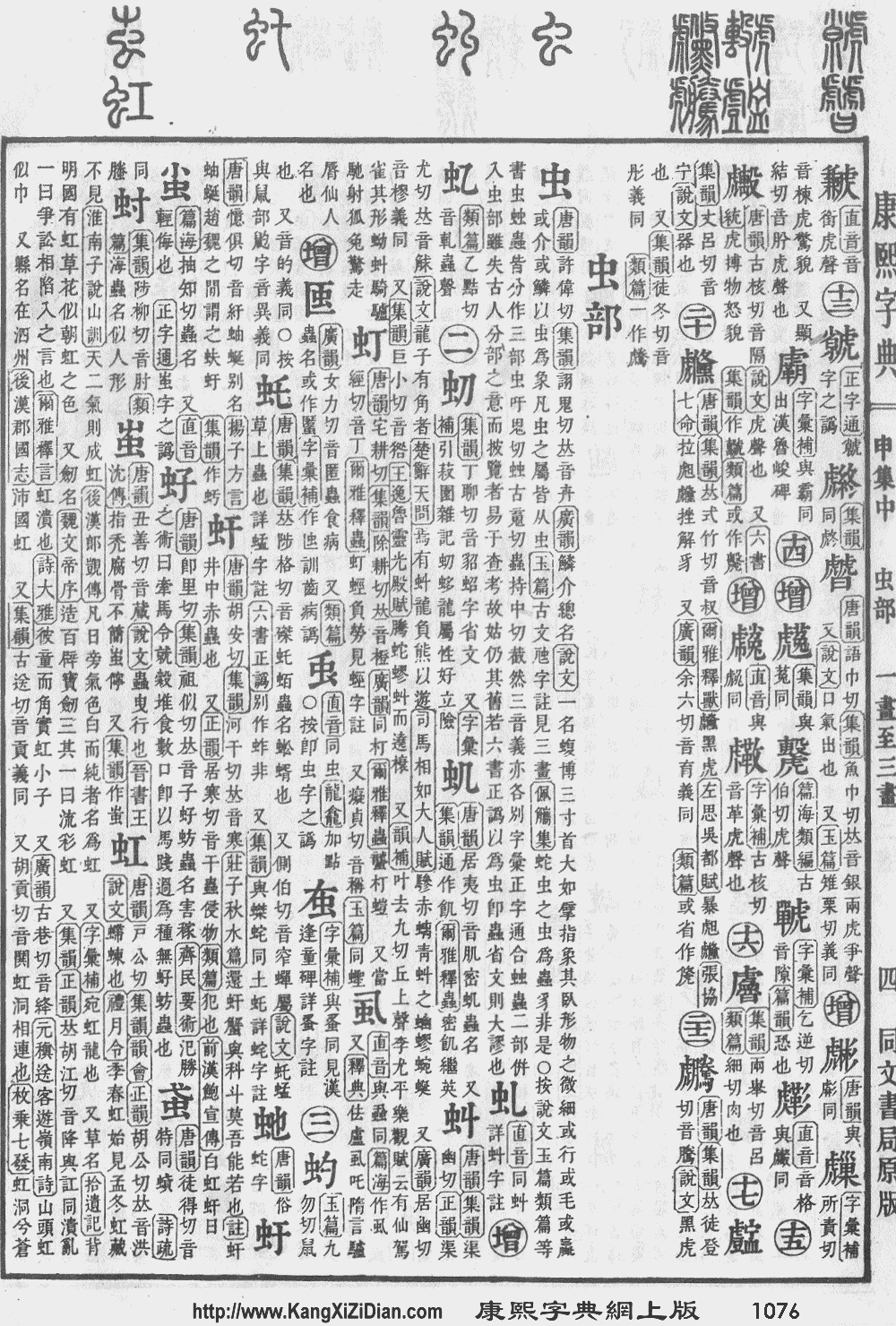
- Kangxi Dictionary: page 1076, character 19
- Dai Kanwa Jiten: character 32804
- Dae Jaweon: page 1545, character 7
- Hanyu Da Zidian (first edition): volume 4, page 2833, character 1
- Unihan data for U+866B
Chinese edit
Glyph origin edit

| Historical forms of the character 虫 | ||
|---|---|---|
| Shang | Western Zhou | Shuowen Jiezi (compiled in Han) |
| Oracle bone script | Bronze inscriptions | Small seal script |

|

|

|
Pictogram (象形) : a snake.
The character originally represented a type of venomous snake, while the derivative 蟲/虫 represented worms and insects (or insect-like things). 虫 was later borrowed for 蟲/虫 (possibly via simplification), and the character 虺 was created to represent the original meaning.
Etymology 1 edit
| For pronunciation and definitions of 虫 – see 蟲 (“insect; bug; worm; etc.”). (This character is the simplified and variant form of 蟲). |
Notes:
|
Etymology 2 edit
| For pronunciation and definitions of 虫 – see 虺 (“venomous snake; snake; etc.”). (This character is an ancient form of 虺). |
Japanese edit
| 虫 | |
| 蟲 |
Kanji edit
(grade 1 “Kyōiku” kanji, shinjitai kanji, kyūjitai form 蟲)
- insect, bug
- generic name for animals
Readings edit
As shinjitai form of 蟲:
- Go-on: じゅう (jū)←ぢゆう (dyuu, historical)
- Kan-on: ちゅう (chū, Jōyō)←ちゆう (tyuu, historical)
- Kun: むし (mushi, 虫, Jōyō)
As the ancient form of 虺:
- Go-on: け (ke)←け (ke, historical)←くゑ (kwe, ancient)
- Kan-on: き (ki)←き (ki, historical)←くゐ (kwi, ancient)
- Kun: まむし (mamushi, 虫)
Compounds edit
Etymology edit

| Kanji in this term |
|---|
| 虫 |
| むし Grade: 1 |
| kun’yomi |
| Alternative spelling |
|---|
| 蟲 (kyūjitai) |
/musi/ → /muɕi/
From Old Japanese, from Proto-Japonic *mosi.
Pronunciation edit
Noun edit
- a bug, insect, worm
- Synonym: 昆虫 (konchū)
- a serpent, snake
- Synonym: 蛇 (hebi)
- 獅子身中の虫
- shishi shinchū no mushi
- a serpent in a lion
- (figurative) a worm (person living for only one thing)
- 本の虫
- hon no mushi
- a bookworm
- 本の虫
- (derogatory) a worm (despicable person)
- a temperament (thought which is in the deep in mind) (Can we verify(+) this sense?)
- 癇の虫
- kan no mushi
- a choleric temperament
- 癇の虫
- (archaic) a male lover
Derived terms edit
- 虫食い (mushikui, “worm-eaten”)
- 虫酸, 虫唾 (mushizu, “heartburn”)
- 虫歯 (mushiba, “bad tooth, dental caries, cavity”)
- 虫偏 (mushihen)
- 虫眼鏡 (mushi megane, “magnifying glass”)
- 青虫 (aomushi)
- 油虫 (aburamushi, “cockroach”)
- 毛虫 (kemushi, “caterpillar”)
- 座頭虫 (zatōmushi, “harvestman”)
- 鈴虫 (suzumushi)
- 長虫 (nagamushi)
- 泣き虫 (nakimushi, “crybaby”)
- 鋏虫, 蠼螋 (hasamimushi, “earwig, maritime earwig”)
- 水虫 (mizumushi)
- 松虫 (matsumushi)
- 蝮 (mamushi, “viper”)
- 弱虫 (yowamushi, “weakling”)
References edit
- ^ Matsumura, Akira, editor (2006), 大辞林 (in Japanese), Third edition, Tōkyō: Sanseidō, →ISBN
- ^ NHK Broadcasting Culture Research Institute, editor (1998), NHK日本語発音アクセント辞典 [NHK Japanese Pronunciation Accent Dictionary] (in Japanese), Tōkyō: NHK Publishing, →ISBN
Korean edit
Etymology 1 edit
From Middle Chinese 蟲 (MC drjuwng).
Hanja edit

虫 (eumhun 벌레 충 (beolle chung))
Etymology 2 edit
From Middle Chinese 虫 (MC xjw+jX).
Hanja edit
References edit
- 국제퇴계학회 대구경북지부 (國際退溪學會 大邱慶北支部) (2007). Digital Hanja Dictionary, 전자사전/電子字典. [1]
Vietnamese edit
Han character edit
虫: Hán Việt readings: trùng (
虫: Nôm readings: tròng[1][2], trùng[1][2], chòng[1], chùng[3]