
式
| ||||||||
Translingual edit
| Stroke order | |||
|---|---|---|---|

| |||
Han character edit
式 (Kangxi radical 56, 弋+3, 6 strokes, cangjie input 戈心一 (IPM), four-corner 43100, composition ⿹弋工)
Derived characters edit
References edit
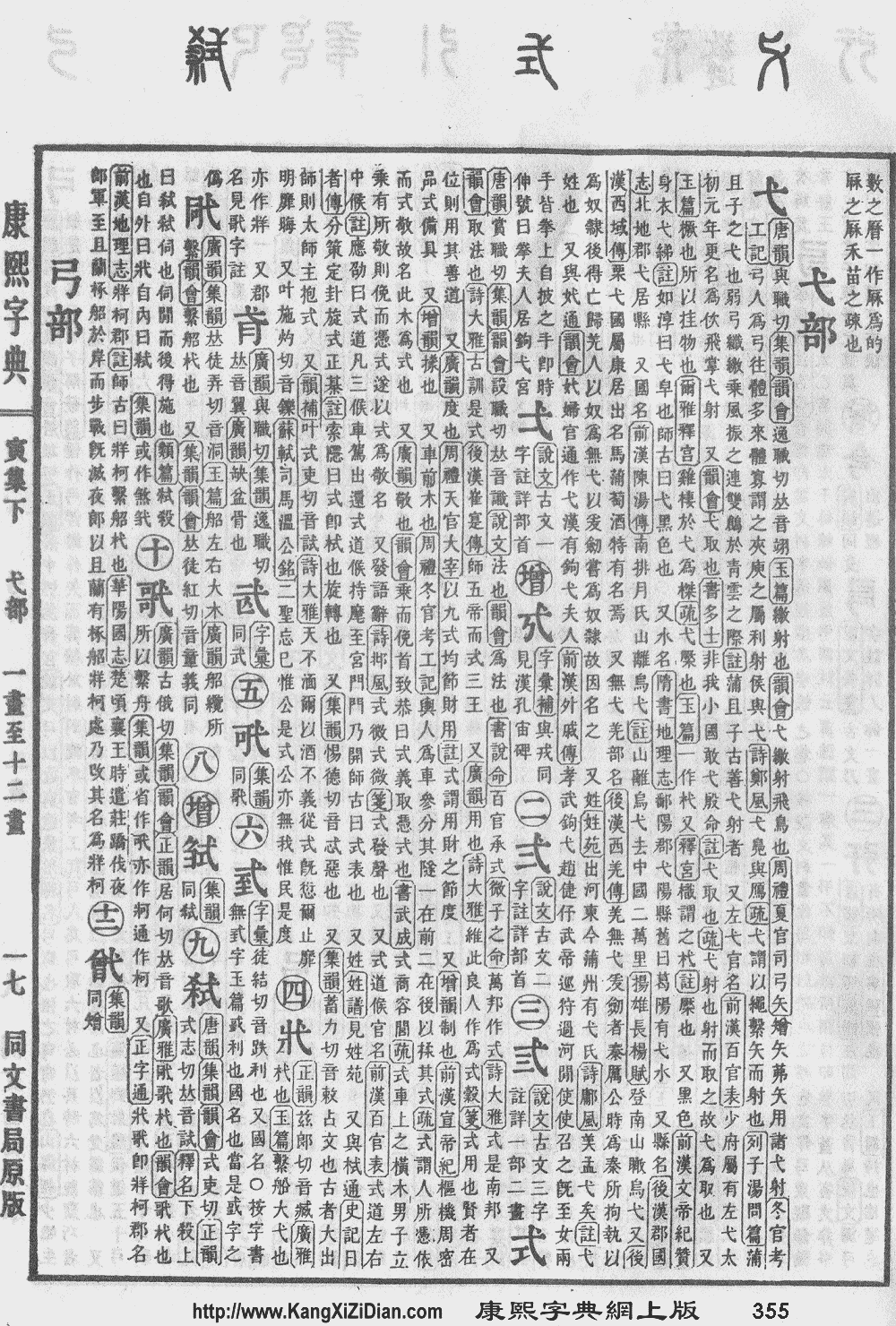
- Kangxi Dictionary: page 355, character 6
- Dai Kanwa Jiten: character 9663
- Hanyu Da Zidian (first edition): volume 1, page 558, character 7
- Unihan data for U+5F0F
Chinese edit
| simp. and trad. |
式 | |
|---|---|---|
Glyph origin edit
| Old Chinese | |
|---|---|
| 戴 | *ʔl'ɯːɡs |
| 襶 | *tɯːɡs |
| 貸 | *l̥ʰɯːɡs |
| 代 | *l'ɯːɡs |
| 袋 | *l'ɯːɡs |
| 岱 | *l'ɯːɡs |
| 黛 | *l'ɯːɡs |
| 玳 | *l'ɯːɡs |
| 帒 | *l'ɯːɡs |
| 甙 | *l'ɯːɡs |
| 酨 | *l'ɯːs, *zlɯːs |
| 試 | *hljɯɡs |
| 弒 | *hljɯɡs |
| 忒 | *l̥ʰɯːɡ |
| 貣 | *l̥ʰɯːɡ, *l'ɯːɡ |
| 鴏 | *l'ɯːɡ |
| 栻 | *l̥ʰɯɡ, *hljɯɡ |
| 侙 | *l̥ʰɯɡ |
| 恜 | *l̥ʰɯɡ |
| 式 | *hljɯɡ |
| 軾 | *hljɯɡ |
| 拭 | *hljɯɡ |
| 鉽 | *hljɯɡ |
| 烒 | *hljɯɡ |
| 弋 | *lɯɡ |
| 芅 | *lɯɡ |
| 黓 | *lɯɡ |
| 隿 | *lɯɡ |
| 杙 | *lɯɡ |
| 釴 | *lɯɡ |
Phono-semantic compound (形聲/形声, OC *hljɯɡ) : phonetic 弋 (OC *lɯɡ) + semantic 工 (“work”).
Pronunciation edit
Definitions edit
式
- (literary, or in compounds) standard; established practice; norm
- (literary, or in compounds) type; style; pattern
- (literary, or in compounds) ritual; ceremony
- (literary, or in compounds) example
- (mathematics, chemistry) formula (Classifier: 條/条 c)
- (grammar) tense
- (grammar) mood; mode
- † to follow the example of
- † to set an example
- † Alternative form of 試/试 (shì, “to apply”)
- † Alternative form of 軾/轼 (shì, “to perform a rite”)
Synonyms edit
- (standard):
- (type):
- (ritual):
- (example):
Compounds edit
- 一依舊式/一依旧式
- 不合式
- 不等式 (bùděngshì)
- 中式 (zhōngshì)
- 主動式/主动式 (zhǔdòngshì)
- 二項式/二项式 (èrxiàngshì)
- 互動式/互动式 (hùdòngshì)
- 他敘式/他叙式
- 代數式/代数式 (dàishùshì)
- 休業式/休业式
- 俏式
- 倍式 (bèishì)
- 儀式/仪式 (yíshì)
- 公因式 (gōngyīnshì)
- 公式 (gōngshì)
- 公式化
- 公文程式
- 公用程式
- 典型足式
- 冷式排版
- 准式
- 分列式 (fēnlièshì)
- 分子式 (fēnzǐshì)
- 分解因式
- 制式 (zhìshì)
- 副程式 (fùchéngshì)
- 化學式/化学式 (huàxuéshì)
- 南式
- 卡式 (kǎshì)
- 原始程式 (yuánshǐ chéngshì)
- 古式 (gǔshì)
- 句式 (jùshì)
- 另式
- 合式
- 各式
- 各式各樣/各式各样 (gèshìgèyàng)
- 告別式/告别式 (gàobiéshì)
- 哈林式
- 哥德式 (gēdéshì)
- 單式教學/单式教学
- 單式預算/单式预算
- 單項式/单项式 (dānxiàngshì)
- 嘴把式
- 因式 (yīnshì)
- 因式分解 (yīnshì fēnjiě)
- 因式定理 (yīnshì dìnglǐ)
- 固定格式
- 國語注音符號第二式/国语注音符号第二式 (Guóyǔ Zhùyīn Fúhào Dì'èr Shì)
- 地毯式
- 型式 (xíngshì)
- 奏鳴曲式/奏鸣曲式 (zòumíngqǔshì)
- 套式
- 奧會模式/奥会模式
- 好把式
- 始業式/始业式
- 威妥瑪式/威妥玛式
- 對式/对式
- 小式
- 布達式/布达式
- 常式
- 式叉摩那
- 式子 (shìzi)
- 式微 (shìwēi)
- 式樣/式样 (shìyàng)
- 式量 (shìliàng)
- 形式 (xíngshì)
- 形式主義/形式主义 (xíngshìzhǔyì)
- 形式美
- 德國模式/德国模式
- 恪守成式
- 恆等式/恒等式 (héngděngshì)
- 應用程式/应用程式 (yìngyòng chéngshì)
- 手提式 (shǒutíshì)
- 打手式
- 打把式
- 把式 (bǎshì)
- 把式匠
- 招式 (zhāoshì)
- 啟動程式/启动程式
- 文化模式
- 新式 (xīnshì)
- 方式 (fāngshì)
- 方程式 (fāngchéngshì)
- 明式家具
- 時式/时式 (shíshì)
- 曲式 (qǔshì)
- 有理式 (yǒulǐshì)
- 服式
- 板式 (bǎnshì)
- 架式
- 格式 (géshì)
- 根式 (gēnshì)
- 株式會社/株式会社 (zhūshì huìshè)
- 楣式
- 楷式
- 樣式/样式 (yàngshì)
- 樂式/乐式
- 模式 (móshì)
- 次程式
- 款式 (kuǎnshì)
- 歐式/欧式 (ōushì)
- 正式 (zhèngshì)
- 母儀足式/母仪足式
- 比手式
- 水冷式
- 法式
- 洋式
- 流於形式/流于形式
- 準式/准式
- 漸趨式微/渐趋式微
- 無理式/无理式
- 營造法式/营造法式
- 版式 (bǎnshì)
- 生活方式 (shēnghuó fāngshì)
- 生產方式/生产方式 (shēngchǎn fāngshì)
- 異位產式/异位产式
- 畢業式/毕业式
- 矜式
- 硬式棒球
- 硬式網球/硬式网球
- 碟式煞車/碟式煞车
- 碟式相機/碟式相机
- 程式 (chéngshì)
- 程式師/程式师
- 程式控制
- 程式規劃/程式规划
- 程式設計/程式设计
- 程式語言/程式语言 (chéngshì yǔyán)
- 稽式
- 立式 (lìshì)
- 筆帖式/笔帖式 (bǐtièshì)
- 等式 (děngshì)
- 算式
- 簡式/简式
- 組合式/组合式
- 練把式/练把式
- 編譯程式/编译程式 (biānyì chéngshì)
- 羅可可式/罗可可式
- 美式 (měishì)
- 美式足球 (měishì zúqiú)
- 老式 (lǎoshì)
- 老把式
- 脈衝式/脉冲式
- 腹式呼吸
- 臥式/卧式 (wòshì)
- 舊式/旧式 (jiùshì)
- 花式 (huāshì)
- 花式撞球
- 花式溜冰 (huāshì liūbīng)
- 花式滑冰
- 菜式 (càishì)
- 蛙式 (wāshì)
- 蝶式 (diéshì)
- 行列式 (hánglièshì)
- 行為模式/行为模式
- 被動式/被动式 (bèidòngshì)
- 複合樣式/复合样式
- 複式/复式 (fùshì)
- 複式教學/复式教学
- 複式路面/复式路面
- 複式關稅/复式关税
- 西式 (xīshì)
- 車式/车式
- 車把式/车把式 (chēbǎshi)
- 軟式/软式 (ruǎnshì)
- 軟式棒球/软式棒球
- 輪式溜冰/轮式溜冰
- 過去式/过去式 (guòqùshì)
- 金相玉式
- 閉幕式/闭幕式 (bìmùshì)
- 開幕式/开幕式 (kāimùshì)
- 防衛方式/防卫方式
- 陣式/阵式
- 電腦程式/电脑程式 (diànnǎo chéngshì)
- 非正式 (fēizhèngshì)
- 體式/体式 (tǐshì)
- 鷹式飛彈/鹰式飞弹
- 齒式/齿式
Japanese edit
Kanji edit
式
Readings edit
- Go-on: しき (shiki, Jōyō)
- Kan-on: しょく (shoku)
- Kun: のり (nori, 式); のっとる (nottoru, 式る)
- Nanori: つね (tsune); のり (nori); もち (mochi)
Noun edit
- type, style
- (mathematics) a formula or expression
- ceremony, ritual, function
Suffix edit
- ceremony
- formula, expression
- style
Compounds edit
Korean edit
Hanja edit
Vietnamese edit
Han character edit
式: Hán Nôm readings: thức, sức
- This term needs a translation to English. Please help out and add a translation, then remove the text
{{rfdef}}.