
辰
| ||||||||
| ||||||||
| ||||||||
Translingual edit
| Stroke order | |||
|---|---|---|---|

| |||
Han character edit

辰 (Kangxi radical 161, 辰+0, 7 strokes, cangjie input 一一一女 (MMMV), four-corner 71232, composition ⿸厂⿱二⿰𠄌⿺乀丿(GJK) or ⿸厂⿸⿱二𠄌⿺乀丿(HTV))
- Kangxi radical #161, ⾠.
Derived characters edit
- Appendix:Chinese radical/辰
- 侲, 㖘, 娠, 帪, 振, 浱, 𪺼, 陙, 桭, 祳, 脤, 𤱼, 䀼, 𪿟, 裖, 𦁄, 𦓶, 蜄, 𧣨, 誫(𫍨), 賑(赈), 䟴, 𨉎, 𨌑, 鋠(𫓵), 𬴶, 𩷩, 𪘝
- 䣅, 𢦿, 敐, 㰮, 㲀, 𣭽, 䫃, 𪁧, 唇, 𪣗, 𡝌, 𫸚, 𢛚, 㫳, 𬅾, 脣, 蜃, 𪓧, 𧒏, 𫤹, 宸, 𡷰, 莀, 晨, 𤲆, 䆣, 震, 𦻼, 𣊤, 𫘾, 曟, 屒, 𢈫, 𭼏, 麎
References edit
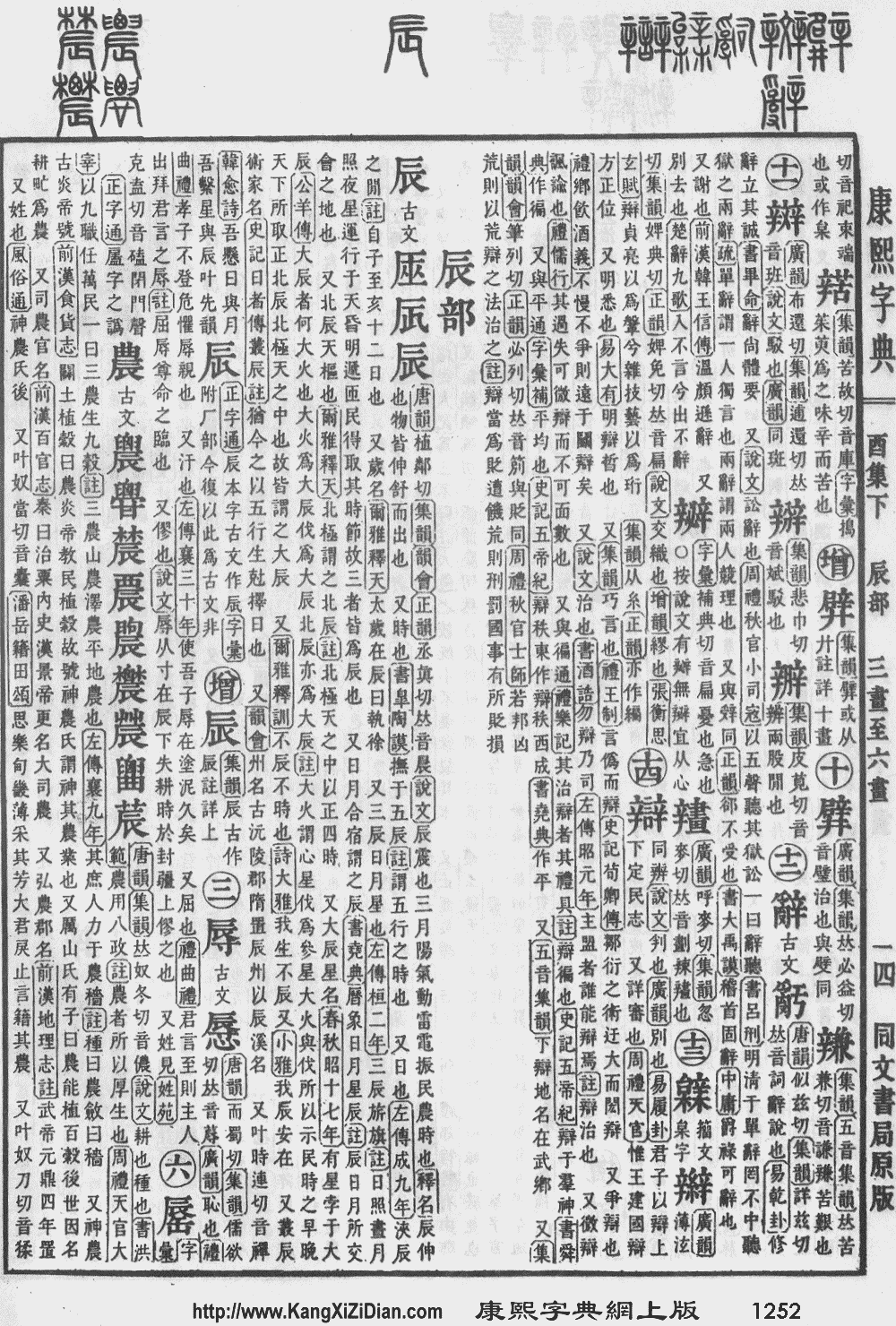
- Kangxi Dictionary: page 1252, character 15
- Dai Kanwa Jiten: character 38682
- Dae Jaweon: page 1733, character 4
- Hanyu Da Zidian (first edition): volume 6, page 3606, character 1
- Unihan data for U+8FB0
Chinese edit
| trad. | 辰 | |
|---|---|---|
| simp. # | 辰 | |
| alternative forms | 𫝕 𨑃 ancient 𨑄 ancient 𠨷 ancient 𠩟 ancient | |
Glyph origin edit
| Historical forms of the character 辰 | |||
|---|---|---|---|
| Shang | Western Zhou | Shuowen Jiezi (compiled in Han) | Liushutong (compiled in Ming) |
| Oracle bone script | Bronze inscriptions | Small seal script | Transcribed ancient scripts |

|

|

|

|
| Old Chinese | |
|---|---|
| 辴 | *tʰɯl, *tʰɯnʔ, *tʰɯn |
| 屒 | *tɯnʔ, *djɯn |
| 振 | *tjɯn, *tjɯns |
| 侲 | *tjɯn, *tjɯn |
| 桭 | *tjɯn, *djɯn |
| 唇 | *tjɯn, *ɦljun |
| 帪 | *tjɯn |
| 賑 | *tjɯnʔ, *tjɯns |
| 裖 | *tjɯnʔ |
| 敐 | *tjɯnʔ, *djɯn |
| 震 | *tjɯn |
| 娠 | *tjɯns, *hljɯn |
| 蜃 | *djɯns, *djɯnʔ, *djins |
| 辰 | *djɯn |
| 晨 | *djɯn, *ɦljɯn |
| 宸 | *djɯn |
| 鷐 | *djɯn |
| 麎 | *djɯn |
| 祳 | *djɯnʔ |
| 脤 | *djɯnʔ |
| 鋠 | *djɯnʔ |
| 磭 | *ŋrɯnʔ, *ŋ̊ʰjaɡ, *ŋaɡ |
| 陙 | *djun |
| 脣 | *ɦljun |
| 漘 | *ɦljun |
Pictogram (象形) – a kind of agricultural tool used for tilling the fields and removing weeds (Guo, 1931; Qiu, 1992), possibly made of a kind of large clam 蜃 (OC *djɯns, *djɯnʔ, *djins) (Guo, 1931).
Alternatively, it could be a pictogram (象形) of a person holding onto a cliff – original character of 振 (OC *tjɯn, *tjɯns, “to hold up”) (Shang, 1983).
Etymology edit
- “to vibrate”
- Related to 震 (OC *tjɯn, “to shake”) and 振 (OC *tjɯn, *tjɯns, “to excite”), from Proto-Sino-Tibetan *dar ~ d(u/i)r (“to tremble; to shiver”) (Schuessler, 2007).
- “fifth earthly branch”
- Norman (1985) suggests that it is from Austroasiatic; compare Proto-Mon-Khmer *t₁la(a)n (“python”), whence Vietnamese trăn, Khmer ថ្លាន់ (thlan), Mon ကၠန် (klɔn). However, Ferlus (2013) points to reconstructions like *dər (Baxter & Sagart) and *ᴸdzɨr (Ferlus) and remarks that those do not match any animal's name in Mainland Southeast Asian (MSEA) languages. Therefore, 辰 might have been associated arbitrarily with the dragon (龍).
- Smith (2011) agrees with the proposal (e.g. by Guo, 1931) that 辰 (OC dən) initially depicted an agricultural implement made from clams' shells and was the original form of 蜃 (OC dəns, “mollusc, clam”); so he proposes that the fifth earthly branch depicted the moon's second waning-gibbous phase, which looks like a clam. He also suggests that 辰 (chén) also represented the ovoid-shaped rising sun and is thus related to 晨 (chén, “early morning”).
- “time”
- From 時 (OC *djɯ, “time”) + nominalizing suffix -n, literally “that which is proceeding” (Schuessler, 2007). This word partially converges with 晨 (OC *djɯn, *ɦljɯn, “morning”) (ibid.).
- “heavenly body”
- The endopassive of 振 (OC *tjɯn, *tjɯns, “to shake; to stir”), literally “to stir oneself”, i.e. “when life begins to stir” > “heavenly bodies that mark time” (ibid.).
Pronunciation edit
Definitions edit
辰
- † to vibrate
- fifth of twelve earthly branches (地支), variously equated with
- time; day; season
- heavenly body; stars
- † (Chinese astronomy) Alternative name for 心宿 (Xīnxiù, “Heart Mansion (one of Twenty-Eight Mansions)”).
- † (Chinese astronomy) Alternative name for 北極星/北极星 (Běijíxīng, “North Star”).
- † Alternative form of 晨 (chén, “early morning”)
- a surname
Coordinate terms edit
- (Chinese earthly branches) 地支 (dìzhī); 子, 丑 (chǒu), 寅 (yín), 卯 (mǎo), 辰 (chén), 巳 (sì), 午 (wǔ), 未 (wèi), 申 (shēn), 酉 (yǒu), 戌, 亥 (hài) (Category: zh:Chinese earthly branches)
Compounds edit
- 丁辰
- 七辰
- 三辰
- 上辰
- 三辰酒
- 不辰
- 二辰
- 五辰
- 他辰
- 令辰
- 休辰
- 伏辰
- 佳辰
- 來辰/来辰
- 俶辰
- 元辰
- 剋辰/克辰
- 剛辰/刚辰
- 北辰 (Běichén)
- 十二辰
- 十二辰堆
- 十二辰屬/十二辰属
- 十二辰神
- 十二辰蟲/十二辰虫
- 卯酉參辰/卯酉参辰
- 參辰/参辰
- 參辰卯酉/参辰卯酉
- 參辰日月/参辰日月
- 及辰
- 叢辰/丛辰
- 司辰
- 吉日良辰
- 吉辰
- 嘉辰
- 嚴辰/严辰
- 四辰
- 壽辰/寿辰 (shòuchén)
- 大辰
- 媽祖誕辰/妈祖诞辰
- 孤辰
- 孤辰合注
- 孤辰寡宿
- 寡宿孤辰
- 帨辰
- 年辰
- 庚辰 (gēngchén)
- 建辰月
- 弁辰
- 弧辰
- 弱辰
- 忌辰 (jìchén)
- 懸弧辰/悬弧辰
- 拱辰
- 指辰
- 拱辰管
- 日月參辰/日月参辰
- 日辰
- 早辰
- 昌辰
- 星辰 (xīngchén)
- 星辰劍/星辰剑
- 時辰/时辰
- 時辰八字/时辰八字 (shíchén bāzì)
- 時辰牌/时辰牌
- 時辰臺/时辰台
- 時辰鐘/时辰钟
- 曩辰
- 朝辰
- 本命辰
- 朱辰
- 正辰
- 比辰
- 泰辰
- 涓辰
- 浹辰/浃辰
- 測辰/测辰
- 火辰
- 炎辰
- 爻辰
- 牝咮鳴辰/牝咮鸣辰
- 生不逢辰 (shēngbùféngchén)
- 生辰 (shēngchén)
- 生辰八字 (shēngchén bāzì)
- 生辰吉帖
- 生辰綱/生辰纲
- 疇辰/畴辰
- 發生辰/发生辰
- 發辰/发辰
- 盼辰勾
- 眾星拱辰/众星拱辰
- 禁火辰
- 私辰
- 移辰
- 窮辰/穷辰
- 簡辰/简辰
- 美景良辰
- 考辰
- 耗磨辰
- 聖辰/圣辰
- 良辰 (liángchén)
- 良辰吉日 (liángchénjírì)
- 良辰媚景
- 良辰美景 (liángchénměijǐng)
- 花辰
- 芳辰
- 花辰月夕
- 蕭辰/萧辰
- 衝辰/冲辰
- 觿辰
- 計辰/计辰
- 設帨佳辰/设帨佳辰
- 誕辰/诞辰 (dànchén)
- 諏辰/诹辰
- 貞辰/贞辰
- 貫月之辰/贯月之辰
- 貫辰/贯辰
- 貿辰/贸辰
- 賤辰/贱辰
- 超辰
- 辰事
- 辰儀/辰仪
- 辰光 (chénguāng)
- 辰刻
- 辰勾
- 辰勾盼月
- 辰參/辰参
- 辰告
- 辰地
- 辰堠
- 辰夜
- 辰太
- 辰宿 (chénxiù)
- 辰尾
- 辰居
- 辰巳
- 辰序
- 辰放氏
- 辰斗
- 辰旆
- 辰旒
- 辰星 (Chénxīng)
- 辰時/辰时 (chénshí)
- 辰晷
- 辰暮
- 辰極/辰极
- 辰河戲/辰河戏
- 辰漢/辰汉
- 辰牌
- 辰牡
- 辰砂 (chénshā)
- 辰精
- 辰緯/辰纬
- 辰衡
- 辰角
- 辰象
- 辰選/辰选
- 辰鑒/辰鉴
- 辰階/辰阶
- 辰韓/辰韩 (Chénhán)
- 辰馬/辰马
- 辰駕/辰驾
- 逢吉丁辰
- 逢辰
- 遠辰/远辰
- 遘辰
- 鐸辰/铎辰
- 陰辰/阴辰
- 陽辰/阳辰
- 霜辰
- 霜露之辰
- 靈辰/灵辰
- 順辰/顺辰
- 餘辰/余辰
- 黃道良辰/黄道良辰
References edit
- (Min Nan) “Entry #3410”, in 臺灣閩南語常用詞辭典 (overall work in Mandarin and Hokkien), Ministry of Education, R.O.C., 2023.
Japanese edit
Kanji edit
(“Jinmeiyō” kanji used for names)
Readings edit
Compounds edit
- 辰韓 (shinkan): the Jinhan confederacy: a twelve-member confederation, located on the southeast of the Korean peninsula during the proto-Three Kingdoms period, later absorbed into the growing Silla kingdom
- 辰刻 (shinkoku): the hour of the dragon: 7:00 AM to 9:00 AM
- 辰刻法 (shinkokuhō): a timekeeping method used during the Edo period, using six hours for the day and six for the night
- 辰沙 (shinsha), 辰砂 (shinsha), 辰砂 (shinsa): cinnabar, mercury sulfide: a common ore of mercury
- 辰砂油 (shinshayu): cinnabar oil, vermilion oil: cinnabar mixed with oil, used to treat dermatitis
- 辰宿 (shinshuku): a constellation
- 辰祭り (tatsu matsuri): "dragon festival": a ceremony in Edo-period Japan, held at the houses of the wealthy in the hour of the dragon on the first day of the dragon after New Years
- 辰松 (Tatsumatsu): the name of a family of traditional Japanese puppeteers
- 辰松風 (Tatsumatsu-fū): a men's hairstyle popular in the middle of the Edo period, popularized by a noted puppeteer of the Takamatsu family
- 辰星 (Shinsei), 辰星 (Tachimiboshi): alternate name for the planet Mercury; alternate name for the star Antares
- 辰年 (tatsudoshi): the year of the dragon under the Chinese zodiac
- 辰巳 (tatsumi): between the dragon and the snake: around 9:00 AM on the clock, or southeast on the compass
- 辰巳下り (tatsumi sagari), 辰巳下 (tatsumi sagari): gentle and refined of speech and manner
- 辰巳上り (tatsumi agari), 辰巳上 (tatsumi agari): shrill and loud of speech, crude and course of manner; a woman from the Fukugawa red-light district in Edo
- 辰巳言葉 (tatsumi kotoba): a slang or argot used by the prostitutes and geisha of the Fukugawa red-light district in Edo
- 辰巳調子 (tatsumi chōshi): shrill and loud of speech, crude and course of manner
- 忌辰 (kishin): deathday; anniversary of a person's death
- 時辰 (jishin): time
- 星辰 (seishin): star
- 誕辰 (tanshin): birthday
- 北辰 (hokushin): North Star; polestar
Etymology 1 edit
| Kanji in this term |
|---|
| 辰 |
| たつ Jinmeiyō |
| kun’yomi |

From the verb たつ (tatsu, “to get up, to take off”) (whence also 竜 (tatsu, “dragon”)), from the notion of a dragon flying.
Pronunciation edit
Proper noun edit
- the Dragon, the fifth of the twelve Earthly Branches
Noun edit
- by extension from the zodiac:
- the name of the year or day corresponding to the fifth in a cycle of twelve
- roughly east-southeast, specifically 30° south of due east (i.e. a bearing of 120°)
- the hour of the dragon, specifically 7:00 AM to 9:00 AM; sometimes treated as 8:00 AM to 10:00 AM instead
- alternate name for 三月 (sangatsu, “the month of March”)
Derived terms edit
- 辰の市 (tatsu no ichi): in the Yamato kingdom of ancient Japan, markets held every day of the dragon
- 辰の一点 (tatsu no itten): the first 30 minutes of the hour of the dragon
- 辰の刻 (tatsu no koku): the hour of the dragon
- 辰の時 (tatsu no toki): the hour of the dragon
- 辰に巻いて巳にこぼす (tatsu ni maite mi ni kobosu): sunny one day, rainy the next
Etymology 2 edit
| Kanji in this term |
|---|
| 辰 |
| しん Jinmeiyō |
| on’yomi |
From Middle Chinese 辰 (dzyin).
Proper noun edit
- the Dragon, the fifth of the twelve Earthly Branches
Korean edit
Etymology 1 edit
From Middle Chinese 辰 (MC dzyin).
| Historical Readings | ||
|---|---|---|
| Middle Korean | ||
| Text | Eumhun | |
| Gloss (hun) | Reading | |
| Hunmong Jahoe, 1527[1] | 별〯 신 | Recorded as Middle Korean 신 (sin) (Yale: sìn) in Hunmong Jahoe (訓蒙字會 / 훈몽자회), 1527. |
| Gwangju Cheonjamun, 1575 | 미르〮 진 | Recorded as Middle Korean 진 (cin) (Yale: cìn) in Hunmong Jahoe (訓蒙字會 / 훈몽자회), 1527. |
| Sinjeung Yuhap, 1576 | 별자리 신 | Recorded as Middle Korean 신 (sin) (Yale: sin) in Sinjeung Yuhap (新增類合 / 신증유합), 1576. |
| Early Modern Korean | ||
| Text | Final (韻) | Reading |
| Samun Seonghwi, 1751 | 별 신 | Recorded as Early Modern Korean 신 (Yale: sin) in Juhae Cheonjamun (註解千字文 / 주해천자문), 1804. |
Pronunciation edit
- (SK Standard/Seoul) IPA(key): [t͡ɕin]
- Phonetic hangul: [진]
Hanja edit

辰 (eumhun 별 진 (byeol jin))
辰 (eumhun 다섯째 지지 진 (daseotjjae jiji jin))
- Hanja form? of 진 (“name of a star”).
- Hanja form? of 진 (“the Dragon, the fifth of the twelve Earthly Branches”).
Compounds edit
Etymology 2 edit
From Middle Chinese 辰 (MC dzyin).
| Historical Readings | ||
|---|---|---|
| Dongguk Jeongun Reading | ||
| Dongguk Jeongun, 1448 | Recorded as Middle Korean 씬 (Yale: ssìn) in Dongguk Jeongun (東國正韻 / 동국정운), 1448. | |
| Early Modern Korean | ||
| Text | Final (韻) | Reading |
| Samun Seonghwi, 1751 | ᄯᅢ 신 | Recorded as Early Modern Korean 신 (Yale: sin) in Juhae Cheonjamun (註解千字文 / 주해천자문), 1804. |
Pronunciation edit
- (SK Standard/Seoul) IPA(key): [ɕʰin]
- Phonetic hangul: [신]
Hanja edit
Compounds edit
Usage notes edit
The semantics of the readings of this Hanja are irregular with the exception of when "진 (辰, jin)" is used to mean "the Dragon, the fifth of the twelve Earthly Branches" or certain historical placenames. The reading may not semantically match its corresponding 음훈 (音訓, eumhun, “reading of the sound and meaning”).
References edit
- 국제퇴계학회 대구경북지부 (國際退溪學會 大邱慶北支部) (2007). Digital Hanja Dictionary, 전자사전/電子字典. [2]
Vietnamese edit
Han character edit
辰: Hán Nôm readings: thìn, thần, thì
- chữ Hán form of Thìn (“fifth of the twelve earthly branches”).