
文
| ||||||||
| ||||||||
| ||||||||
Translingual edit
| Stroke order | |||
|---|---|---|---|

| |||
Han character edit

文 (Kangxi radical 67, 文+0, 4 strokes, cangjie input 卜大 (YK), four-corner 00400, composition ⿱亠乂)
- Kangxi radical #67, ⽂.
Derived characters edit
- Appendix:Chinese radical/文
- 伩, 𪞙, 𭃉, 呅, 坟, 妏, 𪦹, 㞶, 𪫋, 忟, 抆, 汶, 𤝋, 𫔻, 这, 𢪖, 旼, 𣐀, 炆, 𭷏, 玟, 𫠇, 𪽌, 𪽼, 盿, 砇, 𮂹, 𥩛, 𭙁, 𥸹, 紋(纹), 蚊, 𫌴, 𡲈, 鈫, 馼(𫘜), 䰚, 魰, 𪊙, 𬍆, 鼤
- 刘, 𠠼, 対, 彣, 𫾨, 𬀫, 𦍢, 𦐑, 𮥷, 𮨂, 𩖣, 𩢌, 鳼(𪉃), 㓙, 㐎, 齐, 吝, 𡵡, 忞, 𪰎, 𦙟, 彥, 紊, 蚉, 𧴻, 產, 𩵳, 鴍(𬸀), 𪐰, 螡, 䘇
- 㞵, 芠, 旻, 𬐅, 𥄐, 𥫾, 𦐐, 𮍧, 𠳵, 𦍡, 𬜰, 雯, 𪪍, 𤵒, 虔, 𪊓, 閔(闵), 𪢨, 辬, 𣈝, 𨔉
Descendants edit
- 𘱒 (Khitan Small Script)
References edit
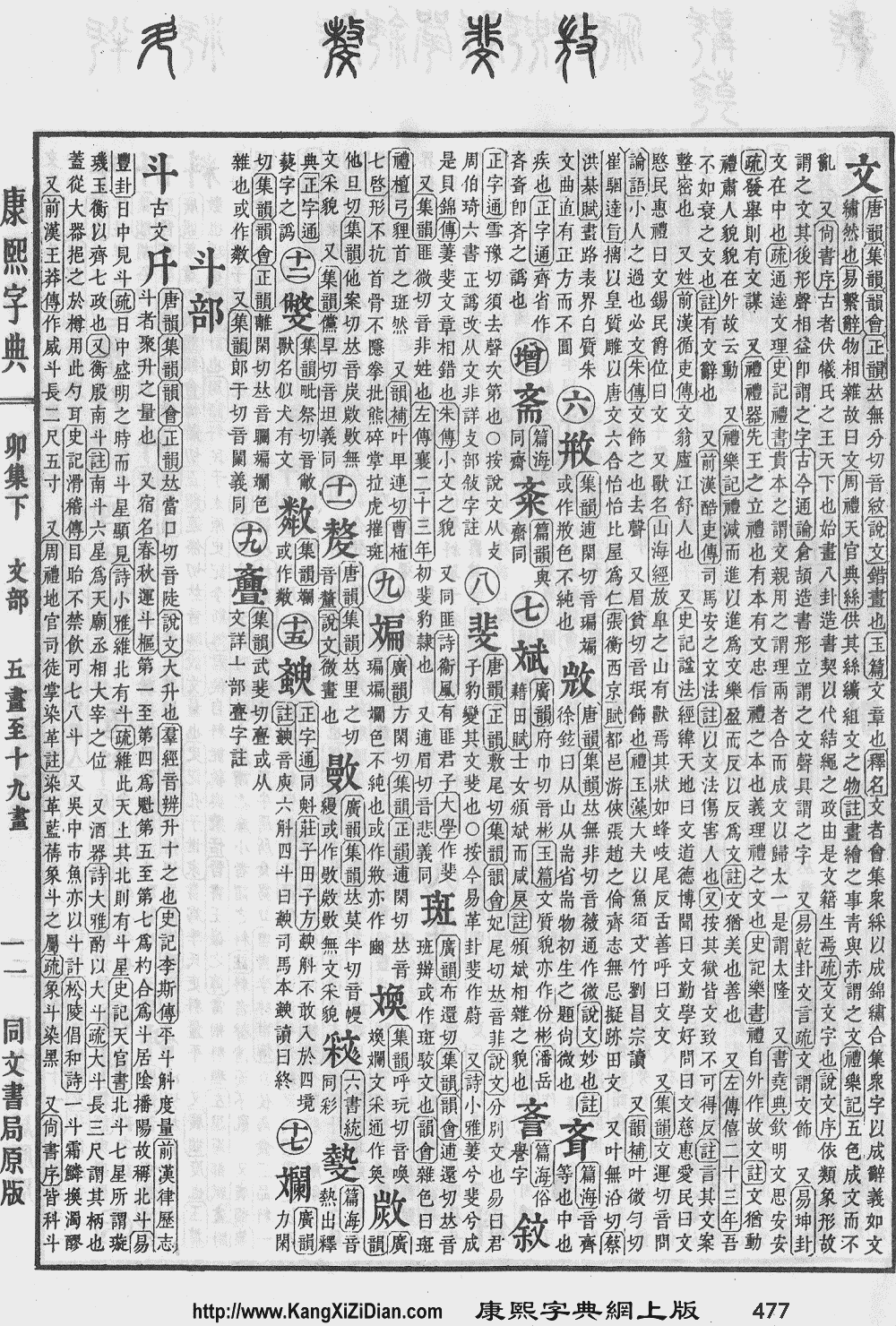
- Kangxi Dictionary: page 477, character 1
- Dai Kanwa Jiten: character 13450
- Dae Jaweon: page 831, character 39
- Hanyu Da Zidian (first edition): volume 3, page 2169, character 1
- Unihan data for U+6587
Chinese edit
| simp. and trad. |
文 | |
|---|---|---|
| alternative forms | 彣 | |
Glyph origin edit
| Historical forms of the character 文 | ||||
|---|---|---|---|---|
| Shang | Western Zhou | Warring States | Shuowen Jiezi (compiled in Han) | Liushutong (compiled in Ming) |
| Oracle bone script | Bronze inscriptions | Chu slip and silk script | Small seal script | Transcribed ancient scripts |

|

|

|

|

|
Ideogram (指事) : a man with a painted or tattooed chest – original form of 紋. In current form, tattoo has vanished, so simply an outline of a man (head, outstretched arms, legs, chest). Compare 大, which has no chest.
Etymology edit
Possibly a derivation, with -n nominal suffix, of 煤 (*mɯː) "soot (obs.), ink (obs.), coal" (Schuessler, 2007).
Semantic shift: "pattern, tattoo (made of soot)", "written glyph (made of ink)" > "literature" > "refined, cultured" (Schuessler, 2007).
Pronunciation 1 edit
Definitions edit
文
- † Original form of 紋/纹 (wén, “mark, pattern, design, tattoo, decoration”).
- 文如貍/文如狸 [Classical Chinese] ― wén rú lí [Pinyin] ― having a pattern like that of a wild cat
- Original form of 紋/纹 (wén rú lí, “to tattoo”).
- writing; literary composition; literature (Classifier: 篇 c)
- official document
- literary language; Literary Chinese
- 半文半白 ― bànwénbànbái ― half literary, half vernacular
- Short for 文讀/文读 (wéndú, “literary reading”).
- script; written form
- (written) language
- culture
- liberal arts; humanities
- natural or social phenomenon
- ritual; etiquette
- of a government position, non-military: civil, civilian
- gentle; refined
- 47th tetragram of the Taixuanjing; "pattern, repetition" (𝌴)
- (archaic) Classifier for coins.
- (numismatics) mill (a tenth of a cent)
- (~日) (telegraphy) the twelfth day of a month
- 文夕大火 ― Wénxī Dàhuǒ ― 1938 Changsha fire
- a surname
- 文天祥 ― Wén Tiānxiáng ― Wen Tianxiang (Chinese politician and poet in the last years of the Southern Song Dynasty)
Pronunciation 2 edit
Definitions edit
文
Pronunciation 3 edit
| For pronunciation and definitions of 文 – see 蚊 (“(Cantonese) yuan; dollar; buck”). (This character is a variant form of 蚊). |
Compounds edit
- 一代文宗
- 一文
- 一文不值 (yīwénbùzhí)
- 一文不名 (yīwénbùmíng)
- 一文半文
- 一文如命
- 一文錢/一文钱
- 一紙空文/一纸空文 (yīzhǐkōngwén)
- 上下文 (shàngxiàwén)
- 上文 (shàngwén)
- 下文 (xiàwén)
- 上梁文
- 下行文
- 不值一文 (bùzhíyīwén)
- 不名一文 (bùmíngyīwén)
- 不成文 (bùchéngwén)
- 不成文法 (bùchéngwénfǎ)
- 不文
- 不文不武
- 不直一文
- 不立文字
- 中古文
- 中國文字/中国文字
- 中文 (zhōngwén)
- 中文內碼/中文内码
- 中文電腦/中文电脑
- 丹文
- 主文
- 主文譎諫/主文谲谏
- 乃文乃武
- 乃武乃文
- 尹文
- 尹文子
- 九文
- 九錫文/九锡文
- 乾文/干文
- 乾文車/干文车
- 事文類聚/事文类聚
- 二文
- 五千文
- 互文 (hùwén)
- 人文 (rénwén)
- 人文主義/人文主义 (rénwén zhǔyì)
- 人文教育
- 人文景觀/人文景观 (rénwén jǐngguān)
- 人文科學/人文科学 (rénwén kēxué)
- 人文薈萃/人文荟萃
- 今文 (jīnwén)
- 今文學/今文学
- 今文家
- 今文尚書/今文尚书
- 今文經/今文经
- 今文經學/今文经学
- 以文害辭/以文害辞
- 以文會友/以文会友
- 以文為詩/以文为诗
- 仰韶文化
- 伾文
- 佚文
- 作文 (zuòwén)
- 作文章
- 佉盧文字/佉卢文字
- 佳文
- 來文/来文
- 佩文詩韻/佩文诗韵
- 佩文韻府/佩文韵府
- 俗下文字
- 侮文
- 便文
- 俗文學/俗文学
- 修文
- 倒文
- 倍文
- 俳文
- 修文偃武
- 修文郎
- 俳諧文/俳谐文
- 偃兵脩文
- 做戲文/做戏文
- 偈文 (jìwén)
- 做文章 (zuò wénzhāng)
- 偃武修文
- 偃武崇文
- 偃武興文/偃武兴文
- 偃武行文
- 偃武覿文/偃武觌文
- 偽造文書/伪造文书
- 偃革尚文
- 傍文
- 備文/备文
- 傷痕文學/伤痕文学 (shānghén wénxué)
- 傳統文化/传统文化
- 傳記文學/传记文学
- 儀文/仪文
- 優文/优文
- 允文
- 允文允武
- 兆文
- 兒童文學/儿童文学
- 入文出武
- 內文案/内文案
- 全中文
- 全唐文
- 全文 (quánwén)
- 全文檢索/全文检索
- 八文十二
- 八股文 (bāgǔwén)
- 八股文章
- 六文
- 公文 (gōngwén)
- 公文帖
- 公文旅行
- 公文程式
- 六朝文
- 具文
- 典文
- 典章文物
- 冊文/册文
- 冒文
- 冰文
- 出土文物
- 出文入武
- 分文 (fēnwén)
- 分文不值
- 分文不取 (fēnwénbùqǔ)
- 分文不直
- 分文不破
- 分文未取
- 刊文 (kānwén)
- 判文
- 初文 (chūwén)
- 刺文
- 刻文
- 刺文褲/刺文裤
- 刻石文
- 前文 (qiánwén)
- 前文人
- 剝文/剥文
- 副文化
- 劄文
- 北山文
- 北山移文
- 千字文 (Qiānzìwén)
- 千文
- 半文不白
- 半文半白 (bànwénbànbái)
- 半文盲 (bànwénmáng)
- 卑南文化
- 卓文君
- 博文 (bówén)
- 博文約禮/博文约礼 (bówényuēlǐ)
- 卦文
- 印加文明
- 印文
- 厚貌深文
- 原文 (yuánwén)
- 原文書/原文书
- 反文
- 反文兒/反文儿
- 反文化
- 反文旁 (fǎnwénpáng)
- 反文邊/反文边 (fǎnwénbiān)
- 反面文章
- 受文者
- 口頭文學/口头文学
- 古典文學/古典文学
- 另文
- 史文 (shǐwén)
- 古文 (gǔwén)
- 右文
- 司文
- 古文字 (gǔwénzì)
- 古文家
- 古文尚書/古文尚书
- 古文經/古文经
- 古文經學/古文经学
- 古文舊書/古文旧书
- 古文觀止/古文观止 (Gǔwén Guānzhǐ)
- 右文說/右文说
- 古文運動/古文运动
- 司文郎
- 句文錦/句文锦
- 另有下文
- 古璽文/古玺文
- 史闕文/史阙文
- 合同文字
- 名文
- 吏文
- 吐文
- 吃文
- 同文 (tóngwén)
- 同文共規/同文共规
- 同文共軌/同文共轨
- 同文寺
- 同文算指
- 同文韻統/同文韵统
- 同文館/同文馆
- 同軌同文/同轨同文
- 吉金文
- 吾家龍文/吾家龙文
- 告急文書/告急文书 (gàojí wénshū)
- 呈文 (chéngwén)
- 告文
- 含文
- 和文 (héwén)
- 周文
- 咒文 (zhòuwén)
- 周文王
- 哀文
- 咨文 (zīwén)
- 咬文嚙字/咬文啮字
- 咬文嚼字 (yǎowénjiáozì)
- 咬文齧字/咬文啮字
- 哈薩克文/哈萨克文
- 哥巴文 (Gēbāwén)
- 唐文
- 唾地成文
- 唱文書/唱文书
- 唱經文/唱经文
- 單文/单文
- 喬文假醋/乔文假醋
- 單文孤證/单文孤证
- 喬文物/乔文物
- 四六文 (sìliùwén)
- 四出文錢/四出文钱
- 四書文/四书文
- 回向文
- 回文 (huíwén)
- 回文機/回文机
- 回鶻文/回鹘文 (huíhúwén)
- 固有文化
- 國情咨文/国情咨文 (Guóqíng Zīwén)
- 國文/国文 (guówén)
- 國語文/国语文
- 國防文學/国防文学
- 圖文/图文 (túwén)
- 圖文並茂/图文并茂 (túwénbìngmào)
- 圖文傳播/图文传播
- 圖畫文字/图画文字
- 地下修文
- 地文 (dìwén)
- 垂文
- 執憑文帖/执凭文帖
- 執文害意/执文害意
- 報告文學/报告文学 (bàogào wénxué)
- 報導文學/报导文学
- 墓文
- 壯文/壮文 (zhuàngwén)
- 壽文/寿文
- 外文 (wàiwén)
- 多文
- 多文為富/多文为富
- 大做文章 (dàzuòwénzhāng)
- 大塊文章/大块文章
- 大文
- 大文衡
- 大文豪
- 大河文化
- 大眾文化/大众文化 (dàzhòng wénhuà)
- 大眾文學/大众文学
- 大眾語文/大众语文
- 天下文宗
- 天文 (tiānwén)
- 天文單位/天文单位 (tiānwén dānwèi)
- 天文地理
- 天文學/天文学 (tiānwénxué)
- 天文座標/天文座标
- 天文攝影/天文摄影 (tiānwén shèyǐng)
- 天文數字/天文数字 (tiānwén shùzì)
- 天文時/天文时
- 天文生 (tiānwénshēng)
- 天文臺/天文台 (tiānwéntái)
- 天文鐘/天文钟
- 天文院
- 天文館/天文馆 (tiānwénguǎn)
- 奇文 (qíwén)
- 奇文共賞/奇文共赏 (qíwéngòngshǎng)
- 奇文瑰句
- 契丹文
- 契文
- 奎文 (Kuíwén)
- 契文舉例/契文举例
- 套文
- 奠文
- 女子文戲/女子文戏
- 女真文 (nǚzhēnwén)
- 姬文
- 孔壁古文
- 字順文從/字顺文从
- 孤文斷句/孤文断句
- 孤文隻義/孤文只义
- 孫文/孙文
- 孫文學說/孙文学说
- 學位論文/学位论文
- 學年論文/学年论文
- 學文/学文
- 宇文 (Yǔwén)
- 守文
- 宇文周
- 宇文氏
- 宋文
- 官樣文章/官样文章 (guānyàngwénzhāng)
- 宮廷文學/宫廷文学
- 宸文
- 寒文
- 實用文/实用文
- 寶文/宝文
- 寺洼文化
- 封禪文/封禅文
- 對文/对文
- 小品文
- 小文 (xiǎowén)
- 少文
- 尚文 (shàngwén)
- 屬文/属文 (zhǔwén)
- 山文
- 山林文學/山林文学
- 峻文
- 崇文 (chóngwén)
- 崇文總目/崇文总目
- 崇文觀/崇文观
- 崇文門/崇文门
- 崇文院
- 崇文館/崇文馆
- 巨文
- 巧文
- 左文
- 巨石文化
- 市民文學/市民文学
- 帖文
- 帝文
- 平文 (píngwén)
- 平民文學/平民文学
- 平行文
- 幽文
- 序文 (xùwén)
- 廋文
- 廟堂文學/庙堂文学
- 廣捕文書/广捕文书
- 廣文/广文
- 廣文先生/广文先生
- 廣文館/广文馆
- 廣緝文書/广缉文书
- 建安文學/建安文学
- 弄文
- 弄文輕武/弄文轻武
- 弄法舞文
- 弔文/吊文
- 引文 (yǐnwén)
- 弘文館/弘文馆
- 弘正文學/弘正文学
- 強文/强文
- 強文假醋/强文假醋
- 彈文/弹文
- 彌文/弥文
- 彌生文化/弥生文化
- 彝文
- 形同具文
- 彬彬文質/彬彬文质
- 彫文/雕文
- 彩陶文化
- 律文
- 徒陳空文/徒陈空文
- 微文
- 微文深詆/微文深诋
- 徵文/征文 (zhēngwén)
- 德文 (déwén)
- 徽文
- 思文
- 恆文/恒文
- 情文
- 惠文
- 惡文/恶文
- 悲文
- 悼文 (dàowén)
- 情文並茂/情文并茂
- 惠文冠
- 愛琴文化/爱琴文化
- 慘文/惨文
- 慧文
- 慧業文人/慧业文人
- 憑文/凭文
- 應用文/应用文 (yìngyòngwén)
- 懷文抱質/怀文抱质
- 懿文
- 成文 (chéngwén)
- 成文憲法/成文宪法
- 成文法 (chéngwénfǎ)
- 戰文/战文
- 戲文/戏文 (xìwén)
- 戲文子弟/戏文子弟
- 才兼文武
- 手文
- 抒情文 (shūqíngwén)
- 投文
- 批文 (pīwén)
- 投文牌
- 抗議文學/抗议文学
- 拉丁文 (lādīngwén)
- 押座文
- 披文
- 拋文/抛文
- 拘文
- 押文字
- 拘文牽俗/拘文牵俗
- 拘文牽義/拘文牵义
- 招文袋
- 拽文
- 拼音文字 (pīnyīn wénzì)
- 掌上觀文/掌上观文
- 掉文
- 掌文
- 掰文兒/掰文儿
- 掉文袋
- 換字文章/换字文章
- 揚文/扬文
- 提文 (tíwén)
- 換文/换文
- 揆文奮武/揆文奋武
- 摛文
- 撰文 (zhuànwén)
- 收文
- 攷文
- 放屁文字
- 政治文化
- 敘事文/叙事文
- 敘文/叙文 (xùwén)
- 敕文
- 散文 (sǎnwén)
- 散文詩/散文诗 (sǎnwénshī)
- 敦煌變文/敦煌变文
- 敬文
- 敷文
- 文丈
- 文丑 (wénchǒu)
- 文丐
- 文不加點/文不加点 (wénbùjiādiǎn)
- 文不對題/文不对题 (wénbùduìtí)
- 文不盡意/文不尽意
- 文世
- 文中子
- 文中虎
- 文事
- 文人 (wénrén)
- 文人化
- 文人學士/文人学士 (wénrénxuéshì)
- 文人無行/文人无行
- 文人畫/文人画
- 文人相輕/文人相轻 (wénrénxiāngqīng)
- 文人雅士
- 文人墨士
- 文人墨客 (wénrénmòkè)
- 文什
- 文令
- 文以載道/文以载道 (wényǐzàidào)
- 文件 (wénjiàn)
- 文件旅遊/文件旅游
- 文伯
- 文似其人
- 文例
- 文俗
- 文倒
- 文修武偃
- 文修武備/文修武备
- 文偃
- 文備/文备
- 文傑/文杰
- 文㑳㑳/文㑇㑇
- 文債/文债
- 文僚
- 文價/文价
- 文儈/文侩
- 文儀/文仪
- 文儒
- 文光
- 文光果
- 文公尺
- 文公帕
- 文公紅/文公红
- 文具 (wénjù)
- 文典
- 文冊/文册
- 文冕
- 文冢
- 文几
- 文刻
- 文刺
- 文制
- 文券
- 文則/文则
- 文剪公
- 文劄
- 文劍/文剑
- 文劾
- 文勛/文勋
- 文勝/文胜
- 文勢/文势
- 文化 (wénhuà)
- 文化事業/文化事业
- 文化交流 (wénhuà jiāoliú)
- 文化人 (wénhuàrén)
- 文化區/文化区
- 文化參贊/文化参赞
- 文化宮/文化宫 (wénhuàgōng)
- 文化層/文化层
- 文化村
- 文化模式
- 文化水準/文化水准
- 文化特質/文化特质
- 文化生活
- 文化變遷/文化变迁
- 文化買辦/文化买办
- 文化資產/文化资产
- 文化遺產/文化遗产 (wénhuà yíchǎn)
- 文化館/文化馆 (wénhuàguǎn)
- 文化體系/文化体系
- 文匠
- 文匣
- 文匯閣/文汇阁
- 文卷
- 文友
- 文句 (wénjù)
- 文史 (wénshǐ)
- 文吏
- 文名 (wénmíng)
- 文同
- 文君
- 文告 (wéngào)
- 文君司馬/文君司马
- 文君壚/文君垆
- 文君新寡
- 文君早寡
- 文君當壚/文君当垆
- 文君酒
- 文命
- 文品
- 文員/文员 (wényuán)
- 文囓/文啮
- 文囿
- 文圃
- 文園/文园
- 文園消渴/文园消渴
- 文園渴/文园渴
- 文園渴病/文园渴病
- 文園病/文园病
- 文園病渴/文园病渴
- 文圓質方/文圆质方
- 文堂
- 文場/文场 (wénchǎng)
- 文報/文报
- 文報局/文报局
- 文塞
- 文境
- 文墀
- 文壇/文坛 (wéntán)
- 文士 (wénshì)
- 文契
- 文奏
- 文奩/文奁
- 文如其人 (wénrúqírén)
- 文妖
- 文始
- 文姝
- 文姦濟惡/文奸济恶
- 文娛/文娱 (wényú)
- 文姬入塞
- 文娛活動/文娱活动
- 文婪武嬉
- 文子同升
- 文子文孫/文子文孙
- 文字 (wénzì)
- 文字交
- 文字傳播/文字传播
- 文字學/文字学 (wénzìxué)
- 文字改革 (wénzì gǎigé)
- 文字獄/文字狱 (wénzìyù)
- 文字畫/文字画
- 文字癖
- 文字禪/文字禅
- 文字緣/文字缘
- 文字飲/文字饮
- 文孫/文孙
- 文學/文学 (wénxué)
- 文學史/文学史 (wénxuéshǐ)
- 文學家/文学家 (wénxuéjiā)
- 文學批評/文学批评 (wénxué pīpíng)
- 文學語言/文学语言 (wénxué yǔyán)
- 文學革命/文学革命 (wénxué gémìng)
- 文宗 (Wénzōng)
- 文官 (wénguān)
- 文定 (wéndìng)
- 文宗學府/文宗学府
- 文官果
- 文官花
- 文宗閣/文宗阁
- 文宣 (wénxuān)
- 文客
- 文宣王
- 文家
- 文宿
- 文實/文实
- 文察
- 文履
- 文山 (Wénshān)
- 文山會海/文山会海
- 文峰 (Wénfēng)
- 文工
- 文工團/文工团 (wéngōngtuán)
- 文工隊/文工队
- 文巧
- 文布
- 文帚
- 文帖
- 文帥/文帅
- 文師/文师
- 文席
- 文帳/文帐
- 文幌
- 文幹/文干
- 文序
- 文府
- 文庠
- 文庫/文库 (wénkù)
- 文康
- 文廕/文荫
- 文廟/文庙 (wénmiào)
- 文建會/文建会
- 文弊
- 文引
- 文弛武玩
- 文弱 (wénruò)
- 文弱書生/文弱书生 (wénruòshūshēng)
- 文形
- 文彥/文彦
- 文彩 (wéncǎi)
- 文彰
- 文律
- 文從/文从
- 文從字順/文从字顺
- 文復會/文复会
- 文德 (wéndé)
- 文德武功
- 文德殿
- 文德班
- 文徽
- 文心
- 文心雕龍/文心雕龙
- 文思 (wénsī)
- 文性
- 文思泉湧/文思泉涌
- 文思院
- 文恬武嬉
- 文情 (wénqíng)
- 文惡/文恶
- 文惠
- 文情並茂/文情并茂
- 文意
- 文愧金聲/文愧金声
- 文憲/文宪
- 文憑/文凭 (wénpíng)
- 文成 (Wénchéng)
- 文成公主
- 文成履
- 文戰/文战
- 文戲/文戏
- 文房 (wénfáng)
- 文房四侯
- 文房四士
- 文房四寶/文房四宝 (wénfángsìbǎo)
- 文房四物
- 文房四藝/文房四艺
- 文才 (wéncái)
- 文扎
- 文扮
- 文抄公
- 文按
- 文探
- 文搜丁甲
- 文摘 (wénzhāi)
- 文擅彫龍/文擅雕龙
- 文攝/文摄
- 文攤/文摊
- 文政
- 文教 (wénjiào)
- 文敏
- 文敘子/文叙子
- 文敝
- 文文
- 文文仔笑 (bûn-bûn-á-chhiò) (Min Nan)
- 文文莫莫
- 文文墨墨
- 文旆
- 文旄
- 文旌
- 文旛
- 文旦 (wéndàn)
- 文旨
- 文明 (wénmíng)
- 文昌 (Wénchāng)
- 文明人 (wénmíngrén)
- 文明古國/文明古国
- 文昌君
- 文昌帝
- 文昌帝君 (Wénchāng Dìjūn)
- 文明戲/文明戏 (wénmíngxì)
- 文昌星
- 文明棍 (wénmínggùn)
- 文明生產/文明生产
- 文明病
- 文昌省
- 文明結婚/文明结婚
- 文昌纏斗
- 文明腳/文明脚
- 文昌臺/文昌台
- 文明詞/文明词
- 文昌魚/文昌鱼 (wénchāngyú)
- 文星
- 文昭
- 文星和合
- 文昭武穆
- 文星高照
- 文景
- 文景之治
- 文曆/文历
- 文曜
- 文曲 (wénqǔ)
- 文曲星
- 文書/文书 (wénshū)
- 文書房/文书房
- 文書爻/文书爻
- 文書管理/文书管理
- 文書處理/文书处理
- 文書認證/文书认证
- 文書鑑定/文书鉴定
- 文曹
- 文會/文会 (wénhuì)
- 文服
- 文望
- 文期酒會/文期酒会
- 文木
- 文本 (wénběn)
- 文札
- 文朴
- 文杏
- 文林 (wénlín)
- 文林果
- 文東武西/文东武西
- 文林郎
- 文柄
- 文柏
- 文格
- 文案 (wén'àn)
- 文案孔目
- 文梁
- 文梓
- 文梭
- 文棟/文栋
- 文業/文业
- 文楸
- 文榭
- 文榱
- 文榜
- 文樓/文楼
- 文樂/文乐
- 文標/文标
- 文樂傀儡/文乐傀儡
- 文檔/文档 (wéndàng)
- 文檄
- 文款
- 文武 (wénwǔ)
- 文武之道
- 文武全才
- 文武兼備/文武兼备
- 文武兼濟/文武兼济
- 文武兼資/文武兼资
- 文武場/文武场
- 文武士
- 文武差事
- 文武才
- 文武挑兒/文武挑儿
- 文武火
- 文武班
- 文武百官 (wénwǔbǎiguān)
- 文武雙全/文武双全 (wénwǔshuāngquán)
- 文歷/文历
- 文殊 (Wénshū)
- 文殊師利/文殊师利 (Wénshūshīlì)
- 文毋害
- 文母
- 文氓
- 文氣/文气 (wénqì)
- 文水 (Wénshuǐ)
- 文江
- 文江學海/文江学海
- 文治 (wénzhì)
- 文法 (wénfǎ)
- 文法吏
- 文法學/文法学
- 文治武力
- 文治武功 (wénzhìwǔgōng)
- 文派
- 文流
- 文津閣/文津阁
- 文海
- 文深
- 文深之柱
- 文深網密/文深网密
- 文淵閣/文渊阁
- 文游臺/文游台
- 文滙閣/文滙阁
- 文源閣/文源阁
- 文溯閣/文溯阁
- 文漪
- 文漵子
- 文澆/文浇
- 文澳 (Wén'ào)
- 文瀾/文澜
- 文瀾閣/文澜阁
- 文火 (wénhuǒ)
- 文炳雕龍/文炳雕龙
- 文烈
- 文無/文无
- 文焰
- 文無加點/文无加点
- 文無害/文无害
- 文無點易/文无点易
- 文燕
- 文燭/文烛
- 文牒
- 文牘/文牍 (wéndú)
- 文牘主義/文牍主义
- 文物 (wénwù)
- 文物聲明/文物声明
- 文犀
- 文犧/文牺
- 文狀/文状
- 文狐
- 文狸
- 文獄/文狱
- 文獸/文兽
- 文獻/文献 (wénxiàn)
- 文獻之家/文献之家
- 文獻通考/文献通考 (Wénxiàn Tōngkǎo)
- 文王 (Wénwáng)
- 文王操
- 文王有聲/文王有声
- 文王課/文王课
- 文玉樹/文玉树
- 文玩 (wénwán)
- 文珠蘭/文珠兰
- 文理 (wénlǐ)
- 文瑞
- 文瑞樓/文瑞楼
- 文瑤/文瑶
- 文璫/文珰
- 文甲
- 文界
- 文畝/文亩
- 文異/文异
- 文畫/文画
- 文疏
- 文痞
- 文瘋/文疯
- 文癡/文痴
- 文白 (wénbái)
- 文白異讀/文白异读 (wénbái yìdú)
- 文的
- 文皇
- 文皮
- 文益
- 文盟
- 文盲 (wénmáng)
- 文石
- 文石陛
- 文砌
- 文磚/文砖
- 文示
- 文社
- 文祖
- 文祝延
- 文禁
- 文禍/文祸
- 文禮/文礼
- 文禽
- 文秀
- 文科 (wénkē)
- 文移
- 文種/文种
- 文稿 (wéngǎo)
- 文窗
- 文窮/文穷
- 文童
- 文竹
- 文竿
- 文符
- 文策
- 文筆/文笔 (wénbǐ)
- 文筆匠/文笔匠
- 文算
- 文簟
- 文簫/文箫
- 文簡/文简
- 文簡意深/文简意深
- 文簿
- 文籍 (wénjí)
- 文籍先生
- 文籥
- 文粹
- 文糞/文粪
- 文約/文约
- 文組/文组
- 文統/文统
- 文絲不動/文丝不动
- 文經武略/文经武略
- 文經武緯/文经武纬
- 文緒/文绪
- 文綾/文绫
- 文綺/文绮
- 文綬/文绶
- 文網/文网
- 文綴/文缀
- 文綵/文彩 (wéncǎi)
- 文緣/文缘
- 文練/文练
- 文縐/文绉
- 文縠
- 文縟/文缛
- 文縐縐/文绉绉
- 文繢/文缋
- 文繡/文绣
- 文繒/文缯
- 文織/文织
- 文繡院/文绣院
- 文繪/文绘
- 文繹/文绎
- 文繫/文系
- 文罔
- 文罽
- 文義/文义
- 文翁
- 文翮
- 文翰
- 文耀
- 文考
- 文聖/文圣
- 文聯/文联
- 文聲/文声
- 文職/文职 (wénzhí)
- 文背
- 文脈/文脉
- 文臣 (wénchén)
- 文致
- 文舞
- 文舟
- 文舫
- 文艘
- 文艷/文艳
- 文苔
- 文英
- 文苑 (wényuàn)
- 文茵
- 文莫
- 文莖/文茎
- 文華/文华
- 文華殿/文华殿
- 文葆
- 文蓺 (wényì)
- 文薄
- 文藝/文艺 (wényì)
- 文藝學/文艺学
- 文藝家/文艺家 (wényìjiā)
- 文藝復興/文艺复兴 (Wényì Fùxīng)
- 文藝批評/文艺批评 (wényì pīpíng)
- 文藝節/文艺节
- 文藝評論/文艺评论
- 文藻
- 文虎
- 文虎章
- 文號/文号
- 文虻
- 文虹
- 文蛇
- 文蛋
- 文蛤 (wéngé)
- 文蜃
- 文蛾
- 文螺
- 文螭
- 文行
- 文術/文术
- 文衛/文卫
- 文衡
- 文衣
- 文表
- 文袞/文衮
- 文裘
- 文製/文制
- 文褓
- 文襄
- 文覿武匿/文觌武匿
- 文解
- 文言 (wényán)
- 文言文 (wényánwén)
- 文計/文计
- 文記/文记
- 文訞/文𫍚
- 文詞/文词 (wéncí)
- 文詠/文咏
- 文話/文话 (wénhuà)
- 文語/文语
- 文誥/文诰
- 文課/文课
- 文誼/文谊
- 文調/文调
- 文談/文谈
- 文論/文论 (wénlùn)
- 文謅/文诌
- 文謅謅/文诌诌
- 文謨/文谟
- 文證/文证
- 文譜/文谱
- 文譽/文誉
- 文讀/文读 (wéndú)
- 文讌/文宴
- 文豔/文艳
- 文象
- 文豪 (wénháo)
- 文豹
- 文貌
- 文貍/文狸
- 文貝/文贝
- 文責/文责 (wénzé)
- 文販/文贩
- 文責自負/文责自负
- 文貴天成/文贵天成
- 文資/文资
- 文賦/文赋
- 文質/文质
- 文質三統/文质三统
- 文質彬彬/文质彬彬 (wénzhìbīnbīn)
- 文質斌斌/文质斌斌
- 文路
- 文蹟/文迹
- 文身 (wénshēn)
- 文身剪髮/文身剪发
- 文身斷髮/文身断发
- 文身翦髮/文身翦发
- 文車/文车
- 文軌/文轨
- 文軒/文轩
- 文軸/文轴
- 文軫/文轸
- 文輝/文辉
- 文輿/文舆
- 文辨
- 文辭/文辞 (wéncí)
- 文辯/文辩
- 文通 (wéntōng)
- 文通殘錦/文通残锦
- 文運/文运 (wényùn)
- 文道
- 文過/文过 (wénguò)
- 文過其實/文过其实
- 文過遂非/文过遂非
- 文過飾非/文过饰非 (wénguòshìfēi)
- 文選/文选 (wénxuǎn)
- 文選學/文选学
- 文選巷/文选巷
- 文選樓/文选楼
- 文邪
- 文郎 (Wénláng)
- 文部
- 文酒
- 文采 (wéncǎi)
- 文采風流
- 文野 (wényě)
- 文鋒/文锋
- 文錢/文钱
- 文錦/文锦
- 文錯/文错
- 文錦覆阱/文锦覆阱
- 文鎮/文镇
- 文閥/文阀
- 文閫/文阃
- 文闈/文闱
- 文降
- 文陣/文阵
- 文陛
- 文陸/文陆
- 文階/文阶
- 文雅 (wényǎ)
- 文雄
- 文集 (wénjí)
- 文雞/文鸡
- 文電/文电
- 文靜/文静 (wénjìng)
- 文面 (wénmiàn)
- 文革 (Wéngé)
- 文韜武略/文韬武略
- 文韜武韜/文韬武韬
- 文章 (wénzhāng)
- 文章伯
- 文章四友
- 文章國/文章国
- 文章宗匠
- 文章宗工
- 文章家
- 文章宿老
- 文章山斗
- 文章巨公
- 文章憎命
- 文章星斗
- 文章樹/文章树
- 文章海
- 文章經濟/文章经济
- 文章草
- 文章貨/文章货
- 文章鉅公/文章巨公
- 文章魁首
- 文頌/文颂
- 文風/文风 (wénfēng)
- 文風不動/文风不动 (wénfēngbùdòng)
- 文飭/文饬
- 文飾/文饰
- 文馬/文马
- 文駟/文驷
- 文驗/文验
- 文驟驟/文骤骤
- 文骨
- 文體/文体 (wéntǐ)
- 文鬥/文斗
- 文魁
- 文魔
- 文魚/文鱼 (wényú)
- 文魴/文鲂
- 文魮/文𱇒
- 文鯉/文鲤
- 文鰩/文鳐
- 文鰩魚/文鳐鱼
- 文鱗/文鳞
- 文鳥/文鸟
- 文鴛/文鸳
- 文鵠/文鹄
- 文鵷/文鹓
- 文鵷彩鳳/文鹓彩凤
- 文鷁/文鹢
- 文鸞/文鸾
- 文鹿
- 文麗/文丽
- 文墨
- 文墨人
- 文墨職/文墨职
- 文鼎
- 文鼠
- 文齊/文齐
- 斑文
- 斗文
- 斯文 (sīwén)
- 斯文人
- 斯文委地
- 斯文掃地/斯文扫地
- 斯文敗類/斯文败类
- 斯斯文文 (sīsīwénwén)
- 新文
- 新文化
- 新文字 (Xīn Wénzì)
- 新文學/新文学
- 新文藝/新文艺
- 斷文/断文
- 斷髮文身/断发文身
- 旁文賸義/旁文剩义
- 日文 (rìwén)
- 明文 (míngwén)
- 明文規定/明文规定 (míngwénguīdìng)
- 星文
- 昭文
- 昭文帶/昭文带
- 昭文館/昭文馆
- 昭明文選/昭明文选
- 時文/时文
- 晉文公/晋文公
- 普同文化
- 普羅文學/普罗文学
- 暴露文學/暴露文学
- 曲文
- 書文/书文
- 曾文水庫/曾文水库
- 曾文溪
- 會文/会文
- 會文切理/会文切理
- 有文無行/有文无行
- 有文章
- 望文生義/望文生义 (wàngwénshēngyì)
- 望文生訓/望文生训
- 朝鮮文/朝鲜文
- 本土文化
- 本文 (běnwén)
- 朱文 (zhūwén)
- 朱文公
- 朱銷文簿/朱销文簿
- 杜詩韓文/杜诗韩文 (dùshīhánwén)
- 杖限文書/杖限文书
- 李陵變文/李陵变文
- 枕典席文
- 東巴文/东巴文 (dōngbāwén)
- 析律舞文
- 枚文
- 東文/东文 (dōngwén)
- 松文
- 松文紙/松文纸
- 東方文化/东方文化
- 柱後惠文/柱后惠文
- 柄文錢/柄文钱
- 校文
- 格文
- 桓文
- 條文/条文 (tiáowén)
- 梵文 (fànwén)
- 梳文櫛字/梳文栉字
- 梁簡文帝
- 棄文/弃文
- 棄文存質/弃文存质
- 棄文就武/弃文就武
- 棄武修文/弃武修文
- 棄武競文/弃武竞文
- 椒鶴文石/椒鹤文石
- 楔形文字 (xiēxíng wénzì)
- 業文/业文
- 榜文 (bǎngwén)
- 樂文/乐文
- 橫僿不文/横僿不文
- 機密文件/机密文件
- 橫行文字/横行文字
- 樽酒論文/樽酒论文
- 檢文/检文
- 檄文 (xíwén)
- 次文化 (cìwénhuà)
- 次級文化/次级文化
- 歐文/欧文 (Ōuwén)
- 正始文學/正始文学
- 正文 (zhèngwén)
- 武偃文修
- 歷事文書/历事文书
- 歷史文學/历史文学
- 死文字
- 殊文
- 殷文存
- 比較文學/比较文学 (bǐjiào wénxué)
- 民族文化
- 民間文學/民间文学
- 氣充文見/气充文见
- 水文 (shuǐwén)
- 池文
- 汲冢古文
- 沙文 (shāwén)
- 沙文主義/沙文主义 (shāwén zhǔyì)
- 汲郡古文
- 河套文化
- 泉幣文字/泉币文字
- 法文
- 注文 (zhùwén)
- 波文
- 泥文
- 河目龜文/河目龟文
- 法華文句/法华文句
- 洋文 (yángwén)
- 流言飛文/流言飞文
- 海捕公文
- 海捕文書/海捕文书
- 浮文
- 涅文
- 海洋文學/海洋文学
- 深文
- 淫文
- 清文 (Qīngwén)
- 深文傅會/深文傅会
- 深文周內/深文周内
- 深文周納/深文周纳
- 深文大義/深文大义
- 深文峻法
- 深文巧劾
- 深文巧詆/深文巧诋
- 深文曲折
- 深文附會/深文附会
- 游文
- 湘文
- 溫文/温文 (wēnwén)
- 溫文儒雅/温文儒雅
- 滕文公
- 溫文爾雅/温文尔雅 (wēnwén'ěryǎ)
- 漢文/汉文 (Hànwén)
- 漆文
- 漫文
- 滿文/满文 (mǎnwén)
- 漢文帝/汉文帝
- 滿朝文武/满朝文武
- 演武修文
- 滿腹文章/满腹文章
- 潛文/潜文
- 潤文/润文
- 潤文使/润文使
- 潤文官/润文官
- 潘文樂旨/潘文乐旨
- 濬文
- 瀾文/澜文
- 為情造文/为情造文
- 炳文
- 烏文/乌文
- 烈文
- 烏文木/乌文木
- 無文/无文
- 煩文/烦文
- 煩文縟禮/烦文缛礼
- 燒角文書/烧角文书
- 爾雅溫文/尔雅温文
- 片文隻事/片文只事
- 牒文 (diéwén)
- 物質文明/物质文明 (wùzhì wénmíng)
- 特種文書/特种文书
- 牽文/牵文
- 犀頂龜文/犀顶龟文
- 狐文几
- 獄文/狱文
- 玄文
- 玉文
- 班文兒/班文儿
- 班馬文章/班马文章
- 理文
- 琱文/雕文
- 璽印文字/玺印文字
- 瓊文/琼文 (Qióngwén)
- 瓦當文/瓦当文
- 甘限文書/甘限文书
- 生死文字
- 田園文學/田园文学
- 申文 (shēnwén)
- 由文
- 甲文
- 田文飯/田文饭
- 甲骨文 (jiǎgǔwén)
- 異文/异文
- 畢業論文/毕业论文 (bìyè lùnwén)
- 番文
- 發文/发文 (fāwén)
- 白地文
- 白文 (báiwén)
- 白文印
- 白話文/白话文 (báihuàwén)
- 白話文學/白话文学
- 百代文宗
- 皺文/皱文
- 盟文
- 盲文 (mángwén)
- 省文 (shěngwén)
- 看文巨眼
- 看文老眼
- 真文
- 睿文
- 知文達禮/知文达礼
- 短文 (duǎnwén)
- 石文
- 石鼓文 (shígǔwén)
- 硬文學/硬文学
- 碑文 (bēiwén)
- 碑陰文/碑阴文
- 碣文
- 祈文
- 视文
- 祈禱文/祈祷文
- 祝文 (zhùwén)
- 祕文/秘文
- 神文
- 祖武宗文
- 祝髮文身/祝发文身
- 祭妹文
- 祭弔文/祭吊文
- 祭文 (jìwén)
- 視同具文/视同具文
- 禁文
- 禪文/禅文
- 禮文/礼文
- 禱文/祷文 (dǎowén)
- 私文
- 秉文
- 秉文兼武
- 秉文經武/秉文经武
- 科文
- 科斗文
- 科斗文字
- 秋胡變文/秋胡变文
- 秦文
- 移文
- 程文
- 種學績文/种学绩文
- 種學織文/种学织文
- 空文 (kōngwén)
- 突厥文
- 穿文鑿句/穿文凿句
- 竹簡文/竹简文
- 竺文
- 符文
- 符節文/符节文
- 策文 (cèwén)
- 筆文/笔文
- 節威反文/节威反文
- 節文/节文
- 篆文 (zhuànwén)
- 範文/范文 (fànwén)
- 箭頭文字/箭头文字
- 簟文
- 簡節繁文/简节繁文
- 籀文 (zhòuwén)
- 粟文
- 精神文化
- 精神文明 (jīngshén wénmíng)
- 紅山文化/红山文化 (Hóngshān wénhuà)
- 紅頭文件/红头文件 (hóngtóuwénjiàn)
- 素文
- 純文學/纯文学 (chúnwénxué)
- 絢文/绚文
- 經世文學/经世文学
- 經典釋文/经典释文
- 經文/经文 (jīngwén)
- 經文緯武/经文纬武
- 經武緯文/经武纬文
- 維吾爾文/维吾尔文 (wéiwú'ěrwén)
- 維文/维文 (wéiwén)
- 綺文/绮文
- 綴文/缀文 (zhuìwén)
- 綠文/绿文
- 綠文赤字/绿文赤字
- 練文/练文
- 緣文生義/缘文生义
- 緯武經文/纬武经文
- 繇文
- 繁文 (fánwén)
- 繁文末節/繁文末节
- 繁文縟禮/繁文缛礼
- 繁文縟節/繁文缛节
- 織文/织文
- 繡文/绣文
- 織錦回文/织锦回文
- 織錦迴文/织锦回文
- 繩文/绳文 (Shéngwén)
- 纈文/缬文
- 缺文 (quēwén)
- 罪文
- 羅文/罗文
- 羲文
- 習文/习文
- 翟文
- 老廣文/老广文
- 考文 (kǎowén)
- 聖文/圣文 (shèngwén)
- 聖神文武/圣神文武
- 聲名文物/声名文物
- 聲文/声文
- 聲明文物/声明文物
- 背文
- 胤文
- 能文
- 能文善武
- 能文能武
- 脩文
- 脫文/脱文
- 膏粱文繡/膏粱文绣
- 臨文/临文
- 臨文不諱/临文不讳
- 自文
- 至敬無文/至敬无文
- 至文
- 興文/兴文 (Xīngwén)
- 興文匽武/兴文匽武
- 舊文/旧文
- 舛文
- 舞弄文墨
- 舞文
- 舞文巧法
- 舞文巧詆/舞文巧诋
- 舞文弄法
- 舞文弄墨 (wǔwénnòngmò)
- 舞文枉法
- 舞文玩法
- 舞文飾智/舞文饰智
- 舞筆弄文/舞笔弄文
- 花文
- 苛文
- 英文 (yīngwén)
- 苗文
- 荊文璧/荆文璧
- 華文/华文 (huáwén)
- 落文
- 蒙古文 (měnggǔwén)
- 藏文 (Zàngwén)
- 藝文/艺文 (yìwén)
- 藝文志/艺文志 (yìwénzhì)
- 藝文活動/艺文活动
- 藝文監/艺文监
- 藝文類聚/艺文类聚
- 虎文
- 虎文韔/虎文𮧴
- 虎豹之文
- 彪文
- 虛文/虚文
- 虛文縟禮/虚文缛礼
- 虛文縟節/虚文缛节
- 虯文/虬文
- 蝌斗篆文
- 蝌蚪文
- 蝌蚪文字
- 螭文
- 蟲文/虫文
- 蟹文
- 蟹行文
- 蟹行文字
- 行文 (xíngwén)
- 行文書/行文书
- 衍文 (yǎnwén)
- 衡文
- 衣冠文物
- 表形文字
- 表意文字 (biǎoyì wénzì)
- 表文 (biǎowén)
- 表音文字 (biǎoyīn wénzì)
- 被髮文身/被发文身
- 裂文
- 製文/制文
- 複文/复文 (fùwén)
- 西文 (xīwén)
- 觀文/观文
- 解文
- 言文
- 言文行遠/言文行远
- 計文/计文
- 訃文/讣文 (fùwén)
- 記敘文/记叙文 (jìxùwén)
- 記述文學/记述文学
- 設文/设文
- 訛文/讹文
- 註文/注文 (zhùwén)
- 詔文/诏文
- 詞文/词文
- 詛楚文/诅楚文
- 話文/话文
- 誄文/诔文
- 試文/试文
- 詩文/诗文 (shīwén)
- 詳文/详文
- 詭文/诡文
- 說唱文學/说唱文学
- 誤文/误文
- 誓文
- 誌文/志文
- 說文/说文 (Shuōwén)
- 語文/语文 (yǔwén)
- 語文學/语文学 (yǔwénxué)
- 說文解字/说文解字 (Shuōwén Jiězì)
- 說明文/说明文 (shuōmíngwén)
- 說理文/说理文
- 語體文/语体文 (yǔtǐwén)
- 論事文/论事文
- 課文/课文 (kèwén)
- 調文/调文
- 論文/论文 (lùnwén)
- 談文論藝/谈文论艺
- 論說文/论说文 (lùnshuōwén)
- 諷刺文字/讽刺文字
- 謁文/谒文
- 諺文/谚文 (yànwén)
- 諧文/谐文
- 諭祭文/谕祭文
- 諭蜀文/谕蜀文
- 講唱文學/讲唱文学
- 講文/讲文
- 講文張字/讲文张字
- 謝玄文/谢玄文
- 講經文/讲经文
- 識文斷字/识文断字 (shíwénduànzì)
- 識文談字/识文谈字
- 證明文件/证明文件
- 譯文/译文 (yìwén)
- 議論文/议论文 (yìlùnwén)
- 讀者文摘/读者文摘
- 變文/变文 (biànwén)
- 變文協韻/变文协韵
- 變造文書/变造文书
- 讖文/谶文
- 讞文/谳文
- 象形文字 (xiàngxíng wénzì)
- 豳文
- 豹成文
- 豹文
- 豹文韉/豹文鞯
- 豹文鼠
- 貂文
- 貝文/贝文
- 貝葉文/贝叶文
- 貞卜文字/贞卜文字
- 負文/负文
- 貢文/贡文
- 貧窮文化/贫穷文化
- 貴族文學/贵族文学
- 質文/质文
- 賣文/卖文
- 賣文為活/卖文为活
- 賢良文學/贤良文学
- 質非文是/质非文是
- 贄文/贽文
- 贅文/赘文
- 贊文/赞文
- 贍文/赡文
- 赤文
- 赦文
- 赬文/赪文
- 走文
- 走筆成文/走笔成文
- 起文
- 起送文書/起送文书
- 超文本 (chāowénběn)
- 跋文 (báwén)
- 跩文
- 身文
- 身無一文/身无一文
- 身無分文/身无分文 (shēnwúfēnwén)
- 車軌共文/车轨共文
- 軌文/轨文
- 軟文學/软文学
- 軸文/轴文
- 較文/较文
- 較武論文/较武论文
- 輕文/轻文
- 輪文/轮文
- 轉文/转文
- 辣丁文
- 迦文
- 迴文/回文 (huíwén)
- 迴文印/回文印
- 迴文對/回文对
- 迴文織錦/回文织锦
- 迴文詩/回文诗
- 迴文錦/回文锦
- 通俗文
- 通俗文學/通俗文学
- 通文
- 逐文
- 連文/连文
- 通文調武/通文调武
- 通文達理/通文达理
- 通文達禮/通文达礼
- 通文達藝/通文达艺
- 逸文
- 逸文軼事/逸文轶事
- 過文/过文
- 遒文
- 遒文壯節/遒文壮节
- 遂非文過/遂非文过
- 選文/选文
- 遺文/遗文
- 遺文逸句/遗文逸句
- 邇文/迩文
- 邕文
- 郢曲文
- 部文
- 鄉土文學/乡土文学
- 都會文學/都会文学
- 鄴下文學/邺下文学
- 酸文
- 酸文假醋
- 醮文
- 采文
- 釋文/释文 (shìwén)
- 重厚少文
- 重文 (chóngwén)
- 重文輕武/重文轻武
- 野文
- 金文 (jīnwén)
- 金文學/金文学
- 金文編/金文编
- 金石文
- 金葉表文/金叶表文
- 釘封文書/钉封文书
- 釗文袋/钊文袋
- 釘頭文字/钉头文字
- 釣文鉤/钓文钩
- 銓文/铨文
- 銘文/铭文 (míngwén)
- 鋪文/铺文
- 鋪采摛文
- 錦文/锦文
- 錢文/钱文
- 錯文/错文
- 錦迴文/锦回文
- 鍾鼎文/钟鼎文
- 鏤彩摛文/镂彩摛文
- 鐘鼎文/钟鼎文 (zhōngdǐngwén)
- 鐵券文/铁券文
- 鑼群文化/锣群文化
- 長濱文化/长滨文化
- 閒文/闲文
- 闕文/阙文 (quēwén)
- 關文/关文
- 降文
- 陷文
- 陶文 (táowén)
- 陰文/阴文 (yīnwén)
- 陳文/陈文
- 陰騭文/阴骘文
- 陽文/阳文 (yángwén)
- 隋文帝
- 障車文/障车文
- 險文/险文
- 隨文析義/随文析义
- 隨文釋義/随文释义
- 隱文/隐文
- 隸文/隶文
- 雅文
- 雄文
- 雄文大手
- 雍容文雅
- 雕文
- 雕文刻鏤/雕文刻镂
- 雕文織綵/雕文织彩
- 雙文/双文
- 雜文/杂文 (záwén)
- 雞毛文書/鸡毛文书
- 離文/离文
- 雪文 (sap-bûn) (Min Nan)
- 雲文/云文
- 電子文件/电子文件
- 電影文化/电影文化
- 雷文
- 電文/电文 (diànwén)
- 霞文
- 霜文
- 霧文/雾文
- 靈文/灵文
- 青牛文梓
- 靠身文書/靠身文书
- 靨文/靥文
- 革命文學/革命文学
- 革文
- 靴文
- 音標文字/音标文字
- 音節文字/音节文字 (yīnjié wénzì)
- 音素文字 (yīnsù wénzì)
- 韻文/韵文 (yùnwén)
- 順文/顺文
- 頌文/颂文
- 顯文/显文
- 風文/风文
- 飛文/飞文
- 飛文染翰/飞文染翰
- 飾非文過/饰非文过 (shìfēiwénguò)
- 餘文/余文
- 餓文/饿文
- 餘風遺文/余风遗文
- 馬文/马文
- 馬氏文通/马氏文通
- 馬雅文字/马雅文字
- 馬雅文明/马雅文明
- 馭文/驭文
- 駁文/驳文
- 駢文/骈文 (piánwén)
- 駢體文/骈体文 (piántǐwén)
- 騰文/腾文
- 騷文/骚文
- 驥子龍文/骥子龙文
- 骨甲文字
- 體目文字/体目文字
- 高文
- 高文典冊/高文典册
- 高文典策
- 高文大冊/高文大册
- 高等文官
- 鬥文/斗文
- 鬻文
- 魏孝文帝
- 魏文侯
- 魏文帝
- 魏文手巾
- 魚文/鱼文
- 魚質龍文/鱼质龙文
- 魯文在手/鲁文在手
- 鮐文/鲐文
- 鮮文/鲜文
- 鱗文/鳞文
- 鳥文/鸟文
- 鳥蹟文/鸟迹文
- 鳴文/鸣文
- 鳳文/凤文
- 鴛文/鸳文
- 鴻文/鸿文
- 鶴文/鹤文
- 鷖文/鹥文
- 鸞文/鸾文
- 鹿文
- 麗文/丽文 (lìwén)
- 麒麟文化
- 麟文
- 黃色文學/黄色文学
- 黑文
- 黑陶文化
- 黛文
- 點文/点文
- 黥文
- 黻文
- 黼文
- 黼黻文章
- 齋文/斋文
- 齩文嚼字/咬文嚼字
- 龍山文化/龙山文化 (Lóngshān Wénhuà)
- 龍文/龙文 (lóngwén)
- 龍文刀/龙文刀
- 龍文劍/龙文剑
- 龍虎文/龙虎文
- 龜文/龟文
- 龜文鳥跡/龟文鸟迹
References edit
- “文”, in 漢語多功能字庫 (Multi-function Chinese Character Database)[1], 香港中文大學 (the Chinese University of Hong Kong), 2014–
Japanese edit
Kanji edit
Readings edit
- Go-on: もん (mon, Jōyō)
- Kan-on: ぶん (bun, Jōyō)
- Kun: ふみ (fumi, 文, Jōyō); あや (aya, 文)
- Nanori: かざり (kazari); ふ (fu); も (mo)
Etymology 1 edit
| Kanji in this term |
|---|
| 文 |
| もん Grade: 1 |
| on’yomi |
From Middle Chinese 文 (mjun, “ornate; a kind of coin; language, literature, a letter, a character”).
Pronunciation edit
Noun edit
- the mon, an old currency
- a unit of length for measuring the size of one's foot (from the way that the mon coins would be lined up and used as a kind of inch marker)
- a character, a letter
- writing, something written
- a magical spell
- (also spelled 紋) a design, a pattern
- (also spelled 紋) a 家紋 (kamon, “family crest”)
Usage notes edit
The design and crest senses are more often spelled 紋.
Derived terms edit
Etymology 2 edit
| Kanji in this term |
|---|
| 文 |
| ぶん Grade: 1 |
| on’yomi |
A later borrowing from Middle Chinese. Compare modern Min Nan reading bûn, Hakka vûn.
Pronunciation edit
Noun edit
- (grammar) a sentence
- writing, composition
- a design or pattern as decoration
- literature, learning, scholarship
- elegance, refinement (especially of writing or wording)
- a saying, an aphorism, a proverb
Derived terms edit
- 文案 (bun'an): a copy (advertising), copywriter (advertising); secretary; official document
- 文意 (bun'i): (grammar) semantics
- 文化 (bunka): culture; cultural
- 文官 (bunkan): a civil servant, a public official
- 文学 (bungaku): literature
- 文芸 (bungei): art and culture
- 文言 (bungen): the phrasing or wording of a piece of writing; in Chinese contexts, the written style or register as opposed to the spoken style or register
- 文豪 (bungō): leading writer, author
- 文才 (bunsai): writing talent
- 文書 (bunsho): document; written record; letter; epistle
- 文章 (bunshō): (grammatical) sentence; writing; essay; composition; writing style; Fumiaki (a male given name)
- 文人 (bunjin): intellectual; Fumihito (a male given name)
- 文責 (bunseki): author's responsibility (for the contents of a document)
- 文体 (buntai): writing style
- 文筆 (bunpitsu): writing, literary work, literature
- 文法 (bunpō): grammar
- 文末 (bunmatsu): end of a document
- 文脈 (bunmyaku): genre
- 文民 (bunmin): civilian
- 文明 (bunmei): civilization
- 文面 (bunmen): content of a document
- 論文 (ronbun): thesis
- 博士論文 (hakushi ronbun): a Ph.D. thesis
- 礼文島 (rebuntō): Rebun Island
Etymology 3 edit
| Kanji in this term |
|---|
| 文 |
| ふみ Grade: 1 |
| kun’yomi |
Possibly a shift from an older Middle Chinese-derived reading pun.[3] Earlier Japanese writing was ambiguous regarding the final n sound spelled ん in modern Japanese, with this sound often spelled (and possibly pronounced) as む (mu) instead.
*/pumu/ → /pumi/ → /ɸumi/
This reading appears in the Heian period, in works such as The Tale of Genji.[3][1]
Pronunciation edit
Noun edit
- writing, something written
- a letter (written communication), an epistle
- (archaic) study, scholarship (especially of classical Chinese)
- a style of 家紋 (kamon, “family crest”)
Synonyms edit
Derived terms edit
- 恋文 (koibumi): a love letter
Etymology 4 edit
| Kanji in this term |
|---|
| 文 |
| あや Grade: 1 |
| kun’yomi |
Uncertain. Appears in texts from the early Heian period.[3][1] Compare Miyako あやぐ (ayagu), あーぐ (āgu).
Pronunciation edit
Noun edit
- (also spelled 紋, 綾)
- a pattern, a design, especially one with diagonally crossing lines
- a diagonal crossing
- a flowery expression or turn of phrase
- a plot, a scheme
- a refrain or recurring phrase in a piece of music
- a harder vein or grain in a leaf or piece of wood or bamboo
- a stain, a blemish
- a mediator, a go-between (apparently from the way that a go-between can make the relationship more indirect and indistinct)
- a small indistinct fluctuation in a trend line
- (also spelled 綾, 絢)
Usage notes edit
For the second group of senses, the 綾 spelling is more common.
Derived terms edit
- 奇 (aya), 怪 (aya): mystifying, mysterious, strange (from the way that an aya pattern could confound the eyes)
- 綾織 (ayaori): a twill weave; someone who weaves twill
- 綾竹 (ayadake): in a loom, a bamboo pole placed between the heddle and the back-beam or platen, used to improve the handling
- 綾取り (ayatori): cat's cradle
References edit
- ↑ 1.0 1.1 1.2 1.3 1.4 1.5 Matsumura, Akira, editor (2006), 大辞林 (in Japanese), Third edition, Tōkyō: Sanseidō, →ISBN
- ↑ 2.0 2.1 2.2 2.3 Kindaichi, Kyōsuke et al., editors (1997), 新明解国語辞典 (in Japanese), Fifth edition, Tōkyō: Sanseidō, →ISBN
- ↑ 3.0 3.1 3.2 Shōgaku Tosho (1988) 国語大辞典(新装版) [Unabridged Dictionary of Japanese (Revised Edition)] (in Japanese), Tōkyō: Shogakukan, →ISBN
Korean edit
Etymology edit
From Middle Chinese 文 (MC mjun). Recorded as Middle Korean 문 (mwun) (Yale: mwun) in Hunmong Jahoe (訓蒙字會 / 훈몽자회), 1527.
Pronunciation edit
- (SK Standard/Seoul) IPA(key): [mun]
- Phonetic hangul: [문]
Hanja edit

Compounds edit
- 학계 (學界, hakgye, “academia”)
- 주문 (呪文, jumun, “an incantation”)
- 문어 (文魚, muneo, “octopus”)
- 한문 (漢文, hanmun, “Classical Chinese”)
- 인문 (人文, inmun, “humanities”)
- 문학 (文學, munhak, “literature”)
- 문명 (文明, munmyeong, “civilization”)
- 문화 (文化, munhwa, “culture”)
- 문과 (文科, mun'gwa, “liberal arts”)
- 언문 (諺文, eonmun, “Hangeul”)
- 고문 (古文, gomun, “ancient text”)
- 문자 (文字, munja, “letter; character”)
- 문서 (文書, munseo, “document”)
- 문장 (文章, munjang, “(grammar) sentence”)
- 서문 (序文, seomun, “preface, foreword”)
- 발문 (跋文, balmun, “epilogue; afterword”)
- 문맹 (文盲, munmaeng, “illiteracy”)
- 인문학 (人文學, inmunhak, “humanities”)
References edit
- 국제퇴계학회 대구경북지부 (國際退溪學會 大邱慶北支部) (2007). Digital Hanja Dictionary, 전자사전/電子字典. [2]
Vietnamese edit
Han character edit
文: Hán Việt readings: văn[1][2][3]
文: Nôm readings: văn[1][2][4], von[3][5][4], vằn[1][2]
- chữ Hán form of văn (“literature; letters; culture; civilization”).
- chữ Hán form of Văn (“a surname”).
- 文進勇 ― Văn Tiến Dũng
- chữ Hán form of Văn (“a male middle name”).
- 阮文A ― Nguyễn Văn A ― John Doe