
形
| ||||||||
 | ||||||||
Translingual edit
| Stroke order | |||
|---|---|---|---|

| |||
Han character edit
形 (Kangxi radical 59, 彡+4, 7 strokes, cangjie input 一廿竹竹竹 (MTHHH), four-corner 12422, composition ⿰开彡)
Derived characters edit
References edit
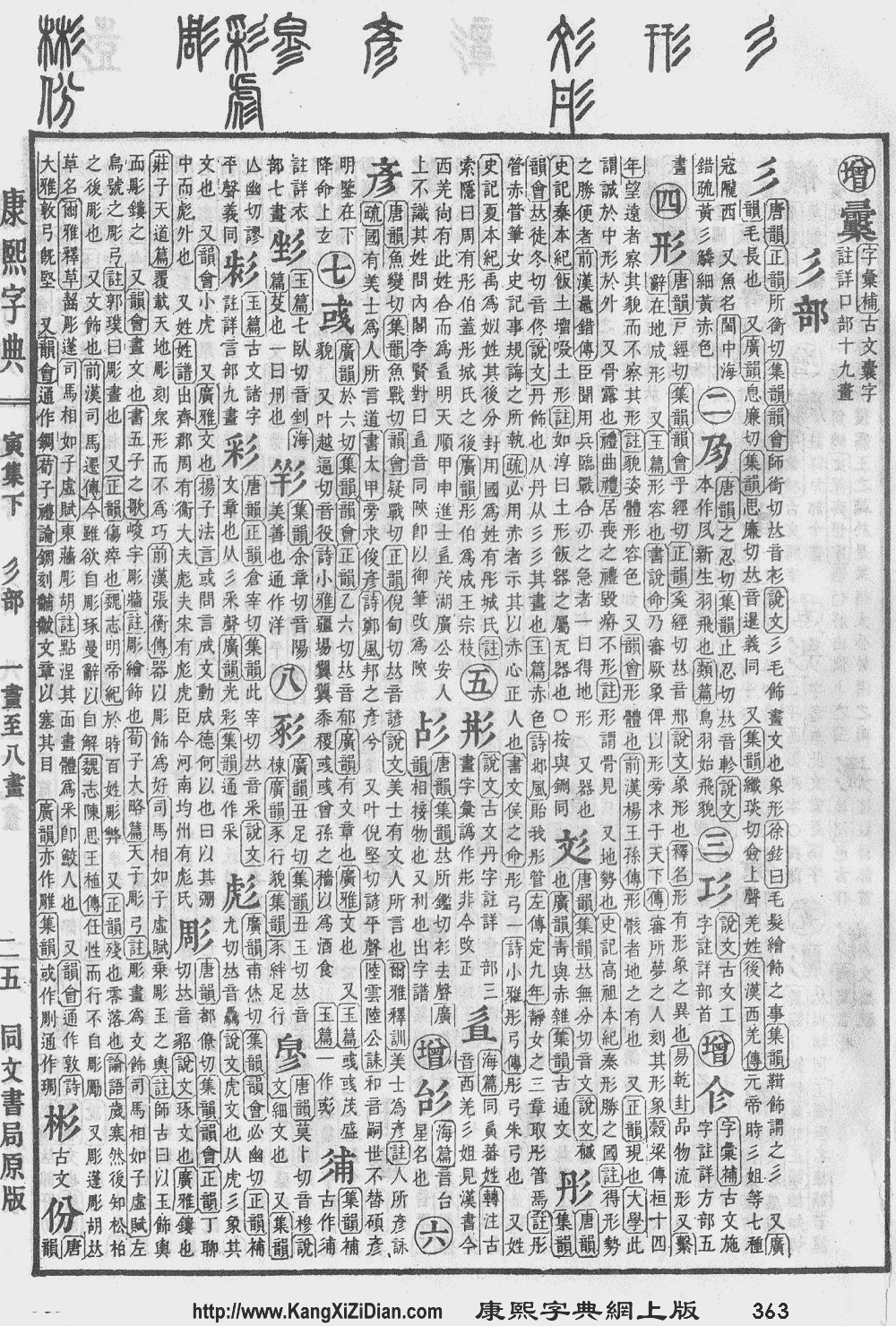
- Kangxi Dictionary: page 363, character 6
- Dai Kanwa Jiten: character 9969
- Dae Jaweon: page 681, character 25
- Hanyu Da Zidian (first edition): volume 2, page 852, character 10
- Unihan data for U+5F62
Chinese edit
| simp. and trad. |
形 | |
|---|---|---|
| alternative forms | 𢒈 | |
Glyph origin edit
| Historical forms of the character 形 | |
|---|---|
| Shuowen Jiezi (compiled in Han) | Liushutong (compiled in Ming) |
| Small seal script | Transcribed ancient scripts |

|

|
Ideogrammic compound (會意/会意) : 幵 + 彡. In current form 幵 has been simplified to 开.
It may also be interpreted as a phono-semantic compound (形聲/形声, OC *ɡeːŋ) : phonetic 井 (OC *skeŋʔ) + semantic 彡, if the original character was 𢒈.
Pronunciation edit
Definitions edit
形
- form; shape; appearance
- image; appearance
- body; entity; contour
- style; vogue
- (grammar) Short for 形容詞/形容词 (xíngróngcí, “adjective”).
- to appear; to display
- to form; to become
- to compare
Synonyms edit
Compounds edit
- 三角形 (sānjiǎoxíng)
- 不形 (bùxíng)
- 不形於色/不形于色 (bùxíngyúsè)
- 中形
- 二形人
- 二形花
- 人形 (rénxíng)
- 傘形/伞形
- 儀形/仪形
- 六角形 (liùjiǎoxíng)
- 分形 (fēnxíng)
- 分形同氣/分形同气
- 勞形/劳形
- 勢合形離/势合形离
- 勾股形
- 化形
- 匿影藏形 (nìyǐngcángxíng)
- 匿跡潛形/匿迹潜形
- 匿跡隱形/匿迹隐形
- 卵形 (luǎnxíng)
- 原形 (yuánxíng)
- 原形畢露/原形毕露 (yuánxíngbìlù)
- 原形質/原形质
- 口形 (kǒuxíng)
- 同形詞/同形词
- 呈形
- 吠形吠聲/吠形吠声
- 喜劇形象/喜剧形象
- 喜形於色/喜形于色
- 四邊形/四边形 (sìbiānxíng)
- 圓形/圆形 (yuánxíng)
- 圓形劇場/圆形剧场
- 圓形動物/圆形动物
- 圖形/图形 (túxíng)
- 圖形分析/图形分析
- 土木形骸
- 地形 (dìxíng)
- 地形雨
- 外形 (wàixíng)
- 多角形 (duōjiǎoxíng)
- 多邊形/多边形 (duōbiānxíng)
- 奇形怪狀/奇形怪状 (qíxíngguàizhuàng)
- 如影隨形/如影随形 (rúyǐngsuíxíng)
- 妖形怪狀/妖形怪状
- 字形 (zìxíng)
- 孤形吊影
- 孤形單影/孤形单影
- 孤形隻影/孤形只影
- 定形 (dìngxíng)
- 寓形
- 寫形/写形
- 幾何圖形/几何图形 (jǐhé túxíng)
- 弓形 (gōngxíng)
- 弓形鑽/弓形钻
- 弧形 (húxíng)
- 弭患無形/弭患无形
- 形上 (xíngshàng)
- 形上學/形上学 (xíngshàngxué)
- 形似 (xíngsì)
- 形便 (xíngbiàn)
- 形像 (xíngxiàng)
- 形制 (xíngzhì)
- 形勝/形胜 (xíngshèng)
- 形勢/形势 (xíngshì)
- 形同具文
- 形名參同/形名参同
- 形同虛設/形同虚设 (xíngtóngxūshè)
- 形單影單/形单影单
- 形單影支/形单影支
- 形單影隻/形单影只 (xíngdānyǐngzhī)
- 形孤影寡
- 形孤影隻/形孤影只
- 形容 (xíngróng)
- 形容句
- 形容枯槁 (xíngróng kūgǎo)
- 形容盡致/形容尽致
- 形容詞/形容词 (xíngróngcí)
- 形式 (xíngshì)
- 形式主義/形式主义 (xíngshìzhǔyì)
- 形式美
- 形形色色 (xíngxíngsèsè)
- 形影 (xíngyǐng)
- 形影不離/形影不离 (xíngyǐngbùlí)
- 形影相依
- 形影相弔/形影相吊
- 形影相追
- 形影相隨/形影相随
- 形影相顧/形影相顾
- 形意拳
- 形態/形态 (xíngtài)
- 形態學/形态学 (xíngtàixué)
- 形成 (xíngchéng)
- 形成層/形成层 (xíngchéngcéng)
- 形於色/形于色 (xíngyúsè)
- 形於言色/形于言色
- 形於辭色/形于辞色
- 形於顏色/形于颜色
- 形旁 (xíngpáng)
- 形景
- 形格勢禁/形格势禁 (xínggéshìjìn)
- 形氣/形气
- 形狀/形状 (xíngzhuàng)
- 形疲神困
- 形相 (xíngxiàng)
- 形神
- 形穢/形秽
- 形符
- 形而下 (xíng'érxià)
- 形而上 (xíng'érshàng)
- 形而上學/形而上学 (xíng'érshàngxué)
- 形聲/形声 (xíngshēng)
- 形聲偏旁/形声偏旁 (xíngshēng piānpáng)
- 形聲字/形声字 (xíngshēngzì)
- 形色
- 形藏
- 形解
- 形訓/形训
- 形變/形变 (xíngbiàn)
- 形象 (xíngxiàng)
- 形象化
- 形象藝術/形象艺术
- 形貌 (xíngmào)
- 形質/形质
- 形跡/形迹 (xíngjì)
- 形跡可疑/形迹可疑
- 形跡敗露/形迹败露
- 形蹟/形迹
- 形蹤/形踪
- 形銷骨立/形销骨立
- 形隻影單/形只影单 (xíngzhīyǐngdān)
- 形骸 (xínghái)
- 形體/形体 (xíngtǐ)
- 形魄
- 影形不離/影形不离
- 影隻形單/影只形单
- 得意忘形 (déyìwàngxíng)
- 心形 (xīnxíng)
- 忘形 (wàngxíng)
- 忘形之交
- 忘形之契
- 忘形交
- 怒形於色/怒形于色
- 情形 (qíngxíng)
- 意識形態/意识形态 (yìshí xíngtài)
- 憂形於色/忧形于色
- 應物現形/应物现形
- 成形 (chéngxíng)
- 扇形 (shànxíng)
- 扇形理論/扇形理论
- 扇形角
- 披針形葉/披针形叶
- 放浪形骸 (fànglàng xínghái)
- 斂影逃形/敛影逃形
- 新月形麵包/新月形面包 (xīnyuèxíng miànbāo)
- 方形 (fāngxíng)
- 星形 (xīngxíng)
- 月形天蠶蛾/月形天蚕蛾 (yuèxíng tiāncán'é)
- 有形 (yǒuxíng)
- 有形戰力/有形战力
- 有形損耗/有形损耗
- 有形資本/有形资本
- 有形資產/有形资产
- 木形灰心
- 未形之患
- 枯形灰心
- 案牘勞形/案牍劳形
- 梯形 (tīxíng)
- 條形圖/条形图 (tiáoxíngtú)
- 楔形文字 (xiēxíng wénzì)
- 構形/构形 (gòuxíng)
- 模塑成形
- 樂極忘形/乐极忘形
- 橢圓形/椭圆形 (tuǒyuánxíng)
- 正三角形
- 正多邊形/正多边形 (zhèngduōbiānxíng)
- 正方形 (zhèngfāngxíng)
- 殊形妙狀/殊形妙状
- 殊形怪狀/殊形怪状
- 殊形詭狀/殊形诡状
- 殊形詭色/殊形诡色
- 毀形滅性/毁形灭性
- 沒人形/没人形
- 沒形沒影/没形没影
- 波形 (bōxíng)
- 波形板
- 流形 (liúxíng)
- 流於形式/流于形式
- 潛形/潜形
- 潛形匿跡/潜形匿迹
- 灰心槁形
- 無形/无形 (wúxíng)
- 無形中/无形中 (wúxíngzhōng)
- 無形無影/无形无影
- 無形無蹤/无形无踪
- 無形眼鏡/无形眼镜
- 無形貿易/无形贸易
- 無形鏡/无形镜
- 無影無形/无影无形
- 無所遁形/无所遁形 (wúsuǒdùnxíng)
- 現形/现形 (xiànxíng)
- 環形/环形 (huánxíng)
- 環形山/环形山 (huánxíngshān)
- 異形/异形 (yìxíng)
- 異形葉/异形叶
- 異形詞/异形词 (yìxíngcí)
- 異形配子/异形配子
- 畫影圖形/画影图形 (huàyǐngtúxíng)
- 畸形 (jīxíng)
- 畸形兒/畸形儿
- 畸形發展/畸形发展
- 發泡成形/发泡成形
- 相似形 (xiāngsìxíng)
- 相形
- 省形
- 相形之下
- 相形失色
- 相形見絀/相形见绌 (xiāngxíngjiànchù)
- 看情形
- 矩形 (jǔxíng)
- 矩形體/矩形体
- 神勞形瘁/神劳形瘁
- 空間圖形/空间图形
- 窮形極狀/穷形极状
- 窮形盡相/穷形尽相
- 立體圖形/立体图形
- 筒形
- 等腰梯形 (děngyāo tīxíng)
- 線形動物/线形动物 (xiànxíng dòngwù)
- 義形於色/义形于色
- 胚形成
- 脣形花/唇形花
- 自慚形穢/自惭形秽 (zìcánxínghuì)
- 自覺形穢/自觉形秽
- 舉止形容/举止形容
- 船形帽
- 花形
- 菱形 (língxíng)
- 葉形/叶形
- 蔽形術/蔽形术
- 藏形
- 藏形匿影
- 彪形大漢/彪形大汉 (biāoxíngdàhàn)
- 蠕形動物/蠕形动物 (ruǎnxíng dòngwù)
- 表形文字
- 觀形察色/观形察色
- 觀念形態/观念形态 (guānniàn xíngtài)
- 詭形怪狀/诡形怪状
- 詭形殊狀/诡形殊状
- 詭狀異形/诡状异形
- 變形/变形 (biànxíng)
- 變形工時/变形工时
- 變形蟲/变形虫 (biànxíngchóng)
- 變形金剛/变形金刚 (biànxíng jīngāng)
- 象形 (xiàngxíng)
- 象形文字 (xiàngxíng wénzì)
- 賦形劑/赋形剂 (fùxíngjì)
- 身形 (shēnxíng)
- 輪形動物/轮形动物
- 造形 (zàoxíng)
- 造形藝術/造形艺术
- 遁形
- 遁跡潛形/遁迹潜形
- 遯形/遁形
- 針形葉/针形叶
- 鍊形/炼形
- 鎮暴隊形/镇暴队形
- 鐘形蟲/钟形虫
- 長方形/长方形 (chángfāngxíng)
- 隊形/队形 (duìxíng)
- 隨物賦形/随物赋形
- 隱介藏形/隐介藏形
- 隱形/隐形 (yǐnxíng)
- 隱形塗料/隐形涂料
- 隱形眼鏡/隐形眼镜 (yǐnxíng yǎnjìng)
- 雁形目
- 雛形/雏形 (chúxíng)
- 雲形定規/云形定规
- 露原形
- 露形
- 面形
- 顯形/显形 (xiǎnxíng)
- 顯露原形/显露原形
- 馬蹄形/马蹄形
- 駐形/驻形
- 體形/体形 (tǐxíng)
- 鳥面鵠形/鸟面鹄形
- 鳩形鵠面/鸠形鹄面
- 鳶形/鸢形 (yuānxíng)
- 鵜形目/鹈形目
- 鵠形菜色/鹄形菜色
- 鵠面鳥形/鹄面鸟形
- 鵠面鳩形/鹄面鸠形
- 鶴形目/鹤形目
- 點檢形骸/点检形骸
Descendants edit
Japanese edit
| Shinjitai | 形 | |
| Kyūjitai | 形󠄁 形+ 󠄁?(Adobe-Japan1) |
|
| The displayed kanji may be different from the image due to your environment. See here for details. | ||
Kanji edit
Readings edit
- Go-on: ぎょう (gyō, Jōyō)←ぎやう (gyau, historical)
- Kan-on: けい (kei, Jōyō)
- Kun: かた (kata, 形, Jōyō); かたち (katachi, 形, Jōyō); かたぎ (katagi); なり (nari, 形)
- Nanori: ち (chi)
Compounds edit
- 形声 (keisei): the phonosemantic formation of a kanji character from elements signifying meaning and elements signifying sound
- 形成 (keisei): formation, shape
- 形而下 (keijika): physical, material
- 形而上 (keijijō): metaphysical
- 形而上学 (keijijōgaku): metaphysics
- 形容詞 (keiyōshi): adjective
- 形容動詞 (keiyōdōshi): (Japanese grammar) adjectival noun, na- adjective
- 形態 (keitai): shape, form
- 形態学 (keitaigaku): (biology) morphology
- 形態論 (keitairon): (linguistics) morphology
- 形体 (keitai): physical shape
- 形相 (gyōsō): a facial expression, a look
- 形相 (keisō): (philosophy) the form, the eidos; the Platonic ideal
- 原形質 (genkeishitsu): protoplasm
Etymology 1 edit
| Kanji in this term |
|---|
| 形 |
| かた Grade: 2 |
| kun’yomi |
| Alternative spelling |
|---|
| 型 |
From Old Japanese. First attested in the Nihon Shoki of 720 CE.[1]
Probably related to 堅い / 硬い / 固い (katai, “hard”).[2]
Pronunciation edit
Noun edit
- [from 720] a shape
- [from 720] a form
- [from 1007] a pattern, die, or model from which copies are made
- [from roughly 1300s] collateral for borrowed money
- [from 1775] on a coin, the side with writing on it
- Antonym: 縵面 (name)
Etymology 2 edit
| Kanji in this term |
|---|
| 形 |
| がた Grade: 2 |
| kun’yomi |
| Alternative spelling |
|---|
| 型 |
Derived from kata above.[1] The kata changes to gata as an instance of rendaku (連濁). Found most commonly as a suffixing element in compounds.
The standalone noun sense was originally a shortening of 女形 (onnagata, literally “woman form”), a female role played by a male actor in kabuki theater. This noun sense is only spelled with the 形 kanji.
Pronunciation edit
Noun edit
- [from 1820] (kabuki, theater) Short for 女形 (onnagata)., a female role played by a male actor in kabuki theater
Suffix edit
- (affixed to nouns): the shape or form of the affixed noun
- (affixed to on'yomi nouns): a typical example of the affixed noun; the type of the affixed noun
Usage notes edit
- For a shape, the spelling 形 is more commonly used. For a type, the spelling 型 is more commonly used.
Etymology 3 edit
| Kanji in this term |
|---|
| 形 |
| かたち Grade: 2 |
| kun’yomi |
| Alternative spellings |
|---|
| 容 躰 |
From Old Japanese. First attested in the Nihon Shoki of 720 CE.[6]
Compound of 形 (kata, “shape, form”) + ち (-chi),[4] but the derivation of the chi element is unclear.
Pronunciation edit
Noun edit
- [from 720] shape or form
- [from late 900s] shapeliness: see 形有り (katachiari)
- [from 1688] form, as opposed to substance
Etymology 4 edit
| Kanji in this term |
|---|
| 形 |
| けい Grade: 2 |
| kan’on |
From Middle Chinese 形 (MC heng). Compare modern Mandarin 形 (xíng). The 漢音 (kan'on) reading, so likely a later borrowing.
Pronunciation edit
Suffix edit
- (linguistics) grammatical tense
- 過去形
- kakokei
- the past tense
- 将来形
- shōraikei
- the future tense
- 過去形
- (Japanese grammar) a conjugation form of a verb
- 連用形
- ren'yōkei
- the continuative form
- 命令形
- meireikei
- the imperative or command form
- 連用形
Derived terms edit
Etymology 5 edit
| Kanji in this term |
|---|
| 形 |
| なり Grade: 2 |
| kun’yomi |
| Alternative spelling |
|---|
| 態 |
From Old Japanese. First attested in the Nihon Shoki of 720 CE.[7]
From 成り (nari), the 連用形 (ren'yōkei, “continuative or stem form”) of the verb 成る (naru, “to become”).[7][3]
First attested as a suffix on a noun in the 曾我物語 (Soga Mongatari),[7] of uncertain dating but probably in the late 1300s. As a suffix on a verb stem, first attested from 1927.[7]
Pronunciation edit
Usage notes edit
- The most common spelling for this use is なり, for all parts of speech.
Noun edit
- [from 720] the shape or form of something
- [from late 900s] one's clothing and appearance
- [from mid 1600s] one's body shape or form
- [from 1477] one's circumstances or situation
- [from 1773] one's reputation
- [from 1763] (following the plain imperfective form (attributive form, 連体形 (rentaikei)) or plain perfective form of a verb) indicates the state of the affixed verb or phrase: compare English just as
- 人々の言うなりになった
- hitobito no iu nari ni natta
- things turned out just as people were saying
- 人々の言うなりになった
- [from 1915] (following the plain imperfective form (attributive form, 連体形 (rentaikei)) of an adjective) indicates responding to the affixed adjective: compare English fitting
- 寒ければ寒いなりの厚着をする
- samukereba samui nari no atsugi o suru
- if it's cold, then put on warm clothing / if it's cold, then put on warm clothes for cold weather
- 寒ければ寒いなりの厚着をする
- [from 1928] (following the plain imperfective form (attributive form, 連体形 (rentaikei)) of a verb) indicates the moment of the action occurring: compare English as soon as
- Synonym: や否や (ya ina ya)
- 断りを聞くなり泣き出した
- kotowari o kiku nari nakidashita
- she burst into tears as soon as she heard the rejection
- 幼稚園から帰るなり、母に抱きついてきました。
- Yōchien kara kaeru nari, haha ni dakitsuite kimashita.
- As soon as she returned from kindergarten, she clung to her mom.
- (after a verb in the past tense ~た (~た)) ... while ...
Suffix edit
- following the 連用形 (ren'yōkei, “continuative or stem form”) of a verb, indicates the state of the affixed verb or phrase: compare English just as
- 人々が言いなりになった
- hitobito ga iinari ni natta
- things turned out just as people say
- 人々が言いなりになった
- [from 1951] following a noun, indicates a state fitting or becoming to the affixed noun
- 子供なりに想像する
- kodomo nari ni sōzō suru
- imagine in a way fitting for a child / imagine like a child (implies that the subject is a child)
- 自分なりの判断
- jibun nari no handan
- my own kind of decision / deciding in my own way
- 子供なりに想像する
- [from late 1300s] following a noun, indicates that shape or form: compare English like
- 弓なりになる
- yumi nari ni naru
- to become bow-shaped / to become like a bow
- 弓なりになる
References edit
- ↑ 1.0 1.1 “形・型”, in 日本国語大辞典 (Nihon Kokugo Daijiten, “Nihon Kokugo Daijiten”)[1] (in Japanese), concise edition, Tōkyō: Shogakukan, 2000
- ^ “堅い/固い/硬い/かたい”, in 語源由来辞典 (Gogen Yurai Jiten, “Etymology Derivation Dictionary”) (in Japanese), 2003–2024, mentioning the likely overlap with kata.
- ↑ 3.0 3.1 3.2 3.3 3.4 Matsumura, Akira, editor (2006), 大辞林 (in Japanese), Third edition, Tōkyō: Sanseidō, →ISBN
- ↑ 4.0 4.1 4.2 Kindaichi, Kyōsuke et al., editors (1997), 新明解国語辞典 (in Japanese), Fifth edition, Tōkyō: Sanseidō, →ISBN
- ↑ 5.0 5.1 NHK Broadcasting Culture Research Institute, editor (1998), NHK日本語発音アクセント辞典 [NHK Japanese Pronunciation Accent Dictionary] (in Japanese), Tōkyō: NHK Publishing, →ISBN
- ^ “形・容”, in 日本国語大辞典 (Nihon Kokugo Daijiten, “Nihon Kokugo Daijiten”)[2] (in Japanese), concise edition, Tōkyō: Shogakukan, 2000
- ↑ 7.0 7.1 7.2 7.3 “形・態”, in 日本国語大辞典 (Nihon Kokugo Daijiten, “Nihon Kokugo Daijiten”)[3] (in Japanese), concise edition, Tōkyō: Shogakukan, 2000
Korean edit
Etymology edit
From Middle Chinese 形 (MC heng).
| Historical readings |
|---|
|
Pronunciation edit
- (SK Standard/Seoul) IPA(key): [çʌ̹ŋ]
- Phonetic hangul: [형]
Hanja edit

形 (eumhun 모양 형 (moyang hyeong))
Compounds edit
References edit
- 국제퇴계학회 대구경북지부 (國際退溪學會 大邱慶北支部) (2007). Digital Hanja Dictionary, 전자사전/電子字典. [5]
Vietnamese edit
Han character edit
形: Hán Nôm readings: hình, hềnh
- image
- a figure or a silhouette
- (Southern Vietnam) a photo; a picture
- (geometry) a shape
- Clipping of hình học (“geometry”).