
鼠
| ||||||||
| ||||||||
Translingual edit
| Stroke order | |||
|---|---|---|---|

| |||
Han character edit

鼠 (Kangxi radical 208, 鼠+0, 13 strokes, cangjie input 竹難女卜女 (HXVYV), four-corner 77717, composition ⿱臼⿲⿺𠄌⺀⿺𠄌⺀㇂(GJK) or ⿱臼⿲⿺𠄌𠄠⿺𠄌𠄠㇂(HT))
- Kangxi radical #208, ⿏.
Derived characters edit
References edit
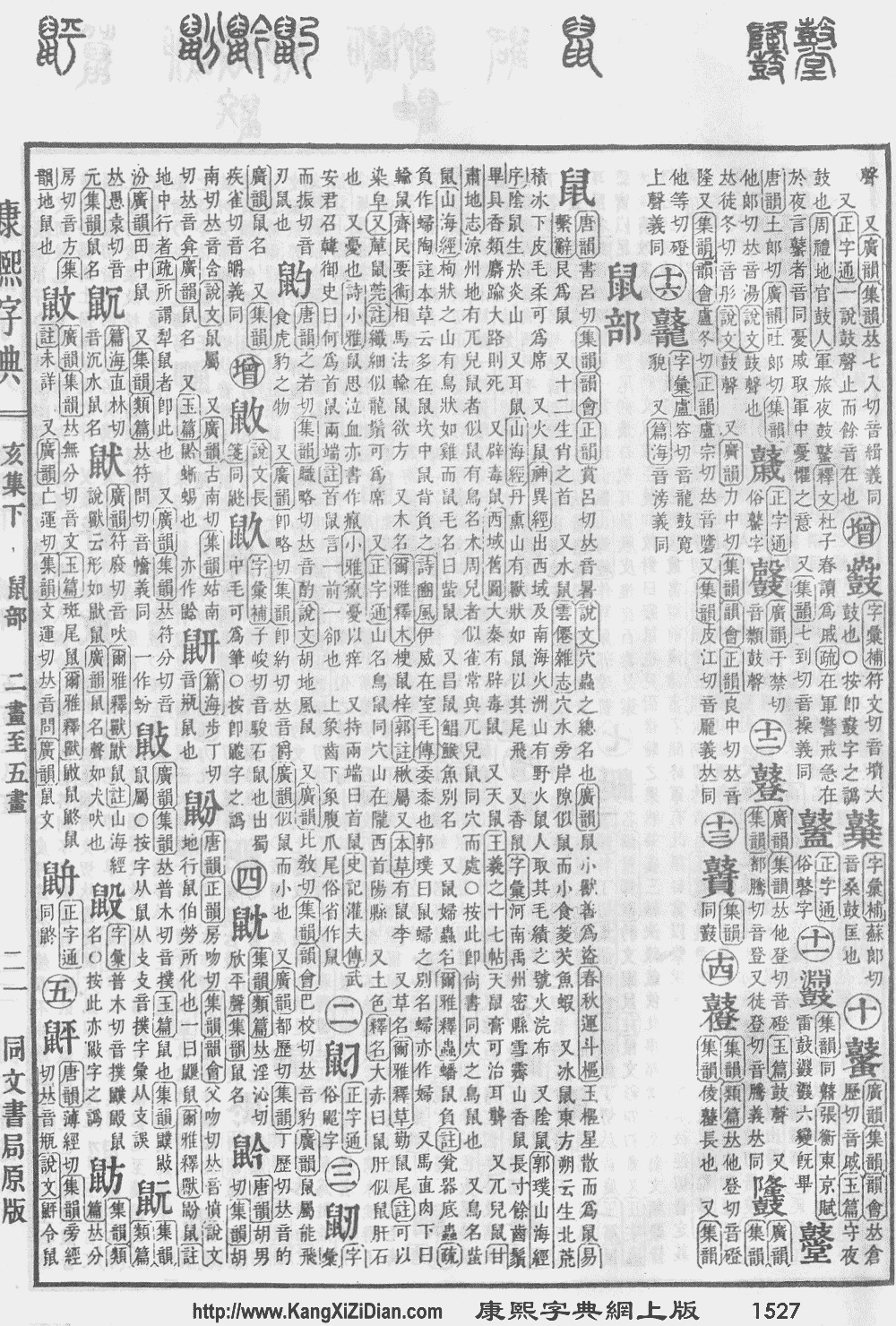
- Kangxi Dictionary: page 1527, character 14
- Dai Kanwa Jiten: character 48390
- Dae Jaweon: page 2063, character 23
- Hanyu Da Zidian (first edition): volume 7, page 4772, character 1
- Unihan data for U+9F20
Chinese edit
| trad. | 鼠 | |
|---|---|---|
| simp. # | 鼠 | |
| alternative forms | 䑕 鼡 ⿱𭕄电 2nd round simp. (1977) ⿱白⿲𠄌𠄌㇂ 2nd round simp. (1981) | |
Glyph origin edit
| Historical forms of the character 鼠 | ||
|---|---|---|
| Shang | Shuowen Jiezi (compiled in Han) | Liushutong (compiled in Ming) |
| Oracle bone script | Small seal script | Transcribed ancient scripts |

|

|

|
Pictogram (象形) – a mouse or rat. In the seal script form, which is inherited in the regular script, the upper component resembling 臼 (jiù) represents the open mouth of a rat with teeth displayed, and the lower component represents the two feet of a rat on the left and a tail on the right.
Etymology edit
Unclear. Schuessler (2007) reconstructs the Minimal Old Chinese as *nhaʔ (homophonous to 癙 (OC *nhaʔ) "painful, suffering", which is in the same phonetic series and may be related to Proto-Tibeto-Burman *na-n/t (“ill, pain, sore, ache, difficult, evil spirit”)) and compares to the following:
- Nyah Kur [script needed] (hnáaʔ, “small squirrel; tree shrew”);
- Proto-Mon-Khmer *kn₁(i)ʔ (“rat; mouse”): Old Mon kni' > Mon ဂၞိ (nɔeˀ), Proto-Bahnaric *knɛː;
- Proto-Kam-Sui *hnu³ (“rat”): Southern Kam not, Sui hnoc.
STEDT, on the other hand, compares 鼠 (OC *hljaʔ) to Proto-Sino-Tibetan *b-jəw-n (“rat; rabbit; hare”).
Pronunciation edit
Definitions edit
鼠
- rat; mouse; any member of the superfamily Muroidea, rodent
- 老鼠 ― lǎoshǔ ― mouse, rat
- Rat (first of the Chinese zodiac signs)
- (traditional Chinese medicine) scrofula; scrofulous
- (Cantonese) to sneak; to go stealthily
Synonyms edit
Compounds edit
- 二鼠
- 五技鼠
- 人與鼠/人与鼠
- 以狸餌鼠/以狸饵鼠
- 以貍至鼠/以狸至鼠
- 以貍致鼠/以狸致鼠
- 以貍餌鼠/以狸饵鼠
- 仙鼠
- 偃鼠
- 偃鼠飲河/偃鼠饮河
- 兩鼠鬥穴/两鼠斗穴
- 劫鼠倉/劫鼠仓
- 十鼠同穴
- 十鼠爭穴/十鼠争穴
- 卻鼠刀/却鼠刀
- 唐鼠
- 嗛鼠
- 器鼠難投/器鼠难投
- 土撥鼠/土拨鼠 (tǔbōshǔ)
- 地拍鼠
- 地老鼠
- 城狐社鼠
- 大袋鼠
- 天竺鼠 (tiānzhúshǔ)
- 天鼠
- 奉頭鼠竄/奉头鼠窜
- 奚鼠
- 姬鼠
- 孤豚腐鼠
- 孤雛腐鼠/孤雏腐鼠
- 家鼠 (jiāshǔ)
- 小袋鼠 (xiǎodàishǔ, “wallaby, joey”)
- 屋鼠
- 山老鼠 (shānlǎoshǔ)
- 巢鼠
- 懷鼠/怀鼠
- 投鼠
- 投鼠之忌
- 投鼠忌器 (tóushǔjìqì)
- 拖腸鼠/拖肠鼠
- 抱頭鼠竄/抱头鼠窜 (bàotóu-shǔcuàn)
- 拱鼠
- 捕鼠器 (bǔshǔqì, “mousetrap”)
- 捉鼠拿貓/捉鼠拿猫
- 掘室求鼠
- 掉頭鼠竄/掉头鼠窜
- 捧頭鼠竄/捧头鼠窜
- 擲鼠/掷鼠
- 擲鼠忌器/掷鼠忌器
- 文鼠
- 旅鼠 (lǚshǔ)
- 易腸鼠/易肠鼠
- 昌鼠
- 松鼠 (sōngshǔ, “squirrel”)
- 栗鼠 (lìshǔ)
- 梧鼠之技
- 梧鼠五技
- 梧鼠技窮/梧鼠技穷
- 水浸老鼠
- 水渰老鼠
- 水老鼠
- 水老鼠花
- 水鼠
- 沙鼠 (shāshǔ)
- 海狸鼠
- 溷鼠
- 滑鼠 (huáshǔ)
- 火鼠 (huǒshǔ)
- 火鼠布
- 灰鼠 (huīshǔ)
- 炙鼠
- 無線滑鼠/无线滑鼠
- 犁鼠 (líshǔ)
- 狗偷鼠竊/狗偷鼠窃
- 狐奔鼠竄/狐奔鼠窜
- 狐憑鼠伏/狐凭鼠伏
- 狐潛鼠伏/狐潜鼠伏
- 狗盜鼠竊/狗盗鼠窃
- 狗逮老鼠
- 狗頭鼠腦/狗头鼠脑
- 狗鼠
- 狐鼠
- 狐鼠之徒
- 狼奔鼠偷
- 狼奔鼠竄/狼奔鼠窜
- 狼貪鼠竊/狼贪鼠窃
- 獐頭鼠目/獐头鼠目 (zhāngtóu shǔmù)
- 玄鼠
- 玉鼠
- 甘鼠
- 田鼠 (tiánshǔ)
- 癡鼠拖薑/痴鼠拖姜
- 白面鼯鼠
- 白鼠 (báishǔ)
- 目光如鼠
- 相鼠
- 石鼠
- 砂鼠
- 碩鼠/硕鼠
- 磎鼠
- 社鼠 (shèshǔ)
- 社鼠城狐
- 禮鼠/礼鼠
- 稷蜂社鼠
- 窮鼠齧貍/穷鼠啮狸 (qióngshǔ nièlí)
- 窮鼠齧貓/穷鼠啮猫 (qióngshǔnièmāo)
- 竹鼠 (zhúshǔ)
- 笮鼠
- 簷鼠/檐鼠
- 米奇老鼠 (Mǐqí Lǎoshǔ)
- 米奇鼠
- 米老鼠 (Mǐlǎoshǔ)
- 紅飛鼠/红飞鼠
- 羅雀掘鼠/罗雀掘鼠
- 義鼠/义鼠
- 老鼠 (lǎoshǔ, “mouse, rat”)
- 老鼠會/老鼠会
- 老鼠見貓/老鼠见猫
- 老鼠過街/老鼠过街
- 耳鼠
- 腐鼠
- 膨鼠 (phòng-chhí) (Min Nan)
- 膽小如鼠/胆小如鼠 (dǎnxiǎorúshǔ)
- 般薑鼠/般姜鼠
- 花鼠 (huāshǔ)
- 虎頭鼠尾/虎头鼠尾
- 蚡鼠
- 蛇入鼠出
- 蛇行鼠步
- 蛇頭鼠眼/蛇头鼠眼
- 蛇鼠
- 蛇鼠一窩/蛇鼠一窝 (shéshǔyīwō)
- 蝘鼠
- 蝟鼠/猬鼠
- 蟲臂鼠肝/虫臂鼠肝
- 蟲鐫鼠齧/虫镌鼠啮
- 蟨鼠
- 蟲齕鼠傷/虫龁鼠伤
- 蟻潰鼠駭/蚁溃鼠骇
- 蠅營鼠窺/蝇营鼠窥
- 蟻羶鼠腐/蚁羶鼠腐
- 蠖屈鼠伏
- 蠶頭鼠尾/蚕头鼠尾
- 袋鼠 (dàishǔ, “kangaroo”)
- 褥特鼠
- 讞鼠/谳鼠
- 豆鼠
- 豚鼠 (túnshǔ)
- 豹文鼠
- 豹鼠
- 豹鼠奇編/豹鼠奇编
- 豺鼠子
- 貂鼠
- 貊鄉鼠壤/貊乡鼠壤
- 貊鄉鼠攘/貊乡鼠攘
- 貓哭老鼠/猫哭老鼠
- 貓鼠同乳/猫鼠同乳
- 貓鼠同眠/猫鼠同眠
- 貓鼠同處/猫鼠同处
- 負子鼠/负子鼠
- 賊眉鼠眼/贼眉鼠眼
- 賊頭鼠腦/贼头鼠脑
- 賊鼠鼠/贼鼠鼠
- 跳鼠 (tiàoshǔ)
- 輸鼠/输鼠
- 進退首鼠/进退首鼠
- 過街老鼠/过街老鼠 (guòjiē lǎoshǔ)
- 避貓鼠/避猫鼠
- 鄭鼠/郑鼠
- 野鼠
- 金毛鼠
- 金鼠之變/金鼠之变
- 銀鼠/银鼠
- 隱鼠/隐鼠
- 雀目鼠步
- 雀角鼠牙
- 雀鼠
- 雀鼠耗
- 雉伏鼠竄/雉伏鼠窜
- 電腦鼠/电脑鼠
- 青鼠
- 飛鼠/飞鼠 (fēishǔ)
- 食蛇鼠
- 飲河鼴鼠/饮河鼹鼠
- 首鼠 (shǒushǔ)
- 首鼠兩端/首鼠两端 (shǒushǔliǎngduān)
- 首鼠模棱
- 香鼠
- 馬捉老鼠/马捉老鼠
- 驢鼠/驴鼠
- 鱗鼠/鳞鼠
- 鳥駭鼠竄/鸟骇鼠窜
- 鳥驚鼠竄/鸟惊鼠窜
- 鳥鼠/鸟鼠
- 鳥鼠同穴/鸟鼠同穴
- 鴟張鼠伏/鸱张鼠伏
- 鴟得腐鼠/鸱得腐鼠
- 鴞鳴鼠暴/鸮鸣鼠暴
- 鸓鼠/𱊳鼠
- 麝鼠 (shèshǔ)
- 麵老鼠/面老鼠
- 黃鼠/黄鼠 (huángshǔ)
- 黃鼠狼/黄鼠狼 (huángshǔláng, “weasel”)
- 黑家鼠
- 黑鼠 (hēishǔ)
- 黑鼠族
- 點鼠/点鼠
- 黠鼠 (xiáshǔ)
- 鼠乳
- 鼠伏
- 鼠偷
- 鼠偷狗盜/鼠偷狗盗
- 鼠入牛角
- 鼠印
- 鼠坻
- 鼠壤
- 鼠妖
- 鼠姑
- 鼠婦/鼠妇 (shǔfù)
- 鼠子
- 鼠尾
- 鼠尾帳/鼠尾帐
- 鼠尾草 (shǔwěicǎo)
- 鼠尾轎/鼠尾轿
- 鼠屎
- 鼠屎汙羹/鼠屎污羹
- 鼠市
- 鼠布
- 鼠徑/鼠径
- 鼠心狼肺
- 鼠思
- 鼠憑社貴/鼠凭社贵
- 鼠技
- 鼠拖腸/鼠拖肠
- 鼠攛/鼠撺
- 鼠攛狼奔/鼠撺狼奔
- 鼠朴
- 鼠李 (shǔlǐ)
- 鼠梨
- 鼠梓
- 鼠標/鼠标 (shǔbiāo, “mouse (of a computer)”)
- 鼠樝
- 鼠步
- 鼠母
- 鼠毛褐
- 鼠毫
- 鼠毫筆/鼠毫笔
- 鼠氣/鼠气
- 鼠法
- 鼠溪
- 鼠無牙/鼠无牙
- 鼠牙
- 鼠牙筆/鼠牙笔
- 鼠牙雀角
- 鼠狗輩/鼠狗辈
- 鼠狼
- 鼠獄/鼠狱
- 鼠璞
- 鼠疫 (shǔyì)
- 鼠病
- 鼠瘡/鼠疮 (shǔchuāng)
- 鼠瘺/鼠瘘
- 鼠盜/鼠盗
- 鼠盜狗竊/鼠盗狗窃
- 鼠目
- 鼠目寸光 (shǔmùcùnguāng)
- 鼠目獐頭/鼠目獐头
- 鼠目獐頭/鼠目獐头
- 鼠眼
- 鼠矢
- 鼠禍/鼠祸
- 鼠穴
- 鼠窟
- 鼠竄/鼠窜 (shǔcuàn)
- 鼠竄狗盜/鼠窜狗盗
- 鼠竄狼奔/鼠窜狼奔
- 鼠竄蜂逝/鼠窜蜂逝
- 鼠竊/鼠窃
- 鼠竊狗偷/鼠窃狗偷
- 鼠竊狗盜/鼠窃狗盗
- 鼠耗
- 鼠耳
- 鼠耳巾
- 鼠肝
- 鼠肝蟲臂/鼠肝虫臂
- 鼠肚雞腸/鼠肚鸡肠
- 鼠肚鷄腸/鼠肚鸡肠
- 鼠胎
- 鼠腊
- 鼠腰兜
- 鼠腹蝸腸/鼠腹蜗肠
- 鼠腹雞腸/鼠腹鸡肠
- 鼠膠/鼠胶
- 鼠膽/鼠胆 (shǔdǎn)
- 鼠臂蟣肝/鼠臂虮肝
- 鼠舞
- 鼠苗
- 鼠莽
- 鼠莽草
- 鼠虎
- 鼠裘
- 鼠豺
- 鼠負/鼠负
- 鼠賊/鼠贼 (shǔzéi)
- 鼠跡/鼠迹
- 鼠蹊 (shǔxī)
- 鼠蹟狐蹤/鼠迹狐踪
- 鼠輩/鼠辈 (shǔbèi)
- 鼠遁
- 鼠遯/鼠遁
- 鼠鄉/鼠乡
- 鼠銜薑/鼠衔姜
- 鼠雀
- 鼠雀之牙
- 鼠雀之輩/鼠雀之辈
- 鼠韭
- 鼠須/鼠须
- 鼠須管/鼠须管
- 鼠頭鼠腦/鼠头鼠脑
- 鼠駭/鼠骇
- 鼠鬚/鼠须
- 鼠鬚筆/鼠须笔
- 鼠鯰/鼠鲶
- 鼠麴/鼠曲
- 鼠麴粿/鼠曲粿
- 鼠麴草/鼠曲草
- 鼠黃/鼠黄
- 鼠黏
- 鼠黏子
- 鼠黠
- 鼠黨/鼠党
- 鼠齒莧/鼠齿苋
- 鼠齧腸/鼠啮肠
- 鼠齧蟲穿/鼠啮虫穿
- 鼠齧蠹蝕/鼠啮蠹蚀
- 鼢鼠
- 鼪鼠
- 鼬鼠 (yòushǔ)
- 鼩鼠
- 鼫鼠
- 鼫鼠五技
- 鼯鼠 (wúshǔ)
- 鼯鼠技
- 鼲鼠/𱌏鼠
- 鼴鼠/鼹鼠 (yǎnshǔ)
- 鼷鼠
- 鼷鼠飲河/鼷鼠饮河
See also edit
Japanese edit
| 鼡 | |
| 鼠 |
Kanji edit
(uncommon “Hyōgai” kanji, kyūjitai kanji, shinjitai form 鼡)
Readings edit
- Go-on: しょ (sho)←しよ (syo, historical)
- Kan-on: しょ (sho)←しよ (syo, historical)
- Kan’yō-on: そ (so)
- Kun: ねずみ (nezumi, 鼠); ねず (nezu, 鼠); ね (ne, 鼠)
Compounds edit
Etymology 1 edit

 |
 |
 |
| Kanji in this term |
|---|
| 鼠 |
| ねずみ Hyōgaiji |
| kun’yomi |
Originally a compound of 根 (ne, “root”, more specifically signifying somewhere hidden away) + 住み (sumi, the 連用形 (ren'yōkei, “continuative or stem form”) of verb 住む sumu, “to live in a place, to reside”), meaning roughly “one who lives in hidden places”. (Can this(+) etymology be sourced?) The sumi changes to zumi as an instance of rendaku (連濁).
Pronunciation edit
Noun edit
鼠 or 鼠 • (nezumi) ←ねづみ (nedumi)?
- a mouse or a rat
- Synonym: (Kagoshima) ねずん (nezun)
- 1993 November 15 [1989 August 25], “○動物のお医者さん 登場人物紹介”, in 動物のお医者さん [The Veterinarian], 44th edition, volume 2 (fiction), Tokyo: Hakusensha, →ISBN, page 7:
- 二階堂:ハムテルの友人で獣医の卵。だがネズミに弱いという弱点がある。
- Nikaidō: Hamuteru no yūjin de jūi no tamago. Daga nezumi ni yowai to iu jakuten ga aru.
- Nikaidō: Hamuteru’s friend, who’s also a future veterinarian. One of his weaknesses, however, is being frightened of rats and mice.
- 二階堂:ハムテルの友人で獣医の卵。だがネズミに弱いという弱点がある。
- 1999 May 25, “イビル・ラット [Evil Rat]”, in Booster 2, Konami:
- どんな物にでもかじりつく、行儀の悪い野ネズミ。
- Donna mono ni demo kajiritsuku, gyōgi no warui nonezumi.
- A feral rat evil-doer that can bite through anything.
- どんな物にでもかじりつく、行儀の悪い野ネズミ。
- 1999 September 23, “鎧ネズミ”, in Vol.5, Konami:
- 鎧のようにかたい毛で体を守ることができるネズミ。
- Yoroi no yō ni katai ke de karada o mamoru koto ga dekiru nezumi.
- A rat capable of defending itself with a coat that functions as armor.
- 鎧のようにかたい毛で体を守ることができるネズミ。
- 2007 November 20 [2006 March 25], Fujiko F. Fujio, “「スパルタ式にが手こくふく錠」と「にが手タッチバトン」”, in ドラえもん+, 4th edition, volume 5 (fiction), Tokyo: Shogakukan, →ISBN, pages 11–12:
- ごめんください。
- Gomen kudasai.
- May I come in?
- Nezumidoshi no hito desu ka?
- Were you born in a Rat year?
- Sarudoshi desu ga.
- I was born in a Monkey year.
- Ja ohairi kudasai.
- Please come in then.
- Watakushi, Nezumi to mōshimasu.
- But my name is Nezumi.
- ごめんください。
- general term for members of superfamily Muroidea, including mice, rats, voles, hamsters, gerbils, and other similar rodents
- short for 鼠色 (nezumi iro): the colour grey, sometimes more specifically a dark grey colour
Usage notes edit
- Japanese does not generally distinguish between mice and rats, and both are commonly called nezumi. If a distinction is needed, speakers may use the adjectives 大きい (ōkii, “large”) or 小さい (chīsai, “small”), or may use the word マウス (mausu, “mouse”, borrowed from either German or English).
- As with many terms that name organisms, this term is often spelled in katakana, especially in biological contexts (where katakana is customary), as ネズミ.
- Note that, although the Japanese term 子年 (nezumidoshi, nedoshi) for The Year of the Rat in the Chinese zodiac does derive from this same nezumi term, it is not written with this 鼠 kanji.
Derived terms edit
- 赤鼠 (akanezumi): large Japanese field mouse (Apodemus speciosus)
- 家鼠 (ienezumi): domestic rodent (brown rat (Rattus norvegicus), black rat (Rattus rattus), and house mouse (Mus musculus)
- 鬼天竺鼠 (oni tenjiku nezumi): capybara (Hydrochoerus hydrochaeris)
- 絹毛鼠 (kinuge nezumi): hamster (Cricetinae)
- 熊鼠 (kuma nezumi): black rat (Rattus rattus)
- 地鼠 (ji nezumi): white-toothed shrews (subfamily Crocidurinae)
- 田鼠 (ta nezumi): field rodent, wild rodent; black rat (Rattus rattus) and related species
- 旅鼠 (tabi nezumi): lemming (in subfamily Arvicolinae)
- 地鼠 (chi nezumi): large Japanese field mouse (Apodemus speciosus)
- 天竺鼠 (tenjiku nezumi): guinea pig (in family Caviidae)
- 尖鼠 (togari nezumi): shrew (in family Soricidae)
- 溝鼠 (dobu nezumi): brown rat (Rattus norvegicus)
- 鼠色 (nezumi iro): (UK) grey, (US) gray
- 鼠衣 (nezumigoromo): simple grey clerical robes
- 鼠食 (nezumikui): something that has been chewed on by mice or rats
- 鼠穴 (nezumiana): a mousehole, a rathole
- 火鼠 (hi nezumi): fire rat
- 袋鼠 (fukuro nezumi): opossum (Didelphimorphia)
- 水畑鼠 (mizuhata nezumi): the European water vole, Arvicola amphibius, formerly Arvicola terrestris.
- 野鼠 (no nezumi): wild rodent (large Japanese field mouse (Apodemus speciosus), Japanese grass vole (Microtus montebelli), red-backed voles (Myodes spp.), etc)
- 野良鼠 (nora nezumi): white-toothed shrews (subfamily Crocidurinae); Japanese shrew mole (Urotrichus talpoides); Japanese dormouse (Glirulus japonicus)
- 畑鼠 (hata nezumi): Japanese grass vole (Microtus montebelli); vole
- 二十日鼠 (hatsuka nezumi): house mouse (Mus musculus)
- 針鼠 (hari nezumi): hedgehog
- 火鼠 (hi nezumi): fire rat
- 谷地鼠 (yachi nezumi): red-backed voles (Myodes spp.)
Further reading edit
- "Nezumi" entry at 日本辞典 (Nihon Jiten, “Japan Dictionary”)
- "Nezumi entry at 語源由来辞典 (Gogen Yurai Jiten, “Etymology Derivation Dictionary”)
Etymology 2 edit
| Kanji in this term |
|---|
| 鼠 |
| ねず Hyōgaiji |
| kun’yomi |
Abbreviation of nezumi. Used in some compounds.[3][1]
Pronunciation edit
Noun edit
Derived terms edit
- 鼠子 (nezuko): alternate name for 黒檜 (kurobe): Thuja standishii, an evergreen coniferous tree in the cypress family Cupressaceae
- 銀鼠 (ginnezu): silver-grey
Etymology 3 edit
| Kanji in this term |
|---|
| 鼠 |
| ね Hyōgaiji |
| kun’yomi |
Abbreviation of nezumi. Used in some compounds.[3][1]
Pronunciation edit
- The pitch accent is determined by the entire compounded term.
Noun edit
Derived terms edit
- 子 (ne): the Rat in the Chinese zodiac
- 子年 (nedoshi): the Year of the Rat in the Chinese zodiac
- 山鼠 (yamane): a Japanese dormouse (Glirulus japonicus)
References edit
- ↑ 1.0 1.1 1.2 1.3 Matsumura, Akira, editor (2006), 大辞林 (in Japanese), Third edition, Tōkyō: Sanseidō, →ISBN
- ^ NHK Broadcasting Culture Research Institute, editor (1998), NHK日本語発音アクセント辞典 [NHK Japanese Pronunciation Accent Dictionary] (in Japanese), Tōkyō: NHK Publishing, →ISBN
- ↑ 3.0 3.1 Shōgaku Tosho (1988) 国語大辞典(新装版) [Unabridged Dictionary of Japanese (Revised Edition)] (in Japanese), Tōkyō: Shogakukan, →ISBN
Korean edit
Etymology edit
From Middle Chinese 鼠 (MC syoX). Recorded as Middle Korean 셔〮 (syé) (Yale: syé) in Hunmong Jahoe (訓蒙字會 / 훈몽자회), 1527.
Pronunciation edit
- (SK Standard/Seoul) IPA(key): [sʰɘ(ː)]
- Phonetic hangul: [서(ː)]
- Though still prescribed in Standard Korean, most speakers in both Koreas no longer distinguish vowel length.
Hanja edit

Compounds edit
References edit
- 국제퇴계학회 대구경북지부 (國際退溪學會 大邱慶北支部) (2007). Digital Hanja Dictionary, 전자사전/電子字典. [1]
Okinawan edit
Kanji edit
Readings edit
Etymology edit
| Kanji in this term |
|---|
| 鼠 |
| えんちゅ Hyōgaiji |
| kun’yomi |
| Kanji in this term |
|---|
| 鼠 |
| ゑんちゅ Hyōgaiji |
| kun’yomi |
| Kanji in this term |
|---|
| 鼠 |
| っゑんちゅ Hyōgaiji |
| kun’yomi |
Compound of 親 (っゑー, 'wee, “parent”) + ん (“n”, reduced genitive particle) + 人 (ちゅ, -chu, “person”)
Pronunciation edit
Noun edit
鼠 or 鼠 or 鼠 ('wenchu or wenchu or enchu)
References edit
- “ゑんちゅ・っゑんちゅ・うぇんちゅ・えんちゅ” in JLect - Japonic Languages and Dialects Database Dictionary, 2019.
Vietnamese edit
Han character edit
鼠: Hán Nôm readings: thử, thửu
- This term needs a translation to English. Please help out and add a translation, then remove the text
{{rfdef}}.