
牛
| ||||||||
| ||||||||
Translingual edit
| Stroke order | |||
|---|---|---|---|

| |||
| Stroke order | |||
|---|---|---|---|

| |||
Alternative forms edit
- 牜 (
U+725C) - used as a left radical component (not a standalone character) - 𠂒 (
U+20092) - sometimes used as a top component
Han character edit

牛 (Kangxi radical 93, 牛+0, 4 strokes, cangjie input 竹手 (HQ), four-corner 25000, composition ⿻𠂉十)
- Kangxi radical #93, ⽜.
- Shuowen Jiezi radical №19
Derived characters edit
- Appendix:Chinese radical/牛
- 件, 吽, 𡉯, 𫰔, 𡵜, 𢓐, 𢪧, 汼, 𭷽, 𨸡, 𨑴, 𣅫, 㭌, 犇, 𣧘, 𣬳, 𤰼, 𥝫, 䋅, 𦧋, 𧉖, 𧣈, 𧥸, 𧲤, 鈝, 𮓤 ,䭽, 𩲍, 𩵠, 𩿓, 䵓, 𬨹
- 吿, 𭇤, 𡕘, 䒜, 𣁄, 𪺝, 㽚, 窂, 荦, 𬙮, 𧢻, 𤛗, 𤵃, 𨳯, 制
See also edit
References edit
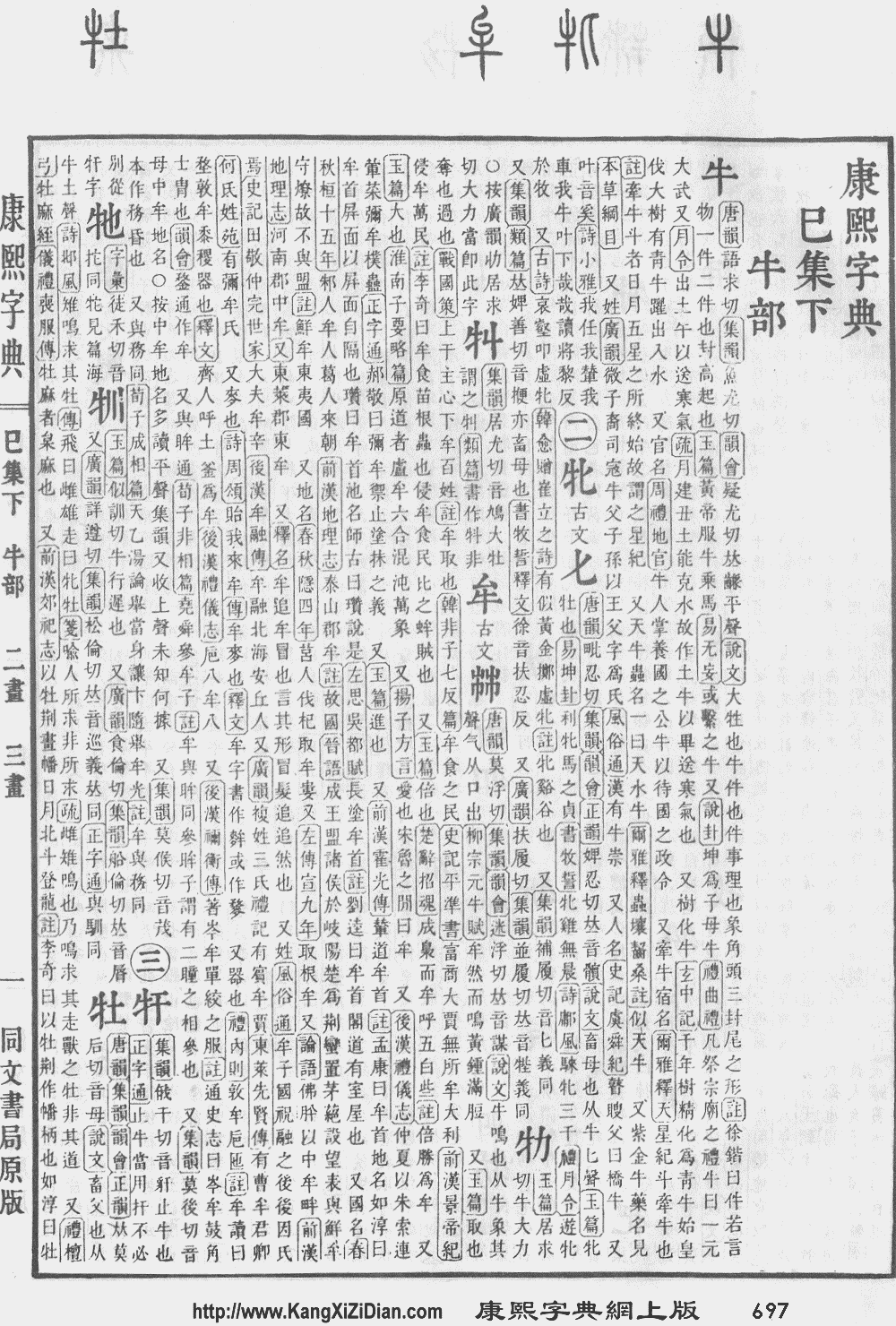
- Kangxi Dictionary: page 697, character 1
- Dai Kanwa Jiten: character 19922
- Dae Jaweon: page 1108, character 16
- Hanyu Da Zidian (first edition): volume 3, page 1800, character 1
- Unihan data for U+725B
Chinese edit
| simp. and trad. |
牛 | |
|---|---|---|
| alternative forms | 𠂒 | |

Glyph origin edit
| Historical forms of the character 牛 | ||||
|---|---|---|---|---|
| Shang | Western Zhou | Warring States | Shuowen Jiezi (compiled in Han) | Liushutong (compiled in Ming) |
| Oracle bone script | Bronze inscriptions | Chu slip and silk script | Small seal script | Transcribed ancient scripts |

|

|

|

|

|
Pictogram (象形) .
Etymology edit
From Proto-Sino-Tibetan *ŋwa.
Pronunciation edit
Definitions edit
牛
- bovine, e.g. cow, bull, ox, buffalo, bison, yak (Classifier: 頭/头 m c mb md; 條/条 m g h x; 隻/只 m c g mn w x)
- beef
- stubborn; pigheaded
- (colloquial) arrogant
- (Mainland China, Mandarin, slang) awesome; powerful
- (~宿) (Chinese astronomy) Ox (one of Twenty-Eight Mansions)
- (physics) Short for 牛頓/牛顿 (niúdùn, “newton”).
- (Hong Kong Cantonese, computing) Short for 火牛 (“transformer”). (Classifier: 隻/只 c)
- a surname
- 牛僧孺 ― Niú Sēngrú ― Niu Sengru (Tang politician)
Synonyms edit
Dialectal synonyms of 牛 (“bovine”) [map]
- (beef): 牛肉 (niúròu)
- (awesome):
- 不得了 (bùdéliǎo) (colloquial)
- 了不得 (colloquial)
- 了不起 (liǎobùqǐ) (colloquial)
- 了勿起 (Wu)
- 佼佼 (jiǎojiǎo) (literary)
- 俊偉/俊伟 (jùnwěi) (literary)
- 偉大/伟大 (wěidà)
- 傑出/杰出 (jiéchū)
- 傲人 (àorén) (nowadays especially of breasts, body curve)
- 優異/优异 (yōuyì)
- 優秀/优秀 (yōuxiù)
- 優越/优越 (yōuyuè)
- 出挑 (chhut-thio) (Quanzhou Hokkien)
- 出擢 (Hokkien)
- 出眾/出众 (chūzhòng)
- 出腳/出脚 (Hokkien)
- 出色 (chūsè)
- 勢面/势面 (Hokkien)
- 勿得了 (Wu)
- 卓然 (zhuórán) (literary)
- 卓犖/卓荦 (zhuóluò) (literary)
- 卓異/卓异 (zhuóyì) (literary)
- 卓著 (zhuózhù)
- 卓越 (zhuóyuè)
- 厲害/厉害 (lìhài) (informal)
- 咧斗 (Zhangzhou Hokkien)
- 咧斗 (Zhangzhou Hokkien)
- 好極了/好极了 (hǎo jíle)
- 尤異/尤异 (yóuyì) (literary)
- 崢嶸/峥嵘 (zhēngróng)
- 彰顯/彰显 (zhāngxiǎn)
- 惡實/恶实 (o5 shr6) (Xiang, used as a complement)
- 打得 (Hakka)
- 挺 (tǐng)
- 斐然 (fěirán)
- 棒 (bàng) (colloquial)
- 標青/标青 (biu1 ceng1) (Cantonese, Teochew)
- 漂亮
- 炳 (bǐng) (literary)
- 牛鬼 (Guilin Mandarin)
- 特出 (tèchū)
- 特異/特异 (tèyì)
- 犀利 (xīlì) (originally Cantonese, sometimes Mandarin)
- 皦皦 (jiǎojiǎo) (literary)
- 看家 (kānjiā) (attributive, of skill, ability, etc.)
- 穩/稳 (wěn) (slang, neologism)
- 突出 (tūchū)
- 英英 (yīngyīng) (literary)
- 蓋帽/盖帽 (gàimào) (slang)
- 表表 (biǎobiǎo) (literary)
- 超凡 (chāofán)
- 超卓 (chāozhuó) (literary)
- 超常 (chāocháng)
- 超拔 (chāobá) (literary)
- 超絕/超绝 (chāojué)
- 非凡 (fēifán)
- 響噹噹/响当当 (xiǎngdāngdāng)
- 顯著/显著 (xiǎnzhù)
- 高強/高强 (gāoqiáng)
| Variety | Location | Words |
|---|---|---|
| Mandarin | Beijing | 牛, 牛兒, 牛屄 vulgar |
| Taiwan | 厲害, 棒 | |
| Malaysia | 厲害, 夠力 | |
| Singapore | 厲害 | |
| Cantonese | Guangzhou | 犀利, 勁 |
| Hong Kong | 犀利, 勁, 勁抽, 堅抽 | |
| Penang (Guangfu) | 犀利 | |
| Singapore (Guangfu) | 犀利, 勁 | |
| Hakka | Miaoli (N. Sixian) | 厲害, 慶 |
| Pingtung (Neipu; S. Sixian) | 厲害, 慶, 壁 | |
| Hsinchu County (Zhudong; Hailu) | 厲害, 慶 | |
| Taichung (Dongshi; Dabu) | 厲害, 慶 | |
| Hsinchu County (Qionglin; Raoping) | 厲害, 慶 | |
| Yunlin (Lunbei; Zhao'an) | 厲害, 慶 | |
| Hong Kong | 叻 | |
| Kuching (Hepo) | 慶 | |
| Southern Min | Xiamen | 厲害 |
| Shishi | 厲害 | |
| Zhao'an | 厲害 | |
| Tainan | 厲害 | |
| Penang (Hokkien) | 厲害 | |
| Singapore (Hokkien) | 厲害, 勥, 𠢕 | |
| Manila (Hokkien) | 厲害, 勥, 𠢕 | |
| Haifeng | 厲害 | |
| Singapore (Teochew) | 厲害 | |
| Wu | Shanghai | 結棍 |
| Suzhou | 結棍 | |
| Wuxi | 結棍 | |
| Hangzhou | 結棍 | |
| Ningbo | 結棍 | |
| Xiang | Changsha | 䏧腮 |
- (transformer):
Descendants edit
- Wutunhua: nek
Compounds edit
- 一牛吼地
- 丙吉問牛/丙吉问牛
- 九牛一毛 (jiǔniúyīmáo)
- 九牛毛
- 乞食飯牛/乞食饭牛
- 乳牛 (rǔniú)
- 亡羊得牛
- 人工蝸牛/人工蜗牛
- 仔牛肉 (zǎiniúròu)
- 休牛放馬/休牛放马
- 休牛散馬/休牛散马
- 休牛歸馬/休牛归马
- 偷渡黃牛/偷渡黄牛
- 做牛做馬/做牛做马 (zuòniúzuòmǎ)
- 充棟汗牛/充栋汗牛
- 全牛
- 公牛 (gōngniú)
- 千牛
- 千牛刀
- 午夜牛郎
- 原牛 (yuánniú)
- 吹牛 (chuīniú)
- 吞牛
- 吳牛喘月/吴牛喘月 (Wú niú chuǎnyuè)
- 吹牛大王
- 吹牛皮 (chuī niúpí)
- 呼牛作馬/呼牛作马
- 呼牛呼馬/呼牛呼马
- 問牛/问牛
- 問牛知馬/问牛知马
- 土牛
- 土牛木馬/土牛木马
- 地牛發威/地牛发威
- 地牛翻身 (dìniú fānshēn)
- 地黃牛/地黄牛
- 執牛耳/执牛耳 (zhí niú'ěr)
- 壯氣吞牛/壮气吞牛
- 夔牛
- 多如牛毛 (duōrúniúmáo)
- 大吹牛皮
- 天牛 (tiānniú)
- 如牛負重/如牛负重 (rúniúfùzhòng)
- 孺子牛 (rúzǐniú)
- 寧為雞口,無為牛後/宁为鸡口,无为牛后 (níng wéi jīkǒu, wú wéi níuhòu)
- 封牛 (fēngniú)
- 對牛彈琴/对牛弹琴 (duìniútánqín)
- 小放牛
- 小牛 (xiǎoniú)
- 小試牛刀/小试牛刀
- 屠牛朝歌
- 帶牛佩犢/带牛佩犊
- 庖丁解牛 (páodīngjiěniú)
- 志沖斗牛
- 扯牛尾巴
- 摸春牛
- 放牛 (fàngniú)
- 放牛吃草
- 放牛歸馬/放牛归马
- 放牛班
- 敲牛宰馬/敲牛宰马
- 斗牛 (dǒuniú)
- 旄牛
- 春牛
- 春牛圖/春牛图
- 木牛流馬/木牛流马 (mùniú liúmǎ)
- 村牛
- 椎牛饗士/椎牛飨士
- 歸馬放牛/归马放牛
- 殷師牛鬥/殷师牛斗
- 母牛 (mǔniú)
- 氂牛/牦牛
- 氣克斗牛
- 氣力如牛/气力如牛
- 氣吞牛斗
- 氣喘如牛/气喘如牛 (qìchuǎnrúniú)
- 氣沖斗牛/气冲斗牛
- 氣沖牛斗/气冲牛斗
- 水牛 (shuǐniú)
- 水牛兒/水牛儿
- 汗牛充棟/汗牛充栋 (hànniúchōngdòng)
- 泥牛
- 泥牛入海 (níniú-rùhǎi)
- 海牛 (hǎiniú)
- 濯濯牛山
- 火牛陣/火牛阵
- 無殼蝸牛/无壳蜗牛
- 版築飯牛/版筑饭牛
- 牛B (niúbī)
- 牛X (niúchā)
- 牛之一毛
- 牛乳 (niúrǔ)
- 牛乳油
- 牛人 (niúrén)
- 牛仔
- 牛仔布 (niúzǎibù)
- 牛仔舞
- 牛仔裝/牛仔装
- 牛仔褲/牛仔裤
- 牛倌
- 牛刀 (niúdāo)
- 牛刀割雞/牛刀割鸡
- 牛刀小試/牛刀小试
- 牛勁/牛劲
- 牛叉 (niúchā)
- 牛回磨轉/牛回磨转
- 牛圈 (niújuàn)
- 牛女
- 牛女佳期
- 牛奶 (niúnǎi)
- 牛奶糖 (niúnǎitáng)
- 牛子 (niúzǐ)
- 牛宿 (Niúxiù)
- 牛小排
- 牛屄 (niúbī)
- 牛山 (Niúshān)
- 牛山下涕
- 牛山歎/牛山叹
- 牛山濯濯
- 牛崽
- 牛崽褲/牛崽裤 (niúzǎikù)
- 牛市 (niúshì)
- 牛年
- 牛年馬月/牛年马月
- 牛後/牛后
- 牛心
- 牛心古怪
- 牛心左性
- 牛性
- 牛房
- 牛掰 (niúbāi)
- 牛排 (niúpái)
- 牛李黨爭/牛李党争
- 牛棚 (niúpéng)
- 牛欄/牛栏 (niúlán)
- 牛步化
- 牛比 (niúbǐ)
- 牛毛 (niúmáo)
- 牛毛雨
- 牛氣/牛气 (niúqi)
- 牛油 (niúyóu)
- 牛津 (niújīn)
- 牛津大學/牛津大学
- 牛溲馬勃/牛溲马勃
- 牛熊證/牛熊证 (niúxióngzhèng)
- 牛犁
- 牛犢/牛犊 (niúdú)
- 牛犢子/牛犊子 (niúdúzi)
- 牛痘 (niúdòu)
- 牛痘苗 (niúdòumiáo)
- 牛瘟 (niúwēn)
- 牛皮 (niúpí)
- 牛皮大王 (niúpí dàwáng)
- 牛皮癬/牛皮癣 (niúpíxuǎn)
- 牛皮糖
- 牛皮紙/牛皮纸 (niúpízhǐ)
- 牛眠地
- 牛眼 (niúyǎn)
- 牛童馬走/牛童马走
- 牛筋牛降
- 牛耳
- 牛肉 (niúròu)
- 牛肉場/牛肉场
- 牛肉秀
- 牛脖子
- 牛脾氣/牛脾气 (niúpíqi)
- 牛腩 (niúnǎn)
- 牛腰
- 牛腱 (niújiàn)
- 牛舌 (niúshé)
- 牛舌餅/牛舌饼
- 牛舍 (niúshè)
- 牛莊/牛庄 (Niúzhuāng)
- 牛莊/牛庄 (Niúzhuāng)
- 牛蒡 (niúbàng)
- 牛虻 (niúméng)
- 牛蛙 (niúwā)
- 牛蠅/牛蝇 (niúyíng)
- 牛衣
- 牛衣對泣/牛衣对泣
- 牛表牛觔/牛表牛斤
- 牛角 (niújiǎo)
- 牛角之歌
- 牛角尖 (niújiǎojiān)
- 牛角掛書/牛角挂书
- 牛角書生/牛角书生
- 牛角麵包/牛角面包 (niújiǎo miànbāo)
- 牛蹄中魚/牛蹄中鱼
- 牛蹄子
- 牛車/牛车 (niúchē)
- 牛軛湖/牛轭湖
- 牛逼 (niúbī)
- 牛郎 (niúláng)
- 牛郎星
- 牛郎織女/牛郎织女
- 牛酪 (niúlào)
- 牛鐲/牛镯
- 牛雜/牛杂 (niúzá)
- 牛革
- 牛鞅
- 牛鞭 (niúbiān)
- 牛頓/牛顿 (Niúdùn)
- 牛頭/牛头 (niútóu)
- 牛頭不對馬嘴/牛头不对马嘴 (niútóubùduìmǎzuǐ)
- 牛頭禪/牛头禅
- 牛頭馬面/牛头马面 (niútóumǎmiàn)
- 牛飲/牛饮
- 牛餼退敵/牛饩退敌
- 牛首 (Niúshǒu)
- 牛馬/牛马 (niúmǎ)
- 牛馬之衣/牛马之衣
- 牛馬襟裾/牛马襟裾
- 牛馬走/牛马走 (niúmǎzǒu)
- 牛驥共牢/牛骥共牢
- 牛驥同皁/牛骥同皁
- 牛鬼蛇神 (niúguǐshéshén)
- 牛魔王 (niú mówáng)
- 牛黃/牛黄 (niúhuáng)
- 牛黄 (niúhuáng)
- 牛黃狗寶/牛黄狗宝
- 牛鼎烹雞/牛鼎烹鸡 (niúdǐngpēngjī)
- 牛鼻 (niúbí)
- 牛鼻子 (niúbízi)
- 牧牛兒/牧牛儿
- 牧牛放馬/牧牛放马
- 牯牛 (gǔniú)
- 犁牛之子
- 牻牛兒苗/牻牛儿苗
- 牽牛拔樁/牵牛拔桩
- 牽牛星/牵牛星 (Qiānniúxīng)
- 牽牛織女/牵牛织女
- 牽牛花/牵牛花 (qiānniúhuā)
- 犀牛 (xīniú)
- 犀牛望月
- 犀牛角
- 犍牛 (jiānniú)
- 犛牛/牦牛
- 犯牛勁/犯牛劲
- 甯戚飯牛/甯戚饭牛
- 瘠牛僨豚/瘠牛偾豚
- 白犀牛
- 目無全牛/目无全牛 (mùwúquánniú)
- 目牛游刃 (mùniúyóurèn)
- 目牛無全/目牛无全
- 石牛道
- 石牛開道/石牛开道
- 種牛痘/种牛痘 (zhòng niúdòu)
- 童牛角馬/童牛角马
- 約翰牛/约翰牛
- 細漢偷挽匏,大漢偷牽牛/细汉偷挽匏,大汉偷牵牛 (sè-hàn thau bán pû, tōa-hàn thau khan gû) (Min Nan)
- 紫金牛
- 繭絲牛毛/茧丝牛毛
- 羞以牛後/羞以牛后
- 羚牛 (língniú)
- 老牛破車/老牛破车
- 老牛筋
- 老牛箝嘴
- 老牛箍嘴
- 老牛舐犢/老牛舐犊
- 耕牛 (gēngniú)
- 臥牛城/卧牛城
- 花牛腿
- 荷蘭乳牛/荷兰乳牛
- 菲列牛排
- 菜牛 (càiniú)
- 蚊動牛鬥/蚊动牛斗
- 蝸牛/蜗牛 (wōniú)
- 蟒牛 (Mǎngniú)
- 蠻牛/蛮牛
- 裾馬襟牛/裾马襟牛
- 襟裾馬牛/襟裾马牛
- 買牛賣劍/买牛卖剑
- 賣刀買牛/卖刀买牛
- 賣劍買牛/卖剑买牛
- 蹊田奪牛/蹊田夺牛
- 酸牛奶 (suānniúnǎi)
- 野牛 (yěniú)
- 金牛 (jīnniú)
- 金牛山
- 金牛座 (jīnniúzuò)
- 金牛道
- 鐵牛/铁牛 (tiěniú)
- 鐵牛車/铁牛车
- 鑽牛犄角/钻牛犄角
- 鑽牛角尖/钻牛角尖 (zuān niújiǎojiān)
- 隔山打牛
- 雞口牛後/鸡口牛后 (jīkǒuníuhòu)
- 雞尸牛從/鸡尸牛从
- 青牛
- 青牛紫氣/青牛紫气
- 青盲牛 (chăng-màng-ngù) (Eastern Min)
- 鞅牛
- 鞭牛
- 頂牛/顶牛
- 風馬牛不相及/风马牛不相及 (fēng mǎ niú bù xiāngjí)
- 馬勃牛溲/马勃牛溲
- 馬牛襟裾/马牛襟裾
- 騎牛覓牛/骑牛觅牛
- 鬥牛/斗牛 (dòuniú)
- 鬥牛士/斗牛士 (dòuniúshì)
- 鬥牛陣/斗牛阵
- 麝牛 (shèniú)
- 黄牛 (huángniú)
- 黃牛/黄牛 (huángniú)
- 黃牛岩/黄牛岩 (Huángniúyán)
- 黧牛
- 齊王捨牛/齐王舍牛
See also edit
- (Chinese zodiac signs) 鼠 (shǔ), 牛 (niú), 虎 (hǔ), 兔 (tù), 龍/龙 (lóng), 蛇 (shé), 馬/马 (mǎ), 羊 (yáng), 猴 (hóu), 雞/鸡 (jī), 狗 (gǒu), 豬/猪 (zhū) (Category: zh:Chinese zodiac signs)
References edit
- “Entry #1228”, in 臺灣閩南語常用詞辭典 (overall work in Mandarin and Hokkien), Ministry of Education, R.O.C., 2023.
Japanese edit
Kanji edit
牛

Readings edit
- Go-on: ぐ (gu)
- Kan-on: ぎゅう (gyū, Jōyō)←ぎう (giu, historical)
- Kan’yō-on: ご (go)
- Kun: うし (ushi, 牛, Jōyō)
Compounds edit
Compounds
- 牛馬 (ushiuma)
- 牛鬼 (ushioni), 牛鬼 (gyūki)
- 牛氈鹿 (ushikamoshika, “wildebeest, gnu”)
- 牛車 (gissha), 牛車 (gyūsha), 牛車 (ushiguruma) : oxcart
- 牛脂 (gyūshi, “tallow of cow”)
- 牛舎 (gyūsha)
- 牛耳る (gyūjiru)
- 牛肉 (gyūniku, “beef”)
- 牛乳 (gyūnyū, “cow's milk”)
- 牛馬 (gyūba)
- 牛皮 (gyūhi, “cowhide”)
- 牛酪 (gyūraku, “butter”)
- 牛頭天王 (Gozu Tennō) : name of a deity
- 牛蒡 (gobō) : greater burdock (Arctium lappa)
- インド牛 (indōshi), 瘤牛 (kobūshi), 犎牛 (hōgyū) : zebu
- 雄牛, 牡牛 (ōshi)
- 蝸牛 (kagyū, “snail; cochlea”)
- 蝸牛 (katatsumuri, “snail”)
- 子牛, 仔牛 (kōshi)
- 呉牛 (gogyū), 水牛 (suigyū) : water buffalo
- 麝香牛 (jakōushi, “musk ox”)
- 肉牛 (nikugyū, “beef cattle”)
- 乳牛 (nyūgyū, “dairy cattle”)
- 雌牛, 牝牛 (meushi)
Etymology 1 edit
| Kanji in this term |
|---|
| 牛 |
| うし Grade: 2 |
| kun’yomi |
From Old Japanese, from Proto-Japonic *Osi.
Pronunciation edit
Noun edit
- cow, bull, ox, cattle, a domestic bovine
- Synonyms: (dialectal, Tohoku) べこ, (dialectal, Akita, Sendai, Shimokita, Tsugaru) べご, (dialectal, Kagoshima) べぶ
- 1999 November 18, “牛魔人”, in Vol.6, Konami:
- 森に住む牛の魔人。ツノを突き出し突進して攻撃。
- Mori ni sumu ushi no majin. Tsuno o tsukidashi tosshin shite kōgeki.
- A bovine jinn who resides in the woods. He’ll charge at you and stick you with his horns.
- 森に住む牛の魔人。ツノを突き出し突進して攻撃。
- 1999 December 1, “ミノタウルス [Minotaurus]”, in BOOSTER 6, Konami:
- すごい力を持つウシの怪物。オノひと振りで何でもなぎ倒す。
- Sugoi chikara o motsu ushi no kaibutsu. Ono hitofuri de nani demo nagitaosu.
- A bovine monster with tremendous power who chops up anyone in his way with one axe swing.
- すごい力を持つウシの怪物。オノひと振りで何でもなぎ倒す。
- beef
Usage notes edit
As with many terms that name organisms, this term is often spelled in katakana, especially in biological contexts (where katakana is customary), as ウシ.
Derived terms edit
Etymology 2 edit
| Kanji in this term |
|---|
| 牛 |
| ぎゅう Grade: 2 |
| kan’on |
From Middle Chinese 牛 (ngjuw, “cow”). Compare Hokkien 牛 (giû / ngiû).
Pronunciation edit
Noun edit
References edit
- ↑ 1.0 1.1 Matsumura, Akira, editor (2006), 大辞林 (in Japanese), Third edition, Tōkyō: Sanseidō, →ISBN
- ↑ 2.0 2.1 NHK Broadcasting Culture Research Institute, editor (1998), NHK日本語発音アクセント辞典 [NHK Japanese Pronunciation Accent Dictionary] (in Japanese), Tōkyō: NHK Publishing, →ISBN
Korean edit
Hanja edit
Compounds edit
Okinawan edit
Kanji edit
牛
Readings edit
Etymology edit
| Kanji in this term |
|---|
| 牛 |
| うし Grade: 2 |
| kun’yomi |
From Proto-Ryukyuan *Osi, from Proto-Japonic *Osi.
Pronunciation edit
Noun edit
牛 (ushi)
Derived terms edit
References edit
- “うし【牛】” in JLect - Japonic Languages and Dialects Database Dictionary, 2019.
Vietnamese edit
Han character edit
牛: Hán Nôm readings: ngưu, ngọ, ngỏ, ngõ, ngâu
- This term needs a translation to English. Please help out and add a translation, then remove the text
{{rfdef}}.
Yonaguni edit
Kanji edit
Etymology edit
From Proto-Ryukyuan *Osi, from Proto-Japonic *Osi.
Noun edit
References edit
- “うち【牛】” in JLect - Japonic Languages and Dialects Database Dictionary, 2019.