
卵
| ||||||||
| ||||||||
Translingual edit
| Stroke order (Chinese) | |||
|---|---|---|---|

| |||
| Stroke order (Japan) | |||
|---|---|---|---|

| |||
Han character edit
卵 (Kangxi radical 26, 卩+5, 7 strokes, cangjie input 竹竹尸中戈 (HHSLI), four-corner 77720, composition ⿰𠂑卪)
Derived characters edit
References edit
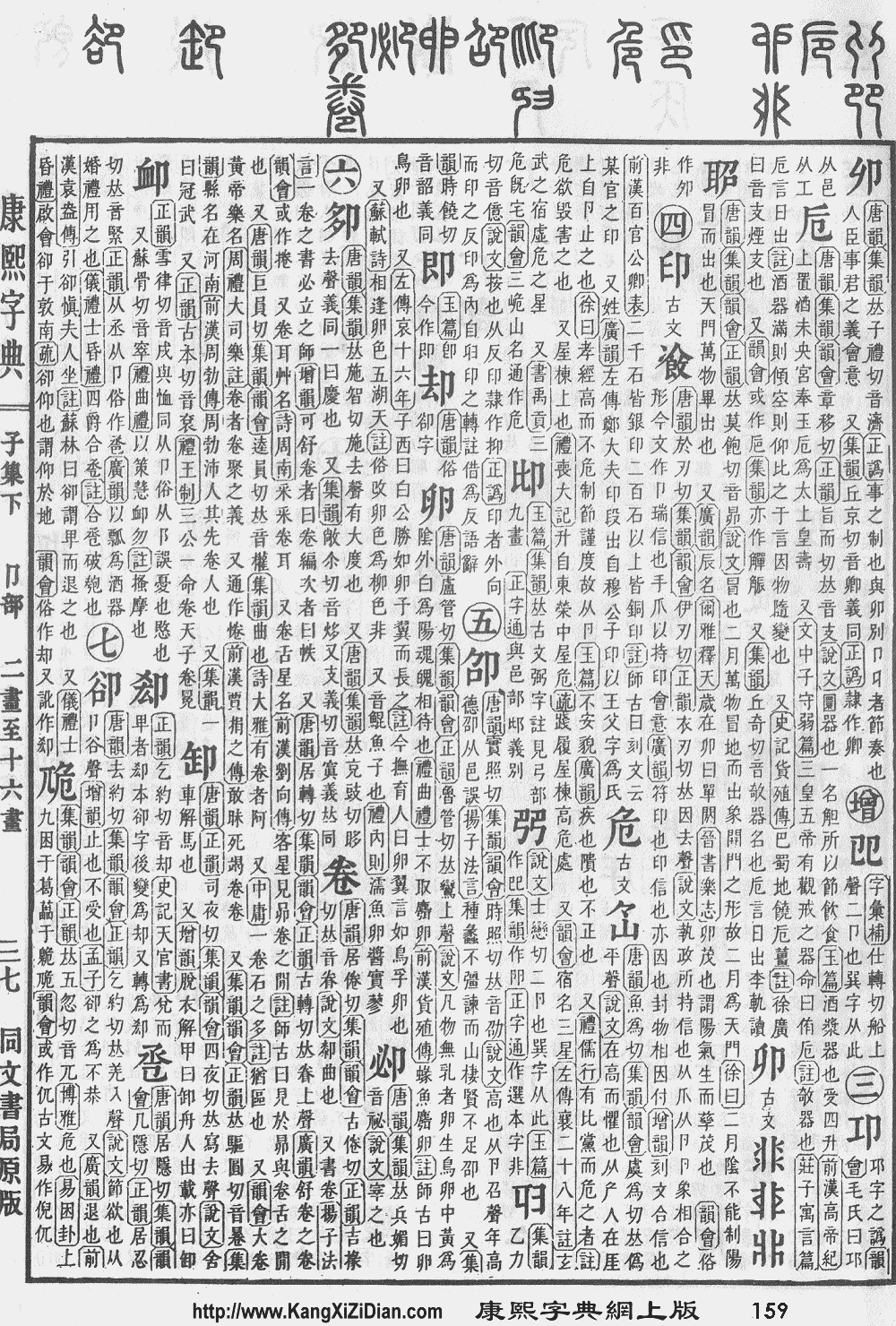
- Kangxi Dictionary: page 159, character 20
- Dai Kanwa Jiten: character 2857
- Dae Jaweon: page 365, character 1
- Hanyu Da Zidian (first edition): volume 1, page 313, character 4
- Unihan data for U+5375
Chinese edit
| simp. and trad. |
卵 | |
|---|---|---|
| alternative forms | 卝 𡖉 𤓲 𠨫 | |

Glyph origin edit
| Historical forms of the character 卵 | ||
|---|---|---|
| Western Zhou | Warring States | Shuowen Jiezi (compiled in Han) |
| Bronze inscriptions | Chu slip and silk script | Small seal script |

|

|

|
Etymology 1 edit
Usually thought of as derived from Proto-Sino-Tibetan *s-row (“egg, nit”) with nominalizing suffix *‑n; compare Tibetan སྲོ་མ (sro ma, “egg of a louse, nit, small bubble”) (Benedict, 1976; Gong, 1995; Schuessler, 2007; STEDT).
Alternatively, STEDT compares it to Proto-Sino-Tibetan *(r/l)um (“egg”), while noting a few phonological problems with the comparison.
Sagart and Ma (2020) propose that it may be related to 果 (OC *kloːlʔ, “fruit”).
Pronunciation edit
Definitions edit
卵
- egg; ovum; roe; spawn
- (entomology) fertilised egg
- (regional) testicles
- (regional) penis; male genitals; scrotum
- 貪此生涯,卵為蚯蚓所哈(吳俗稱陽曰卵),腫不能便。 [MSC, trad.]
- From: 1808, 沈復 (Shen Fu), 《浮生六記》 (Six Records of a Floating Life), 卷二 閒情記趣 (Chapter 2: The Little Pleasures of Life)
- Tān cǐ shēngyá, luǎn wéi qiūyǐn suǒ hā (Wú súchēng yáng yuē luǎn) , zhǒng bùnéng biàn. [Pinyin]
- (please add an English translation of this usage example)
贪此生涯,卵为蚯蚓所哈(吴俗称阳曰卵),肿不能便。 [MSC, simp.]
Synonyms edit
- (egg):
| Variety | Location | Words |
|---|---|---|
| Formal (Written Standard Chinese) | 卵 | |
| Mandarin | Beijing | 子兒, 子 |
| Jinan | 子兒 | |
| Xi'an | 子兒 | |
| Wuhan | 子 | |
| Chengdu | 蛋, 蛋兒 | |
| Yangzhou | 子 | |
| Hefei | 子 | |
| Cantonese | Guangzhou | 卵 |
| Hong Kong | 卵 | |
| Yangjiang | 膥 | |
| Gan | Nanchang | 子 |
| Hakka | Meixian | 卵 |
| Jin | Taiyuan | 蛋, 子兒 |
| Northern Min | Jian'ou | 卵 |
| Eastern Min | Fuzhou | 卵, 子 |
| Southern Min | Xiamen | 卵 |
| Chaozhou | 卵 | |
| Wu | Shanghai | 子 |
| Suzhou | 子 | |
| Wenzhou | 子, 卵 | |
| Xiang | Changsha | 子 |
| Shuangfeng | 蛋, 子 | |
- (testicle):
- (penis):
Compounds edit
- 不麛不卵
- 丸卵
- 乳卵
- 事危累卵
- 以卵投石 (yǐluǎntóushí)
- 以卵擊石/以卵击石 (yǐluǎnjíshí)
- 以卵敵石/以卵敌石
- 以石投卵
- 以碫投卵
- 伏卵
- 剖卵
- 危如累卵 (wēirúlěiluǎn)
- 危於累卵/危于累卵
- 卵危
- 卵囊
- 卵囊球
- 卵圓/卵圆 (luǎnyuán)
- 卵圓形/卵圆形
- 卵圓窗/卵圆窗
- 卵塔
- 卵塊/卵块
- 卵子
- 卵子移植
- 卵孔
- 卵巢 (luǎncháo)
- 卵巢囊腫/卵巢囊肿 (luǎncháo nángzhǒng)
- 卵巢炎 (luǎncháoyán)
- 卵巢癌 (luǎncháo'ái)
- 卵巢窩/卵巢窝
- 卵幕杯
- 卵彈琴/卵弹琴
- 卵形 (luǎnxíng)
- 卵息
- 卵核
- 卵模
- 卵母細胞/卵母细胞 (luǎnmǔxìbāo)
- 卵民
- 卵泡
- 卵清 (luǎnqīng)
- 卵生 (luǎnshēng)
- 卵用雞/卵用鸡 (luǎnyòngjī)
- 卵白 (luǎnbái)
- 卵石 (luǎnshí)
- 卵硯/卵砚
- 卵磷脂 (luǎnlínzhī)
- 卵精巢
- 卵細胞/卵细胞
- 卵翼 (luǎnyì)
- 卵翼之恩
- 卵育
- 卵胎生 (luǎntāishēng)
- 卵脬
- 卵與石鬥/卵与石斗
- 卵色
- 卵蒜 (luǎnsuàn)
- 卵袋
- 卵裂 (luǎnliè)
- 卵鳥/卵鸟
- 卵鹽/卵盐
- 卵黃/卵黄 (luǎnhuáng)
- 卵黃囊/卵黄囊 (luǎnhuángnáng)
- 卵黃管/卵黄管
- 卵黃腺/卵黄腺
- 受精卵 (shòujīngluǎn)
- 同卵 (tóngluǎn)
- 同卵雙生/同卵双生
- 呵卵
- 呵卵脬
- 呵脬捧卵
- 土卵
- 壓卵/压卵
- 如山壓卵/如山压卵
- 孵卵器 (fūluǎnqì)
- 孵卵機/孵卵机
- 完卵
- 巢傾卵破/巢倾卵破
- 巢毀卵破/巢毁卵破
- 投卵
- 投卵擊石/投卵击石
- 抱卵 (bàoluǎn)
- 排卵 (páiluǎn)
- 排卵期 (páiluǎnqī)
- 排山壓卵/排山压卵
- 椎卵
- 殺雞取卵/杀鸡取卵 (shājīqǔluǎn)
- 河卵石
- 泰山壓卵/泰山压卵
- 燕卵
- 玉卵
- 產卵/产卵 (chǎnluǎn)
- 異卵/异卵 (yìluǎn)
- 畫卵/画卵
- 畫卵雕薪/画卵雕薪
- 石卵 (shíluǎn)
- 破卵傾巢/破卵倾巢
- 破巢完卵
- 破巢餘卵/破巢余卵
- 禁麛卵
- 累卵 (lěiluǎn)
- 累卵之危
- 纍卵/累卵
- 翼卵
- 胎卵
- 若卵投石
- 蟻卵/蚁卵
- 覆卵
- 覆巢之下無完卵/覆巢之下无完卵 (fùcháozhīxiàwúwánluǎn)
- 覆巢傾卵/覆巢倾卵
- 覆巢毀卵/覆巢毁卵
- 覆巢破卵
- 赤眼卵蜂
- 赬卵/赪卵
- 赬虯卵/赪虬卵
- 輸卵管/输卵管 (shūluǎnguǎn)
- 遺卵/遗卵
- 重卵
- 陰卵/阴卵 (yīnluǎn)
- 雕卵
- 雞卵/鸡卵 (jīluǎn)
- 魚卵/鱼卵 (yúluǎn)
- 鳥卵/鸟卵 (niǎoluǎn)
- 鴨卵/鸭卵 (yāluǎn)
- 鵠卵/鹄卵
- 鵝卵石/鹅卵石 (éluǎnshí)
- 鶴卵/鹤卵
- 鹹鴨卵/咸鸭卵 (xiányāluǎn)
- 麑卵
- 麛卵
- 龍卵/龙卵
Etymology 2 edit
| For pronunciation and definitions of 卵 – see 𡳞 (“male genitalia; penis; dick; etc.”). (This character is a variant form of 𡳞). |
Etymology 3 edit
| For pronunciation and definitions of 卵 – see 鯤 (“fish roe”). (This character is an obsolete form of 鯤). |
Compounds edit
References edit
- “卵”, in 漢語多功能字庫 (Multi-function Chinese Character Database)[2], 香港中文大學 (the Chinese University of Hong Kong), 2014–
- Dictionary of Chinese Character Variants (教育部異體字字典), A00453
- “Entry #2967”, in 臺灣閩南語常用詞辭典 (overall work in Mandarin and Hokkien), Ministry of Education, R.O.C., 2023.
Japanese edit
Kanji edit
- an egg
Readings edit
Compounds edit
Etymology 1 edit

| Kanji in this term |
|---|
| 卵 |
| たまご Grade: 6 |
| kun’yomi |
| Alternative spelling |
|---|
| 玉子 |


From 玉 (tama, “ball”) + 子 (ko, “child, small thing”).[1] The ko reading for 子 changes to go as an instance of rendaku (連濁).
Pronunciation edit
- (Tokyo) たまご [tàmáꜜgò] (Nakadaka – [2])[2][3]
- (Tokyo) たまご [tàmágó] (Heiban – [0])[2][3]
- IPA(key): [ta̠ma̠ɡo̞]
Noun edit
- an egg, including fish roe
- 1999 September 23, “ウィング・エッグ・エルフ [Wing Egg Elf]”, in Vol.5, Konami:
- たまごのカラに身を包む天使。大きな羽で攻撃を防ぐ。
- Tamago no kara ni mi o tsutsumu tenshi. Ōki na hane de kōgeki o fusegu.
- An angel sheltered inside an eggshell. It fends off attacks with its massive wings.
- たまごのカラに身を包む天使。大きな羽で攻撃を防ぐ。
- 2000 July 13, “ドラゴン・エッガー [Dragon Egger]”, in Pharaoh’s Servant -ファラオのしもべ-, Konami:
- 卵のカラをかぶっているドラゴン。子供と間違えると痛い目にあうぞ!
- Tamago no kara o kabutte iru doragon. Kodomo to machigaeru to itaime ni au zo!
- A dragon who shelters in an eggshell. Never mistake him for a literal baby!
- 卵のカラをかぶっているドラゴン。子供と間違えると痛い目にあうぞ!
- 2003 July 17, “ジェノサイドキングサーモン [Genocide King Salmon]”, in 暗黒の侵略者 [Invader of Darkness], Konami:
- 暗黒海の主として恐れられている巨大なシャケ。その卵は暗黒界一の美味として知られている。
- Ankokukai no nushi to shite osorerarete iru kyodai na shake. Sono tamago wa Ankokukaīchi no bimi to shiteshirarete iru.
- A giant salmon worst feared in the Dark Sea. Its roe is best known as the ultimate delicacy of the Dark World.
- 暗黒海の主として恐れられている巨大なシャケ。その卵は暗黒界一の美味として知られている。
- the beginning or start of something (compare the uses of English terms kernel and seed)
- a beginner or rookie at something
- 1988 July 30 [1985 July 25], Fujiko F. Fujio, “山寺グラフィティ (山寺グラフィティ)”, in 宇宙船製造法 [How to Build a Spaceship] (藤子不二雄少年SF短編集; 3), 6th edition, volume 3 (fiction), Tokyo: Shogakukan, →ISBN, page 106:
- ぼく、加藤広康。イラストレーターの卵。
- Boku, Katō Hiroyasu. Irasutorētā no tamago.
- My name’s Katō Hiroyasu. I’m a rookie illustrator.
- ぼく、加藤広康。イラストレーターの卵。
Usage notes edit
This term in Japanese is nearly as broad in use as English egg, indicating an egg as laid by various oviparous organisms, and an egg as used in cooking. For the more specific biological sense of ovum, see 卵子 (ranshi).
Etymology 2 edit
| Kanji in this term |
|---|
| 卵 |
| らん Grade: 6 |
| on’yomi |
From Middle Chinese 卵 (MC lwanX).
Pronunciation edit
Noun edit
- an ovum
References edit
- ^ “卵・玉子”, in 日本国語大辞典 (Nihon Kokugo Daijiten, “Nihon Kokugo Daijiten”)[1] (in Japanese), concise edition, Tōkyō: Shogakukan, 2000
- ↑ 2.0 2.1 2.2 Matsumura, Akira, editor (2006), 大辞林 (in Japanese), Third edition, Tōkyō: Sanseidō, →ISBN
- ↑ 3.0 3.1 3.2 NHK Broadcasting Culture Research Institute, editor (1998), NHK日本語発音アクセント辞典 [NHK Japanese Pronunciation Accent Dictionary] (in Japanese), Tōkyō: NHK Publishing, →ISBN
Korean edit
Hanja edit
Vietnamese edit
Han character edit
Yonaguni edit
Kanji edit
卵