
梨
| ||||||||
| ||||||||
Translingual edit
Han character edit
梨 (Kangxi radical 75, 木+7, 11 strokes, cangjie input 竹弓木 (HND) or 難竹弓木 (XHND), four-corner 22904, composition ⿱利木)
References edit
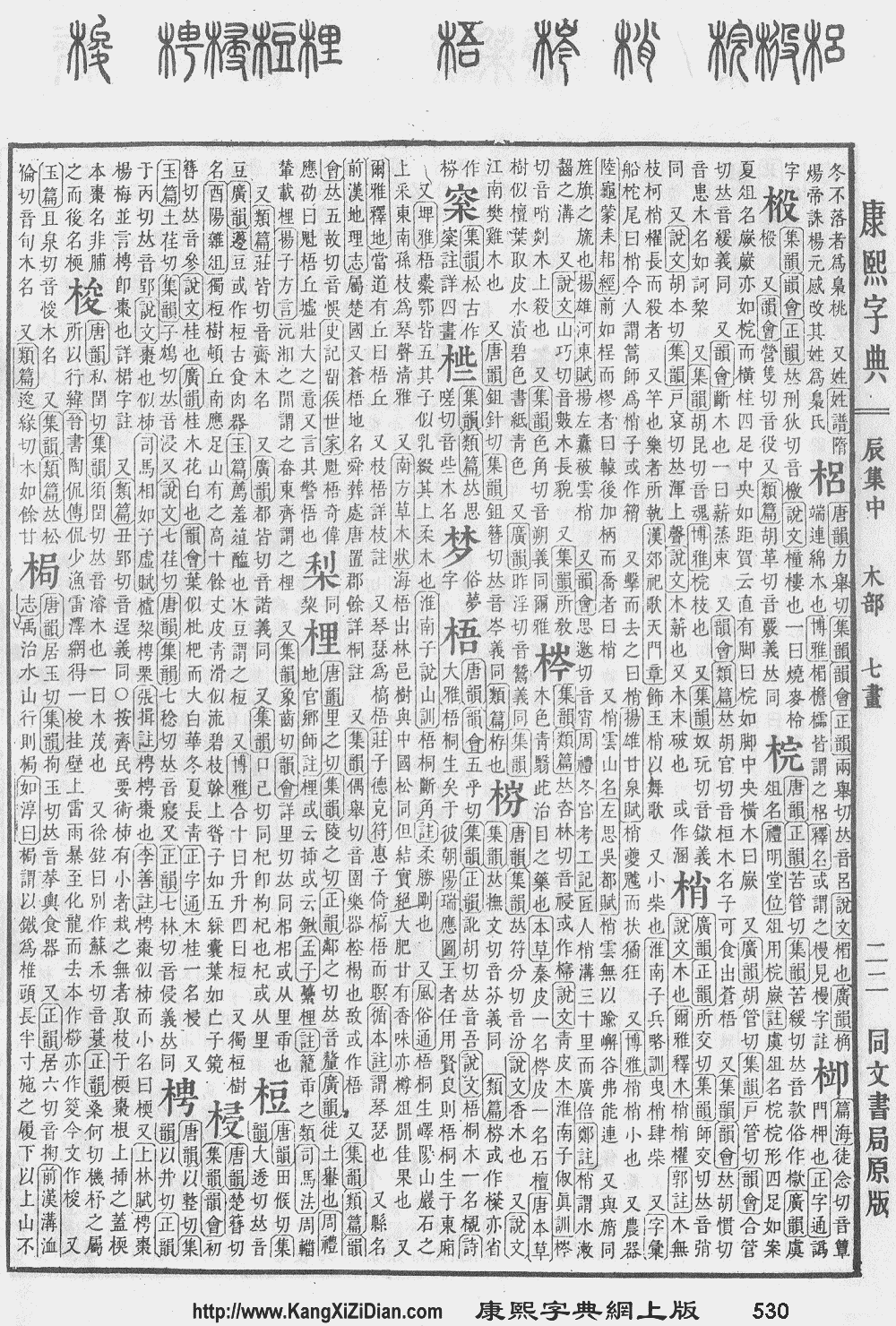
- Kangxi Dictionary: page 530, character 12
- Dai Kanwa Jiten: character 14873
- Dae Jaweon: page 918, character 10
- Hanyu Da Zidian (first edition): volume 2, page 1215, character 10
- Unihan data for U+68A8
Chinese edit
| trad. | 梨 | |
|---|---|---|
| simp. # | 梨 | |
| alternative forms | 棃 梸 | |
Glyph origin edit
| Historical forms of the character 梨 | |
|---|---|
| Shuowen Jiezi (compiled in Han) | Liushutong (compiled in Ming) |
| Small seal script | Transcribed ancient scripts |

|

|
Phono-semantic compound (形聲/形声, OC *ril) : phonetic 利 (OC *rids) + semantic 木.
Etymology edit
Unknown. Also found in Proto-Hmong-Mien *rəj; folk etymology derives this from 利 (OC *rids, “sharp”) (Schuessler, 2007).
Pronunciation edit
Definitions edit

梨
Synonyms edit
Dialectal synonyms of 梨 (“pear”) [map]
Compounds edit
- 不查梨
- 不賣查梨/不卖查梨
- 乳梨
- 交梨火棗/交梨火枣
- 伽梨
- 僧伽梨
- 僧迦梨
- 冰梨
- 凍梨/冻梨
- 剖梨
- 合梨
- 含消梨
- 哀家梨
- 哀梨
- 因提梨
- 地梨
- 士多啤梨 (shìduōpílí)
- 孔融讓梨/孔融让梨
- 山梨 (shānlí)
- 御梨
- 推梨讓棗/推梨让枣
- 杜梨 (dùlí)
- 杏雨梨雲/杏雨梨云
- 查梨
- 查梨相
- 桑梨
- 梨乾/梨干
- 梨乾兒/梨干儿
- 梨元
- 梨圈
- 梨園/梨园 (líyuán)
- 梨園子弟/梨园子弟 (Líyuán zǐdì)
- 梨園弟子/梨园弟子
- 梨園戲/梨园戏 (líyuánxì)
- 梨園榜/梨园榜
- 梨園行/梨园行
- 梨子 (lízi)
- 梨山 (Líshān)
- 梨庶
- 梨木
- 梨板
- 梨果 (líguǒ)
- 梨栗
- 梨栗兒/梨栗儿
- 梨條/梨条
- 梨棗/梨枣
- 梨樹/梨树 (líshù)
- 梨氓
- 梨渦/梨涡 (líwō)
- 梨狗
- 梨眉艾髮/梨眉艾发
- 梨窩/梨窝
- 梨筒
- 梨糕
- 梨肉
- 梨膏
- 梨膏糖 (lígāotáng)
- 梨花 (líhuā)
- 梨花凍/梨花冻
- 梨花夢/梨花梦
- 梨花大鼓
- 梨花帶雨/梨花带雨 (líhuādàiyǔ)
- 梨花春
- 梨花月
- 梨花板
- 梨花槍/梨花枪
- 梨花片
- 梨花盞/梨花盏
- 梨花簡/梨花简
- 梨花粉
- 梨花蜜
- 梨花釀/梨花酿
- 梨花雨
- 梨花雲/梨花云
- 梨花香
- 梨花鼓
- 梨英
- 梨萌
- 梨蓋/梨盖
- 梨蕊
- 梨雪
- 梨雲/梨云
- 梨雲夢/梨云梦
- 梨霜
- 梨面
- 梨頰/梨颊
- 梨頭/梨头
- 梨頰微渦/梨颊微涡
- 梨顆/梨颗
- 梨飣坐/梨饤坐
- 棗梨/枣梨
- 棠梨
- 棠梨宫
- 棠梨宮/棠梨宫
- 棠梨館/棠梨馆
- 楞梨
- 楓梨/枫梨 (fēnglí)
- 樊梨花
- 沙梨 (shālí)
- 消梨
- 消梨花
- 海棠梨
- 災梨/灾梨
- 災梨禍棗/灾梨祸枣
- 蒸梨
- 狐梨
- 獼猴梨/猕猴梨
- 玉嬌梨/玉娇梨
- 疾梨
- 白梨
- 破麥破梨/破麦破梨
- 禍棗災梨/祸枣灾梨
- 紅梨記/红梨记
- 胡梨
- 臘梨/腊梨
- 花梨
- 蛤梨
- 訶梨/诃梨
- 訶梨勒/诃梨勒
- 訶梨子/诃梨子
- 訶梨怛雞/诃梨怛鸡
- 語兒梨/语儿梨
- 讓梨/让梨 (rànglí)
- 讓棗推梨/让枣推梨
- 賣查梨/卖查梨
- 賣楂梨/卖楂梨
- 迦梨迦
- 迦梨郊
- 鄭州梨/郑州梨
- 酪梨 (làolí)
- 釘坐梨/钉坐梨
- 釘座梨/钉座梨
- 鐵腳梨/铁脚梨
- 闍梨/阇梨
- 阿梨
- 阿梨姨
- 阿闍梨/阿阇梨 (āshélí)
- 雨打梨花
- 雪梨 (xuělí)
- 霜梨
- 頗梨/颇梨
- 食蛤梨
- 飣坐梨/饤坐梨
- 飣座梨/饤座梨
- 香梨 (xiānglí)
- 香水梨
- 鳥梨/鸟梨
- 鳳栖梨
- 鳳梨/凤梨 (fènglí)
- 鳳棲梨/凤栖梨
- 鴨兒廣梨/鸭儿广梨
- 鴨兒梨/鸭儿梨
- 鴨梨/鸭梨 (yālí)
- 鵝梨/鹅梨
- 鵝梨角兒/鹅梨角儿
- 鹿梨
- 麵梨/面梨
- 黃梨/黄梨 (huánglí)
- 鼠梨
- 齧梨/啮梨
Descendants edit
Japanese edit
Kanji edit
梨
Readings edit
Etymology 1 edit


| Kanji in this term |
|---|
| 梨 |
| なし Grade: 4 |
| kun’yomi |
From Old Japanese. Derivation unclear, with numerous theories. Two of the more common are given below.
- May be originally a compound of 中 (na, “middle, center”, hypothesized root of modern naka) + 白 (shiro, “white”) in reference to the pale flesh of the fruit.[1]
- */na ɕiro/ → /naɕi/
- Alternatively, may be originally a compound of 中 (na, “middle, center”, hypothesized root of modern naka) + 酢 (su, “sour, acidic”) in reference to the way the flavor of the fruit becomes more astringent closer to the core.[1]
- */na su/ → /naɕi/
Pronunciation edit
Noun edit
- a pear tree
- a pear (the fruit)
- more specifically, a Japanese pear or Asian pear (Pyrus pyrifolia)
Usage notes edit
- As with many terms that name organisms, this term is often spelled in katakana, especially in biological contexts (where katakana is customary), as ナシ.
Derived terms edit
Derived terms
- 梨河豚 (nashifugu): pear puffer (Gastrophysus vermicularis, syn. Takifugu vermicularis)
- 梨子地 (nashiji), 梨地 (nashiji): nashiji, a lacquering technique using gold or silver powder or flakes
- 青梨 (ao nashi): Harbin pear, Ussurian pear, Chinese pear (Pyrus ussuriensis var. hondoensis)
- 玄圃梨 (kenpo nashi): Japanese raisin tree (Hovenia dulcis)
- 猿梨 (saru nashi): hardy kiwi, kiwi berry or tara vine (Actinidia arguta)
- 西洋梨 (seiyō nashi): European or Western pear (Pyrus communis)
- 浜梨 (hama nashi): rugosa rose, Japanese rose, or Ramanas rose (Rosa rugosa)
- 山梨 (yama nashi): wild nashi or wild Japanese pear (Pyrus pyrifolia var. pyrifolia)
- 山梨県 (Yamanashi-ken): Yamanashi prefecture
- 洋梨 (yōnashi): European or Western pear (Pyrus communis)
- 鰐梨 (wani nashi): avocado or alligator pear (Persea americana)
Etymology 2 edit
| Kanji in this term |
|---|
| 梨 |
| り Grade: 4 |
| on’yomi |
From Middle Chinese 梨 (MC lij). Compare modern Mandarin 梨 (lí).
Pronunciation edit
Affix edit
- a pear tree
- a pear (the fruit)
- more specifically, a Japanese pear or Asian pear (Pyrus pyrifolia)
Derived terms edit
Derived terms
- 梨園 (rien): the theatrical world, the world of the theater
- 梨果 (rika): a pome
- 梨花 (rika), 梨華 (rika), 梨英 (rika): pear flower, pear blossom
- 梨状筋 (rijōkin): the piriformis muscle
- 阿闍梨 (ajari), 阿闍梨 (azari): a high monk or high priest; a monk who conducts religious services; an initiate
- 頗梨 (hari): quartz; glass
- 鳳梨 (hōri): pineapple (obsolete)
Etymology 3 edit
| Kanji in this term |
|---|
| 梨 |
| りん Grade: 4 |
| kan’yōon |
Alteration of ri reading.
/ri/ → /rin/
Pronunciation edit
Affix edit
Derived terms edit
Derived terms
- 花梨 (karin) the Burmese rosewood, angsana, amboyna: Pterocarpus indicus; the flowering quince: Pseudocydonia sinensis; the Chinese quince: Chaenomeles sinensis; the quince: Cydonia oblonga
References edit
Korean edit
Hanja edit
梨 (eumhun 배나무 리 (baenamu ri), South Korea 배나무 이 (baenamu i))