
手
| ||||||||
| ||||||||
| ||||||||
Translingual edit
| Stroke order | |||
|---|---|---|---|

| |||
| Stroke order | |||
|---|---|---|---|

| |||
Alternative forms edit
- 扌 (when used as a left Chinese radical)
Han character edit

手 (Kangxi radical 64, 手+0, 4 strokes, cangjie input 手 (Q), four-corner 20500, composition ⿻𠂌一)
- Kangxi radical #64, ⼿.
Derived characters edit
- Appendix:Chinese radical/手
- 㐿, 𡛊, 𢌜, 𣲬, 𨑲, 杽, 𣧙, 𤘶, 𥾹, 𧦌, 𧵃, 𮛋, 𨥋, 𪌐, 𪎚
- 劧, 𠓢, 𠰅, 𥤺, 𥩝, 𥬄, 𩇮, 𦥹, 篫, 𬝩, 𢎇, 𠨾, 𭙕, 𧆠, 𪊗, 𪎮, 䦐, 𡆺, 𦵛
References edit
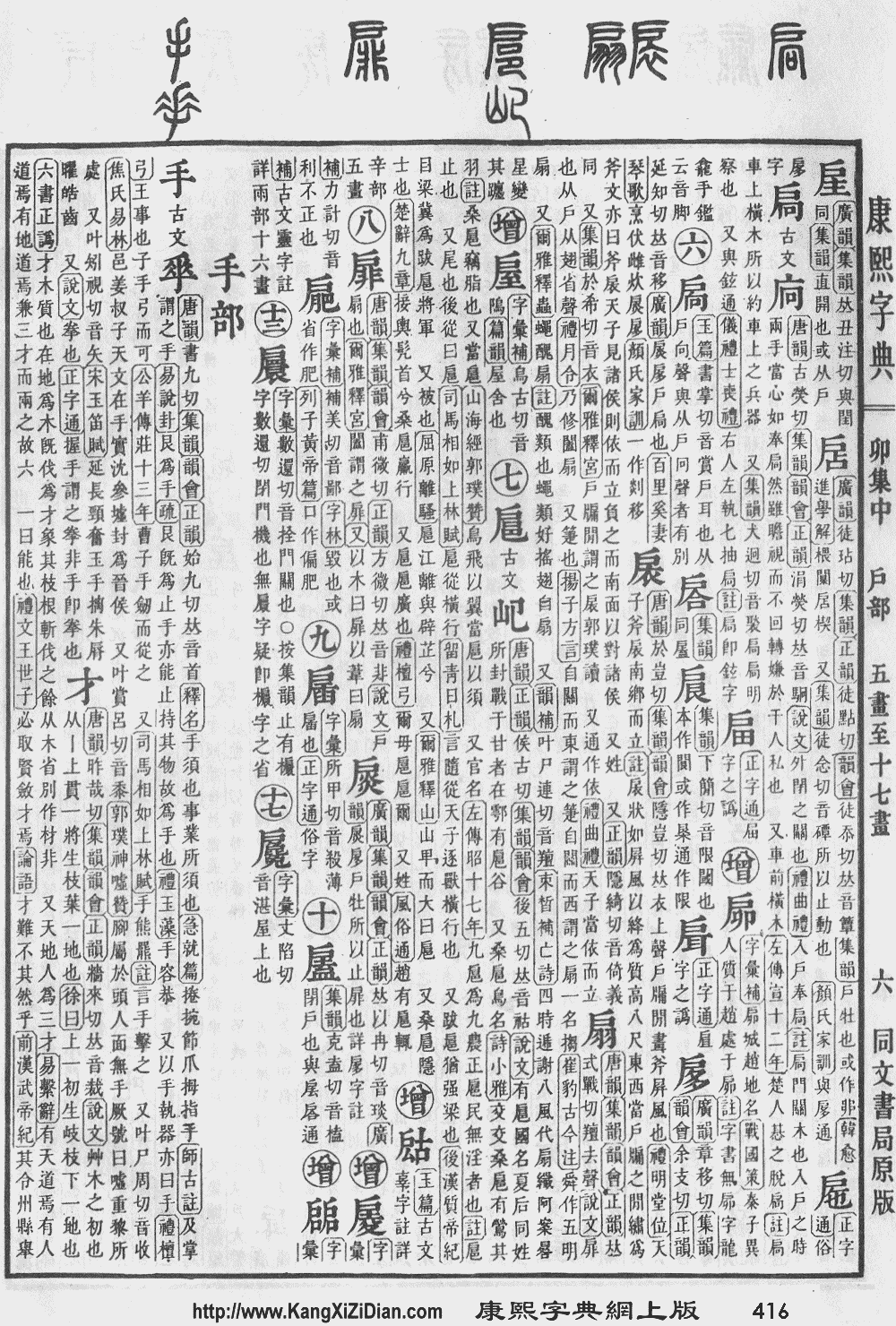
- Kangxi Dictionary: page 416, character 28
- Dai Kanwa Jiten: character 11768
- Dae Jaweon: page 762, character 9
- Hanyu Da Zidian (first edition): volume 3, page 1824, character 1
- Unihan data for U+624B
Chinese edit
| simp. and trad. |
手 | |
|---|---|---|
| alternative forms | 𠂿 | |

Glyph origin edit
| Historical forms of the character 手 | |||||
|---|---|---|---|---|---|
| Western Zhou | Warring States | Shuowen Jiezi (compiled in Han) | Liushutong (compiled in Ming) | ||
| Bronze inscriptions | Chu slip and silk script | Qin slip script | Ancient script | Small seal script | Transcribed ancient scripts |

|

|

|

|

|

|
Pictogram (象形) – hand and fingers. The top stroke is the bent over middle finger, while the horizontal strokes are each two fingers. Compare 爪, 寸, 九, 又.
Note that unlike the other hand/claw characters, 手 has consistently had five fingers: a mammalian/human hand, as opposed to the three digits often found in the others.
Compare also 止 (“foot”), derived from a footprint, originally composed of 3 toes and a sole.
Etymology edit
STEDT compares this word to Proto-Sino-Tibetan *g-(t)sjəw-k/ŋ (“wing; hand”) based on Karlgren's Archaic Chinese (Old Chinese) reconstruction *śi̯ôg, connecting it to Tibetan གཤོག (gshog, “wing”).
However, this comparison is not supported by more recent scholarship, in which the Old Chinese is reconstructed with an alveolar nasal (Unger, 1995; Zhengzhang, 1995; Baxter and Sagart, 2014). Evidence for the nasal initial is given in Sagart (1999):
- 杻 (“handcuffs”) can be written as 杽, so 丑 (OC *ᵇhnruʔ) (with a nasal initial) and 手 seem to be interchangeable as phonetics.
- The ancient graph 丑 resembles the graph of 又 (“right hand”). 狃 (OC *ᵇnruʔ, “animal track; claw”) seems to be the modern specialized form of 丑, which has been borrowed to represent an earthly branch.
As done by Sagart (1999), Baxter and Sagart (2014) put 杻 (OC *n̥<r>uʔ, “handcuffs”) and 狃 (OC *Cə.n<r>uʔ, “animal track; claw”) into the same word family as 手 (OC *n̥uʔ). Zhengzhang (1995) suggests a connection to Burmese ညှိုး (hnyui:, “forefinger”), which STEDT derives from Proto-Sino-Tibetan *s-njuŋ ~ *s-m-juŋ ~ *s-m-juw (“finger”).
Alternatively, Schuessler (2007) suggests a tone B endoactive derivation from 收 (OC *nhiu?, “to take; to gather”), literally “that which is doing the taking”.
Pronunciation edit
Definitions edit
手
- hand (Classifier: 隻/只 m c mn; 雙/双 m mn; 對/对 c)
- expert; master
- 高手 ― gāoshǒu ― master
- -ist; -er
- 歌手 ― gēshǒu ― singer
- convenient; handy; portable
- handwritten
- Classifier for skills.
- Classifier for transactions.
- (Southern Min) luck in gambling
- (Mainland China Hokkien) Classifier for Chinese characters.
- (Taiwanese Hokkien) hidden part (general)
- (finance) Classifier for stocks: lot
See also edit
Usage notes edit
In many varieties of Chinese south of the Yangtze River, 手 (shǒu) refers to the arm and hand collectively.
Compounds edit
- 一就手兒/一就手儿
- 一展身手 (yīzhǎnshēnshǒu)
- 一手
- 一手一腳/一手一脚 (yīshǒuyījiǎo)
- 一手一足
- 一手兒/一手儿 (yīshǒur)
- 一手包攬/一手包揽
- 一手包辦/一手包办 (yīshǒubāobàn)
- 一手承運/一手承运
- 一手提拔
- 一手遮天 (yīshǒuzhētiān)
- 一把手
- 一磔手
- 七手八腳/七手八脚 (qīshǒubājiǎo)
- 上下其手 (shàngxiàqíshǒu)
- 上手 (shàngshǒu)
- 下手 (xiàshǒu)
- 下毒手 (xiàdúshǒu)
- 三隻手/三只手 (sānzhīshǒu)
- 不中手
- 不伏手
- 不去手
- 不忍下手
- 不忍釋手/不忍释手
- 不擇手段/不择手段 (bùzéshǒuduàn)
- 不湊手/不凑手
- 不聽手/不听手
- 不露身手
- 不順手/不顺手
- 不龜手藥/不龟手药 (bùjūnshǒuyào)
- 丟手/丢手
- 丟開手/丢开手
- 丹青妙手
- 丹青手
- 乏手
- 了手
- 二手 (èrshǒu)
- 二手傳播/二手传播
- 二手煙/二手烟 (èrshǒuyān)
- 二手菸/二手烟 (èrshǒuyān)
- 二手貨/二手货 (èrshǒuhuò)
- 交手 (jiāoshǒu)
- 人多手亂/人多手乱
- 人多手雜/人多手杂
- 人手 (rénshǒu)
- 人手一冊/人手一册
- 代手
- 以手加額/以手加额 (yǐshǒujiā'é)
- 伏手
- 伸出援手
- 伴手 (bànshǒu)
- 伸手 (shēnshǒu)
- 佛手 (fóshǒu)
- 作手
- 住手 (zhùshǒu)
- 佛手柑 (fóshǒugān)
- 伸手牌
- 佛手瓜 (fóshǒuguā)
- 來手/来手
- 信手 (xìnshǒu)
- 侮手
- 侮手侮腳/侮手侮脚
- 信手拈來/信手拈来
- 倒手 (dǎoshǒu)
- 借手
- 假手
- 做手
- 偏手
- 假手他人
- 側手翻/侧手翻 (cèshǒufān)
- 做手腳/做手脚 (zuò shǒujiǎo)
- 僮手指千
- 先手 (xiānshǒu)
- 入手 (rùshǒu)
- 兩手/两手 (liǎngshǒu)
- 兩手空空/两手空空 (liǎngshǒukōngkōng)
- 兩手過膝/两手过膝
- 最拿手
- 凶手 (xiōngshǒu)
- 出手 (chūshǒu)
- 出手得盧/出手得卢
- 刀斧手 (dāofǔshǒu)
- 刀牌手
- 分手 (fēnshǒu)
- 別手/别手
- 初試身手/初试身手
- 到手 (dàoshǒu)
- 前手
- 剖腹手術/剖腹手术
- 副手 (fùshǒu)
- 剪手
- 劊子手/刽子手 (guìzishǒu)
- 劈手
- 助手 (zhùshǒu)
- 動手/动手 (dòngshǒu)
- 動手動腳/动手动脚 (dòngshǒudòngjiǎo)
- 動手腳/动手脚 (dòngshǒujiǎo)
- 動手術/动手术 (dòng shǒushù)
- 勝利投手/胜利投手
- 十目十手
- 千手
- 千手千眼觀音/千手千眼观音 (Qiān Shǒu Qiān Yǎn Guānyīn)
- 卑劣手段
- 叉手 (chāshǒu)
- 叉手吟
- 反手 (fǎnshǒu)
- 右手 (yòushǒu)
- 名手 (míngshǒu)
- 合手 (héshǒu)
- 吹手
- 吹鼓手 (chuīgǔshǒu)
- 呵手
- 咬手
- 唾手
- 唾手可取
- 唾手可得 (tuòshǒukědé)
- 喇叭手
- 單手/单手
- 喐手
- 單撒手兒/单撒手儿
- 回手 (huíshǒu)
- 國手/国手 (guóshǒu)
- 垂手
- 垂手可得 (chuíshǒukědé)
- 垂手而得
- 垂手過膝/垂手过膝
- 垂頭拱手/垂头拱手
- 執手/执手 (zhíshǒu)
- 塔手綢/塔手绸
- 壓手/压手
- 外手
- 外科手術/外科手术
- 外野手 (wàiyěshǒu)
- 多手
- 多面手 (duōmiànshǒu)
- 大出手
- 大力水手
- 大展身手 (dàzhǎnshēnshǒu)
- 大手印
- 大手大腳/大手大脚 (dàshǒudàjiǎo)
- 大手段
- 大手筆/大手笔 (dàshǒubǐ)
- 大手腳/大手脚
- 大打出手 (dàdǎchūshǒu)
- 大擋手的/大挡手的
- 大顯身手/大显身手 (dàxiǎnshēnshǒu)
- 失手 (shīshǒu)
- 奪手/夺手
- 如左右手
- 好手 (hǎoshǒu)
- 好手好腳/好手好脚
- 好手如雲/好手如云
- 好身手
- 妙手 (miàoshǒu)
- 妙手丹青
- 妙手回春 (miàoshǒuhuíchūn)
- 妙手空空
- 嫩手
- 寫手/写手
- 射手 (shèshǒu)
- 射鵰手/射雕手
- 對手/对手 (duìshǒu)
- 小手 (xiǎoshǒu)
- 小手小腳/小手小脚
- 小淨手/小净手
- 就手 (jiùshǒu)
- 就此罷手/就此罢手
- 左右手 (zuǒyòushǒu)
- 巧手 (qiǎoshǒu)
- 左手 (zuǒshǒu)
- 帶手/带手
- 帶手兒/带手儿
- 幫手/帮手 (bāngshǒu)
- 平手 (píngshǒu)
- 弄手腳/弄手脚
- 弓手 (gōngshǒu)
- 弓箭手 (gōngjiànshǒu)
- 引手
- 弩手 (nǔshǒu)
- 強硬手段/强硬手段
- 後手/后手 (hòushǒu)
- 後手不上/后手不上
- 後手不接/后手不接
- 後手兒/后手儿
- 後手錢/后手钱
- 徒手 (túshǒu)
- 徒手操
- 得先手
- 得心應手/得心应手 (déxīnyìngshǒu)
- 得手 (déshǒu)
- 御手 (yùshǒu)
- 得手應心/得手应心
- 心慕手追
- 心手相應/心手相应
- 心狠手辣 (xīnhěnshǒulà)
- 心閑手敏/心闲手敏
- 心靈手巧/心灵手巧
- 忙了手腳/忙了手脚
- 忙手忙腳/忙手忙脚
- 快手 (kuàishǒu)
- 怪手 (guàishǒu)
- 急手
- 情同手足
- 情若手足
- 愛不釋手/爱不释手 (àibùshìshǒu)
- 慌了手腳/慌了手脚
- 慌手忙腳/慌手忙脚
- 慌手慌腳/慌手慌脚
- 慧心巧手
- 慣手/惯手
- 慢手慢腳/慢手慢脚
- 應手/应手 (yìngshǒu)
- 戟手
- 手下 (shǒuxià)
- 手下人
- 手下留情 (shǒuxiàliúqíng)
- 手不停揮/手不停挥
- 手不穩/手不稳
- 手不輟筆/手不辍笔
- 手不釋卷/手不释卷 (shǒubùshìjuàn)
- 手串兒/手串儿
- 手令 (shǒulìng)
- 手作
- 手兒/手儿 (shǒur)
- 手冊/手册 (shǒucè)
- 手刃
- 手刺
- 手到回春
- 手到拿來/手到拿来
- 手到擒來/手到擒来 (shǒudàoqínlái)
- 手到病除
- 手創/手创 (shǒuchuàng)
- 手力
- 手勁/手劲
- 手勁兒/手劲儿
- 手動/手动 (shǒudòng)
- 手勢/手势 (shǒushì)
- 手勤
- 手匣
- 手印 (shǒuyìn)
- 手印兒/手印儿
- 手卷 (shǒujuàn)
- 手囊 (chhiú-lông) (Min Nan)
- 手多
- 手套 (shǒutào)
- 手套兒/手套儿 (shǒutàor)
- 手字兒/手字儿
- 手寫/手写 (shǒuxiě)
- 手寫繪圖/手写绘图
- 手寫輸入/手写输入
- 手寫辨似/手写辨似
- 手寫體/手写体
- 手工 (shǒugōng)
- 手工業/手工业 (shǒugōngyè)
- 手工藝/手工艺 (shǒugōngyì)
- 手工藝品/手工艺品 (shǒugōngyìpǐn)
- 手巧
- 手巴掌 (shǒubāzhang)
- 手巴掌兒/手巴掌儿 (shǒubāzhǎngr)
- 手巾 (shǒujīn)
- 手巾把子
- 手帕 (shǒupà)
- 手帖 (shǒutiě)
- 手帕姊妹
- 手帕子
- 手底下
- 手弓鋸/手弓锯
- 手彩兒/手彩儿
- 手心 (shǒuxīn)
- 手忙腳亂/手忙脚乱 (shǒumángjiǎoluàn)
- 手快 (shǒukuài)
- 手急眼快
- 手感 (shǒugǎn)
- 手慌腳忙/手慌脚忙
- 手慢
- 手戳
- 手戳兒/手戳儿
- 手打遮陽/手打遮阳
- 手扒雞/手扒鸡
- 手扣
- 手技 (shǒujì)
- 手把 (shǒubà)
- 手批
- 手抄 (shǒuchāo)
- 手扶 (shǒufú)
- 手把子
- 手把手 (shǒubǎshǒu)
- 手把手兒/手把手儿
- 手拙
- 手拖
- 手指 (shǒuzhǐ)
- 手指字母
- 手指甲
- 手拿花
- 手指頭/手指头
- 手指頭肚兒/手指头肚儿
- 手掣
- 手掌 (shǒuzhǎng)
- 手排 (shǒupái)
- 手捲/手卷 (shǒujuǎn)
- 手推車/手推车 (shǒutuīchē)
- 手提 (shǒutí)
- 手提包 (shǒutíbāo)
- 手援天下
- 手提式 (shǒutíshì)
- 手揮目送/手挥目送
- 手提箱 (shǒutíxiāng)
- 手提袋
- 手搭涼棚/手搭凉棚
- 手摺/手折
- 手擊子/手击子
- 手攜手/手携手
- 手書/手书 (shǒushū)
- 手本 (shǒuběn)
- 手札 (shǒuzhá)
- 手杖 (shǒuzhàng)
- 手板 (shǒubǎn)
- 手松
- 手板係肉,手背亦係肉/手板系肉,手背亦系肉
- 手板係肉,手背又係肉/手板系肉,手背又系肉
- 手板兒/手板儿
- 手板堂
- 手板子
- 手板眼見工夫/手板眼见工夫
- 手柄 (shǒubǐng)
- 手植
- 手榜
- 手槍/手枪 (shǒuqiāng)
- 手榴彈/手榴弹 (shǒuliúdàn)
- 手模 (shǒumó)
- 手機/手机 (shǒujī)
- 手段 (shǒuduàn)
- 手民 (shǒumín)
- 手氣/手气 (shǒuqì)
- 手汗 (shǒuhàn)
- 手泐
- 手法 (shǒufǎ)
- 手淫 (shǒuyín)
- 手滑 (shǒuhuá)
- 手滑心慈
- 手澤/手泽 (shǒuzé)
- 手無寸鐵/手无寸铁 (shǒuwúcùntiě)
- 手無縛雞之力/手无缚鸡之力 (shǒu wú fú jī zhī lì)
- 手照
- 手爐/手炉
- 手爪 (shǒuzhuǎ)
- 手版 (shǒubǎn)
- 手狠
- 手球 (shǒuqiú)
- 手生 (shǒushēng)
- 手疾眼快
- 手痕 (shǒuhén)
- 手癢/手痒 (shǒuyǎng)
- 手癬/手癣 (shǒuxuǎn)
- 手白
- 手相 (shǒuxiàng)
- 手相學/手相学
- 手眼 (shǒuyǎn)
- 手硬
- 手磬子
- 手稿 (shǒugǎo)
- 手策 (shǒucè)
- 手筆/手笔 (shǒubǐ)
- 手簡/手简 (shǒujiǎn)
- 手籠/手笼 (shǒulóng)
- 手紋/手纹 (shǒuwén)
- 手紙/手纸 (shǒuzhǐ)
- 手絹/手绢 (shǒujuàn)
- 手絹兒/手绢儿 (shǒujuànr)
- 手緊/手紧 (shǒujǐn)
- 手續/手续 (shǒuxù)
- 手續費/手续费 (shǒuxùfèi)
- 手翰
- 手肘 (shǒuzhǒu)
- 手背 (shǒubèi)
- 手背朝下
- 手胼足胝
- 手脖子 (shǒubózi)
- 手腕 (shǒuwàn)
- 手腕子 (shǒuwànzi)
- 手腳/手脚 (shǒujiǎo)
- 手腳無措/手脚无措
- 手膀 (shǒubǎng)
- 手臂 (shǒubì)
- 手舞足蹈 (shǒuwǔzúdǎo)
- 手藝/手艺 (shǒuyì)
- 手術/手术 (shǒushù)
- 手術室/手术室 (shǒushùshì)
- 手袋 (shǒudài)
- 手製/手制
- 手製動/手制动
- 手親眼便/手亲眼便
- 手記/手记 (shǒujì)
- 手語/手语 (shǒuyǔ)
- 手語歌/手语歌
- 手談/手谈 (shǒután)
- 手諭/手谕 (shǒuyù)
- 手起刀落 (shǒu qǐ dāo luò)
- 手足 (shǒuzú)
- 手足之情
- 手足之雅
- 手足失措
- 手足情深
- 手足無措/手足无措 (shǒuzúwúcuò)
- 手足異處/手足异处
- 手足胼胝
- 手足重繭/手足重茧
- 手跡/手迹 (shǒujì)
- 手路 (chhiú-lō͘) (Min Nan)
- 手車/手车 (shǒuchē)
- 手軟/手软 (shǒuruǎn)
- 手輕/手轻
- 手辣
- 手邊/手边 (shǒubiān)
- 手邊兒/手边儿
- 手重
- 手鈪/手𰽞
- 手銬/手铐 (shǒukào)
- 手錶/手表 (shǒubiǎo)
- 手鐲/手镯 (shǒuzhuó)
- 手長的/手长的
- 手閘/手闸 (shǒuzhá)
- 手電/手电 (shǒudiàn)
- 手雷 (shǒuléi)
- 手電筒/手电筒 (shǒudiàntǒng)
- 手零腳碎/手零脚碎
- 手震
- 手面 (shǒumiàn)
- 手面賺吃/手面赚吃
- 手頭/手头 (shǒutóu)
- 手頭不便/手头不便
- 手頭字/手头字
- 手風/手风
- 手風琴/手风琴 (shǒufēngqín)
- 手高手低
- 手鬆/手松
- 手麻腳軟/手麻脚软
- 手黏
- 手黑
- 手鼓 (shǒugǔ)
- 扎手 (zhāshǒu)
- 扎手舞腳
- 打下手的
- 打了偏手
- 打偏手
- 打出手
- 打手 (dǎshǒu)
- 扒手 (páshǒu)
- 打手勢/打手势
- 打手式
- 打手心
- 打撒手
- 打擊手/打击手
- 打過偏手/打过偏手
- 扦子手
- 扠手
- 扦手
- 投手 (tóushǒu)
- 抃手
- 抗手
- 把手 (bǎshǒu)
- 扶手 (fúshǒu)
- 扳手 (bānshǒu)
- 抄手 (chāoshǒu)
- 扯手
- 扶手匣
- 扭手扭腳/扭手扭脚
- 扯手扯腳/扯手扯脚
- 投手犯規/投手犯规
- 把手言歡/把手言欢
- 抄手遊廊/抄手游廊
- 拍手 (pāishǒu)
- 招手 (zhāoshǒu)
- 拊手 (fǔshǒu)
- 拉手
- 拍手叫好
- 拍手打腳/拍手打脚
- 拍手拍腳/拍手拍脚
- 拍手稱快/拍手称快
- 拜手稽首
- 招招手
- 括囊拱手
- 拿手 (náshǒu)
- 拱手 (gǒngshǒu)
- 按手
- 拱手作揖
- 拱手垂裳
- 拿手好戲/拿手好戏
- 拱手投降
- 指手畫腳/指手画脚 (zhǐshǒuhuàjiǎo)
- 拿手絕活/拿手绝活
- 拱手而別/拱手而别
- 拱手而降
- 拱手聽命/拱手听命
- 拿手菜 (náshǒucài)
- 拱手讓人/拱手让人 (gǒngshǒuràngrén)
- 指手頓腳/指手顿脚
- 拿雲手/拿云手
- 挽手
- 捉手
- 捕手 (bǔshǒu)
- 挽手兒/挽手儿
- 捏手捏腳/捏手捏脚
- 捏腳捏手/捏脚捏手
- 推手 (tuīshǒu)
- 措手 (cuòshǒu)
- 排手
- 接手
- 探手
- 措手不及 (cuòshǒubùjí)
- 措手不迭
- 捻手捻腳/捻手捻脚
- 授手援溺
- 捻腳捻手/捻脚捻手
- 插手 (chāshǒu)
- 揚手/扬手
- 換手/换手
- 握手 (wòshǒu)
- 援手 (yuánshǒu)
- 揮手/挥手 (huīshǒu)
- 揣手兒/揣手儿
- 提手旁 (tíshǒupáng)
- 握手極歡/握手极欢
- 握手言和
- 握手言歡/握手言欢
- 搖手/摇手 (yáoshǒu)
- 搓手 (cuōshǒu)
- 搶手/抢手 (qiǎngshǒu)
- 搏手
- 搭手
- 搋手兒/搋手儿
- 搏手無策/搏手无策
- 搖手觸禁/摇手触禁
- 搶手貨/抢手货 (qiǎngshǒuhuò)
- 搓手跺腳/搓手跺脚
- 搓手頓腳/搓手顿脚 (cuōshǒudùnjiǎo)
- 搓手頓足/搓手顿足
- 撂手
- 摑手/掴手
- 摔手
- 摸手熟
- 撂過手/撂过手
- 撂開手/撂开手
- 撥手/拨手
- 撒手 (sāshǒu)
- 撲手/扑手
- 撒手人寰 (sāshǒurénhuán)
- 撒手塵寰/撒手尘寰 (sāshǒuchénhuán)
- 撒手歸去/撒手归去
- 撒手鐧/撒手锏
- 擎天手
- 擎手
- 擛手 (ia̍t-chhiú)
- 擋手/挡手
- 擠手捏腳/挤手捏脚
- 擺手/摆手 (bǎishǒu)
- 攜手/携手 (xiéshǒu)
- 攜手合作/携手合作
- 攜手接武/携手接武
- 攤手/摊手 (tānshǒu)
- 攤手攤腳/摊手摊脚
- 支手舞腳/支手舞脚
- 收手 (shōushǒu)
- 放出手眼
- 放手 (fàngshǒu)
- 放手一搏 (fàngshǒuyībó)
- 放手銃/放手铳
- 啟手足/启手足
- 散手 (sànshǒu)
- 敵手/敌手 (díshǒu)
- 整手甲
- 斂手/敛手 (liànshǒu)
- 斂手待斃/敛手待毙
- 斫手
- 斫輪老手/斫轮老手
- 新出手兒/新出手儿
- 新手 (xīnshǒu)
- 斲輪老手/斲轮老手
- 旁手
- 旁觀袖手/旁观袖手
- 旅遊手冊/旅游手册
- 旗手 (qíshǒu)
- 易手 (yìshǒu)
- 書手/书手
- 替手填腳/替手填脚
- 有一手 (yǒu yīshǒu)
- 有一手兒/有一手儿 (yǒu yīshour)
- 札手舞腳/札手舞脚
- 束手 (shùshǒu)
- 束手就擒 (shùshǒujiùqín)
- 束手就縛/束手就缚
- 束手待斃/束手待毙 (shùshǒu dàibì)
- 束手旁觀/束手旁观
- 束手束腳/束手束脚
- 束手無措/束手无措
- 束手無策/束手无策 (shùshǒuwúcè)
- 板手
- 查手舞腳/查手舞脚
- 棒子手
- 棘手 (jíshǒu)
- 棋手 (qíshǒu)
- 棉手籠/棉手笼
- 植皮手術/植皮手术
- 棋逢對手/棋逢对手 (qíféngduìshǒu)
- 棋逢敵手/棋逢敌手 (qíféngdíshǒu)
- 業餘選手/业余选手
- 槍仗手/枪仗手
- 槍手/枪手 (qiāngshǒu)
- 標手錢/标手钱
- 機器手/机器手
- 機械手/机械手
- 歇手 (xiēshǒu)
- 歌手 (gēshǒu)
- 正手板
- 死手
- 殺手/杀手 (shāshǒu)
- 殺手鐧/杀手锏
- 毒手 (dúshǒu)
- 毒手尊拳
- 比手勢/比手势
- 比手式
- 比手畫腳/比手画脚 (bǐshǒuhuàjiǎo)
- 毛了手腳/毛了手脚
- 毛手毛腳/毛手毛脚 (máoshǒumáojiǎo)
- 毛腳毛手/毛脚毛手
- 民謠歌手/民谣歌手
- 水手 (shuǐshǒu)
- 水手帽
- 汗手
- 沙手
- 沒腳手/没脚手
- 沾手 (zhānshǒu)
- 洗手 (xǐshǒu)
- 洗手不幹/洗手不干
- 洗手奉職/洗手奉职
- 洗手池 (xǐshǒuchí)
- 洗手錢/洗手钱
- 洗手間/洗手间 (xǐshǒujiān)
- 淨手/净手
- 游手
- 湊手/凑手
- 游手人戶/游手人户
- 游手好閒/游手好闲 (yóushǒuhàoxián)
- 游手游食
- 游擊手/游击手 (yóujīshǒu)
- 滿手/满手 (mǎnshǒu)
- 澆手/浇手
- 炙手可熱/炙手可热 (zhìshǒukěrè)
- 炮手 (pàoshǒu)
- 無從下手/无从下手
- 熟手 (shúshǒu)
- 燙手/烫手 (tàngshǒu)
- 燙手山芋/烫手山芋 (tàngshǒu shānyù)
- 牽手/牵手 (qiānshǒu)
- 狠手
- 獵手/猎手 (lièshǒu)
- 玉手 (yùshǒu)
- 玉手纖纖/玉手纤纤
- 琴手
- 生手 (shēngshǒu)
- 用手
- 甩手 (shuǎishǒu)
- 甩手掌櫃/甩手掌柜
- 留一手
- 留後手/留后手
- 番子手
- 當場隻手/当场只手
- 當手/当手
- 瘸手 (khôe-chhiú) (Min Nan)
- 白手 (báishǒu)
- 白手套 (báishǒutào)
- 白手成家 (báishǒuchéngjiā)
- 白手興家/白手兴家
- 白手起家 (báishǒuqǐjiā)
- 盈手
- 目披手抄
- 目送手揮/目送手挥
- 相腳手/相脚手
- 眼明手快 (yǎnmíngshǒukuài)
- 眼明手捷
- 眼疾手快
- 眼高手低 (yǎngāoshǒudī)
- 硬手
- 磨扇墜手/磨扇坠手
- 磨牙手機/磨牙手机
- 礙手/碍手
- 礙手礙腳/碍手碍脚 (àishǒu'àijiǎo)
- 神射手
- 神槍手/神枪手
- 空手 (kōngshǒu)
- 空手而回
- 空手道 (kōngshǒudào)
- 穿手
- 立手兒/立手儿
- 第一手 (dìyīshǒu)
- 第一把手 (dìyībǎshǒu)
- 第二把手
- 笨手笨腳/笨手笨脚 (bènshǒubènjiǎo)
- 管手
- 粗手粗腳/粗手粗脚
- 紅旗手/红旗手
- 素手
- 累手
- 經手/经手 (jīngshǒu)
- 緊手/紧手
- 練手/练手 (liànshǒu)
- 縛手縛腳/缚手缚脚
- 縛虎手/缚虎手
- 縮手/缩手 (suōshǒu)
- 縴手/纤手
- 縮手旁觀/缩手旁观
- 縮手縮腳/缩手缩脚 (suōshǒusuōjiǎo)
- 纏手/缠手 (chánshǒu)
- 纏手纏腳/缠手缠脚
- 纖手/纤手
- 纖纖玉手/纤纤玉手 (xiānxiānyùshǒu)
- 罷手/罢手 (bàshǒu)
- 義手/义手
- 翼手目
- 翼手類/翼手类
- 翼手龍/翼手龙 (yìshǒulóng)
- 翻手之間/翻手之间 (fān shǒu zhī jiān)
- 翻手為雲/翻手为云
- 老手 (lǎoshǒu)
- 耍手腕 (shuǎ shǒuwàn)
- 耍手藝/耍手艺
- 聖手/圣手 (shèngshǒu)
- 聖手仁心/圣手仁心
- 聯手/联手 (liánshǒu)
- 職業選手/职业选手
- 聽手/听手
- 肘手鍊足/肘手炼足
- 背抄手
- 能手 (néngshǒu)
- 胼手胝足 (piánshǒuzhīzú)
- 脫手/脱手 (tuōshǒu)
- 腳忙手亂/脚忙手乱
- 腳手/脚手
- 腳手架/脚手架 (jiǎoshǒujià)
- 腳鐐手銬/脚镣手铐
- 舉手/举手 (jǔshǒu)
- 舉手之勞/举手之劳 (jǔshǒuzhīláo)
- 舉手加額/举手加额
- 舉手可采
- 舉手扣額/举手扣额
- 舉手投足/举手投足 (jǔshǒutóuzú)
- 舊手/旧手
- 舞林高手
- 舵手 (duòshǒu)
- 良質美手/良质美手
- 苦手
- 荑手纖纖/荑手纤纤
- 莫措手足
- 著手 (zhuóshǒu)
- 著手/着手
- 著手回春
- 著手成春
- 著手腳/著手脚
- 落手
- 藉手/借手
- 蘭花手/兰花手
- 號手/号手
- 袖手 (xiùshǒu)
- 袖手旁觀/袖手旁观 (xiùshǒupángguān)
- 襯手/衬手
- 覆手 (fùshǒu)
- 親如手足/亲如手足
- 親手/亲手 (qīnshǒu)
- 親手足/亲手足
- 解手 (jiěshǒu)
- 解手刀
- 觸手/触手 (chùshǒu)
- 觸手可及/触手可及 (chùshǒukějí)
- 護手/护手
- 讀不捨手/读不舍手
- 變性手術/变性手术
- 負手/负手
- 負手板/负手板
- 貫手著棼/贯手著棼
- 費手/费手
- 買手/买手 (mǎishǒu)
- 費手腳/费手脚
- 費腳手/费脚手
- 賣手/卖手 (màishǒu)
- 賺手/赚手
- 贏手/赢手
- 赤手
- 赤手空拳 (chìshǒukōngquán)
- 赤手起家
- 起手 (qǐshǒu)
- 趁手
- 超手遊廊/超手游廊
- 足蹈手舞
- 跌腳絆手/跌脚绊手
- 跟手 (gēnshǒu)
- 踢腳絆手/踢脚绊手
- 躡手躡腳/蹑手蹑脚 (nièshǒunièjiǎo)
- 身手 (shēnshǒu)
- 身手不凡 (shēnshǒubùfán)
- 身手矯捷/身手矫捷
- 軍牢快手/军牢快手
- 輕手輕腳/轻手轻脚
- 轉手/转手 (zhuǎnshǒu)
- 轉輪手槍/转轮手枪
- 辣手 (làshǒu)
- 辣手摧花
- 迎手
- 連手/连手
- 通關手/通关手
- 過手/过手
- 遊手好閒/游手好闲 (yóushǒuhàoxián)
- 逼手逼腳/逼手逼脚
- 遊手遊食/游手游食
- 選手/选手 (xuǎnshǒu)
- 還手/还手 (huánshǒu)
- 釋手/释手
- 重炮手
- 野手選擇/野手选择
- 金手套獎/金手套奖
- 金盆洗手 (jīnpénxǐshǒu)
- 鉤手/钩手 (gōushǒu)
- 鎗手/枪手
- 開手/开手
- 開手錢/开手钱
- 關手/关手
- 隔手
- 隨手/随手 (suíshǒu)
- 隻手/只手 (zhīshǒu)
- 隻手單拳/只手单拳
- 隻手擎天/只手擎天
- 隻手空拳/只手空拳
- 隻手遮天/只手遮天 (zhīshǒuzhētiān)
- 雙手/双手 (shuāngshǒu)
- 雙手萬能/双手万能
- 難出手心/难出手心
- 雲手/云手 (yúnshǒu)
- 露一手 (lòu yīshǒu)
- 霹靂手/霹雳手
- 靠手
- 頂尖好手/顶尖好手
- 順手/顺手 (shùnshǒu)
- 順手牽羊/顺手牵羊 (shùnshǒuqiānyáng)
- 頭手鼓/头手鼓
- 額手/额手
- 額手稱慶/额手称庆 (éshǒuchéngqìng)
- 額手稱頌/额手称颂
- 顯微手術/显微手术 (xiǎnwēi shǒushù)
- 顯身手/显身手 (xiǎn shēnshǒu)
- 馬快手/马快手
- 馭手/驭手 (yùshǒu)
- 騎手/骑手 (qíshǒu)
- 高下其手
- 高壓手段/高压手段
- 高手 (gāoshǒu)
- 高手如雲/高手如云 (gāoshǒurúyún)
- 高手雲集/高手云集
- 高抬貴手/高抬贵手 (gāotáiguìshǒu)
- 鬆手/松手 (sōngshǒu)
- 魁手
- 魔手
- 鹹豬手/咸猪手 (xiánzhūshǒu)
- 鹿死誰手/鹿死谁手
- 黑手 (hēishǒu)
- 黑手黨/黑手党 (hēishǒudǎng)
- 點手/点手
- 鼓手 (gǔshǒu)
- 龍龕手鑑/龙龛手鉴
- 龜手/龟手
Descendants edit
Japanese edit
Kanji edit
Readings edit
- Go-on: しゅ (shu, Jōyō)←しゆ (syu, historical); す (su)
- Kan-on: しゅう (shū)←しう (siu, historical)
- Kan’yō-on: ず (zu)
- Kun: て (te, 手, Jōyō); た (ta, 手, Jōyō †)
Compounds edit
Etymology 1 edit
| Kanji in this term |
|---|
| 手 |
| て Grade: 1 |
| kun’yomi |
From Old Japanese, from Proto-Japonic *tay. Compare 目 (me, ma-, “eye”).
Pronunciation edit
Noun edit
- a hand
- a handle, grip
- a paw, foreleg
- a way of acting, means
- (board games) a move, play
- 2002 March 9, Yumi Hotta with Obata, Takeshi, “第131局 試される伊角”, in ヒカルの碁 [Hikaru’s Go], volume 16 (fiction), Tokyo: Shueisha, →ISBN, page 54:
- まだそんな手が残ってた——投了は早すぎた
- Mada sonna te ga nokotteta—— Tōryō wa hayasugita
- There’s still that move — I gave up too soon
- まだそんな手が残ってた——投了は早すぎた
Derived terms edit
- 手打ち (teuchi)
- 手弱女 (taoyame)
- 手斧 (teono), 手斧 (chōna)
- 手折る (taoru)
- 手紙 (tegami)
- 手柄 (tegara)
- 手順 (tejun)
- 手錠 (tejō), 手鎖 (tejō)
- 手作り (tezukuri)
- 手綱 (tazuna)
- 掌 (tanagokoro)
- 手配 (tehai)
- 手袋 (tebukuro)
- 手偏 (tehen)
- 手巻き (temaki)
- 手枕 (tamakura)
- 手水 (temizu), 手水 (chōzu)
- 袂 (tamoto)
- 手元 (temoto), 手許 (temoto)
- 相手 (aite)
- 射手 (ite)
- 上手 (uwate)
- 柏手 (kashiwade)
- 勝手 (katte)
- 上手 (kamite)
- 空手 (karate)
- 切手 (kitte)
- 後手 (gote)
- 仕手 (shite)
- 下手 (shitate)
- 下手 (shimote)
- 素手 (sude)
- 助手 (sukete)
- 取っ手 (totte)
- 御手洗 (mitarashi)
- 筆 (fude)
- 馬手 (mete)
- 山手 (yamate)
- 弓手 (yunde)
- 両手 (ryōte)
- 若手 (wakate)
Prefix edit
- strengthens the prefixed adjective or adjectival noun
- 手早い、手堅い
- tebayai, tegatai
- quick, nimble; firm, steady
- 手早い、手堅い
Suffix edit
- one who does the previous word's action: -ist, -er
- (board games) counter for moves in shogi, go, etc.
Derived terms edit
See also edit
Etymology 2 edit
| Kanji in this term |
|---|
| 手 |
| しゅ Grade: 1 |
| goon |
From Middle Chinese 手 (MC syuwX).
Affix edit
Derived terms edit
- 手記 (shuki)
- 手芸 (shugei)
- 手交 (shukō)
- 手写 (shusha)
- 手術 (shujutsu)
- 手段 (shudan)
- 手腕 (shuwan)
- 手裏剣 (shuriken)
- 握手 (akushu)
- 運転手 (untenshu)
- 歌手 (kashu)
- 義手 (gishu)
- 挙手 (kyoshu)
- 国手 (kokushu)
- 射手 (shashu)
- 助手 (joshu)
- 触手 (shokushu)
- 繊手 (senshu)
- 選手 (senshu)
- 双手 (sōshu)
- 敵手 (tekishu)
- 徒手 (toshu)
- 投手 (tōshu)
- 入手 (nyūshu)
- 馬手 (bashu)
- 拍手 (hakushu)
- 凡手 (bonshu)
- 魔手 (mashu)
- 妙手 (myōshu)
- 名手 (meishu)
- 落手 (rakushu)
References edit
Korean edit
Etymology edit
From Middle Chinese 手 (MC syuwX).
| Historical Readings | ||
|---|---|---|
| Dongguk Jeongun Reading | ||
| Dongguk Jeongun, 1448 | 슈ᇢ〯 (Yale: syǔw) | |
| Middle Korean | ||
| Text | Eumhun | |
| Gloss (hun) | Reading | |
| Hunmong Jahoe, 1527[1] | 손〮 (Yale: swón) | 슈〮 (Yale: syú) |
Pronunciation edit
- (hand; person; etc.):
- (SK Standard/Seoul) IPA(key): [sʰu]
- Phonetic hangul: [수]
- (in 수건 (手巾, sugeon)):
- (SK Standard/Seoul) IPA(key): [sʰu(ː)]
- Phonetic hangul: [수(ː)]
- Though still prescribed in Standard Korean, most speakers in both Koreas no longer distinguish vowel length.
Hanja edit

Compounds edit
- 수갑 (手匣, sugap)
- 수건 (手巾, sugeon)
- 수공 (手工, sugong)
- 수기 (手技, sugi)
- 수기 (手記, sugi)
- 수단 (手段, sudan)
- 수당 (手當, sudang)
- 수법 (手法, subeop)
- 수수 (手授, susu)
- 수술 (手術, susul)
- 수예 (手藝, suye)
- 수완 (手腕, suwan)
- 수음 (手淫, sueum)
- 수족 (手足, sujok)
- 수중 (手中, sujung)
- 수첩 (手帖, sucheop)
- 수표 (手標, supyo)
- 수표 (手票, supyo)
- 수화 (手話, suhwa)
- 가수 (歌手, gasu)
- 거수 (擧手, geosu)
- 고수 (高手, gosu)
- 고수 (鼓手, gosu)
- 국수 (國手, guksu)
- 궁수 (弓手, gungsu)
- 균수 (龜手, gyunsu)
- 기수 (旗手, gisu)
- 기수 (騎手, gisu)
- 노수 (弩手, nosu)
- 능수 (能手, neungsu)
- 마수 (魔手, masu)
- 목수 (木手, moksu)
- 묘수 (妙手, myosu)
- 박수 (拍手, baksu)
- 복수 (覆手, boksu)
- 사수 (射手, sasu)
- 상수 (上手, sangsu)
- 석수 (石手, seoksu)
- 선수 (先手, seonsu)
- 선수 (選手, seonsu)
- 세수 (洗手, sesu)
- 속수 (束手, soksu)
- 수수 (袖手, susu)
- 수수 (隨手, susu)
- 신수 (身手, sinsu)
- 실수 (失手, silsu)
- 쌍수 (雙手, ssangsu)
- 악수 (握手, aksu)
- 안수 (按手, ansu)
- 액수 (額手, aeksu)
- 연수 (剡手, yeonsu)
- 옥수 (玉手, oksu)
- 입수 (入手, ipsu)
- 저수 (著手, jeosu)
- 적수 (敵手, jeoksu)
- 적수 (赤手, jeoksu)
- 조수 (助手, josu)
- 좌수 (左手, jwasu)
- 지수 (蜘手, jisu)
- 착수 (着手, chaksu)
- 촉수 (觸手, choksu)
- 축수 (縮手, chuksu)
- 타수 (舵手, tasu)
- 투수 (投手, tusu)
- 포수 (捕手, posu)
- 호수 (好手, hosu)
- 회수 (劊手, hoesu)
- 휘수 (揮手, hwisu)
- 휴수 (携手, hyusu)
- 흉수 (凶手, hyungsu)
- 수공업 (手工業, sugong'eop)
- 수류탄 (手榴彈, suryutan)
- 수세공 (手細工, susegong)
- 수수료 (手數料, susuryo)
- 수악한 (手握汗, suakhan)
- 수전증 (手顫症, sujeonjeung)
- 수제품 (手製品, sujepum)
- 수하물 (手荷物, suhamul)
- 벽력수 (霹靂手, byeongnyeoksu)
- 외야수 (外野手, oeyasu)
- 일루수 (一壘手, illusu)
- 좌익수 (左翼手, jwaiksu)
- 공수시립 (拱手侍立, gongsusirip)
- 속수무책 (束手無策, soksumuchaek)
- 수수방관 (袖手傍觀, susubanggwan)
References edit
- 국제퇴계학회 대구경북지부 (國際退溪學會 大邱慶北支部) (2007). Digital Hanja Dictionary, 전자사전/電子字典. [2]
Kunigami edit
Kanji edit
Pronunciation edit
Noun edit
手 (thī)
- a hand
Miyako edit
Kanji edit
Pronunciation edit
Noun edit
手 (tī)
- a hand
Okinawan edit
Kanji edit
Readings edit
Compounds edit
- 下手 (fita)
Etymology edit
Pronunciation edit
Noun edit
手 (tī)
Derived terms edit
Vietnamese edit
Han character edit
手: Hán Việt readings: thủ (
手: Nôm readings: thủ[1][3][4][5]
Compounds edit
References edit
Yaeyama edit
Kanji edit
Pronunciation edit
Noun edit
手 (tī)
- a hand
Yonaguni edit
Kanji edit
Pronunciation edit
Noun edit
手 (tī)
- a hand