
九
| ||||||||
| ||||||||
| ||||||||
Translingual edit
| Stroke order | |||
|---|---|---|---|

| |||
| Stroke order | |||
|---|---|---|---|

| |||
Han character edit

九 (Kangxi radical 5, 乙+1, 2 strokes, cangjie input 大弓 (KN), four-corner 40017, composition ⿻㇓㇈)
Derived characters edit
- 仇, 㕤, 扏, 氿, 肍, 朹, 犰, 䊵(𮉠), 訅, 䜪, 軌(轨), 㐜, 釚(𫟲), 骩, 鼽, 丸, 旭, 訄, 䧱, 虓, 頄(𬱓), 馗, 㐡, 㐤, 鳩(鸠), 勼, 宄, 尻, 旯, 㶢, 艽, 究, 㭝, 㐇, 卆, 厹, 叴, 旮, 杂, 䲥, 㔲, 抛, 亴
Descendants edit
References edit
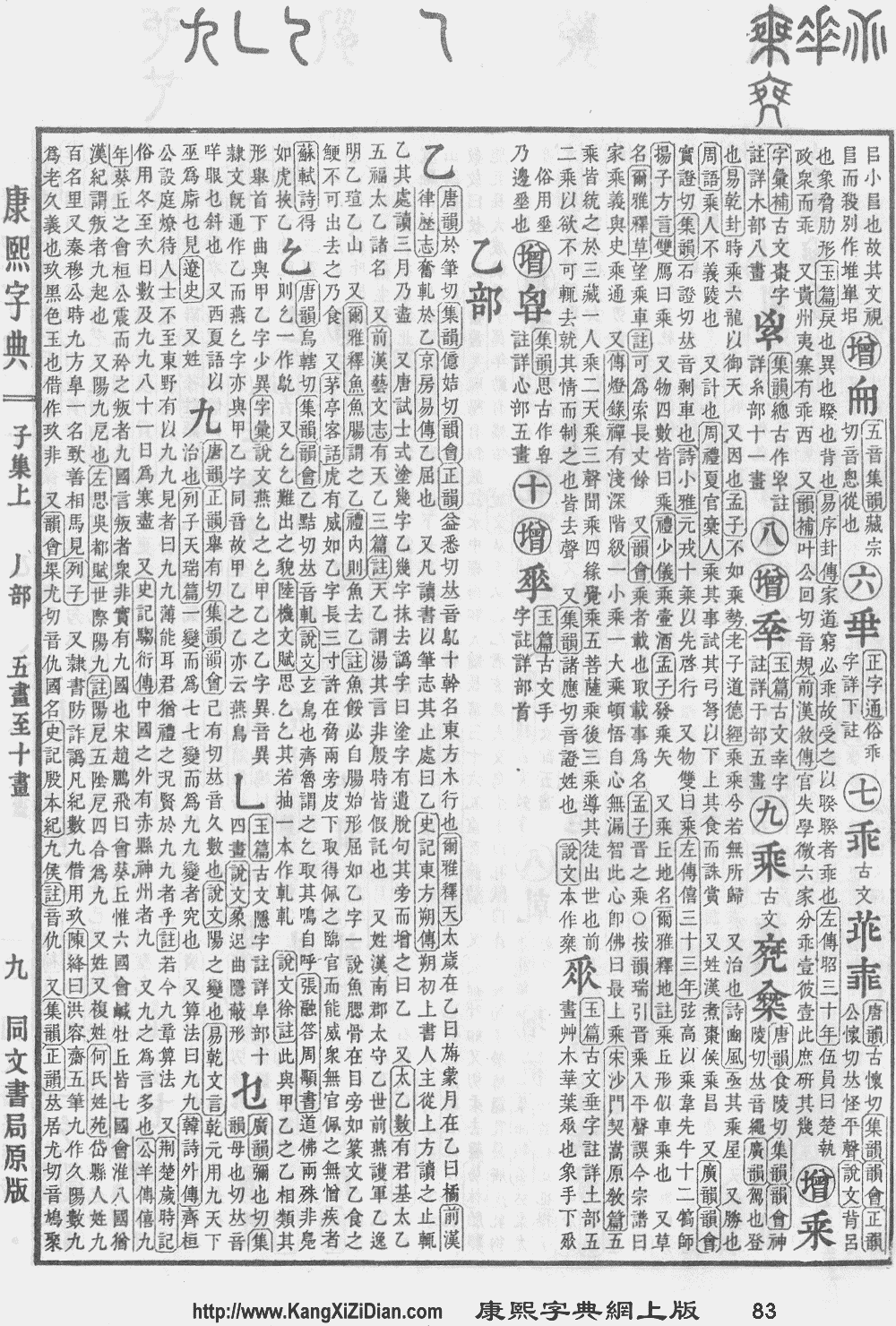
- Kangxi Dictionary: page 83, character 19
- Dai Kanwa Jiten: character 167
- Dae Jaweon: page 168, character 2
- Hanyu Da Zidian (first edition): volume 1, page 48, character 5
- Unihan data for U+4E5D
Chinese edit
| simp. and trad. |
九 | |
|---|---|---|
| alternative forms | 玖 financial 𠔀 𢌬 𣲄 | |


Glyph origin edit
| Historical forms of the character 九 | ||||||||||||||||||||||||||||||||||||||||||||||||||||||||||||||||||||||||||||||||||||||
|---|---|---|---|---|---|---|---|---|---|---|---|---|---|---|---|---|---|---|---|---|---|---|---|---|---|---|---|---|---|---|---|---|---|---|---|---|---|---|---|---|---|---|---|---|---|---|---|---|---|---|---|---|---|---|---|---|---|---|---|---|---|---|---|---|---|---|---|---|---|---|---|---|---|---|---|---|---|---|---|---|---|---|---|---|---|---|
| Shang | Western Zhou | Warring States | Shuowen Jiezi (compiled in Han) | Liushutong (compiled in Ming) | ||||||||||||||||||||||||||||||||||||||||||||||||||||||||||||||||||||||||||||||||||
| Oracle bone script | Bronze inscriptions | Chu slip and silk script | Small seal script | Transcribed ancient scripts | ||||||||||||||||||||||||||||||||||||||||||||||||||||||||||||||||||||||||||||||||||

|

|

|

|

| ||||||||||||||||||||||||||||||||||||||||||||||||||||||||||||||||||||||||||||||||||
| ||||||||||||||||||||||||||||||||||||||||||||||||||||||||||||||||||||||||||||||||||||||
|
References:
Mostly from Richard Sears' Chinese Etymology site (authorisation),
| ||||||||||||||||||||||||||||||||||||||||||||||||||||||||||||||||||||||||||||||||||||||


Pictogram (象形) – a stylized hand, with bent wrist/forearm (hence the hook stroke at lower right). Earlier forms resemble 手 (shǒu), 寸 (cùn). The original meaning of the glyph was “elbow”, which is now written 肘 (OC *tkuʔ).
After the meaning “elbow” was forgotten, 九 was taken to symbolize a fist tightening to bump up against something; thus, there is a metaphorical bumping up of nine against ten, which is the last number when counting on one's fingers.
Etymology 1 edit
From Proto-Sino-Tibetan *d/s-kəw. Compare Tibetan དགུ (dgu).
Pronunciation edit
Definitions edit
九
- nine
- 九九八十一。 [MSC, trad. and simp.]
- From: “The Mnemonic of Multiplication”
- Jiǔ jiǔ bāshíyī. [Pinyin]
- Nine times nine is eighty-one.
- (figurative) many
- 九曲黃河萬里沙,浪淘風簸自天涯。 [Classical Chinese, trad.]
- From: 822?, Liu Yuxi, “Ripples Sifting Sand”
- Jiǔ qū huánghé wàn lǐ shā, làng táo fēng bò zì tiānyá. [Pinyin]
- The Yellow River with its many twists and turns flows thousands of miles full of sand / Carried by its waves stirred up by the wind coming from a faraway land.
九曲黄河万里沙,浪淘风簸自天涯。 [Classical Chinese, simp.]
- (weather) each of the nine nine-day periods from the winter solstice
- 一九二九不出手,三九四九冰上走。 [MSC, trad. and simp.]
- From: “The Nine Nine-Day Periods Song”, a folk song
- Yī jiǔ èr jiǔ bù chū shǒu, sān jiǔ sì jiǔ bīng shàng zǒu. [Pinyin]
- In the first and the second nine-day period, one should not take out one's hand; / In the third and the fourth nine-day period, the ice is thick enough to stand.
- (Cantonese, minced oath, euphemistic) Synonym of 㞗 (gau1, “penis”)
See also edit
- 勾 (gōu) (in radio communications)
| Chinese numbers | |||||||||||||||||
|---|---|---|---|---|---|---|---|---|---|---|---|---|---|---|---|---|---|
| 0 | 1 | 2 | 3 | 4 | 5 | 6 | 7 | 8 | 9 | 10 | 102 | 103 | 104 | 106 | 108 | 1012 | |
| Normal (小寫/小写) |
〇, 零, 空 | 一, 蜀 | 二, 兩/两 | 三 | 四 | 五 | 六 | 七 | 八 | 九 | 十 | 百 | 千 | 萬/万, 十千 (Malaysia, Singapore) |
百萬/百万, 桶(Philippines), 面桶 (Philippines) |
億/亿 | 兆 (Taiwan) 萬億/万亿 (Mainland China) |
| Financial (大寫/大写) |
零 | 壹 | 貳/贰 | 參/叁 | 肆 | 伍 | 陸/陆 | 柒 | 捌 | 玖 | 拾 | 佰 | 仟 | ||||
Compounds edit
- 一一九
- 一丈差九尺 (yīzhàngchājiǔchǐ)
- 一歲九遷/一岁九迁
- 一禾九穗 (yīhéjiǔsuì)
- 一言九鼎 (yīyánjiǔdǐng)
- 七返九還/七返九还
- 七零九 (Qīlíngjiǔ)
- 七零九所 (Qīlíngjiǔsuǒ)
- 上九
- 下九
- 三九天
- 三六九等 (sānliùjiǔděng)
- 三回九曲
- 三回九轉/三回九转
- 三教九流 (sānjiàojiǔliú)
- 三槐九棘
- 三等九格
- 三貞九烈/三贞九烈
- 三跪九叩 (sānguìjiǔkòu)
- 三部九候
- 中九
- 九一八事變/九一八事变 (Jiǔ-Yībā Shìbiàn)
- 九一四
- 九七大限
- 九七期限
- 九丘
- 九世之仇 (jiǔshìzhīchóu)
- 九九 (jiǔjiǔ)
- 九九歸一/九九归一
- 九九歸原/九九归原
- 九九登高
- 九五 (jiǔwǔ)
- 九五之位
- 九五之尊 (jiǔwǔzhīzūn)
- 九份 (Jiǔfèn)
- 九佐
- 九冬
- 九分
- 九刑
- 九功
- 九勢/九势
- 九卿 (Jiǔqīng)
- 九原
- 九原可作
- 九合 (jiūhé)
- 九合一匡
- 九吊六的
- 九命
- 九命奇冤
- 九品 (jiǔpǐn)
- 九品中正 (jiǔpǐn zhōngzhèng)
- 九品詞/九品词
- 九國公約/九国公约
- 九土
- 九地
- 九垓
- 九夏
- 九大行星
- 九天 (Jiǔtiān)
- 九天仙女
- 九天玄女
- 九如 (Jiǔrú)
- 九如鄉/九如乡
- 九姻
- 九嬪/九嫔
- 九子母
- 九孔 (jiǔkǒng)
- 九官鳥/九官鸟 (jiǔguānniǎo)
- 九宮/九宫
- 九宮格/九宫格 (jiǔgōnggé)
- 九尾狐 (jiǔwěihú)
- 九尾龜/九尾龟
- 九層塔/九层塔 (jiǔcéngtǎ)
- 九嶷山 (Jiǔyíshān)
- 九州 (Jiǔzhōu)
- 九幽
- 九思
- 九懷/九怀
- 九成 (jiǔchéng)
- 九成九
- 九成宮/九成宫
- 九折臂
- 九故十親/九故十亲
- 九數/九数
- 九方
- 九方皋
- 九族 (jiǔzú)
- 九旒
- 九日 (jiǔrì)
- 九春
- 九曜
- 九曲洞
- 九更天
- 九有
- 九服
- 九朽一罷/九朽一罢
- 九歌
- 九歎/九叹
- 九歸/九归 (jiǔguī)
- 九死
- 九死一生 (jiǔsǐyīshēng)
- 九死不悔
- 九江 (Jiǔjiāng)
- 九江市
- 九泉 (jiǔquán)
- 九流 (jiǔliú)
- 九流三教 (jiǔliúsānjiào)
- 九流十家
- 九流百家
- 九淵/九渊
- 九湖 (Jiǔhú)
- 九渡河 (Jiǔdùhé)
- 九烏/九乌 (jiǔwū)
- 九烈三貞/九烈三贞
- 九煉成鋼/九炼成钢
- 九牛一毛 (jiǔniúyīmáo)
- 九牛毛
- 九牧
- 九畹溪 (Jiǔwǎnxī)
- 九畹遺容/九畹遗容 (Jiǔ Wǎn Yíróng)
- 九疇/九畴
- 九疊篆/九叠篆
- 九疑山
- 九百
- 九皋
- 九眷
- 九禮/九礼
- 九秋
- 九穀/九谷
- 九竅/九窍
- 九節鞭/九节鞭
- 九經/九经 (Jiǔjīng)
- 九經字樣/九经字样
- 九罭
- 九老會/九老会
- 九聲/九声
- 九芎
- 九花 (jiǔhuā)
- 九華/九华
- 九華山/九华山 (Jiǔhuá Shān)
- 九華帳/九华帐 (jiǔhuázhàng)
- 九蓮燈/九莲灯
- 九衢
- 九親/九亲
- 九譯/九译
- 九賓/九宾
- 九轉丹/九转丹
- 九轉金丹/九转金丹
- 九辯/九辩
- 九迴腸/九回肠
- 九通
- 九連環/九连环 (jiǔliánhuán)
- 九道 (Jiǔdào)
- 九還丹/九还丹
- 九里 (Jiǔlǐ)
- 九重 (jiǔchóng)
- 九重天 (jiǔchóngtiān)
- 九重葛
- 九重霄
- 九野
- 九針/九针
- 九錫/九锡
- 九門/九门
- 九間房/九间房 (Jiǔjiānfáng)
- 九閽/九阍
- 九集 (Jiǔjí)
- 九霄 (jiǔxiāo)
- 九霄雲外/九霄云外 (jiǔxiāoyúnwài)
- 九音鑼/九音锣
- 九章
- 九章律
- 九章算術/九章算术
- 九頭鳥/九头鸟
- 九香蟲/九香虫
- 九鼎 (jiǔdǐng)
- 九鼎大呂/九鼎大吕
- 九龍/九龙 (jiǔlóng)
- 九龍半島/九龙半岛 (Jiǔlóng Bàndǎo)
- 九龍壁/九龙壁
- 九龍杯/九龙杯
- 五九國恥/五九国耻
- 八九
- 八九分
- 八九分人
- 八病九痛
- 八索九丘
- 八花九裂
- 劉九兒/刘九儿
- 力濟九區/力济九区
- 北九州 (Běijiǔzhōu)
- 十中八九
- 十之八九 (shízhībājiǔ)
- 十八九
- 十室九空 (shíshìjiǔkōng)
- 十拿九穩/十拿九稳 (shínájiǔwěn)
- 十捉九著
- 十死九生
- 十清九濁/十清九浊
- 十生九死
- 十病九痛
- 十米九糠
- 十羊九牧
- 十親九故/十亲九故
- 十賭九輸/十赌九输 (shídǔjiǔshū)
- 十轉九空/十转九空
- 回九
- 回腸九回/回肠九回
- 天九 (tiānjiǔ)
- 天保九如
- 夷九族
- 小九九 (xiǎojiǔjiǔ)
- 小加九
- 屏風九疊/屏风九叠
- 廣九鐵路/广九铁路
- 張九齡/张九龄
- 愁腸九轉/愁肠九转
- 接三換九/接三换九
- 推牌九
- 搬九
- 數九/数九
- 數九天/数九天
- 易堂九子
- 暗九
- 東北九省/东北九省
- 深居九重 (shēn jū jiǔchóng)
- 港九 (Gǎng-Jiǔ)
- 燕九節/燕九节
- 牌九 (páijiǔ)
- 牢九
- 視窗九五/视窗九五
- 窮九/穷九
- 第九藝術/第九艺术
- 簫韶九成/箫韶九成
- 老九
- 耕九餘三/耕九余三
- 舉十知九/举十知九
- 言十妄九
- 重九 (Chóngjiǔ)
- 重九登高
- 陸九淵/陆九渊
- 陸九齡/陆九龄
- 陽九/阳九
- 陽九之會/阳九之会
- 陽九之阨/阳九之阨
- 雙九/双九
- 風魔九伯/风魔九伯
- 魄散九霄
- 鶴鳴九皋/鹤鸣九皋
- 齊煙九點/齐烟九点
- 龍生九子/龙生九子
Descendants edit
Others:
- → Proto-Tai: *kɤwꟲ (“nine”)
- Northern Tai:
- Central Tai:
- Wenma-Southwestern Tai:
Etymology 2 edit
| For pronunciation and definitions of 九 – see 鳩 (“to gather; to assemble”). (This character is an obsolete form of 鳩). |
Japanese edit
| < 8 | 9 | 10 > |
|---|---|---|
| Cardinal : 九 | ||
Kanji edit
Readings edit
- Go-on: く (ku, Jōyō)
- Kan-on: きゅう (kyū, Jōyō)←きう (kiu, historical)
- Kun: ここの (kokono, 九, Jōyō); ここのつ (kokonotsu, 九つ, Jōyō)
- Nanori: いちじく (ichijiku); いちのく (ichinoku); この (kono); ひさし (hisashi)
Compounds edit
- 九夏 (kyūka)
- 九官鳥 (kyūkanchō, “a mina or mynah bird”)
- 九牛一毛 (kyū gyū ichi mō, “nine cows one hair (a drop in the ocean)”)
- 九九 (kuku), 九々 (kuku, “Multiplication table”)
- 九月 (kugatsu, “September”)
- 九死 (kyūshi, “near death, nearly dead, a close shave”)
- 九州 (Kyūshū, “Kyushu”)
- 九重 (kokonoe)
- 九寸五分 (kusun gobu, “a short sword, a dagger”)
- 九星 (kyūsei)
- 九折 (kyūsetsu)
- 九泉 (kyūsen, “the nether world”)
- 九地 (kyūchi)
- 九天 (Kyūten, “Ninth Heaven (the highest of heavens)”)
- 九拝 (kyūhai)
- 九分 (kubu)
- 九輪 (kurin)
- 九六 (kunroku)
Etymology 1 edit
| Kanji in this term |
|---|
| 九 |
| きゅう Grade: 1 |
| kan’on |
From Middle Chinese 九 (MC kjuwX). The kan'on reading, so likely a later borrowing. Borrowed after palatalization occurred in Middle Chinese. Compare modern Hakka 九 (giu3).
Pronunciation edit
Numeral edit
Noun edit
- nine
- 究: an indeterminate large number, a myriad, a great many
- (divination) the number of yang, in opposition to 六 (roku, “six”) as the number of yin
Etymology 2 edit
| Kanji in this term |
|---|
| 九 |
| く Grade: 1 |
| goon |
| Alternative spelling |
|---|
| 玖 |
From Early Middle Chinese 九 (MC kjuwX). The goon reading, so likely the initial borrowing.
Pronunciation edit
Numeral edit
Usage notes edit
- Sometimes considered unlucky due to being homophonous with 苦 (ku, “suffering”).
Noun edit
Coordinate terms edit
| Japanese numbers | |||||||||||
|---|---|---|---|---|---|---|---|---|---|---|---|
| 0 | 1 | 2 | 3 | 4 | 5 | 6 | 7 | 8 | 9 | 10 | |
| Regular | 零 (rei) 零 (zero) |
一 (ichi) | 二 (ni) | 三 (san) | 四 (yon) 四 (shi) |
五 (go) | 六 (roku) | 七 (nana) 七 (shichi) |
八 (hachi) | 九 (kyū) 九 (ku) |
十 (jū) |
| Formal | 壱 (ichi) | 弐 (ni) | 参 (san) | 拾 (jū) | |||||||
| 90 | 100 | 300 | 600 | 800 | 1,000 | 3,000 | 8,000 | 10,000 | 100,000,000 | ||
| Regular | 九十 (kyūjū) | 百 (hyaku) 一百 (ippyaku) |
三百 (sanbyaku) | 六百 (roppyaku) | 八百 (happyaku) | 千 (sen) 一千 (issen) |
三千 (sanzen) | 八千 (hassen) | 一万 (ichiman) | 一億 (ichioku) | |
| Formal | 一萬 (ichiman) | ||||||||||
| 1012 | 8×10¹² | 1013 | 1016 | 6×10¹⁶ | 8×10¹⁶ | 1017 | 1018 | ||||
| 一兆 (itchō) | 八兆 (hatchō) | 十兆 (jutchō) | 一京 (ikkei) | 六京 (rokkei) | 八京 (hakkei) | 十京 (jukkei) | 百京 (hyakkei) | ||||
Etymology 3 edit
| Kanji in this term |
|---|
| 九 |
| ここの Grade: 1 |
| kun’yomi |
From Old Japanese from Proto-Japonic *kəkənə.
First attested in the Kojiki of 712 CE.[2]
Pronunciation edit
Numeral edit
Etymology 4 edit
| Kanji in this term |
|---|
| 九 |
| この Grade: 1 |
| kun’yomi |
/kokono/ → /kono/
Abbreviation of Old Japanese 九 (kokono, “nine”).
Pronunciation edit
Numeral edit
- nine
- ひい、ふう、みい、…なな、やあ、この、とお
- hī, fū, mī,…nana, yā, kono, tō
- one, two, three, ... seven, eight, nine, ten
- ひい、ふう、みい、…なな、やあ、この、とお
Usage notes edit
- Generally only used when counting out loud, as in the example above. In writing, usually found spelled out in hiragana as この to make the reading unambiguous.
References edit
Further reading edit
- “You can count on the tales behind number-kanji”, in The Japan Times[2], 2010 March 17, archived from the original on 2014-12-21
Korean edit
Etymology 1 edit
| 90 | ||
| ← 8 | 9 | 10 → |
|---|---|---|
| Native isol.: 아홉 (ahop) Native attr.: 아홉 (ahop) Sino-Korean: 구 (gu) Hanja: 九 Ordinal: 아홉째 (ahopjjae) | ||
From Middle Chinese 九 (MC kjuwX).
| Historical readings |
|---|
|
Pronunciation edit
- (SK Standard/Seoul) IPA(key): [ku]
- Phonetic hangul: [구]
Hanja edit

Compounds edit
- 구경 (九卿, gugyeong)
- 구경 (九經, gugyeong)
- 구계 (九界, gugye)
- 구곡 (九穀, gugok)
- 구덕 (九德, gudeok)
- 구동 (九冬, gudong)
- 구륜 (九輪, guryun)
- 구사 (九思, gusa)
- 구십 (九十, gusip)
- 구월 (九月, guwol)
- 구족 (九族, gujok)
- 구중 (九重, gujung)
- 구천 (九天, gucheon)
- 구천 (九泉, gucheon)
- 십구 (十九, sipgu)
- 중구 (重九, junggu)
- 구관조 (九官鳥, gugwanjo)
- 구미호 (九尾狐, gumiho)
- 정구품 (正九品, jeonggupum)
- 종구품 (從九品, jonggupum)
- 구구단 (九九段, gugudan)
- 일세구천 (一歲九遷, ilsegucheon)
- 일월구천 (一月九遷, irwolgucheon)
- 일일구천 (一日九遷, irilgucheon)
Etymology 2 edit
Related to Middle Chinese 糾 (MC kjiwX).
Hanja edit
Compounds edit
References edit
- 국제퇴계학회 대구경북지부 (國際退溪學會 大邱慶北支部) (2007). Digital Hanja Dictionary, 전자사전/電子字典. [3]
Vietnamese edit
Han character edit
九: Hán Việt readings: cửu[1][2]
九: Nôm readings: cửu[1][3][4]
Derived terms edit
- 九章 (cửu chương)
- 九角 (cửu giác)
- 九原 (cửu nguyên)
- 重九 (trùng cửu)
References edit
Zhuang edit
Noun edit
九