
走
See also: 赱
| ||||||||
| ||||||||
Translingual edit
| Stroke order | |||
|---|---|---|---|

| |||
| Stroke order | |||
|---|---|---|---|

| |||
Han character edit

走 (Kangxi radical 156, 走+0, 7 strokes, cangjie input 土卜人 (GYO), four-corner 40801, composition ⿱土龰)
- Kangxi radical #156, ⾛.
- Shuowen Jiezi radical №26
Derived characters edit
References edit
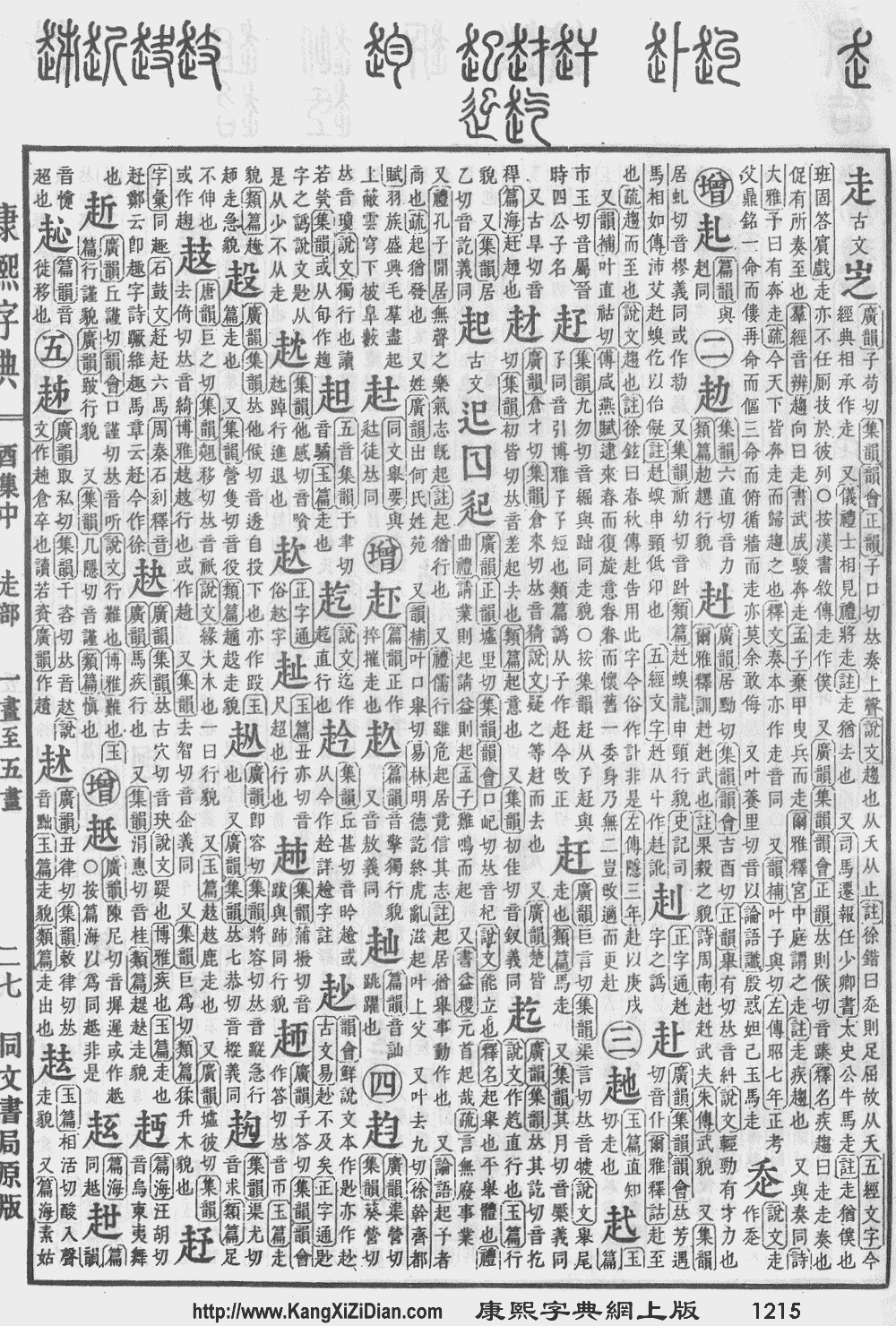
- Kangxi Dictionary: page 1215, character 1
- Dai Kanwa Jiten: character 37034
- Dae Jaweon: page 1683, character 4
- Hanyu Da Zidian (first edition): volume 5, page 3473, character 1
- Unihan data for U+8D70
Chinese edit
Glyph origin edit
| Historical forms of the character 走 | |||||||
|---|---|---|---|---|---|---|---|
| Shang | Western Zhou | Spring and Autumn | Warring States | Shuowen Jiezi (compiled in Han) | Liushutong (compiled in Ming) | ||
| Oracle bone script | Bronze inscriptions | Bronze inscriptions | Bronze inscriptions | Chu slip and silk script | Qin slip script | Small seal script | Transcribed ancient scripts |

|

|

|

|

|

|

|

|
Ideogrammic compound (會意/会意) : 夭 (“young, running man”) + 止 (“foot”) – a running man. The top component (夭) simplified to the unrelated 土.
As with 圭, there are two separate vertical strokes, not a single one.
Etymology 1 edit
| simp. and trad. |
走 | |
|---|---|---|
| alternative forms | 赱 𧺆 㞫 | |
Schuessler (2007) considers this to be part of a large Sino-Tibetan word family, including 搜 (OC *sru, “to move”), 速 (OC *sloːɡ, “quick”), 夙 (OC *suɡ, “morning”), 聳 (OC *sloŋʔ, “to excite”), 蔌 (OC *sloːɡ, “vegetables”), which derive from Proto-Sino-Tibetan *m-sow (“to arise; to awake”).
Pronunciation edit
Definitions edit
走
- to go; to walk; to go on foot
- 走吧! ― Zǒu ba! ― Let's go!
- (literary or dialectal Mandarin, Cantonese, Hakka, Min, Wu) to run; to jog
-
- 宋人有耕田者,田中有株,兔走,觸株折頸而死。 [Classical Chinese, trad.]
- Sòng rén yǒu gēngtián zhě, tián zhōng yǒu zhū, tù zǒu, chù zhū zhé jǐng ér sǐ. [Pinyin]
- There was a farmer of Song who tilled the land, and in his field was a stump. One day a rabbit, racing across the field, bumped into the stump, broke its neck, and died.
宋人有耕田者,田中有株,兔走,触株折颈而死。 [Classical Chinese, simp.]
- (ergative) to leave; to go away
- (literary) to run away; to flee
-
- 填然鼓之,兵刃既接,棄甲曳兵而走。 [Classical Chinese, trad.]
- Tiánrán gǔ zhī, bīngrèn jì jiē, qìjiǎyèbīng ér zǒu. [Pinyin]
- The soldiers move forward to the sound of the drums; and after their weapons have been crossed, on one side they throw away their coats of mail, trail their arms behind them, and run.
填然鼓之,兵刃既接,弃甲曳兵而走。 [Classical Chinese, simp.]
-
- to reveal; to divulge; to leak
- to leak; to let out
- (of devices) to run; to work
- to move; to shift; to transfer
- (euphemistic) to pass away; to die
- to change; to lose original shape, flavour, etc.
- (Cantonese) to leave out (from a dish); to hold
- to pass through
- to visit; to call on
- a surname: Zou
Synonyms edit
- (to walk):
Dialectal synonyms of 走 (“to walk”) [map]
- (to run):
- (to leave):
Dialectal synonyms of 走 (“to leave (intransitive)”) [map]
| Variety | Location | Words |
|---|---|---|
| Formal (Written Standard Chinese) | 走, 離開, 離去 | |
| Mandarin | Taiwan | 走, 離開 |
| Jinan | 走 | |
| Wanrong | 走 | |
| Xi'an | 走 | |
| Yinchuan | 走 | |
| Xining | 走 | |
| Ürümqi | 走 | |
| Wuhan | 走 | |
| Chengdu | 走 | |
| Guiyang | 走 | |
| Nanjing | 走 | |
| Singapore | 走, 離開 | |
| Cantonese | Guangzhou | 走, 扯 |
| Hong Kong | 走, 扯, 撇, 閃, 𨅝, 鬆, 撇s | |
| Penang (Guangfu) | 走 | |
| Singapore (Guangfu) | 走, 扯 | |
| Gan | Nanchang | 走 |
| Hakka | Meixian | 走 |
| Yudu | 走 | |
| Jin | Taiyuan | 走 |
| Southern Min | Taipei | 走 GT |
| Singapore (Hokkien) | 走 | |
| Manila (Hokkien) | 行 | |
| Singapore (Teochew) | 走 | |
| Zhongshan Min | Shaxi (Longdu) | 走, 行 |
| Wu | Shanghai | 跑, 走 |
| Danyang | 走 | |
| Hangzhou | 走 | |
| Jinhua | 走 | |
| Note | GT - General Taiwanese (no specific region identified) | |
- (to reveal):
- 宣洩/宣泄 (xuānxiè)
- 戳破 (chuōpò)
- 戳穿 (chuōchuān)
- 抖 (dǒu)
- 抖落 (dǒuluò)
- 拓破 (Hokkien)
- 捅
- 揭
- 揭發/揭发 (jiēfā)
- 揭穿 (jiēchuān)
- 揭露 (jiēlù)
- 㨴 (kin2) (Cantonese)
- 撞破 (zhuàngpò)
- 泄露 (xièlù)
- 洩漏/泄漏 (xièlòu)
- 洩露/泄露 (xièlù)
- 流露 (liúlù)
- 浮泛 (fúfàn)
- 漏 (lòu)
- 漏洩/漏泄 (lòuxiè)
- 破 (pò) (literary, or in compounds)
- 篤爆/笃爆 (duk1 baau3) (Cantonese)
- 篤穿/笃穿 (duk1 cyun1) (Cantonese)
- 說破/说破 (shuōpò)
- 說穿/说穿 (shuōchuān)
- 講穿/讲穿 (gan3 qyenn1) (Xiang, Cantonese)
- 走漏 (zǒulòu)
- 踢爆 (tek3 baau3) (Cantonese)
- 透露 (tòulù)
- (to move):
- (to die):
- 下世 (xiàshì) (formal)
- 上天 (shàngtiān) (euphemistic)
- 上路 (shànglù) (euphemistic)
- 不在 (bùzài) (euphemistic)
- 不幸 (bùxìng) (Classical Chinese, euphemistic)
- 不祿/不禄 (bùlù) (archaic, euphemistic, of military officers)
- 亡
- 亡故 (wánggù) (literary)
- 仙逝 (xiānshì) (euphemistic)
- 仙遊/仙游 (xiānyóu) (euphemistic)
- 作古 (zuògǔ) (literary, euphemistic)
- 做鬼 (zuòguǐ) (colloquial)
- 傾世/倾世 (qīngshì) (literary)
- 傾亡/倾亡 (qīngwáng) (literary)
- 入寂 (rùjì) (Buddhism, of Buddhist monks)
- 凋謝/凋谢 (diāoxiè) (to die of old age)
- 化去 (huàqù) (euphemistic)
- 升天 (shēngtiān) (euphemistic)
- 即世 (jíshì) (literary)
- 去世 (qùshì)
- 合眼 (héyǎn) (euphemistic)
- 喪亡/丧亡 (sàngwáng) (literary)
- 喪命/丧命 (sàngmìng) (euphemistic)
- 喪生/丧生 (sàngshēng) (euphemistic)
- 嗚呼/呜呼 (wūhū) (euphemistic)
- 嗝屁 (gěpì) (Mandarin, vulgar, derogatory)
- 嚥氣/咽气 (yànqì) (colloquial)
- 回老家 (huí lǎojiā) (euphemistic, humorous)
- 圓寂/圆寂 (yuánjì) (of Buddhist monks or nuns)
- 壽終正寢/寿终正寝 (shòuzhōngzhèngqǐn) (euphemistic)
- 安息 (ānxī) (euphemistic)
- 安眠 (ānmián) (euphemistic)
- 小喇叭兒吹了/小喇叭儿吹了 (xiǎo lǎbār chuī le) (Beijing Mandarin)
- 就義/就义 (jiùyì) (to die a martyr)
- 崩 (bēng) (of a king, emperor, monarch, etc.)
- 崩殂 (bēngcú) (Classical, of a king, emperor, monarch, etc.)
- 往生 (wǎngshēng) (euphemistic)
- 忽然 (hūrán) (Classical Chinese, euphemistic)
- 掛/挂 (guà) (slang, humorous)
- 故 (gù)
- 故世 (gùshì) (euphemistic, chiefly of one's elders)
- 故去 (gùqù) (euphemistic, chiefly of one's elders)
- 斃命/毙命 (bìmìng) (pejorative)
- 早死 (zǎosǐ)
- 晏駕/晏驾 (yànjià) (of a king, emperor, monarch, etc.)
- 枯死 (kūsǐ) (literary, figurative)
- 棄世/弃世 (qìshì) (literary)
- 歸天/归天 (guītiān) (euphemistic)
- 歸西/归西 (guīxī) (euphemistic)
- 歸道山/归道山 (guī dàoshān) (literary, euphemistic)
- 死 (sǐ)
- 死亡 (sǐwáng) (formal)
- 死人 (sǐrén)
- 死去 (sǐqù) (informal)
- 死掉 (sǐdiào) (informal)
- 死翹翹/死翘翘 (sǐqiàoqiào) (informal, humorous)
- 死脫/死脱 (5shi-theq) (Wu)
- 殞/殒 (yǔn) (archaic)
- 氣絕/气绝 (qìjué) (literary)
- 永眠 (yǒngmián) (euphemistic, honorific)
- 沒世/没世 (mòshì) (literary)
- 沉眠 (chénmián) (euphemistic)
- 消忒 (Hakka, euphemistic)
- 物化 (wùhuà) (literary)
- 畢命/毕命 (bìmìng) (formal, euphemistic)
- 病亡 (bìngwáng) (to die of illness)
- 病故 (bìnggù) (to die of illness)
- 病死 (bìngsǐ) (to die of illness)
- 病逝 (bìngshì) (to die of illness)
- 百年歸老/百年归老 (bǎiniánguīlǎo) (euphemistic, of the elderly)
- 盡命/尽命 (jìnmìng) (literary, euphemistic)
- 終/终 (zhōng) (literary, or in compounds, euphemistic)
- 絕/绝 (jué) (literary, or in compounds)
- 翹辮子/翘辫子 (qiào biànzi) (informal, humorous)
- 老了 (lǎo le) (euphemistic, of the elderly)
- 蒙主寵召/蒙主宠召 (méngzhǔchǒngzhào) (euphemistic)
- 薨 (hōng) (Classical Chinese, of feudal lords or high officials)
- 薨逝 (hōngshì) (of feudal lords)
- 被難/被难 (bèinàn) (to be killed in a disaster, political incident, etc.)
- 見背/见背 (jiànbèi) (literary, of one's parents or elders)
- 見閻王/见阎王 (jiàn Yánwáng) (figurative)
- 賓天/宾天 (bīntiān) (of a king, emperor, monarch, etc.)
- 走去踮 (Hokkien, euphemistic)
- 身亡 (shēnwáng) (formal, usually from unnatural causes)
- 辭世/辞世 (císhì) (literary)
- 逝世 (shìshì)
- 進棺材/进棺材 (jìn guāncái)
- 過世/过世 (guòshì)
- 過去/过去 (guòqù) (euphemistic)
- 過往/过往 (Hokkien, euphemistic, Teochew, euphemistic)
- 過身/过身 (guòshēn) (literary)
- 過面/过面 (Hokkien)
- 長山賣鴨卵/长山卖鸭卵 (Hakka, euphemistic)
- 長眠/长眠 (chángmián) (euphemistic, honorific)
- 閉眼/闭眼 (bìyǎn) (euphemistic)
- 隕落/陨落 (yǔnluò) (euphemistic)
- 離世/离世 (líshì) (euphemistic)
- 駕崩/驾崩 (jiàbēng) (of a king, emperor, monarch, etc.)
- 駕鶴西去/驾鹤西去 (jiàhèxīqù) (euphemistic)
- 駕鶴西遊/驾鹤西游 (jiàhèxīyóu) (euphemistic)
- 龍馭上賓/龙驭上宾 (lóngyùshàngbīn) (of an emperor)
- (to call on):
Compounds edit
- 一走了之 (yīzǒuliǎozhī)
- 下坂走丸
- 下坡走馬/下坡走马
- 下走
- 不擊自走/不击自走
- 不脛而走/不胫而走 (bùjìng'érzǒu)
- 不走
- 不走旁門/不走旁门
- 且戰且走/且战且走
- 便走 (biànzǒu)
- 先走一步
- 兔走烏飛/兔走乌飞 (tùzǒuwūfēi)
- 出走 (chūzǒu)
- 到處奔走/到处奔走
- 大杖則走/大杖则走
- 大走
- 奔走 (bēnzǒu)
- 奔走之友
- 奔走如市
- 奔走相告 (bēnzǒuxiānggào)
- 奔走逢迎
- 奔走風塵/奔走风尘
- 小受大走
- 帶牌走馬/带牌走马
- 帶走/带走 (dàizǒu)
- 慢走 (mànzǒu)
- 抗塵走俗/抗尘走俗
- 掩耳而走
- 捲走/卷走
- 揚砂走石/扬砂走石
- 搬走
- 擦槍走火/擦枪走火 (cāqiāngzǒuhuǒ)
- 攆走/撵走 (niǎnzǒu)
- 放走 (fàngzǒu)
- 敗走/败走 (bàizǒu)
- 星馳電走/星驰电走
- 望風而走/望风而走
- 未學行,先學走/未学行,先学走 (mei6 hok6 haang4, sin1 hok6 zau2) (Cantonese)
- 東奔西走/东奔西走 (dōngbēnxīzǒu)
- 東走西撞/东走西撞
- 東走西移/东走西移
- 架走
- 步走 (bùzǒu)
- 波蘭走廊/波兰走廊
- 河西走廊 (Héxī Zǒuláng)
- 溜走 (liūzǒu)
- 烏飛兔走/乌飞兔走
- 無路可走/无路可走
- 牛童馬走/牛童马走
- 牛馬走/牛马走 (niúmǎzǒu)
- 畏影而走
- 疾走 (jízǒu)
- 皮裡走肉/皮里走肉
- 看走眼 (kànzǒuyǎn)
- 空中走廊
- 競走/竞走 (jìngzǒu)
- 筆走龍蛇/笔走龙蛇 (bǐzǒulóngshé)
- 縱走/纵走
- 老走硝
- 老走道兒/老走道儿
- 臨走/临走 (línzǒu)
- 落荒而走 (luòhuāngérzǒu)
- 行尸走肉 (xíngshīzǒuròu)
- 行尸走骨
- 行走 (xíngzǒu)
- 行走如飛/行走如飞
- 行鍼走線/行针走线
- 調走/调走 (diàozǒu)
- 販夫走卒/贩夫走卒 (fànfūzǒuzú)
- 走下坡 (zǒuxiàpō)
- 走不開/走不开
- 走了風聲/走了风声
- 走了馬腳/走了马脚
- 走人 (zǒurén)
- 走作
- 走位
- 走佬
- 走來走去/走来走去 (zǒuláizǒuqù)
- 走俏 (zǒuqiào)
- 走內線/走内线
- 走出 (zǒuchū)
- 走動/走动 (zǒudòng)
- 走勢/走势 (zǒushì)
- 走勢圖/走势图 (zǒushìtú)
- 走卒 (zǒuzú)
- 走南闖北/走南闯北 (zǒunánchuǎngběi)
- 走及奔馬/走及奔马
- 走口
- 走向 (zǒuxiàng)
- 走味 (zǒuwèi)
- 走味兒/走味儿
- 走唱
- 走單幫/走单帮
- 走嘴 (zǒuzuǐ)
- 走回頭路/走回头路
- 走堂的
- 走報的/走报的
- 走失 (zǒushī)
- 走小路子
- 走局
- 走岐路
- 走廊 (zǒuláng)
- 走後門/走后门 (zǒu hòumén)
- 走得開/走得开
- 走心經/走心经
- 走扇
- 走投沒路/走投没路
- 走投無路/走投无路 (zǒutóuwúlù)
- 走散 (zǒusàn)
- 走斝傳觴/走斝传觞
- 走斝飛觥/走斝飞觥
- 走斝飛觴/走斝飞觞
- 走方
- 走春
- 走板 (zǒubǎn)
- 走板眼
- 走樣/走样 (zǒuyàng)
- 走步 (zǒubù)
- 走水 (zǒushuǐ)
- 走水槽
- 走江湖 (zǒujiānghu)
- 走油
- 走油子
- 走漏 (zǒulòu)
- 走漏天機/走漏天机
- 走漏消息
- 走漏風聲/走漏风声
- 走火 (zǒuhuǒ)
- 走火入魔 (zǒuhuǒrùmó)
- 走為上策/走为上策 (zǒuwéishàngcè)
- 走無常/走无常
- 走狗 (zǒugǒu)
- 走狗烹
- 走獸/走兽 (zǒushòu)
- 走百病
- 走眼 (zǒuyǎn)
- 走石揚沙/走石扬沙
- 走石飛砂/走石飞砂
- 走神兒/走神儿
- 走票
- 走禽
- 走私 (zǒusī)
- 走空
- 走筆/走笔
- 走筆成文/走笔成文
- 走筆成章/走笔成章
- 走糴/走籴
- 走紅/走红 (zǒuhóng)
- 走紅運/走红运
- 走索
- 走繩索/走绳索
- 走老路
- 走肉行屍/走肉行尸 (zǒuròuxíngshī)
- 走背運/走背运
- 走脫/走脱 (zǒutuō)
- 走臘法/走腊法
- 走舸
- 走色
- 走莖/走茎
- 走著瞧 (zǒuzheqiáo)
- 走親/走亲
- 走訪/走访 (zǒufǎng)
- 走話/走话
- 走調/走调 (zǒudiào)
- 走讀生/走读生
- 走資派/走资派 (zǒuzīpài)
- 走走 (zǒuzǒu)
- 走路 (zǒulù)
- 走跳
- 走路子
- 走近 (zǒujìn)
- 走透
- 走進/走进 (zǒujìn)
- 走運/走运 (zǒuyùn)
- 走道 (zǒudào)
- 走道兒/走道儿
- 走過場/走过场 (zǒuguòchǎng)
- 走遍天下 (zǒubiàntiānxià)
- 走避 (zǒubì)
- 走野路
- 走鋼絲/走钢丝 (zǒu gāngsī)
- 走鏢/走镖
- 走門子/走门子
- 走門路/走门路
- 走音 (zǒuyīn)
- 走順風/走顺风
- 走頭無路/走头无路
- 走風/走风 (zǒufēng)
- 走馬/走马 (zǒumǎ)
- 走馬上任/走马上任
- 走馬之任/走马之任
- 走馬到任/走马到任
- 走馬嶺/走马岭 (Zǒumǎlǐng)
- 走馬換將/走马换将
- 走馬燈/走马灯 (zǒumǎdēng)
- 走馬看花/走马看花 (zǒumǎkànhuā)
- 走馬赴任/走马赴任
- 走馬章臺/走马章台
- 走骨行屍/走骨行尸
- 走鬼 (zǒuguǐ)
- 走魔入火
- 走黑運/走黑运
- 趕走/赶走 (gǎnzǒu)
- 趨走/趋走
- 跑馬走解/跑马走解
- 轟走/轰走
- 迅走
- 逃走 (táozǒu)
- 退走 (tuìzǒu)
- 迷走神經/迷走神经 (mízǒu shénjīng)
- 遊走/游走
- 遁走 (dùnzǒu)
- 遠走高飛/远走高飞 (yuǎnzǒugāofēi)
- 遼西走廊/辽西走廊
- 鋌而走險/铤而走险 (tǐng'érzǒuxiǎn)
- 開低走低/开低走低
- 開低走軟/开低走软
- 開低走高/开低走高
- 開高走低/开高走低
- 開高走高/开高走高
- 阪上走丸 (bǎnshàngzǒuwán)
- 離家出走/离家出走 (líjiāchūzǒu)
- 難走/难走
- 電線走火/电线走火
- 頓衣而走/顿衣而走
- 領走/领走
- 飛書走檄/飞书走檄
- 飛殃走禍/飞殃走祸
- 飛沙走奶/飞沙走奶
- 飛沙走石/飞沙走石 (fēi shā zǒu shí)
- 飛沙走礫/飞沙走砾
- 飛牆走壁/飞墙走壁
- 飛砂走石/飞砂走石 (fēi shā zǒu shí)
- 飛禽走獸/飞禽走兽 (fēiqínzǒushòu)
- 飛簷走壁/飞檐走壁
- 飛簷走脊/飞檐走脊
- 飛蒼走黃/飞苍走黄
- 飛觥走斝/飞觥走斝
- 飛觴走斝/飞觞走斝
- 飛走/飞走
- 飛走如風/飞走如风 (fēi zǒu rú fēng)
- 飛車走壁/飞车走壁
- 飛針走線/飞针走线
- 飛鷹走犬/飞鹰走犬
- 飛鷹走狗/飞鹰走狗
- 飛鷹走馬/飞鹰走马
- 驚走/惊走
- 高飛遠走/高飞远走
- 鬥雞走狗/斗鸡走狗
Etymology 2 edit
| simp. and trad. |
走 | |
|---|---|---|
Pronunciation edit
Definitions edit
走
- (Hokkien) Alternative form of 行 (kiâⁿ, “to walk”)
- 走不知路才會乎你騙騙去 走不知路才會為你來傷心 [Taiwanese Hokkien, trad.]
- From: 2017, 王俊傑 (lyrics and music), 走不知路, performed by 蔡秋鳳
- kiâⁿ m̄-chai lō͘ chiah ē hō͘ lí phiàn-phiàn--khì, kiâⁿ m̄-chai lō͘ chiah ē ūi lí lâi siong-sim [Pe̍h-ōe-jī]
- (please add an English translation of this usage example)
走不知路才会乎你骗骗去 走不知路才会为你来伤心 [Taiwanese Hokkien, simp.]
Japanese edit
Kanji edit
走
Readings edit
Compounds edit
| Kanji in this term |
|---|
| 走 |
| そう Grade: 2 |
| on’yomi |
Suffix edit
Korean edit
Hanja edit
Vietnamese edit
Han character edit
- This term needs a translation to English. Please help out and add a translation, then remove the text
{{rfdef}}.