
末
| ||||||||
Translingual edit
| Stroke order | |||
|---|---|---|---|

| |||
Han character edit
末 (Kangxi radical 75, 木+1, 5 strokes, cangjie input 木十 (DJ), four-corner 50900, composition ⿻一木)
Derived characters edit
- 𠇱, 𠖾, 𠰌, 𡊉, 妺, 帓, 𢗿, 抹, 沫, 𠅒, 昩, 枺, 𣧣, 㶬, 䏞, 皌, 𤿗, 眜, 砞, 𥘯, 秣, 袜, 粖, 𥿉(𬘚), 䍪, 𮋥, 𦥦, 𬟼, 𮘀, 𧿴, 𮠢, 𱋊, 𣔍, 𫈪, 𣖛, 𫖀, 靺, 韎, 䬴, 𩠿, 𩢖, 䱅(𱇚), 䴲, 𬗱, 𫤳, 𣝖
- 𫖼, 𩗂, 𠅍, 𤿖, 𬑉, 𡘮, 𣖢, 𩈘, 𩑷, 𩿣, 𣞄, 㭆, 㭐, 茉, 𥬎, 𪜑, 唜, 𬰠
Descendants edit
References edit
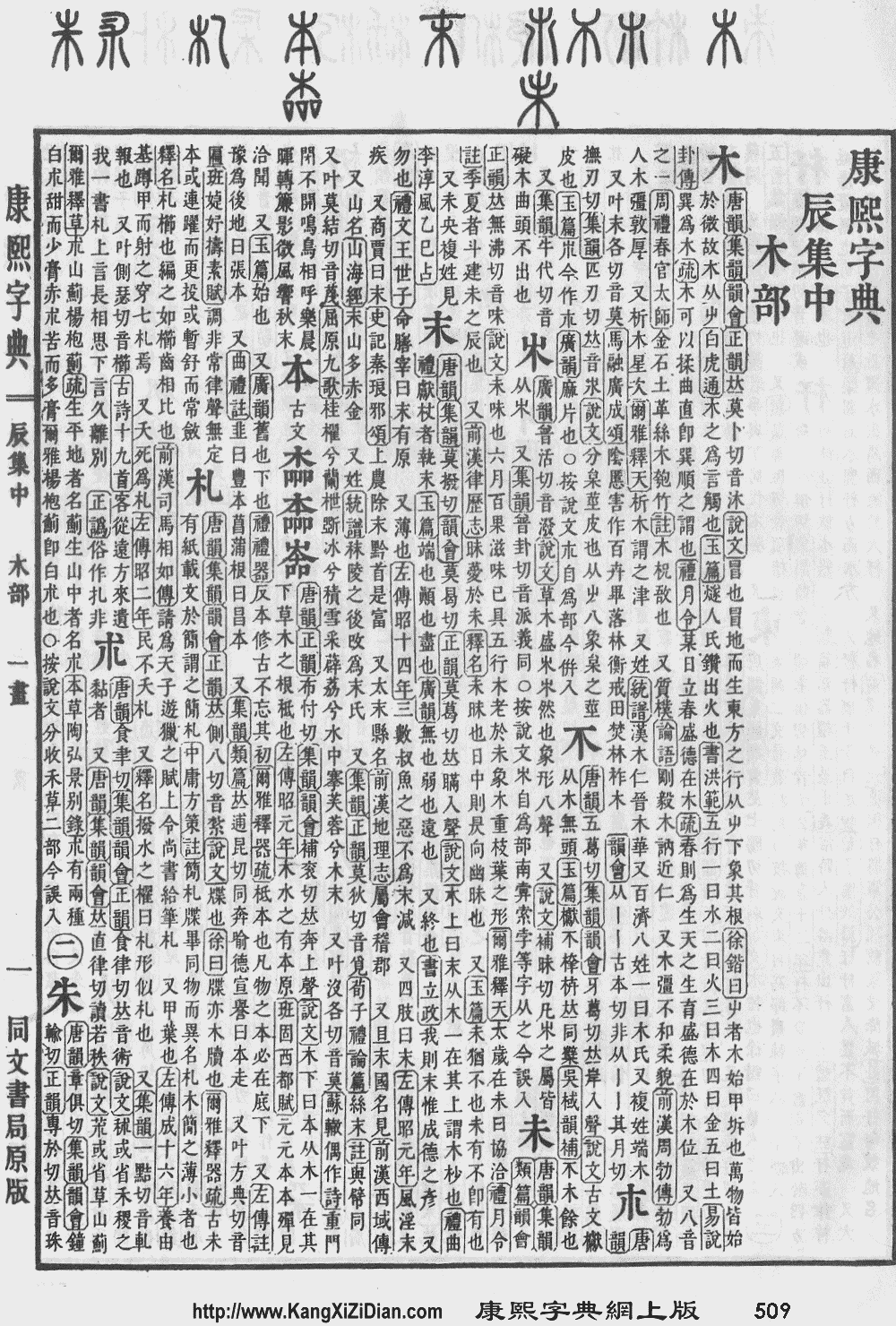
- Kangxi Dictionary: page 509, character 6
- Dai Kanwa Jiten: character 14420
- Dae Jaweon: page 891, character 1
- Hanyu Da Zidian (first edition): volume 2, page 1150, character 2
- Unihan data for U+672B
Chinese edit
| simp. and trad. |
末 | |
|---|---|---|
Glyph origin edit
Ideogram (指事) : a tree (木) with its top highlighted with an extra stroke, implying the meaning of “apex”; contrast 本, 朱.
Etymology 1 edit
Pronunciation edit
Definitions edit
末
- tip; treetop
- 末梢 ― mòshāo ― tip; end
- 明足以察秋毫之末,而不見輿薪。 [Classical Chinese, trad.]
- From: Mencius, c. 4th century BCE, translated based on James Legge's version
- Míng zúyǐ chá qiūháo zhī mò, ér bùjiàn yúxīn. [Pinyin]
- [M]y eyesight is sharp enough to examine the point of an autumn hair, but I do not see a cart-load of firewood.
明足以察秋毫之末,而不见舆薪。 [Classical Chinese, simp.]
- (by extension) effect; result
- 本末 ― běnmò ― cause and effect
- late or the last stage; conclusion; close
- final; the last; concluding; closing; terminal
- insignificant; trivial; inferior; low-priority; low-class
- powder; fine particulate matter
- 粉末 ― fěnmò ― powder
- (literary, dated) not; none; no (negative indicator)
- 子曰:「不曰『如之何如之何』者,吾末如之何也已矣。」 [Classical Chinese, trad. and simp.]
- From: The Analects of Confucius, c. 475 – 221 BCE, translated based on James Legge's version
- Zǐyuē: “Bù yuē ‘rúzhīhé rúzhīhé’ zhě, wú mò rúzhīhé yě yǐ yǐ.” [Pinyin]
- The Master said, "When a man is not in the habit of saying, 'What shall I think of this? What shall I think of this?' I can indeed do nothing with him."
- 末不亦樂乎堯舜之知君子也? [Classical Chinese, trad.]
- From: Commentary of Gongyang, c. 206 BCE– 9 CE
- Mò bùyì lèhū Yáoshùn zhī zhī Jūnzǐ yě? [Pinyin]
- Is it not (literally, a double negative) also a joyful truth, that the ancient sages like Yao and Shun had known that a Noble One would go on to keep their teachings alive?
末不亦乐乎尧舜之知君子也? [Classical Chinese, simp.]
- mo (a category of male roles in traditional Chinese theatre and opera)
Compounds edit
- 三梢末尾
- 且末
- 世界末日 (shìjiè mòrì)
- 世紀末/世纪末 (shìjìmò)
- 么末
- 凶終隙末
- 切末
- 副末
- 務本抑末/务本抑末
- 卑末
- 去本就末
- 四末
- 外末
- 天末
- 天末涼風/天末凉风
- 始末 (shǐmò)
- 姻末
- 封胡羯末
- 封胡遏末
- 小末
- 岑樓齊末/岑楼齐末
- 崇本抑末
- 底末
- 弩末
- 強弩之末/强弩之末 (qiángnǔzhīmò)
- 彊弩之末/强弩之末 (qiángnǔzhīmò)
- 彊本弱末/强本弱末
- 微末
- 忝在愛末/忝在爱末
- 捨本逐末/舍本逐末 (shěběnzhúmò)
- 損本逐末/损本逐末
- 敬陪末坐
- 敬陪末座
- 晚節末路/晚节末路
- 月末 (yuèmò)
- 期末考 (qīmòkǎo)
- 末上
- 末世 (mòshì)
- 末世論/末世论 (mòshìlùn)
- 末了 (mòliǎo)
- 末事
- 末代 (mòdài)
- 末代皇帝
- 末伏
- 末作
- 末位 (mòwèi)
- 末俗 (mòsú)
- 末光
- 末兒/末儿 (mòr)
- 本同末異/本同末异
- 末命
- 末堂
- 末大不掉
- 末大必折
- 末奈何
- 末如之何
- 末娘
- 末子 (mòzi)
- 末子堆
- 末學/末学 (mòxué)
- 末學膚受/末学肤受
- 末官
- 末尾 (mòwěi)
- 末尾三梢
- 末尾三稍
- 末席
- 末年 (mònián)
- 末座
- 末後/末后 (mòhòu)
- 末技
- 末日 (mòrì)
- 末期 (mòqī)
- 本末 (běnmò)
- 本末不稱/本末不称
- 末末了
- 本末倒置 (běnmòdàozhì)
- 本末有序
- 本末舛逆
- 本末顛倒/本末颠倒 (běnmòdiāndǎo)
- 末杪年
- 末梢 (mòshāo)
- 末梢神經/末梢神经
- 末梢頭/末梢头
- 末民
- 末法
- 末泥
- 末流 (mòliú)
- 末浪
- 末班車/末班车 (mòbānchē)
- 末異/末异
- 末疾
- 末站
- 末端 (mòduān)
- 末等
- 末節/末节 (mòjié)
- 末節細行/末节细行
- 末耐何
- 末腳/末脚
- 末臣
- 末著
- 末葉/末叶 (mòyè)
- 末藝/末艺 (mòyì)
- 末行
- 末議/末议
- 末路 (mòlù)
- 末路之難/末路之难
- 末路人
- 末路窮途/末路穷途
- 末躬
- 末造 (mòzào)
- 末過/末过
- 末那
- 末項/末项 (mòxiàng)
- 桑榆末景
- 棄本逐末/弃本逐末
- 正末
- 歲末/岁末
- 殘燈末廟/残灯末庙
- 毫末
- 毫末之利
- 沖末/冲末
- 浮末
- 煤末
- 片長末技/片长末技
- 眇天末
- 砌末
- 研末
- 磨末器
- 神經末梢/神经末梢 (shénjīng mòshāo)
- 秋毫之末
- 窮途末路/穷途末路 (qióngtúmòlù)
- 篤篤末末/笃笃末末
- 粉末 (fěnmò)
- 細微末節/细微末节 (xìwēimòjié)
- 終末/终末 (zhōngmò)
- 細枝末節/细枝末节 (xìzhīmòjié)
- 結末/结末 (jiémò)
- 繁文末節/繁文末节
- 背本爭末/背本争末
- 背本趨末/背本趋末
- 舍本事末
- 舍本問末/舍本问末
- 芥末
- 英雄末路
- 茶末
- 茶葉末/茶叶末
- 莩末
- 落末
- 葭莩之末
- 藥末/药末 (yàomò)
- 蘋末/𬞟末
- 蘭花末兒/兰花末儿
- 起末
- 趨末背本/趋末背本
- 逐末
- 逐末捨本/逐末舍本
- 週末/周末 (zhōumò)
- 週末效應/周末效应
- 那末 (nàme)
- 醜末/丑末
- 錐刀之末/锥刀之末
- 鋸末/锯末 (jùmò)
- 頭上末下/头上末下
- 顛末/颠末
- 高末兒/高末儿
- 麥末/麦末
Etymology 2 edit
Pronunciation 1 edit
Definitions edit
末
Pronunciation 2 edit
Definitions edit
末 (Northern Wu)
- Used to mark a conditional subordinate clause.
- Used to mark the topic in a topic-comment construction.
Japanese edit
Kanji edit
末
Readings edit
- Go-on: まっ (ma'); まつ (matsu, Jōyō)
- Kan-on: ばつ (batsu, Jōyō)
- Kun: うら (ura, 末); うれ (ure, 末); おわり (owari, 末わり)←をはり (wofari, 末はり, historical); すえ (sue, 末, Jōyō)←すゑ (suwe, 末, historical)
Compounds edit
Compounds
Etymology 1 edit
| Kanji in this term |
|---|
| 末 |
| すえ Grade: 4 |
| kun’yomi |
From Old Japanese. First attested in the Kojiki of 712.[1]
Pronunciation edit
Noun edit
- [from 720] the tip or top of a plant
- [from 712] the tip or end of something
- [from 720] the top or peak of a mountain
- [from 1205] the edge or verge of a road or field
- Synonym: 外れ (hazure)
- [from early 1000s] a descendant
- [from 720] the future, later, after
- [from early 800s] the end of a period of time
- [from early 1000s] (by extension) old age, the end period of a lifetime
- Synonym: 晩年 (bannen, literally “evening years”)
- [from 1435] (by extension) a degraded world, a world with low morals and corrupt politics
- Synonym: 末の世 (sue no yo)
- [from late 1500s] the end of a month, the latter third of a month
- Synonym: 下旬 (gejun)
- [from early 1000s] some time considerably later
- [from early 1000s] the result, outcome, or trace, remains of something having been done
- [from 1120] the direction in which someone has gone or will go
- Synonym: 方向 (hōkō)
- [from early 1000s] the youngest or last child
- Synonym: 末子 (sueko)
- [from early 1000s] youth, childhood
- Synonym: 幼少 (yōshō)
- [from early 1000s] the lowest seat, the seat at the foot of a table; the lowest rank
- [from early 900s] the last two seven-mora stanzas or lines of a 短歌 (tanka) poem
- [from early 1000s] the end of a sentence or word
- [from mid-1000s] the latter portion of a book or serial
- Synonym: 後編 (kōhen)
- [from 1182] the origin, the starting point
- [from 1435] (historical) the interior rooms of a palace or manor where maids worked; a maid who worked in such a household
- Synonym: 御末 (osue)
- [from 1682] a low class or grade; an item of low class or grade
- [unknown] something minor, a trifle
- [from 1179] downstream
- [from late 800s] (kagura, music) in a 神楽 (kagura) performance, the seats on the right side facing the altar or shrine; the performers playing in these seats
- Synonym: 末方 (suekata)
Etymology 2 edit
| Kanji in this term |
|---|
| 末 |
| うら Grade: 4 |
| kun’yomi |
From Old Japanese. First attested in the Man'yōshū completed in 759.[1]
Pronunciation edit
Noun edit
- [from 759] (archaic) the tip or top of a plant
- [from late 1500s] (archaic) the tip or end of something
Etymology 3 edit
| Kanji in this term |
|---|
| 末 |
| うれ Grade: 4 |
| kun’yomi |
From Old Japanese. First attested in the Man'yōshū completed in 759.[1]
Pronunciation edit
Noun edit
Etymology 4 edit
| Kanji in this term |
|---|
| 末 |
| まつ Grade: 4 |
| goon |
From Middle Chinese 末 (MC mat).
First attested in Japanese in 1120.[1]
Noun edit
- [from 1120] powder
- [from 1804] (theater) in traditional Chinese theater, an extra, a minor part
- Synonym: (extra or minor part in any theatrical tradition) 端役 (hayaku)
Suffix edit
See also edit
References edit
- ↑ 1.0 1.1 1.2 1.3 Shōgaku Tosho (1988) 国語大辞典(新装版) [Unabridged Dictionary of Japanese (Revised Edition)] (in Japanese), Tōkyō: Shogakukan, →ISBN
- ^ Matsumura, Akira, editor (2006), 大辞林 (in Japanese), Third edition, Tōkyō: Sanseidō, →ISBN
- ^ NHK Broadcasting Culture Research Institute, editor (1998), NHK日本語発音アクセント辞典 [NHK Japanese Pronunciation Accent Dictionary] (in Japanese), Tōkyō: NHK Publishing, →ISBN
- ^ Kindaichi, Kyōsuke et al., editors (1997), 新明解国語辞典 (in Japanese), Fifth edition, Tōkyō: Sanseidō, →ISBN
Korean edit
Hanja edit
- (끝): the end, last, low
- (가루): flour, powder
- (허드레): something coarse, improper, inferior, trivial
- 1431: 鄕藥採取月令[1] 十二月 (향약채취월령 십이월, hyang-yag-chaechwi-wolryeong sib-iwol):
- 芰實鄕名末栗'"`UNIQref0000006DQINU`"' '"`UNIQref0000006EQINU`"' (기실향명말밤, gisilhyangmyeongmalbam, "The folk name of the water caltrop fruit is coarse chestnut.")
- 芰實鄕名 末栗 (gisilhyangmyeongmalbam, gisil-hyangmyeong-malbam , "The folk name of the water caltrop fruit is coarse chestnut .)
- (please add an English translation of this quotation)
- 1431: 鄕藥採取月令[1] 十二月 (향약채취월령 십이월, hyang-yag-chaechwi-wolryeong sib-iwol):
Compounds edit
- end, last
- flour, powder
- something coarse
References edit
- ^ This was authored by several scholars at the direction of King Sejong of Yi Dynasty, concerning the folk medical herb gathering by month.
- ^ Cited by: 南廣祐 (1997). 敎學古語辭典. 敎學社. p. 538.
- ^ "末栗" is a hanja rendering for 말밤(mal-bam), the origin of 마름(mareum, 菱) "water caltrop, water chestnut," literally, "coarse chestnut" such as "horse-chestnut".
- ^ Meaning "water caltrop, (also implausibly) water chestnut." Another likely literal reading is malryul.
Vietnamese edit
Han character edit
末: Hán Nôm readings: mạt, mất, mặt, mết, mệt, mượt
- This term needs a translation to English. Please help out and add a translation, then remove the text
{{rfdef}}.