
正
| ||||||||
 | ||||||||
Translingual edit
| Stroke order | |||
|---|---|---|---|

| |||
| Stroke order | |||
|---|---|---|---|

| |||
Alternative forms edit
As a component of some complex characters, 正 is often written as 𤴓 with its last two strokes different. Compare 昰 and 是.
Han character edit
正 (Kangxi radical 77, 止+1, 5 strokes, cangjie input 一卜中一 (MYLM), four-corner 10101, composition ⿱一止)
- Shuowen Jiezi radical №31
Usage notes edit
- (tally marks, 5): The successive strokes of 正 (
 ) are used in China, Taiwan, Japan, Korea and other areas where Chinese characters are prominent to designate tallies in votes, scores, points, sushi orders, and the like, much as
  is used in Africa, the Americas, Australia, and Europe. Tallies beyond five are written with a 正 for each group of five, followed by the remainder. For example, a tally of twelve
  is written as 正正丅.


Derived characters edit
References edit
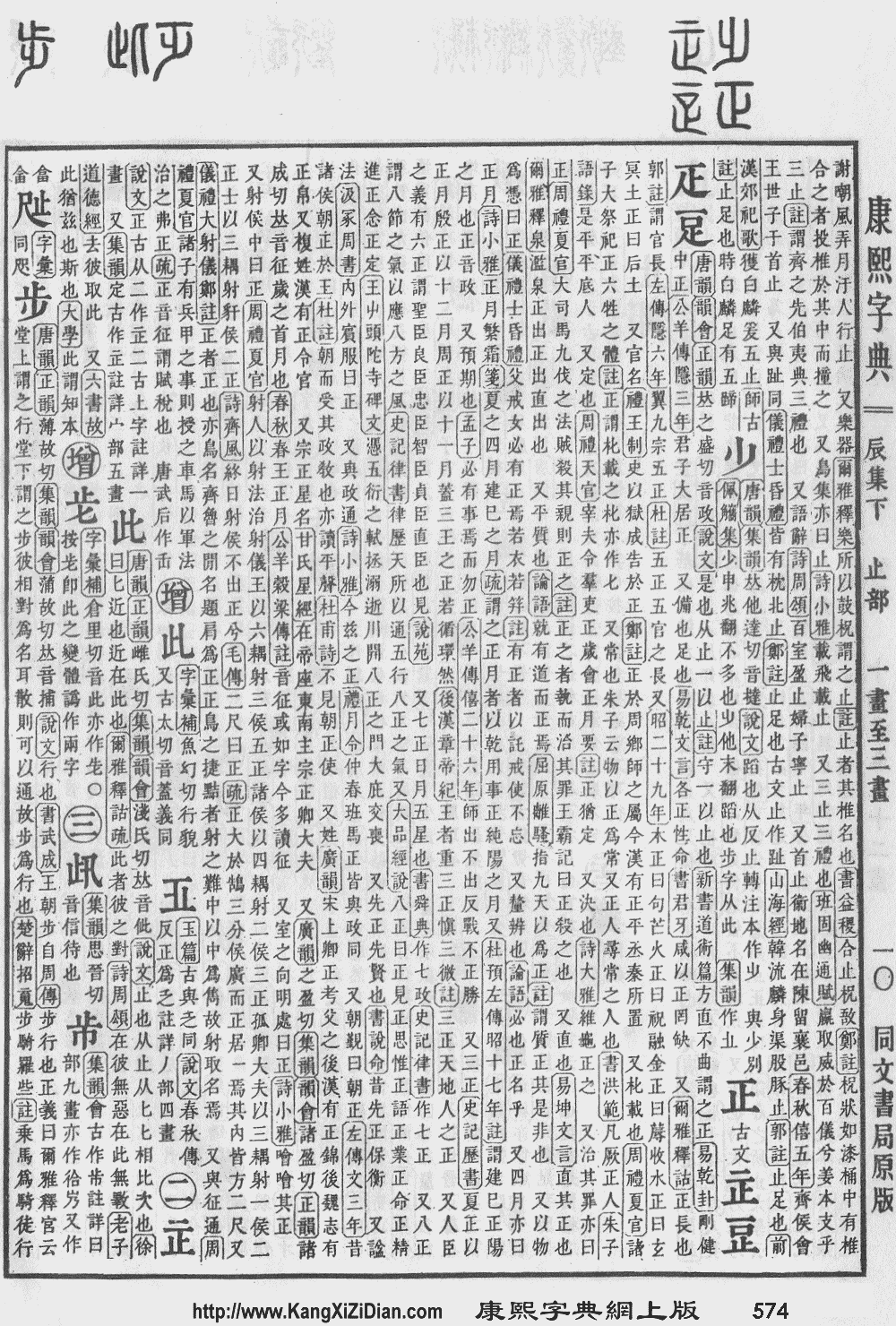
- Kangxi Dictionary: page 574, character 2
- Dai Kanwa Jiten: character 16255
- Dae Jaweon: page 962, character 2
- Hanyu Da Zidian (first edition): volume 2, page 1436, character 1
- Unihan data for U+6B63
Chinese edit
| simp. and trad. |
正 | |
|---|---|---|
| alternative forms | ||
Glyph origin edit
| Historical forms of the character 正 | |||
|---|---|---|---|
| Shang | Western Zhou | Shuowen Jiezi (compiled in Han) | Liushutong (compiled in Ming) |
| Oracle bone script | Bronze inscriptions | Small seal script | Transcribed ancient scripts |

|

|

|

|
Phono-semantic compound (形聲/形声, OC *tjeŋ, *tjeŋs) : phonetic 丁 (OC *rteːŋ, *teːŋ) + semantic 止 (“foot”) – to go on a long journey. Original form of 征 (OC *tjeŋ, “to go on long campaign”).
Etymology edit
Sino-Tibetan or area word: “centre; target; first (month); straight; correct”.
Compare Mizo dîng (“to go straight or direct (as person, arrow etc.); to go straight through without breaking the journey; straight; direct”). Matisoff sets up Proto-Sino-Tibetan *m-tjak/ŋ ~ tik/ŋ (“good; very; real; straight”) for this, which includes 正, 直 (OC *dɯɡ, “straight; right”) and 實 (OC *ɦliɡ, “solid; true”).
Additionally, Matisoff has Proto-Sino-Tibetan *t(r)waŋ (“straight; straighten”), whence Chepang धेङ्सा (dʰeŋ-, “straight”), Jingpho ding (“straight”), Tibetan དྲང་པོ (drang po, “straight; correct; upright; just; fair”), Burmese တန်း (tan:, “straight; to head straight for”). Also compare Khmer ទៀង (tiĕng, “accurate; correct; exact; precise; honest”).
Derivatives:
- 征 (OC *tjeŋ, “to go straight > to go on a journey”)
- 政 (OC *tjeŋs, “correct; to govern; government; to determine”)
- 整 (OC *tjeŋʔ, “orderly; to arrange; to dispose”)
For etymology of pronunciation 正 (zhĕng) in the month 正月 (zhēngyuè)'s name, see there.
Pronunciation 1 edit
Definitions edit
正
- straight; upright in proper position; middle
- right; proper; correct; upright
- obverse; right
- regular; standard
- precisely; directly; perfectly
- primary; chief; main; full
- pure; unmixed; authentic; true
- pretty; attractive; beautiful
- (Cantonese) awesome; fantastic
- just now; right now; in the process of
- just; exactly; precisely
- to straighten; to make straight
- 君子正其衣冠,尊其瞻視,儼然人望而畏之,斯不亦威而不猛乎? [Classical Chinese, trad.]
- From: The Analects of Confucius, c. 475 – 221 BCE, translated based on James Legge's version
- Jūnzǐ zhèng qí yīguān, zūn qí zhānshì, yǎnrán rén wàng ér wèi zhī, sī bù yì wēi ér bù měng hū? [Pinyin]
- He adjusts his clothes and cap, and throws a dignity into his looks, so that, thus dignified, he is looked at with awe - is not this to be majestic without being fierce?
君子正其衣冠,尊其瞻视,俨然人望而畏之,斯不亦威而不猛乎? [Classical Chinese, simp.]
- to make right; to rectify; to correct
- 正音 ― zhèngyīn ― to correct one's pronunciation
- (numeral) ten duodecillion(1040)
- (mathematics) regular
- (mathematics) positive; plus
- (physics) positive
- (time) sharp; on the dot
- (Hakka, Teochew) only; merely
- (Hakka, Teochew) just; just now
- (Hakka, Teochew) only then; only after
- (Hakka, Teochew) Used to emphasize that something is/is not.
- (Southern Min) right (direction)
- a surname
- (tally marks) five (successive strokes of 正 are added in writing sequence to tally a count of five per character)
Synonyms edit
| Variety | Location | Words |
|---|---|---|
| Formal (Written Standard Chinese) | 才2, 再, 方, 始, 方才 | |
| Mandarin | Taiwan | 才2 |
| Singapore | 才2 | |
| Cantonese | Guangzhou | 先, 至, 先至 |
| Hong Kong | 先, 至, 先至 | |
| Hakka | Meixian | 正 |
| Southern Min | Xiamen | 才3 |
| Quanzhou | 才3 | |
| Zhangzhou | 才3 | |
| Singapore (Hokkien) | 才3 | |
| Manila (Hokkien) | 才3 | |
| Shantou | 正 | |
| Singapore (Teochew) | 正 | |
| Wu | Shanghai | 再, 才2 |
| Suzhou | 再 | |
| Xiang | Changsha | 才至 |
Antonyms edit
- (antonym(s) of “right”): (Hokkien, Teochew) 倒 (tò, “left”)
Compounds edit
- 一本正經/一本正经
- 上梁不正
- 上正
- 三正
- 不務正業/不务正业 (bùwùzhèngyè)
- 不正 (bùzhèng)
- 不正知
- 不正經/不正经
- 不當不正/不当不正
- 不端不正
- 中正 (zhōngzhèng)
- 中正大學/中正大学
- 九品中正 (jiǔpǐn zhōngzhèng)
- 令正
- 伸張正義/伸张正义
- 來日正長/来日正长
- 保正 (bǎozhèng)
- 修正 (xiūzhèng)
- 修正主義/修正主义 (xiūzhèng zhǔyì)
- 修正液 (xiūzhèngyè)
- 假正經/假正经 (jiǎzhèngjing)
- 光明正大 (guāngmíngzhèngdà)
- 先正
- 八正道 (bāzhèngdào)
- 公平正大
- 公正 (gōngzhèng)
- 公正證書/公正证书
- 共同正犯 (gòngtóng zhèngfàn)
- 冊正/册正
- 判正
- 削正
- 剛板硬正/刚板硬正
- 剛正/刚正 (gāngzhèng)
- 剛正不阿/刚正不阿 (gāngzhèngbù'ē)
- 勘正 (kānzhèng)
- 匡正 (kuāngzhèng)
- 午正 (wǔzhèng)
- 卯正
- 危言正色
- 去邪從正/去邪从正
- 去邪歸正/去邪归正
- 反正
- 反邪歸正/反邪归正
- 可正是
- 名正具
- 名正肅/名正肃
- 名正言順/名正言顺 (míngzhèngyánshùn)
- 呈正
- 呂蒙正/吕蒙正
- 咬合不正
- 嚴正/严正 (yánzhèng)
- 嚴氣正性/严气正性
- 堂堂正正 (tángtángzhèngzhèng)
- 堂皇正大
- 壽終正寢/寿终正寝 (shòuzhōngzhèngqǐn)
- 大公至正
- 大正
- 天心正法
- 奉公正己
- 字正腔圓/字正腔圆 (zìzhèngqiāngyuán)
- 孝廉方正
- 安宅正路
- 守正不回
- 守正不撓/守正不挠
- 守正不移
- 守正不阿
- 宗正 (zōngzhèng)
- 導正/导正 (dǎozhèng)
- 就地正法
- 就正 (jiùzhèng)
- 居正
- 崇正黜邪
- 工正
- 希臘正教/希腊正教
- 平正 (píngzhèng)
- 平頭正臉/平头正脸
- 廉正 (liánzhèng)
- 弘正文學/弘正文学
- 彩色正片
- 律呂正義/律吕正义
- 心正筆正/心正笔正
- 心術不正/心术不正
- 忠正
- 恭本正傳/恭本正传
- 恰正
- 惡直醜正/恶直丑正
- 成正果
- 戶口校正/户口校正
- 打正快
- 技正
- 扶正 (fúzhèng)
- 扶正黜邪
- 指正 (zhǐzhèng)
- 持正
- 持正不撓/持正不挠
- 持正不阿
- 挑正梁
- 撥亂反正/拨乱反正 (bōluànfǎnzhèng)
- 撥正/拨正
- 改正 (gǎizhèng)
- 改邪歸正/改邪归正 (gǎixiéguīzhèng)
- 教正 (jiàozhèng)
- 斂衽正容/敛衽正容
- 斧正 (fǔzhèng)
- 方方正正
- 方正 (fāngzhèng)
- 方正不苟
- 方正不阿
- 明公正氣/明公正气
- 明公正義/明公正义
- 明公正道
- 明堂正道
- 明婚正配
- 明媒正娶 (míngméizhèngqǔ)
- 明媒正配
- 明正
- 明正典刑
- 是正 (shìzhèng)
- 更正 (gēngzhèng)
- 更正啟事/更正启事
- 書歸正傳/书归正传
- 朝正
- 枉己正人
- 東正教/东正教 (dōngzhèngjiào)
- 校正 (jiàozhèng)
- 棄邪從正/弃邪从正
- 棄邪歸正/弃邪归正
- 樂正/乐正 (yuèzhèng)
- 正三角形
- 正中 (zhèngzhōng)
- 正中下懷/正中下怀 (zhèngzhòngxiàhuái)
- 正中己懷/正中己怀
- 正中紅心/正中红心
- 正事 (zhèngshì)
- 正事主
- 正人 (zhèngrén)
- 正人君子 (zhèngrénjūnzǐ)
- 正位 (zhèngwèi)
- 正值 (zhèngzhí)
- 正傳/正传 (zhèngzhuàn)
- 正像 (zhèngxiàng)
- 正冠李下
- 正冠納履/正冠纳履
- 正凶
- 正出
- 正切 (zhèngqiē)
- 正則/正则 (zhèngzé)
- 正割 (zhènggē)
- 正劇/正剧
- 正務/正务
- 正午 (zhèngwǔ)
- 正反合
- 正取 (zhèngqǔ)
- 正史 (zhèngshǐ)
- 正名 (zhèngmíng)
- 正合我意
- 正名責實/正名责实
- 正命
- 正味 (zhèngwèi)
- 正品 (zhèngpǐn)
- 正在 (zhèngzài)
- 正堂
- 正多邊形/正多边形 (zhèngduōbiānxíng)
- 正多面體/正多面体 (zhèng duōmiàntǐ)
- 正大 (zhèngdà)
- 正大光明 (zhèngdàguāngmíng)
- 正大堂煌
- 正好 (zhènghǎo)
- 正妻 (zhèngqī)
- 正始之音
- 正始文學/正始文学
- 正始玄風/正始玄风
- 正始體/正始体
- 正子 (zhèngzǐ)
- 正字 (zhèngzì)
- 正字標記/正字标记
- 正字法 (zhèngzìfǎ)
- 正字通 (Zhèngzìtōng)
- 正宅
- 正宗 (zhèngzōng)
- 正定 (zhèngdìng)
- 正室 (zhèngshì)
- 正宮/正宫 (zhènggōng)
- 正寢/正寝
- 正寫/正写 (zhèngxiě)
- 正對/正对
- 正屋 (zhèngwū)
- 正巧 (zhèngqiǎo)
- 正己守道
- 正常 (zhèngcháng)
- 正常化 (zhèngchánghuà)
- 正店
- 正庫/正库
- 正座 (zhèngzuò)
- 正廳/正厅
- 正式 (zhèngshì)
- 正弦 (zhèngxián)
- 正待
- 正後像/正后像
- 正德 (Zhèngdé)
- 正心 (zhèngxīn)
- 正心誠意/正心诚意
- 正念 (zhèngniàn)
- 正思惟
- 正意
- 正房 (zhèngfáng)
- 正手板
- 正授
- 正教 (zhèngjiào)
- 正數/正数 (zhèngshù)
- 正整數/正整数
- 正文 (zhèngwén)
- 正斷層/正断层
- 正方 (zhèngfāng)
- 正方形 (zhèngfāngxíng)
- 正方晶系
- 正方體/正方体 (zhèngfāngtǐ)
- 正明師/正明师
- 正是 (zhèngshì)
- 正書/正书
- 正本 (zhèngběn)
- 正末
- 正本清源 (zhèngběnqīngyuán)
- 正本溯源
- 正果
- 正枝正葉/正枝正叶
- 正格
- 正楷 (zhèngkǎi)
- 正極/正极 (zhèngjí)
- 正業/正业 (zhèngyè)
- 正橋/正桥
- 正歌 (zhènggē)
- 正正堂堂
- 正正經經/正正经经
- 正步 (zhèngbù)
- 正殿 (zhèngdiàn)
- 正比 (zhèngbǐ)
- 正比例 (zhèngbǐlì)
- 正氣/正气 (zhèngqì)
- 正沖/正冲 (Zhèngchōng)
- 正法 (zhèngfǎ)
- 正法直度
- 正法眼藏
- 正派 (zhèngpài)
- 正港 (chiàⁿ-káng) (Min Nan)
- 正片
- 正牌 (zhèngpái)
- 正犯 (zhèngfàn)
- 正理 (zhènglǐ)
- 正番鴨/正番鸭
- 正當/正当
- 正當中/正当中 (zhèngdāngzhōng)
- 正直 (zhèngzhí)
- 正直清廉
- 正直無私/正直无私
- 正直無邪/正直无邪
- 正眼 (zhèngyǎn)
- 正確/正确 (zhèngquè)
- 正視/正视 (zhèngshì)
- 正視繩行/正视绳行
- 正統/正统 (zhèngtǒng)
- 正統派/正统派
- 正經/正经
- 正經八百/正经八百
- 正義/正义 (zhèngyì)
- 正義感/正义感 (zhèngyìgǎn)
- 正聲/正声 (zhèngshēng)
- 正聲雅音/正声雅音
- 正職/正职 (zhèngzhí)
- 正自 (zhèngzì)
- 正色 (zhèngsè)
- 正色危言
- 正色敢言
- 正色直言
- 正號/正号 (zhènghào)
- 正襟
- 正襟危坐 (zhèngjīnwēizuò)
- 正要 (zhèngyào)
- 正見/正见
- 正規/正规 (zhèngguī)
- 正規軍/正规军 (zhèngguījūn)
- 正覺/正觉
- 正言
- 正言不諱/正言不讳
- 正言厲色/正言厉色
- 正言厲顏/正言厉颜
- 正言直諫/正言直谏
- 正話/正话
- 正該/正该
- 正誤/正误 (zhèngwù)
- 正語/正语 (zhèngyǔ)
- 正誤表/正误表
- 正論/正论
- 正課/正课
- 正路 (zhènglù)
- 正身 (zhèngshēn)
- 正身明法
- 正身清心
- 正身率下
- 正軌/正轨 (zhèngguǐ)
- 正途 (zhèngtú)
- 正道 (zhèngdào)
- 正配
- 正鋒/正锋
- 正門/正门 (zhèngmén)
- 正陽門/正阳门 (Zhèngyángmén)
- 正陽關/正阳关
- 正集團/正集团
- 正電/正电
- 正電子/正电子 (zhèngdiànzǐ)
- 正面 (zhèngmiàn)
- 正面人物
- 正面攻擊/正面攻击
- 正音 (zhèngyīn)
- 正音法
- 正章
- 正韻/正韵
- 正項/正项
- 正頭/正头
- 正頭娘子/正头娘子
- 正頭香主/正头香主
- 正題/正题 (zhèngtí)
- 正顏/正颜
- 正顏厲色/正颜厉色
- 正風/正风 (zhèngfēng)
- 正餐 (zhèngcān)
- 正骨 (zhènggǔ)
- 正體/正体 (zhèngtǐ)
- 正鯨/正鲸
- 正鹽/正盐
- 正點/正点 (zhèngdiǎn)
- 正點背畫/正点背画
- 歪打正著 (wāidǎzhèngzháo)
- 歷正/历正
- 歸正/归正 (guīzhèng)
- 歸正反本/归正反本
- 沒正經/没正经
- 洪武正韻/洪武正韵
- 浩然正氣/浩然正气
- 清原正本
- 清正 (qīngzhèng)
- 澄源正本
- 疾終正寢/疾终正寝
- 皈正
- 直言正色
- 直言正論/直言正论
- 直言正諫/直言正谏
- 真正 (zhēnzhèng)
- 真贓正賊/真赃正贼
- 矯枉過正/矫枉过正 (jiǎowǎngguòzhèng)
- 矯正/矫正 (jiǎozhèng)
- 矯正處分/矫正处分
- 矯邪歸正/矫邪归正
- 破邪顯正/破邪显正
- 神清氣正/神清气正
- 福德正神 (Fúdé Zhèngshén)
- 秉正 (bǐngzhèng)
- 立正 (lìzhèng)
- 端人正士
- 端本正源
- 端正 (duānzhèng)
- 端端正正
- 糾正/纠正 (jiūzhèng)
- 糾正權/纠正权
- 純正/纯正 (chúnzhèng)
- 結正/结正
- 繩正/绳正
- 羅馬正教/罗马正教
- 義正詞嚴/义正词严 (yìzhèngcíyán)
- 義正辭嚴/义正辞严 (yìzhèngcíyán)
- 舉正/举正
- 舍正從邪/舍正从邪
- 芒寒色正
- 董正
- 補正/补正 (bǔzhèng)
- 規正/规正
- 言歸正傳/言归正传 (yánguīzhèngzhuàn)
- 訂正/订正 (dìngzhèng)
- 詞嚴義正/词严义正
- 誠心正意/诚心正意
- 譎而不正/谲而不正
- 負負得正/负负得正 (fùfùdézhèng)
- 賢良方正/贤良方正
- 轉正/转正 (zhuǎnzhèng)
- 辨正 (biànzhèng)
- 辭嚴氣正/辞严气正
- 辭嚴義正/辞严义正
- 返正撥亂/返正拨乱
- 遷正/迁正
- 邪不勝正/邪不胜正 (xiébùshèngzhèng)
- 邪不干正 (xiébùgānzhèng)
- 郢正
- 里正 (lǐzhèng)
- 釐正 (lízhèng)
- 間接正犯/间接正犯
- 閣正/阁正
- 隆正
- 雅正 (yǎzhèng)
- 雍正 (Yōngzhèng)
- 雨無正/雨无正
- 非正式 (fēizhèngshì)
- 音正詞圓/音正词圆
- 頭正/头正
- 題目正名/题目正名
- 風華正茂/风华正茂 (fēnghuázhèngmào)
- 駁正/驳正
- 駮正/驳正
- 驗明正身/验明正身
See also edit
| Chinese numerals | ||||||||||||
|---|---|---|---|---|---|---|---|---|---|---|---|---|
| 104 | 108 | 1012 | 1016 | 1020 | 1024 | 1028 | 1032 | 1036 | 1040 | 1044 | 1048 | |
| 萬/万 (wàn) | 億/亿 (yì) | 兆 (zhào) (Taiwan) | 京 (jīng) (Taiwan) | 垓 (gāi) | 秭 (zǐ) | 穰 (ráng) | 溝/沟 (gōu) | 澗/涧 (jiàn) | 正 (zhèng) | 載/载 (zài) | 極/极 (jí) | |
| 萬億/万亿 (wànyì) (Mainland China) |
億億/亿亿 (Mainland China) | |||||||||||
Pronunciation 2 edit
Definitions edit
正
- first (month of the lunar year)
- 新正 ― xīnzhēng ― first month of the lunar new year
- † bull's eye; centre of target
- † target; goal
- † Original form of 征 (zhēng, “to levy”).
- † Original form of 征 (zhēng, “to go on a punitive expedition”).
Compounds edit
Descendants edit
Others:
- Lao: ຈຽງ (chīang, “first month of the lunar year”)
- Lü: ᦵᦈᧂ (ṫseng, “first month in Dai lunar calendar, starting in November”)
- Northern Thai: ᨠ᩠ᨿᨦ (“first month of the lunar year”)
- Shan: ၸဵင် (tsǎeng, “first month of the Shan year, starting December-January”)
- Ahom: 𑜋𑜢𑜂𑜫 (chiṅ, “first month of the lunar year”)
- Vietnamese: giêng (“first month of the Vietnamese lunar year, starting January-February”)
Japanese edit
Kanji edit
Readings edit
- Go-on: しょう (shō, Jōyō)←しやう (syau, historical)
- Kan-on: せい (sei, Jōyō)
- Kun: ただしい (tadashii, 正しい, Jōyō); ただす (tadasu, 正す, Jōyō); まさ (masa, 正, Jōyō); まさに (masani, 正に)
- Nanori: おお (ō); くに (kuni); ま (ma); まさし (masashi); ただし (tadashi)
Compounds edit
Derived terms edit
Etymology 1 edit
| Kanji in this term |
|---|
| 正 |
| せい Grade: 1 |
| kan’on |
Noun edit
Pronoun edit
- 生: (humble) I or me, the first person singular (used by males)
Numeral edit
- A number of ten-duodecillion (1040) in modern Japanese since 17th century.
- 5, as tally marks. Similar to four vertical lines followed by a slanted horizontal line crossing through them, this character is used to count to 5 stroke by stroke. Thus this kanji written up to the third stroke represents 3. After the fifth and final stroke, when this character is completed, one starts writing this character again to count to higher numbers.
Etymology 2 edit
| Kanji in this term |
|---|
| 正 |
| しょう Grade: 1 |
| goon |
Prefix edit
Adjective edit
正 • (shō) -na (adnominal 正な (shō na), adverbial 正に (shō ni))
Numeral edit
| Kanji in this term |
|---|
| 正 |
| しょう Grade: 1 |
| on’yomi |
- ten-duodecillion (1040)
Etymology 3 edit
Proper noun edit
| Kanji in this term |
|---|
| 正 |
| ただし Grade: 1 |
| nanori |
| Kanji in this term |
|---|
| 正 |
| まさし Grade: 1 |
| nanori |
正 or 正 or 正 • (Masashi or Tadashi)
- a male given name
Korean edit
Etymology 1 edit
From Middle Chinese 正 (MC tsyengH).
| Historical readings |
|---|
|
Pronunciation edit
- (SK Standard/Seoul) IPA(key): [t͡ɕɘ(ː)ŋ]
- Phonetic hangul: [정(ː)]
- Though still prescribed in Standard Korean, most speakers in both Koreas no longer distinguish vowel length.
Hanja edit

正 (eumhun 바를 정 (bareul jeong))
Compounds edit
- 정규 (正規, jeonggyu)
- 정답 (正答, jeongdap)
- 정당 (正當, jeongdang)
- 정도 (正道, jeongdo)
- 정면 (正面, jeongmyeon)
- 정문 (正門, jeongmun)
- 정상 (正常, jeongsang)
- 정색 (正色, jeongsaek)
- 정식 (正式, jeongsik)
- 정안 (正眼, jeong'an)
- 정오 (正午, jeong'o)
- 정오 (正誤, jeong'o)
- 정원 (正員, jeong'won)
- 정의 (正義, jeong'ui)
- 정장 (正裝, jeongjang)
- 정직 (正直, jeongjik)
- 정체 (正體, jeongche)
- 정통 (正統, jeongtong)
- 정품 (正品, jeongpum)
- 정화 (正貨, jeonghwa)
- 정확 (正確, jeonghwak)
- 개정 (改正, gaejeong)
- 경정 (更正, gyeongjeong)
- 경정 (梗正, gyeongjeong)
- 공정 (公正, gongjeong)
- 광정 (匡正, gwangjeong)
- 교정 (校正, gyojeong)
- 교정 (矯正, gyojeong)
- 단정 (端正, danjeong)
- 당정 (黨正, dangjeong)
- 동정 (董正, dongjeong)
- 방정 (方正, bangjeong)
- 보정 (補正, bojeong)
- 부정 (不正, bujeong)
- 사정 (査正, sajeong)
- 사정 (邪正, sajeong)
- 삼정 (芟正, samjeong)
- 서정 (緖正, seojeong)
- 수정 (修正, sujeong)
- 숙정 (肅正, sukjeong)
- 시정 (是正, sijeong)
- 엄정 (嚴正, eomjeong)
- 염정 (廉正, yeomjeong)
- 오정 (午正, ojeong)
- 이정 (里正, ijeong)
- 이정 (釐正, ijeong)
- 인정 (寅正, injeong)
- 자정 (子正, jajeong)
- 적정 (適正, jeokjeong)
- 정정 (訂正, jeongjeong)
- 진정 (眞正, jinjeong)
- 질정 (質正, jiljeong)
- 칙정 (飭正, chikjeong)
- 현정 (顯正, hyeonjeong)
- 정반대 (正反對, jeongbandae)
- 정범자 (正犯者, jeongbeomja)
- 정비례 (正比例, jeongbirye)
Etymology 2 edit
From Middle Chinese 正 (MC tsyeng).
| Historical readings |
|---|
|
Pronunciation edit
- (SK Standard/Seoul) IPA(key): [t͡ɕʌ̹ŋ]
- Phonetic hangul: [정]
Hanja edit
正 (eumhun 정월(正月) 정 (jeong'wol( 正月 ) jeong))
Compounds edit
References edit
- 국제퇴계학회 대구경북지부 (國際退溪學會 大邱慶北支部) (2007). Digital Hanja Dictionary, 전자사전/電子字典. [1]
Vietnamese edit
Han character edit
正: Hán Việt readings: chinh (
正: Nôm readings: chánh[3][4][1][2][5], chênh[1], chính[3][4][1][2][6], chếnh[1][7][2][5][6], chiếng[3], chỉnh[1], giêng[1]
- chữ Hán form of chánh (“chief; head”).
- chữ Hán form of chính (“main; major, chief; just, righteous”).
- Nôm form of chếnh.
Derived terms edit
- 不正 (bất chính)
- 改正 (cải chính)
- 真正 (chân chính)
- 正当 (chính đáng)
- 正名 (chính danh)
- 正义 (chính nghĩa)
- 正果 (chính quả)
- 正國 (chính quốc)
- 正統 (chính thống)
- 正式 (chính thức)
- 正直 (chính trực)
- 正确 (chính xác)
- 公正 (công chính)
- 訂正 (đính chính)
- 端正 (đoan chính)
- 效正 (hiệu chính)
- 廉正 (liêm chính)
- 男正 (nam chính)
- 严正 (nghiêm chính)
- 女正 (nữ chính)
- 斧正 (phủ chính)
- 歸正 (quy chính)
- 修正 (tu chính)