
肉
| ||||||||
| ||||||||
Translingual edit
| Stroke order | |||
|---|---|---|---|

| |||
| Stroke order | |||
|---|---|---|---|

| |||
Alternative forms edit
- ⺼ U+2EBC (when used as a left Chinese radical in compositions)
The left component form ⺼ looks very similar to ⺝, the left radical form of 月 (“moon”), and is often drawn identically in compounds. However they are etymologically distinct, and careful usage distinguishes the cross strokes, with ⺼ written with unattached diagonal strokes. This is particularly an issue in looking up characters by radical; compare 月 index and 肉 index.
The radical form ⺼ may also appear twisted to a diagonal, resembling 夕 with an added line, as in 祭, 然, and 將.
Han character edit

肉 (Kangxi radical 130, 肉+0, 6 strokes, cangjie input 人月人 (OBO), four-corner 40227, composition ⿵内人 or ⿻冂仌)
- Kangxi radical #130, ⾁.
Derived characters edit
- Appendix:Chinese radical/肉
- 𪠼, 𢫭, 𭸆, 𨹌, 朒, 𣧻, 𧻣, 𩣀, 䯐, 𩶩, 𨛇, 𦧘, 𭑶, 𠒯, 𫻯, 𭃘, 𡱎, 𢩌, 𥭊, 𨿇, 𩬳, 𪗌, 瘸, 𤻚
- 將 (top right component)
- 祭 (top left component)
References edit
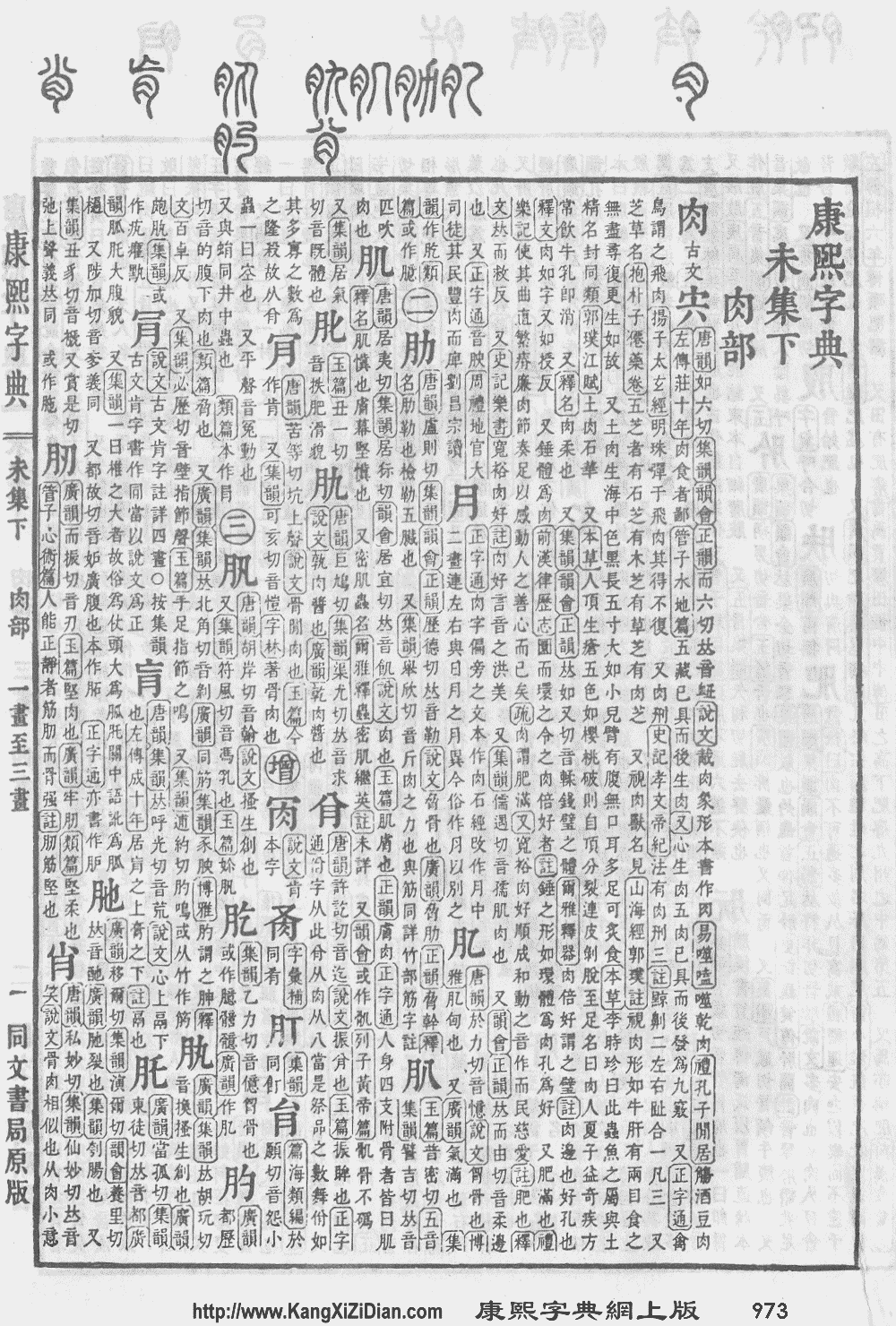
- Kangxi Dictionary: page 973, character 1
- Dai Kanwa Jiten: character 29236
- Dae Jaweon: page 1424, character 4
- Hanyu Da Zidian (first edition): volume 5, page 2931, character 1
- Unihan data for U+8089
Chinese edit
| simp. and trad. |
肉 | |
|---|---|---|
| alternative forms | ||
Glyph origin edit
| Historical forms of the character 肉 | ||||||
|---|---|---|---|---|---|---|
| Shang | Western Zhou | Warring States | Shuowen Jiezi (compiled in Han) | Liushutong (compiled in Ming) | Libian (compiled in Qing) | |
| Oracle bone script | Bronze inscriptions | Chu slip and silk script | Qin slip script | Small seal script | Transcribed ancient scripts | Clerical script |

|

|

|

|

|

|

|
Pictogram (象形) – ribs of an animal’s torso or simply a physical representation of a slice of meat.
Etymology 1 edit
Probably from Proto-Sino-Tibetan *now (“tender; soft”), which has also been compared to 柔 (OC *mlju, “soft; flexible”), 揉 (OC *mju, “to knead”), 軟 (OC *njonʔ, “soft”), 弱 (OC *njewɢ, “weak”), 懦 (OC *noːls, *njo, “cowardly”), 荏 (OC *njɯmʔ, “weak”) (STEDT; Schuessler, 2007). Alternatively, it may be from Proto-Sino-Tibetan *s-nja-k (“meat, flesh”) (STEDT).
- "media"
- Back-formation from 生肉 (shēngròu). See there for more.
Pronunciation edit
Definitions edit
肉
- meat; flesh
- (specifically) pork
- body
- flesh; pulp
- (ACG) media; video
- (Quanzhou Hokkien) main part of an object
- 刀肉 [Hokkien] ― to-hia̍k [Pe̍h-ōe-jī] ― blade of a knife or sword
Compounds edit
- 一塊肉/一块肉
- 丁祭肉
- 三淨肉/三净肉
- 不做肉
- 五花肉 (wǔhuāròu)
- 人肉市場/人肉市场 (rénròu shìchǎng)
- 仔牛肉 (zǎiniúròu)
- 以肉餧虎/以肉喂虎
- 伏肉
- 俎上肉 (zǔshàngròu)
- 凡夫肉眼
- 刀肉
- 剜肉補瘡/剜肉补疮
- 剜肉醫瘡/剜肉医疮
- 割肉 (gēròu)
- 劗肉/𭄛肉
- 咕咾肉 (gūlǎoròu)
- 墦間酒肉/墦间酒肉
- 大腸息肉/大肠息肉
- 大魚大肉/大鱼大肉 (dàyúdàròu)
- 天鵝肉/天鹅肉
- 好酒好肉
- 嬌皮嫩肉/娇皮嫩肉
- 寢皮食肉/寝皮食肉
- 小肉兒/小肉儿
- 小鮮肉/小鲜肉 (xiǎoxiānròu)
- 弱肉強食/弱肉强食 (ruòròuqiángshí)
- 心肝肉
- 心頭肉/心头肉 (xīntóuròu)
- 心驚肉戰/心惊肉战
- 心驚肉跳/心惊肉跳 (xīnjīngròutiào)
- 心驚肉顫/心惊肉颤
- 息肉 (xīròu)
- 愚眉肉眼
- 挖肉補瘡/挖肉补疮
- 掠脂斡肉
- 晚食當肉/晚食当肉
- 有血有肉 (yǒuxuèyǒuròu)
- 東坡肉/东坡肉 (dōngpōròu)
- 果肉 (guǒròu)
- 槁骨腐肉
- 橫肉/横肉 (héngròu)
- 涮羊肉
- 滷肉/卤肉 (lǔròu)
- 漿酒藿肉/浆酒藿肉
- 漿酒霍肉/浆酒霍肉
- 烤肉 (kǎoròu)
- 燒肉/烧肉 (shāoròu)
- 燔肉
- 燻肉/熏肉 (xūnròu)
- 牛肉 (niúròu)
- 狗肉 (gǒuròu)
- 狼多肉少
- 生死肉骨
- 療瘡剜肉/疗疮剜肉
- 白切肉
- 白肉 (báiròu)
- 皮嬌肉嫩/皮娇肉嫩
- 皮焦肉爛/皮焦肉烂
- 皮肉 (píròu)
- 皮裡抽肉/皮里抽肉
- 皮裡走肉/皮里走肉
- 皮開肉破/皮开肉破
- 皮開肉綻/皮开肉绽 (píkāiròuzhàn)
- 皮開肉裂/皮开肉裂
- 皮鬆肉緊/皮松肉紧
- 眼肉胎凡
- 砧上之肉
- 破肉
- 碎肉 (suìròu)
- 稽顙肉袒/稽颡肉袒
- 竹肉
- 筋肉 (jīnròu)
- 米粉肉 (mǐfěnròu)
- 粉蒸肉 (fěnzhēngròu)
- 粱肉
- 精肉 (jīngròu)
- 羊肉床子
- 羊頭狗肉/羊头狗肉 (yángtóugǒuròu)
- 羶肉
- 羽翮飛肉/羽翮飞肉
- 肉丁 (ròudīng)
- 肉中刺
- 肉丸 (ròuwán)
- 肉乎乎
- 肉乾/肉干 (ròugān)
- 肉人
- 肉傀儡
- 肉冠 (ròuguān)
- 肉刑 (ròuxíng)
- 肉包子 (ròubāozi)
- 肉包子打狗 (ròubāozi dǎ gǒu)
- 肉吊窗
- 肉呼呼
- 肉嘟嘟 (ròudūdū)
- 肉囊囊
- 肉圓/肉圆 (ròuyuán)
- 肉墩墩
- 肉屋
- 肉山
- 肉山脯林
- 肉山酒海
- 肉彈/肉弹 (ròudàn)
- 肉感 (ròugǎn)
- 肉慾/肉欲 (ròuyù)
- 肉排 (ròupái)
- 肉搏 (ròubó)
- 肉搏戰/肉搏战 (ròubózhàn)
- 肉敦敦
- 肉柱
- 肉桂 (ròuguì)
- 肉案 (ròu'àn)
- 肉棗兒/肉枣儿
- 肉毒桿菌/肉毒杆菌 (ròudúgǎnjūn)
- 肉沫
- 肉湯/肉汤 (ròutāng)
- 肉燥 (ròusào)
- 肉牛 (ròuniú)
- 肉用雞/肉用鸡 (ròuyòngjī)
- 肉畜
- 肉痛 (ròutòng)
- 肉瘤 (ròuliú)
- 肉皮 (ròupí)
- 肉眼 (ròuyǎn)
- 肉眼凡夫
- 肉眼凡胎
- 肉眼愚晦
- 肉眼愚眉
- 肉眼泡兒/肉眼泡儿
- 肉票 (ròupiào)
- 肉禽 (ròuqín)
- 肉穗花序
- 肉粽 (ròuzòng)
- 肉紅/肉红
- 肉絲/肉丝 (ròusī)
- 肉綻皮開/肉绽皮开
- 肉羹 (ròugēng)
- 肉聲/肉声 (ròushēng)
- 肉脯 (ròufǔ)
- 肉腰刀
- 肉色 (ròusè)
- 肉芽 (ròuyá)
- 肉芝
- 肉蓯蓉/肉苁蓉 (ròucōngróng)
- 肉袒 (ròutǎn)
- 肉裡錢/肉里钱
- 肉角
- 肉豆蔻 (ròudòukòu)
- 肉豬/肉猪 (ròuzhū)
- 肉質/肉质 (ròuzhì)
- 肉跳心驚/肉跳心惊
- 肉身 (ròushēn)
- 肉邊菜/肉边菜
- 肉酥 (ròusū)
- 肉醬/肉酱 (ròujiàng)
- 肉重千斤
- 肉雞/肉鸡 (ròujī)
- 肉頭/肉头 (ròutou)
- 肉顫心驚/肉颤心惊 (ròu chàn xīn jīng)
- 肉飛仙/肉飞仙
- 肉食 (ròushí)
- 肉食者 (ròushízhě)
- 肉食者鄙 (ròushízhěbǐ)
- 肉食鴿/肉食鸽
- 肉餅/肉饼 (ròubǐng)
- 肉餡/肉馅 (ròuxiàn)
- 肉餡兒/肉馅儿
- 肉體/肉体 (ròutǐ)
- 肉鬆/肉松 (ròusōng)
- 肉鰭/肉鳍
- 肉鴿/肉鸽
- 肉麻 (ròumá)
- 肌肉 (jīròu)
- 肌肉注射 (jīròu zhùshè)
- 肌肉麻痺/肌肉麻痹
- 肥羊肉
- 肥肉 (féiròu)
- 胙肉
- 脈不制肉/脉不制肉
- 脢子肉
- 腐肉 (fǔròu)
- 臘肉/腊肉 (làròu)
- 臭肉來蠅/臭肉来蝇
- 至親骨肉/至亲骨肉
- 苦肉計/苦肉计 (kǔròujì)
- 荷葉肉/荷叶肉
- 著肉
- 葉肉/叶肉 (yèròu)
- 虎頭食肉/虎头食肉
- 血肉 (xuèròu)
- 血肉之軀/血肉之躯 (xuèròuzhīqū)
- 血肉模糊 (xuèròumóhú)
- 血肉橫飛/血肉横飞 (xuèròuhéngfēi)
- 血肉淋漓
- 血肉相連/血肉相连 (xuèròuxiānglián)
- 行尸走肉 (xíngshīzǒuròu)
- 行屍視肉/行尸视肉
- 衣帛食肉
- 衣錦食肉/衣锦食肉
- 裡脊肉/里脊肉
- 見肉生根/见肉生根
- 親生骨肉/亲生骨肉
- 親骨肉/亲骨肉 (qīngǔròu)
- 豆腐盤成肉價錢/豆腐盘成肉价钱 (dòufu pán chéng ròu jiàqián)
- 豬肉乾/猪肉干
- 貼皮貼肉/贴皮贴肉
- 貼肉/贴肉
- 賊肉/贼肉
- 賴肉頑皮/赖肉顽皮
- 贅肉/赘肉 (zhuìròu)
- 走肉行屍/走肉行尸 (zǒuròuxíngshī)
- 酒池肉林 (jiǔchíròulín)
- 酒肉兄弟
- 酒肉朋友
- 醃肉/腌肉
- 陳平分肉/陈平分肉
- 雞肉/鸡肉 (jīròu)
- 電宰豬肉/电宰猪肉
- 靈肉/灵肉 (língròu)
- 靠胸貼肉/靠胸贴肉
- 風肉/风肉 (fēngròu)
- 飛土逐肉/飞土逐肉
- 食不異肉/食不异肉
- 食不重肉
- 食肉寢皮/食肉寝皮 (shíròuqǐnpí)
- 香肉 (xiāngròu)
- 骨肉 (gǔròu)
- 骨顫肉驚/骨颤肉惊
- 骨騰肉飛/骨腾肉飞
- 髀肉
- 髀肉復生/髀肉复生 (bìròufùshēng)
- 魚肉/鱼肉 (yúròu)
- 鮓肉/鲊肉
- 鮮肉/鲜肉 (xiānròu)
Descendants edit
Etymology 2 edit
Pronunciation edit
Definitions edit
肉
- (archaic) edge; brim; an outer part of a ring-shaped object (such as coin or jade annulus)
- (archaic, of sound and music) rich; substantial
- 使其曲直繁瘠,廉肉節奏,足以感動人之善心而已矣。 [Classical Chinese, trad.]
- From: The Records of the Grand Historian, by Sima Qian, c. 91 BCE
- Shǐ qí qūzhí fánjí, liánròu jiézòu, zúyǐ gǎndòng rén zhī shànxīn ér yǐyǐ. [Pinyin]
- (please add an English translation of this usage example)
使其曲直繁瘠,廉肉节奏,足以感动人之善心而已矣。 [Classical Chinese, simp.]
- (dialectal Mandarin) spongy; squashy; flabby
- (dialectal Mandarin) slow; sluggish
Compounds edit
Descendants edit
Etymology 3 edit
| simp. and trad. |
肉 | |
|---|---|---|
| alternative forms | 脈/脉 𬁲 | |
Unclear. Reminiscent of 脢 (OC *mɯːs, *mɯː, *mɯːs, “dorsal meat”) (Schuessler, 2007).
Alternatively, it may be of substrate origin. Compare (Deng, 1994):
- Proto-Austronesian *SimaR (“grease; oil; fat”) > Amis simal;
- Proto-Tai *manᴬ (“grease; fat”) > Thai มัน (man);
- Malay gemuk (“fat”, adjective);
- Bunun masmuh (“fat”, adjective);
- Tsat maʔ˥˧ (“fat”, adjective).
Pronunciation edit
Definitions edit
- meat; flesh
- 豬肉/猪肉 [Hokkien] ― ti-bah [Pe̍h-ōe-jī] ― pork
- 牛肉 [Hokkien] ― gû-bah [Pe̍h-ōe-jī] ― beef
- (specifically) pork
- 肉骨 [Hokkien] ― bah-kut [Pe̍h-ōe-jī] ― pork ribs
- flesh; pulp
- 龍眼乾肉/龙眼干肉 [Hokkien] ― lêng-géng-koaⁿ bah [Pe̍h-ōe-jī] ― flesh of dried longan
- main part of an object
- 刀肉 [Hokkien] ― to-bah [Pe̍h-ōe-jī] ― blade of a knife or sword
Further reading edit
- “肉”, in 漢語多功能字庫 (Multi-function Chinese Character Database)[3], 香港中文大學 (the Chinese University of Hong Kong), 2014–
- Dictionary of Chinese Character Variants (教育部異體字字典), A03288
- “Entry #2607”, in 臺灣閩南語常用詞辭典 (overall work in Mandarin and Hokkien), Ministry of Education, R.O.C., 2023.
- (Cantonese) 粵音資料集叢
- zi.tools
Japanese edit
| Shinjitai | 肉 | 
|
| Kyūjitai [1][2][3] |
肉󠄁 肉+ 󠄁?(Adobe-Japan1) |

|
| The displayed kanji may be different from the image due to your environment. See here for details. | ||
Kanji edit
Readings edit
- Go-on: にく (niku, Jōyō)←にく (niku, historical)
- Kan-on: じく (jiku)←じく (ziku, historical)
- Kun: しし (shishi, 肉)
Etymology 1 edit
| Kanji in this term |
|---|
| 肉 |
| しし Grade: 2 |
| kun’yomi |
| Alternative spelling |
|---|
| 宍 |
From Old Japanese, from Proto-Japonic *sisi. Not used in isolation in modern standard Japanese. Persists in compounds and in some dialects.
Cognate with 獣 (shishi, “beast, especially one used for meat”).
Pronunciation edit
Noun edit
- [from 712–1682] (obsolete or dialect, Aomori, Fukushima, Nara, Kagoshima) meat (of boars, pigs, deer, etc.)
- [from 712–1682] (obsolete) human flesh
- (dialect, Iwate, Niigata, Shizuoka, Toyama) muscle
- (dialect, Toyama) excess fat, flab
- (dialect, Kochi) the human body
Derived terms edit
- 肉合い (shishiai): how someone or something is fleshed out, one's build
- 肉置き (shishioki): how someone or something is fleshed out, one's build
- 肉付き (shishitsuki): how someone or something is fleshed out, one's build
- 肉付く (shishizuku): to become fatter, to become meatier; to make someone or something fatter or meatier
- 肉醤 (shishibishio): salted meat, salted fish; the salted and mummified body of an executed person, a practice of punishment carried out in ancient China
- 肉骨 (shishibone): bones from which the meat has been removed; a skeleton
- 肉叢 (shishimura): a cut or hunk of meat; the physical or corporeal body, the flesh
- 肉病 (shishiyami): (rare) obesity, a disease whereby the body becomes fat
Etymology 2 edit
| Kanji in this term |
|---|
| 肉 |
| にく Grade: 2 |
| goon |
From Middle Chinese 肉 (MC nyuwk). Compare modern Hokkien 肉 (jio̍k / lio̍k), Teochew 肉 (ne̍k), or Hakka 肉 (ngiuk7).
Alternative forms edit
Pronunciation edit
Noun edit
- meat, the muscle and fat tissue of an animal used as food
-
- この肉上げましょうか、食べたくなる程美味しい肉ですよ
- kono niku agemashō ka, tabetakunaru hodo oishī niku desuyo
- Should I give this meat [to someone else]? I want to eat them so much because this meat is just so good!
- この肉上げましょうか、食べたくなる程美味しい肉ですよ
-
- the flesh of an animal
- the flesh of a fruit or vegetable
- one's body, as opposed to spirit
- in the Edo period, a prostitute who was an amateur woman
- (Christianity) refers to humans themselves, their world, and their sins, as opposed to their spirit
- the thickness of a thing
- 板の肉
- ita no niku
- the thickness of a board
- 板の肉
- (figurative) the flesh or meat of something, such as an idea, structure, or argument
- an ink pad, a stamp pad
- (theater, kabuki) short for 肉襦袢 (niku juban): flesh-toned undergarments worn by actors and shown when the character has to display their skin
Synonyms edit
- (fruit or vegetable flesh): 実 (mi)
- (body): 肉体 (nikutai)
- (thickness): 厚さ (atsusa), 太さ (futosa)
- (ink pad): 印肉 (inniku)
Derived terms edit
- 肉交 (nikukō): sexual intercourse
- 肉羹 (nikukō): meat broth
- 肉汁 (nikujū): meat broth; meat juice; gravy
- 肉漿 (nikushō): meat juice
- 肉饅 (nikuman): nikuman
- 肉饅頭 (nikumanjū): nikuman
- 肉類 (nikurui): a kind of meat, the sort of meat
- 牛肉 (gyūniku): beef
- 筋肉 (kinniku): muscle
- 狗肉 (kuniku): dog meat
- 鶏肉 (keiniku), 鶏肉 (toriniku): chicken (meat)
- 鯨肉 (geiniku): whale meat
- すじ肉 (sujiniku)
- 鳥肉 (toriniku): meat of a bird, in particular meat of a chicken
- 馬肉 (baniku): horsemeat
- 豚肉 (butaniku), 豚肉 (tonniku): pork
- 挽肉 (hikiniku): minced meat, ground meat
- 羊肉 (yōniku): mutton
References edit
- ^ 白川静 (Shirakawa Shizuka) (2014) “肉”, in 字通 (Jitsū)[1] (in Japanese), popular edition, Tōkyō: Heibonsha, →ISBN
- ^ Haga, Gōtarō (1914) 漢和大辞書 [The Great Kanji-Japanese Dictionary] (in Japanese), Fourth edition, Tōkyō: Kōbunsha, , page 1741 (paper), page 922 (digital)
- ^ Shōundō Henshūjo, editor (1927), 新漢和辞典 [The New Kanji-Japanese Dictionary] (in Japanese), Ōsaka: Shōundō, , page 984 (paper), page 505 (digital)
- ^ “しし 【肉・宍】”, in 日本国語大辞典 (Nihon Kokugo Daijiten, “Nihon Kokugo Daijiten”)
 [2] (in Japanese), 2nd edition, Tōkyō: Shogakukan, 2000, released online 2007, →ISBN, concise edition entry available here (Note: Dialectal meanings, etymological theories, pronunciation including modern, dialectal, and historical information, Jōdai Tokushu Kanazukai, historical dictionaries containing this word, and the kanji spellings in those dictionaries have been omitted.)
- ↑ 5.0 5.1 Yamada, Tadao et al., editors (2011), 新明解国語辞典 (in Japanese), Seventh edition, Tōkyō: Sanseidō, →ISBN
- ^ Matsumura, Akira, editor (2006), 大辞林 (in Japanese), Third edition, Tōkyō: Sanseidō, →ISBN
- ^ NHK Broadcasting Culture Research Institute, editor (1998), NHK日本語発音アクセント辞典 [NHK Japanese Pronunciation Accent Dictionary] (in Japanese), Tōkyō: NHK Publishing, →ISBN

Korean edit
Hanja edit
Vietnamese edit
Han character edit
肉: Hán Nôm readings: nhục[1], nậu, nhụ