
行
| ||||||||
| ||||||||
| ||||||||
Translingual edit
| Stroke order | |||
|---|---|---|---|

| |||
Han character edit

行 (Kangxi radical 144, 行+0, 6 strokes, cangjie input 竹人一一弓 (HOMMN), four-corner 21221, composition ⿰彳亍)
- Kangxi radical #144, ⾏.
- Shuowen Jiezi radical №37
Usage notes edit
行 itself is also used as a radical (in addition to 彳); unusually for radicals, the phonetic is placed in the middle – with 彳 on the left and 亍 on the right – corresponding to the phonetic originally being placed at the middle of the intersection.
Derived characters edit
- Appendix:Chinese radical/行
- 哘, 垳, 㤚, 𢫱, 洐, 𭤷, 𣆯, 桁, 烆, 珩, 胻, 𮁴, 䀪, 𮀖, 𥞧, 裄, 絎(绗), 𦨵, 𧊽, 𠒣, 𧻥, 䟰, 𮠧, 𬫑, 䯒, 䰢, 𫙚, 𮬷
- 鴴(鸻), 𢙡, 𪩵, 𪨳, 荇, 筕, 𢔖, 𧊔, 𢔮, 䚘, 䡓, 𢕋, 𢕁, 銜, 𢕵, 𢖍, 鵆, 𨴠
References edit
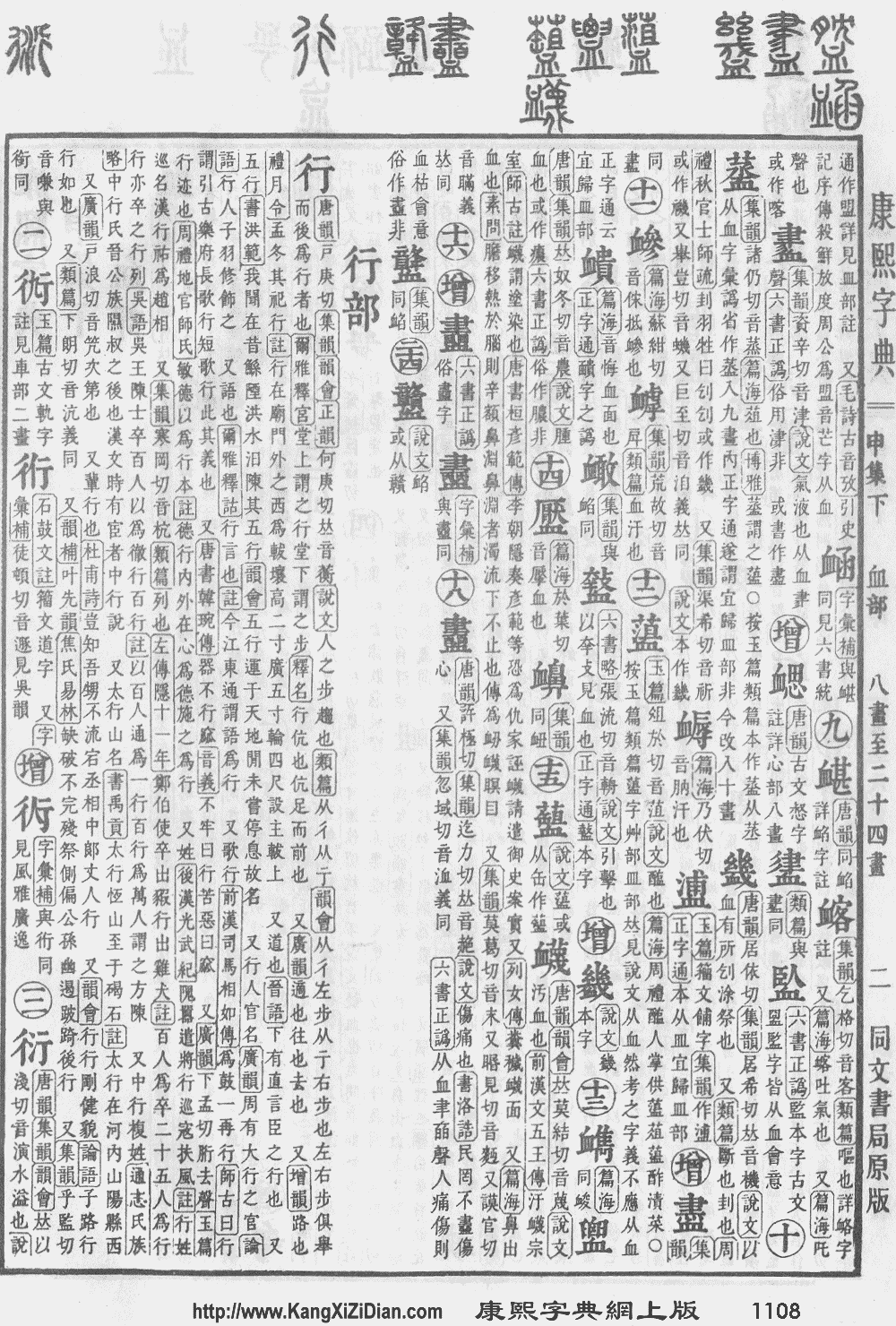
- Kangxi Dictionary: page 1108, character 31
- Dai Kanwa Jiten: character 34029
- Dae Jaweon: page 1570, character 31
- Hanyu Da Zidian (first edition): volume 2, page 811, character 6
- Unihan data for U+884C
Chinese edit
| simp. and trad. |
行 | |
|---|---|---|
Glyph origin edit
| Historical forms of the character 行 | ||||||||
|---|---|---|---|---|---|---|---|---|
| Shang | Western Zhou | Spring and Autumn | Warring States | Shuowen Jiezi (compiled in Han) | Liushutong (compiled in Ming) | Libian (compiled in Qing) | ||
| Oracle bone script | Bronze inscriptions | Bronze inscriptions | Bronze inscriptions | Chu slip and silk script | Qin slip script | Small seal script | Transcribed ancient scripts | Clerical script |

|

|

|

|

|

|

|

|

|
Pictogram (象形) – a street intersection.
Originally symmetric, it has been simplified asymmetrically; the left half 彳 is widely used as a radical, while the right half 亍 finds occasional use, and the character can be broken up as 彳 + 亍, though originally it was not a compound.
Pronunciation 1 edit
Definitions edit
行
- (literary or dialectal) to walk
- 子曰:「三人行,必有我師焉。擇其善者而從之,其不善者而改之。」 [Classical Chinese, trad.]
- From: The Analects of Confucius, c. 475 – 221 BCE, translated based on James Legge's version
- Zǐ yuē: “Sān rén xíng, bì yǒu wǒ shī yān. Zé qí shàn zhě ér cóng zhī, qí bù shàn zhě ér gǎi zhī.” [Pinyin]
- The Master said, “When I walk along with two others, they may serve me as my teachers. I will select their good qualities and follow them, their bad qualities and avoid them.”
子曰:「三人行,必有我师焉。择其善者而从之,其不善者而改之。」 [Classical Chinese, simp.]
- (Cantonese, of a vehicle) to go
- (Cantonese) to navigate
- (Cantonese) to roam; to stroll; to wander
- Synonym: 逛 (guàng)
- (Cantonese, computing) to run
- to go; to move
- to carry out; to execute
- to perform (a salute)
- OK; good
- to be good; to work
- to be good (opposed to bad) (usually in negative sentences, or with 還)
- to be able to do something (usually mentioned before)
- (often sarcastic) remarkable
- (Northern Wu) trending; fashionable; popular
- (Hinduism, Buddhism) vedana
Usage notes edit
Notice that when meaning “be able to do something”, 行 can only be used without a complement. This is different from 能 (néng, “to be able to (do something)”).
Synonyms edit
Compounds edit
- 一意孤行 (yīyìgūxíng)
- 一滅行/一灭行
- 一行作吏
- 三思而行
- 上行 (shàngxíng)
- 上行下效 (shàngxíngxiàxiào)
- 下行文
- 不虛此行/不虚此行 (bùxūcīxíng)
- 不行 (bùxíng)
- 且行且談/且行且谈
- 並行/并行 (bìngxíng)
- 並行不悖/并行不悖 (bìngxíngbùbèi)
- 乘偽行詐/乘伪行诈
- 也行
- 二行程
- 五行四柱
- 人行道 (rénxíngdào)
- 仄行
- 令出惟行
- 以字行 (yǐzìxíng)
- 令行禁止 (lìngxíngjìnzhǐ)
- 仿行 (fǎngxíng)
- 伏行
- 例行公事 (lìxínggōngshì)
- 依計行事/依计行事
- 便宜行事 (biànyíxíngshì)
- 侵權行為/侵权行为 (qīnquán xíngwéi)
- 信步而行
- 借水行舟 (jièshuǐxíngzhōu)
- 倒行逆施 (dàoxíngnìshī)
- 倍道兼行
- 偏差行為/偏差行为
- 偕行 (xiéxíng)
- 僂行/偻行
- 先行官 (xiānxíngguān)
- 光行差
- 克敦孝行
- 八步周行
- 公文旅行
- 公門修行/公门修行
- 兵車行/兵车行
- 冒名行騙/冒名行骗
- 冥行擿埴
- 出行 (chūxíng)
- 刊行 (kānxíng)
- 前行 (qiánxíng)
- 剛行剛驀/刚行刚蓦
- 力學篤行/力学笃行 (lìxuédǔxíng)
- 力行 (lìxíng)
- 力行哲學/力行哲学
- 功行圓滿/功行圆满
- 勢在必行/势在必行 (shìzàibìxíng)
- 勤行
- 印行 (yìnxíng)
- 卻行/却行
- 厲行節約/厉行节约 (lìxíngjiéyuē)
- 及時行樂/及时行乐 (jíshíxínglè)
- 反經行權/反经行权
- 司法行政
- 右行
- 名不虛行/名不虚行
- 同行
- 各行其是 (gèxíngqíshì)
- 周行
- 單線進行/单线进行
- 單行本/单行本 (dānxíngběn)
- 單行法/单行法
- 單行犯/单行犯
- 單行路/单行路
- 單車旅行/单车旅行
- 因公行私
- 團體行動/团体行动
- 坐言起行
- 執行/执行 (zhíxíng)
- 執行機關/执行机关
- 多行不義必自斃/多行不义必自毙 (duō xíng bùyì bì zìbì)
- 夜住曉行/夜住晓行
- 夜行人
- 夜行衣
- 夢行症/梦行症
- 大行
- 大行其道 (dàxíngqídào)
- 大行政區/大行政区 (dàxíngzhèngqū)
- 大行星
- 天行
- 天馬行空/天马行空 (tiānmǎxíngkōng)
- 奉行 (fèngxíng)
- 奉行故事
- 好行小慧
- 孤行 (gūxíng)
- 孤行己意
- 官止神行
- 宵行
- 寸步難行/寸步难行 (cùnbùnánxíng)
- 專斷獨行/专断独行
- 小行星 (xiǎoxíngxīng)
- 履中行善
- 川行 (chuānxíng)
- 左行
- 常行
- 帶髮修行/带发修行
- 平行官署
- 平行線/平行线 (píngxíngxiàn)
- 平行脈/平行脉
- 平行表親/平行表亲
- 并行 (bìngxíng)
- 廣行善事/广行善事
- 強行/强行 (qiángxíng)
- 強行法/强行法
- 徇行
- 徒行 (túxíng)
- 徐行 (xúxíng)
- 徑行/径行 (jìngxíng)
- 微服私行
- 性行 (xìngxíng)
- 性行為/性行为 (xìngxíngwéi)
- 急行軍/急行军 (jíxíngjūn)
- 恩威並行/恩威并行
- 恨苦修行
- 慮周行果/虑周行果
- 懷寶夜行/怀宝夜行
- 戒行 (jièxíng)
- 我行其野
- 戶籍行政/户籍行政
- 批行
- 持行
- 接淅而行
- 採行/采行 (cǎixíng)
- 撲花行徑/扑花行径
- 攝行/摄行 (shèxíng)
- 改惡行善/改恶行善
- 放任行為/放任行为
- 放行 (fàngxíng)
- 教育行政
- 方行
- 施行細則/施行细则 (shīxíng xìzé)
- 旁行
- 旅行 (lǚxíng)
- 旅行包
- 旅行支票 (lǚxíng zhīpiào)
- 旁行斜上
- 旅行社 (lǚxíngshè)
- 旅行車/旅行车 (lǚxíngchē)
- 日行一善 (rìxíngyīshàn)
- 日行千里 (rì xíng qiānlǐ)
- 星行
- 星行夜歸/星行夜归
- 時行天氣/时行天气
- 暢行/畅行 (chàngxíng)
- 暢行無阻/畅行无阻 (chàngxíngwúzǔ)
- 暴行
- 曉行夜宿/晓行夜宿
- 有償行為/有偿行为
- 朝行夕改
- 未學行,先學走/未学行,先学走 (mei6 hok6 haang4, sin1 hok6 zau2) (Cantonese)
- 果擲行車/果掷行车
- 東行/东行
- 榮行/荣行
- 橫行介士/横行介士
- 橫行文字/横行文字
- 橫行直撞/横行直撞 (héngxíngzhízhuàng)
- 橫行霸道/横行霸道 (héngxíngbàdào)
- 歌行
- 步步行兇/步步行凶
- 步行 (bùxíng)
- 步行機/步行机
- 歹徒橫行/歹徒横行
- 沒行止/没行止
- 法律行為/法律行为
- 流行 (liúxíng)
- 流行坎止
- 流行歌曲 (liúxíng gēqǔ)
- 流行症
- 流行病 (liúxíngbìng)
- 流行色
- 浼人親行/浼人亲行
- 滑行 (huáxíng)
- 滑行道 (huáxíngdào)
- 潛行/潜行 (qiánxíng)
- 潔言汙行/洁言污行
- 濫行/滥行
- 無脛而行/无胫而行
- 煙視媚行/烟视媚行
- 爬行 (páxíng)
- 爬行動物/爬行动物 (páxíng dòngwù)
- 特立獨行/特立独行 (tèlìdúxíng)
- 狗行狼心
- 獨斷獨行/独断独行 (dúduàndúxíng)
- 獨行俠/独行侠 (dúxíngxiá)
- 獨行其是/独行其是
- 獨行大盜/独行大盗
- 班功行賞/班功行赏
- 現行法/现行法
- 琵琶行
- 瑰意琦行 (guīyìqíxíng)
- 環行/环行
- 用行舍藏
- 畢業旅行/毕业旅行
- 疾行 (jíxíng)
- 發行/发行
- 發行首日/发行首日
- 直情徑行/直情径行
- 盲目行事
- 直道而行
- 相機行事/相机行事
- 相須而行/相须而行
- 知易行難/知易行难
- 知難而行/知难而行
- 矩步方行
- 示威遊行/示威游行
- 票據行為/票据行为
- 禹行舜趨/禹行舜趋
- 稀行
- 立盹行眠
- 立身行道
- 節儉躬行/节俭躬行
- 紆行/纡行
- 索隱行怪/索隐行怪
- 綠色行銷/绿色行销
- 網際行銷/网际行销
- 緩緩而行/缓缓而行
- 編隊飛行/编队飞行
- 罕行
- 肆行 (sìxíng)
- 肆行無忌/肆行无忌
- 胡行亂作/胡行乱作
- 膝行肘步
- 自助旅行
- 自行 (zìxíng)
- 自行車/自行车 (zìxíngchē)
- 舉行/举行 (jǔxíng)
- 舊家行徑/旧家行径
- 航行燈/航行灯
- 苞苴公行
- 草偃風行/草偃风行
- 草靡風行/草靡风行
- 虎步龍行/虎步龙行
- 蛇行 (shéxíng)
- 蝸行/蜗行
- 蟹行文字
- 行不及言
- 行不由徑/行不由径 (xíngbùyóujìng)
- 行不苟合 (xíngbùgǒuhé)
- 行不苟容
- 行不通 (xíngbutōng)
- 行不顧言/行不顾言
- 行之有效 (xíngzhīyǒuxiào)
- 行乞 (xíngqǐ)
- 行事 (xíngshì)
- 行事曆/行事历 (xíngshìlì)
- 行人 (xíngrén)
- 行人情
- 行以求知
- 行來/行来
- 行個方便/行个方便
- 行兵列陣/行兵列阵
- 行凶 (xíngxiōng)
- 行刑場/行刑场
- 行前 (xíngqián)
- 行劫 (xíngjié)
- 行動/行动 (xíngdòng)
- 行動坐臥/行动坐卧
- 行動自如/行动自如
- 行動電話/行动电话 (xíngdòng diànhuà)
- 行化
- 行匣
- 行取
- 行同狗豨
- 行吟
- 行哭
- 行商 (xíngshāng)
- 行善 (xíngshàn)
- 行囊 (xíngnáng)
- 行在 (Xíngzài)
- 行坐
- 行夜
- 行好積德/行好积德
- 行媒
- 行孝
- 行宮/行宫 (xínggōng)
- 行將/行将 (xíngjiāng)
- 行將就木/行将就木 (xíngjiāngjiùmù)
- 行尸走肉 (xíngshīzǒuròu)
- 行屍視肉/行尸视肉
- 行己有恥/行己有耻
- 行師動眾/行师动众
- 行幸 (xíngxìng)
- 行廚/行厨
- 行徑/行径 (xíngjìng)
- 行復/行复
- 行思
- 行思坐憶/行思坐忆
- 行憲/行宪
- 行成功滿/行成功满
- 行戶/行户
- 行所無事/行所无事
- 行持
- 行放
- 行政區/行政区 (xíngzhèngqū)
- 行政區畫/行政区画 (xíngzhèng qūhuà)
- 行政司法
- 行政學/行政学 (xíngzhèngxué)
- 行政官
- 行政效率
- 行政機關/行政机关 (xíngzhèng jīguān)
- 行政權/行政权
- 行政法院 (xíngzhèng fǎyuàn)
- 行政犯
- 行政立法
- 行政訴訟/行政诉讼
- 行政警察
- 行散
- 行旅
- 行春
- 行星儀/行星仪
- 行時/行时 (xíngshí)
- 行景
- 行有餘力/行有余力 (xíngyǒuyúlì)
- 行期 (xíngqī)
- 行杖
- 行李 (xínglǐ)
- 行李袋
- 行枷
- 行樂/行乐 (xínglè)
- 行樂圖/行乐图
- 行權/行权 (xíngquán)
- 行權立斷/行权立断 (xíngquánlìduàn)
- 行次
- 行止 (xíngzhǐ)
- 行步如風/行步如风
- 行水
- 行滿功成/行满功成
- 行濁言清/行浊言清
- 行炙
- 行為主義/行为主义 (xíngwéizhǔyì)
- 行為模式/行为模式
- 行為科學/行为科学 (xíngwéi kēxué)
- 行為能力/行为能力 (xíngwéi nénglì)
- 行為藝術/行为艺术 (xíngwéi yìshù)
- 行無越思/行无越思
- 行燈/行灯 (xíngdēng)
- 行營/行营 (xíngyíng)
- 行獵/行猎
- 行監坐守/行监坐守
- 行看子
- 行神
- 行福
- 行程 (xíngchéng)
- 行窩/行窝
- 行童
- 行篋/行箧 (xíngqiè)
- 行糧/行粮
- 行經期/行经期
- 行聘 (xíngpìn)
- 行腔
- 行腳僧/行脚僧
- 行舟
- 行色 (xíngsè)
- 行色匆匆
- 行若狗彘 (xíngruògǒuzhì)
- 行菜
- 行藏 (xíngcáng)
- 行藥/行药
- 行行
- 行裝/行装 (xíngzhuāng)
- 行詐/行诈
- 行販/行贩
- 行賈/行贾
- 行走 (xíngzǒu)
- 行走如飛/行走如飞
- 行跡/行迹 (xíngjì)
- 行路難/行路难
- 行蹤/行踪 (xíngzōng)
- 行蹤無定/行踪无定
- 行車/行车 (xíngchē)
- 行車執照/行车执照
- 行車速率/行车速率
- 行軍動眾/行军动众
- 行轅/行辕
- 行進/行进 (xíngjìn)
- 行道
- 行道樹/行道树
- 行遠自邇/行远自迩
- 行郎
- 行酒 (xíngjiǔ)
- 行酒令 (xíng jiǔlìng)
- 行醫/行医 (xíngyī)
- 行針步線/行针步线
- 行銷學/行销学
- 行鍼/行针
- 行鍼走線/行针走线
- 行關/行关
- 行隨事遷/行随事迁
- 行雲/行云 (xíngyún)
- 行雲流水/行云流水 (xíngyúnliúshuǐ)
- 行露
- 行食
- 行館/行馆
- 行駛/行驶 (xíngshǐ)
- 行騙/行骗 (xíngpiàn)
- 行鬼路兒/行鬼路儿
- 衡行
- 衣繡晝行/衣绣昼行
- 衣食住行 (yīshízhùxíng)
- 見機行事/见机行事
- 規行矩止/规行矩止
- 言不踐行/言不践行
- 言出必行 (yánchūbìxíng)
- 言多傷行/言多伤行
- 言揚行舉/言扬行举
- 言聽行從/言听行从
- 言談行事/言谈行事
- 計行慮義/计行虑义
- 試行/试行 (shìxíng)
- 詭譎無行/诡谲无行
- 論功行賞/论功行赏 (lùngōngxíngshǎng)
- 謹言慎行/谨言慎行 (jǐnyánshènxíng)
- 貌合行離/貌合行离
- 貨賂公行/货赂公行
- 賄貨公行/贿货公行
- 賄賂并行/贿赂并行
- 賦食行水/赋食行水
- 走肉行屍/走肉行尸 (zǒuròuxíngshī)
- 走骨行屍/走骨行尸
- 趲行/趱行
- 踽踽獨行/踽踽独行 (jǔjǔdúxíng)
- 踽踽而行
- 蹣行/蹒行
- 身體力行/身体力行 (shēntǐlìxíng)
- 躬行
- 躬行節儉/躬行节俭
- 軍事行動/军事行动
- 軍行/军行
- 辭行/辞行 (cíxíng)
- 巡行 (xúnxíng)
- 逆水行舟 (nìshuǐxíngzhōu)
- 逆耳利行
- 逆行 (nìxíng)
- 逆行倒施
- 逕行/迳行
- 通行本
- 通行無阻/通行无阻
- 通行費/通行费 (tōngxíngfèi)
- 進行/进行 (jìnxíng)
- 進行曲/进行曲 (jìnxíngqǔ)
- 運行/运行 (yùnxíng)
- 遊行/游行 (yóuxíng)
- 遍行 (biànxíng)
- 遠行/远行 (yuǎnxíng)
- 遵行 (zūnxíng)
- 遲行早住/迟行早住
- 銷行/销行
- 鐵馬橫行/铁马横行
- 閃電行動/闪电行动
- 間行/间行 (jiànxíng)
- 閒行/闲行 (xiánxíng)
- 陸行/陆行
- 隨行/随行 (suíxíng)
- 隴西行/陇西行
- 難行/难行
- 雷厲風行/雷厉风行 (léilìfēngxíng)
- 霹靂行動/霹雳行动
- 非法行為/非法行为
- 順水行舟/顺水行舟
- 順行/顺行
- 預行/预行 (yùxíng)
- 頭行/头行
- 類地行星/类地行星
- 風掣雷行/风掣雷行
- 風行一時/风行一时 (fēngxíngyīshí)
- 風行水上/风行水上
- 風行草從/风行草从
- 風行電擊/风行电击
- 飛行傘/飞行伞
- 飛行器/飞行器 (fēixíngqì)
- 飛行家/飞行家 (fēixíngjiā)
- 飛行甲板/飞行甲板
- 食衣住行
- 體行/体行
- 魚貫而行/鱼贯而行
- 鵝行鴨步/鹅行鸭步
- 點行/点行
- 龍行虎步/龙行虎步 (lóng xíng hǔ bù)
- 龔行天罰/龚行天罚
Pronunciation 2 edit
Definitions edit
行
- profession; industry; trade; business
- place for specific transaction
- line of objects; row
- (Mainland China) row (in data tables)
- Synonym: 列 (liè) (Taiwan)
- (Taiwan) column (in data tables)
- Synonym: 列 (liè) (Mainland China)
- (Cantonese) Short for 行貨/行货.
- (Cantonese) coarse; of poor quality; too general
Compounds edit
- 一目十行 (yīmùshíháng)
- 一行三昧
- 七十二行
- 丈人行
- 三十六行
- 上廳行首/上厅行首
- 三行
- 不在行
- 世界銀行/世界银行 (Shìjiè Yínháng)
- 中國銀行/中国银行 (Zhōngguó Yínháng)
- 中央銀行/中央银行 (zhōngyāng yínháng)
- 五熟行
- 五行並下/五行并下
- 五行俱下
- 五行八作
- 人力銀行/人力银行 (rénlì yínháng)
- 仵作行人
- 估價行/估价行
- 僧行
- 儲備銀行/储备银行 (chǔbèi yínháng)
- 儲蓄銀行/储蓄银行 (chǔxù yínháng)
- 充內行/充内行
- 充行家
- 內行人/内行人 (nèihángrén)
- 全武行 (quánwǔháng)
- 八行 (bāháng)
- 八行書/八行书 (bāhángshū)
- 公司行號/公司行号
- 分行 (fēnháng)
- 分行布白
- 十三行 (Shísānháng)
- 十四行詩/十四行诗 (shísìhángshī)
- 十目一行
- 十行俱下
- 各行各業/各行各业 (gèhánggèyè)
- 同行相忌
- 同行語/同行语
- 商業銀行/商业银行 (shāngyè yínháng)
- 商行 (shāngháng)
- 器官銀行/器官银行
- 四行倉庫/四行仓库
- 四行孤軍/四行孤军
- 國民銀行/国民银行
- 團行/团行
- 土地銀行/土地银行
- 土行
- 地下油行
- 在行 (zàiháng)
- 報關行/报关行
- 外匯銀行/外汇银行
- 外行 (wàiháng)
- 外行人 (wàihángrén)
- 外行話/外行话
- 大排行 (dàpáiháng)
- 大行院
- 大通銀行/大通银行
- 太行山 (Tàiháng Shān)
- 姊妹行
- 委託行/委托行
- 子曰行
- 字裡行間/字里行间 (zìlǐhángjiān)
- 實習銀行/实习银行
- 尋行數墨/寻行数墨
- 尋行逐隊/寻行逐队
- 廝撲行/厮扑行
- 懂行 (dǒngháng)
- 戎行 (róngháng)
- 戲行/戏行
- 抬行市
- 排行 (páiháng)
- 排行榜 (páihángbǎng)
- 提行
- 擺行陣/摆行阵
- 攙行奪市/搀行夺市
- 改行
- 暗行
- 有行無市/有行无市 (yǒuhángwúshì)
- 本色當行/本色当行
- 本行 (běnháng)
- 梨園行/梨园行
- 標行/标行
- 欺行霸市 (qīhángbàshì)
- 武行
- 歪行貨/歪行货
- 沒行款/没行款
- 油行
- 洋行 (yángháng)
- 無人銀行/无人银行
- 牙行 (yáháng)
- 特許行業/特许行业
- 班行
- 當行/当行
- 當行出色/当行出色
- 當行家/当行家
- 目下十行
- 秀出班行
- 糧行/粮行
- 細胞銀行/细胞银行
- 綜合銀行/综合银行
- 網路銀行/网路银行
- 總行/总行 (zǒngháng)
- 老在行
- 老本行
- 老行伍
- 老行家
- 老行尊
- 腳行/脚行
- 臺灣銀行/台湾银行
- 茶行
- 蓼菜成行
- 藝壓當行/艺压当行
- 藥行/药行 (yàoháng)
- 行伍 (hángwǔ)
- 行伍出身
- 行佣
- 行分
- 行列 (hángliè)
- 行列式 (hánglièshì)
- 行口
- 行口商
- 行員/行员
- 行家 (hángjiā)
- 行家話/行家话
- 行市 (hángshì)
- 行幫/行帮 (hángbāng)
- 行庫/行库
- 行情 (hángqíng)
- 行戲/行戏
- 行會/行会
- 行東/行东
- 行棧/行栈
- 行業語/行业语
- 行檔/行档
- 行款 (hángkuǎn)
- 行當/行当 (hángdàng)
- 行老
- 行號/行号 (hánghào)
- 行號巷哭/行号巷哭
- 行行蛇蚓
- 行規/行规 (hángguī)
- 行話/行话 (hánghuà)
- 行貨/行货 (hánghuò)
- 行距
- 行輩/行辈 (hángbèi)
- 行鋪/行铺
- 行間/行间 (hángjiān)
- 行陣/行阵 (hángzhèn)
- 行院 (hángyuàn)
- 行首 (hángshǒu)
- 誰行/谁行
- 跨行
- 跳行 (tiàoháng)
- 車行/车行 (chēháng)
- 軟體銀行/软体银行
- 輩行/辈行 (bèiháng)
- 轉行/转行 (zhuǎnháng)
- 銀行/银行 (yínháng)
- 銀行券/银行券
- 銀行團/银行团
- 銀行貸款/银行贷款
- 開發銀行/开发银行
- 隊伍行列/队伍行列
- 隨行就市/随行就市
- 雁行
- 雁行折翼
- 雙線行/双线行
- 電器行/电器行 (diànqìháng)
- 電子銀行/电子银行 (diànzǐ yínháng)
- 電氣行/电气行
- 靠行
- 香水行
- 骨董行
- 鴛行/鸳行
- 鵷行/鹓行
Descendants edit
Others:
Pronunciation 3 edit
Definitions edit
行
Compounds edit
- 一行
- 不守細行/不守细行
- 不拘細行/不拘细行
- 不矜細行/不矜细行
- 不護細行/不护细行
- 中行
- 信行 (xìnxíng)
- 內行/内行 (nèiháng)
- 劣行 (lièxíng)
- 勵行/励行
- 危行
- 危言危行
- 品行 (pǐnxíng)
- 品行端醇
- 善行 (shànxíng)
- 嘉言善行
- 嘉言懿行
- 四行
- 奇節瑰行/奇节瑰行
- 孝行
- 孝行可嘉
- 學行/学行
- 家行
- 庸行
- 德淺行薄/德浅行薄
- 德行
- 志行
- 惡行/恶行
- 慎行
- 懿行
- 才高行厚
- 才高行潔/才高行洁
- 抗行
- 操行 (cāoxíng)
- 改行遷善/改行迁善
- 敗行/败行 (bàixíng)
- 智圓行方/智圆行方
- 景行
- 曲學詖行/曲学诐行
- 更行
- 末節細行/末节细行
- 末行
- 沒志行/没志行
- 治行
- 淫心慝行
- 無行/无行 (wúxíng)
- 無行止/无行止
- 狗心狗行
- 狼心狗行 (láng xīn gǒu xíng)
- 獨行/独行 (dúxíng)
- 獸行/兽行 (shòuxíng)
- 琦行
- 直言危行
- 短行
- 矯情飾行/矫情饰行
- 矯言偽行/矫言伪行
- 矯飾偽行/矫饰伪行
- 砥志礪行/砥志砺行
- 砥礪名行/砥砺名行
- 砥節礪行/砥节砺行
- 砥行磨名
- 砥行立名
- 穢行/秽行
- 節行瑰奇/节行瑰奇
- 素行
- 素行不良
- 素隱行怪/素隐行怪
- 細行/细行
- 絜行
- 罪行 (zuìxíng)
- 義行/义行
- 義行可風/义行可风
- 羶行
- 聖德懿行/圣德懿行
- 聖行/圣行
- 至行
- 茂行 (màoxíng)
- 薄行
- 虧心短行/亏心短行
- 行狀/行状 (xíngzhuàng)
- 行短
- 行短才喬/行短才乔
- 行短才高
- 行能
- 行誼/行谊
- 觀行/观行
- 言行
- 言行一致 (yánxíng yīzhì)
- 言行相悖
- 言行相詭/言行相诡
- 言行相顧/言行相顾
- 言行舉止/言行举止
- 言行若一
- 言行計從/言行计从
- 言行錄/言行录
- 詖行/诐行
- 輕薄無行/轻薄无行
- 遺行/遗行
- 醜行/丑行
- 頡頏之行/颉颃之行
- 願行/愿行
- 餘食贅行/余食赘行
- 馴行/驯行
- 高山景行
- 高行
- 鳥獸行/鸟兽行
Pronunciation 4 edit
Definitions edit
行
Pronunciation 5 edit
Definitions edit
行
Pronunciation 6 edit
| simp. and trad. |
行 | |
|---|---|---|
| alternative forms | 杭 | |
Definitions edit
行 (Northern Wu)
Synonyms edit
Compounds edit
References edit
- “行”, in 漢語多功能字庫 (Multi-function Chinese Character Database)[2], 香港中文大學 (the Chinese University of Hong Kong), 2014–
- Dictionary of Chinese Character Variants (教育部異體字字典), A03699
- (Min Nan) “Entry #2617”, in 臺灣閩南語常用詞辭典 (overall work in Mandarin and Hokkien), Ministry of Education, R.O.C., 2023.
Japanese edit
Kanji edit
Readings edit
From Middle Chinese 行 (MC haeng); compare Mandarin 行 (xíng):
- Go-on: ぎょう (gyō, Jōyō)←ぎやう (gyau, historical)
- Kan-on: こう (kō, Jōyō)←かう (kau, historical)
- Tō-on: あん (an, Jōyō †); ひん (hin)
- Sō-on: あん (an, Jōyō †)
From Middle Chinese 行 (MC haengH); compare Mandarin 行 (xìng):
- Go-on: ぎょう (gyō, Jōyō)←ぎやう (gyau, historical)
- Kan-on: こう (kō, Jōyō)←かう (kau, historical)
- Tō-on: あん (an, Jōyō †)
- Sō-on: あん (an, Jōyō †)
From Middle Chinese 行 (MC hang); compare Mandarin 行 (háng):
- Go-on: ごう (gō)←がう (gau, historical)
- Kan-on: こう (kō, Jōyō)←かう (kau, historical)
- Kan’yō-on: ぎょう (gyō, Jōyō)←ぎやう (gyau, historical)
From Middle Chinese 行 (MC hangH); compare Mandarin 行 (hàng):
- Go-on: ごう (gō)←がう (gau, historical)
- Kan-on: こう (kō, Jōyō)←かう (kau, historical)
- Kan’yō-on: ぎょう (gyō, Jōyō)←ぎやう (gyau, historical)
From native Japanese roots:
- Kun: いく (iku, 行く, Jōyō); ゆく (yuku, 行く, Jōyō); おこなう (okonau, 行う, Jōyō)←おこなふ (okonafu, 行ふ, historical); おこなう (okonau, 行なう)←おこなふ (okonafu, 行なふ, historical); おこない (okonai, 行い)←おこなひ (okonafi, 行ひ, historical); くだり (kudari, 行); しぬ (shinu, 行ぬ); みち (michi, 行); やる (yaru, 行る)
- Nanori: あきら (akira); き (ki); たか (taka); つら (tsura); のり (nori); ひら (hira); みち (michi); もち (mochi); やす (yasu); ゆき (yuki)
Compounds edit
- 行間 (gyōkan)
- 旅行 (ryokō)
- 行政 (gyōsei)
- 発行 (hakkō)
- 進行 (shinkō)
- 実行 (jikkō)
- 流行 (ryūkō)
- 執行 (shikkō)
- 施行 (shikō)
- 平行四辺形 (heikō shihenkei)
- 善行 (zenkō)
- 洋行 (yōkō)
- 歩行 (hokō)
- 代行 (daikō)
- 品行 (hinkō)
- 行火 (anka, “heater”)
- 行脚 (angya, “pilgrimage”)
- 行灯 (andon, “lamp”)
- 行事 (gyōji, “event”)
- 行書 (gyōsho, “semicursive handwriting”)
- 行政 (gyōsei, “government”)
- 行人 (kōjin, “passer-by, traveler”)
- 行列 (gyōretsu, “matrix”)
- 旅行者 (ryokōsha)
- 走行 (sōkō)
- 貴行 (kikō)
- 孝行 (kōkō)
- 航行 (kōkō)
- 試行 (shikō)
- 試行錯誤 (shikō sakugo)
- 挙行 (kyokō)
- 専行 (senkō)
- 急行 (kyūkō)
- 励行 (reikō)
- 悪行 (akugyō)
- 不言実行 (fugenjikkō)
- 行政事件 (gyōseijiken)
- 強行 (kyōkō)
- 行使 (kōshi, “execution”)
- 行方 (yukue, “whereabouts”)
- 通行人 (tsūkōnin, “passer-by”)
- 銀行 (ginkō, “bank”)
- 飛行 (hikō, “aviation”)
- 飛行機 (hikōki, “airplane, aircraft”)
- 飛行場 (hikōjō, “airfield, airport”)
- 行宮 (angū, “temporary residence of the Emperor”)
- 失行 (shikkō)
- 続行 (zokkō)
- 奇行 (kikō)
- 紀行 (kikō)
- 国事行為 (kokujikōi)
- 一目十行 (ichimoku jūgyō)
- 言行齟齬 (genkōsogo)
- 行く年 (ikutoshi)
- 九品の行業 (kuhon no gyōgō)
- 跂行喙息 (kikōkaisoku)
- 行革 (gyōkaku)
- 行為 (kōi)
- 行動 (kōdō)
Etymology 1 edit

From Middle Chinese 行 (MC haeng). First cited in Buddhist texts of the early 600s.[1]
The goon pronunciation, so likely an earlier borrowing.
- For the "formations" definition, translation of Sanskrit संस्कार (saṃskāra)
- For "austerities", translation of Sanskrit चर्या (caryā)
- For "walking", translation of Sanskrit गमन (gamana)
Pronunciation edit
Noun edit
- [from late 1100s] a line of text
- [date uncertain] (mathematics) a row of a matrix
- [from 1177] (calligraphy) Abbreviation of 行書 (“semi-cursive script”).
- [from 1887] a row or column, such as in a table; more specifically, such a row or column in the gojūon table, which consists of kana that have or historically had the same initial consonant
- [from 830] (Buddhism) saṅkhāra: formations, mental activity; one of the 五蘊 (goun, “five skandhas”)
- [from early 600s] (Buddhism) caryā: austerities; practice or discipline for enlightenment (Can we verify(+) this sense?)
- [date uncertain] (Buddhism) gamana: manner of going forward or walking (Can we verify(+) this sense?)
Synonyms edit
See also edit
- 五蘊 (gōn, “five skandhas”): 色 (shiki, “rūpa”), 受 (ju, “vedanā”), 想 (sō, “saññā”), 行 (gyō, “saṅkhāra”), 識 (shiki, “viññāṇa”)
Proper noun edit
- A surname
- a unisex given name
Etymology 2 edit
From Middle Chinese 行 (MC hang|haeng|hangH|haengH). First cited to 1275.[1]
The kan'on pronunciation, so likely the later borrowing.
Pronunciation edit
Noun edit
- going; travelling (UK), traveling (US)
- type of classical Chinese verse (usually an epic)
- (archaic) merchant's association; guild
Proper noun edit
- a unisex given name
Etymology 3 edit
(This etymology is missing or incomplete. Please add to it, or discuss it at the Etymology scriptorium.)
Affix edit
Etymology 4 edit
Cognate with 下り (kudari, “downward-going”).[2]
Pronunciation edit
Noun edit
Suffix edit
Etymology 5 edit
Various nanori readings.
Proper noun edit
行 or 行 or 行 or 行 • (Akira or Susumu or Tōru or Makoto)
- a unisex given name
Proper noun edit
- A place name
Proper noun edit
行 or 行 or 行 or 行 • (An or Iku or Itaru or Yukue)
- a female given name
Proper noun edit
行 or 行 • (Tsutomu or Tsuyoshi)
- a male given name
Proper noun edit
- A place name
- A surname
- a female given name
References edit
Korean edit
Etymology 1 edit
- “movement; going”
From Middle Chinese 行 (MC haeng, “walk; move”).
| Historical Readings | ||
|---|---|---|
| Dongguk Jeongun Reading | ||
| Dongguk Jeongun, 1448 | Recorded as Middle Korean ᅘᆡᇰ (Yale: hhòyng) in Dongguk Jeongun (東國正韻 / 동국정운), 1448. | |
| Middle Korean | ||
| Text | Eumhun | |
| Gloss (hun) | Reading | |
| Hunmong Jahoe, 1527[3] | 녈 ᄒᆡᇰ | Recorded as Middle Korean ᄒᆡᇰ (hoyng) (Yale: hòyng) in Hunmong Jahoe (訓蒙字會 / 훈몽자회), 1527. |
| Gwangju Cheonjamun, 1575 | 녈 ᄒᆡᆼ | Recorded as Middle Korean ᄒᆡᆼ (hoyng) (Yale: hoyng) in Sinjeung Yuhap (新增類合 / 신증유합), 1576. |
| Early Modern Korean | ||
| Text | Final (韻) | Reading |
| Samun Seonghwi, 1751 | ᄃᆞᆫ닐 ᄒᆡᆼ | Recorded as Early Modern Korean ᄒᆡᆼ (Yale: hoyng) in Juhae Cheonjamun (註解千字文 / 주해천자문), 1804. |
- “behaviour; conduct”
From Middle Chinese 行 (MC haengH, “behaviour”).
| Historical Readings | ||
|---|---|---|
| Dongguk Jeongun Reading | ||
| Dongguk Jeongun, 1448 | Recorded as Middle Korean ᅘᆡᇰ〮 (Yale: hhóyng) in Dongguk Jeongun (東國正韻 / 동국정운), 1448. | |
| Middle Korean | ||
| Text | Eumhun | |
| Gloss (hun) | Reading | |
| Hunmong Jahoe, 1527[4] | ᄒᆡᇰ〯뎍〮 ᄒᆡᇰ〯 | Recorded as Middle Korean ᄒᆡᇰ〯 (hǒyng) (Yale: hǒyng) in Hunmong Jahoe (訓蒙字會 / 훈몽자회), 1527. |
| Gwangju Cheonjamun, 1575 | ᄒᆡᆼ실 ᄒᆡᆼ | Recorded as Middle Korean ᄒᆡᆼ ( hoyng) (Yale: hoyng) in Sinjeung Yuhap (新增類合 / 신증유합), 1576. |
| Early Modern Korean | ||
| Text | Final (韻) | Reading |
| Samun Seonghwi, 1751 | ᄒᆡᆼ실 ᄒᆡᆼ | Recorded as Early Modern Korean ᄒᆡᆼ (Yale: hoyng) in Juhae Cheonjamun (註解千字文 / 주해천자문), 1804. |
- “line; row”
- From a corrupted or unorthodox reading. The original reading is 항 based on Middle Chinese 行 (MC hang, “row”).
- “place for specific transaction”
- From a corrupted or unorthodox reading. The original reading is 항 based on Middle Chinese 行 (MC hang, “market”).
Pronunciation edit
- (SK Standard/Seoul) IPA(key): [hɛŋ] ~ [he̞ŋ]
- Phonetic hangul: [행/헹]
Hanja edit

- Hanja form? of 행 (“movement; going”).
- Hanja form? of 행 (“behaviour; conduct”).
- Hanja form? of 행 (“line; row”).
- Hanja form? of 행 (“place for specific transaction”).
- Hanja form? of 행 (“(suffix) (transport) bound for”).
Compounds edit
- 시행 (施行, sihaeng)
- 관행 (慣行, gwanhaeng)
- 행위 (行爲, haeng'wi)
- 진행 (進行, jinhaeng)
- 수행 (遂行, suhaeng)
- 집행 (執行, jiphaeng)
- 행동 (行動, haengdong)
- 이행 (履行, ihaeng)
- 은행 (銀行, eunhaeng)
- 행태 (行態, haengtae)
- 행사 (行事, haengsa)
- 행정 (行政, haengjeong)
- 여행 (旅行, yeohaeng)
- 행사 (行使, haengsa)
- 만행 (蠻行, manhaeng)
- 자행 (恣行, jahaeng)
- 병행 (竝行, byeonghaeng)
- 운행 (運行, unhaeng)
- 발행 (發行, balhaeng)
- 강행 (強行, ganghaeng)
- 유행 (流行, yuhaeng)
- 폭행 (暴行, pokhaeng)
- 실행 (實行, silhaeng)
- 주행 (走行, juhaeng)
- 현행 (現行, hyeonhaeng)
- 행성 (行星, haengseong)
- 언행 (言行, eonhaeng)
- 성행 (盛行, seonghaeng)
- 행패 (行悖, haengpae)
- 단행 (斷行, danhaeng)
- 간행 (刊行, ganhaeng)
- 역행 (逆行, yeokhaeng)
- 대행 (代行, daehaeng)
- 감행 (敢行, gamhaeng)
- 연행 (連行, yeonhaeng)
- 행적 (行跡, haengjeok)
- 행실 (行實, haengsil)
- 수행 (隨行, suhaeng)
- 비행 (飛行, bihaeng)
- 선행 (善行, seonhaeng)
- 범행 (犯行, beomhaeng)
- 항행 (航行, hanghaeng)
- 행진 (行進, haengjin)
- 덕행 (德行, deokhaeng)
- 급행 (急行, geuphaeng)
- 통행 (通行, tonghaeng)
- 품행 (品行, pumhaeng)
- 보행 (步行, bohaeng)
- 행습 (行習, haengseup)
- 행보 (行步, haengbo)
- 행인 (行人, haeng'in)
- 행렬 (行列, haengnyeol)
- 거행 (擧行, geohaeng)
- 미행 (尾行, mihaeng)
- 추행 (醜行, chuhaeng)
- 흥행 (興行, heunghaeng)
- 선행 (先行, seonhaeng)
- 행방 (行方, haengbang)
- 서행 (徐行, seohaeng)
- 악행 (惡行, akhaeng)
- 기행 (紀行, gihaeng)
- 암행 (暗行, amhaeng)
- 평행 (平行, pyeonghaeng)
- 기행 (奇行, gihaeng)
- 퇴행 (退行, toehaeng)
- 난행 (難行, nanhaeng)
- 산행 (山行, sanhaeng)
- 직행 (直行, jikhaeng)
- 자행 (自行, jahaeng)
- 행군 (行軍, haenggun)
Etymology 2 edit
From Middle Chinese 行 (MC hang, “row”).
| Historical Readings | ||
|---|---|---|
| Dongguk Jeongun Reading | ||
| Dongguk Jeongun, 1448 | Recorded as Middle Korean ᅘᅡᇰ (Yale: hhàng) in Dongguk Jeongun (東國正韻 / 동국정운), 1448. | |
| Middle Korean | ||
| Text | Eumhun | |
| Gloss (hun) | Reading | |
| Hunmong Jahoe, 1527[5] | 져제〮 하ᇰ | Recorded as Middle Korean 하ᇰ (hang) (Yale: hàng) in Hunmong Jahoe (訓蒙字會 / 훈몽자회), 1527. |
| Early Modern Korean | ||
| Text | Final (韻) | Reading |
| Samun Seonghwi, 1751 | 줄 행 | Recorded as Early Modern Korean 항 (Yale: hang) in Juhae Cheonjamun (註解千字文 / 주해천자문), 1804. |
Pronunciation edit
- (SK Standard/Seoul) IPA(key): [ha̠ŋ]
- Phonetic hangul: [항]
Hanja edit
行 (eumhun 항렬 항 (hangnyeol hang))
- Hanja form? of 항 (“degree of familial relation”).
- (historical) Hanja form? of 항 (“a line of soldiers”).
Compounds edit
References edit
- 국제퇴계학회 대구경북지부 (國際退溪學會 大邱慶北支部) (2007). Digital Hanja Dictionary, 전자사전/電子字典. [6]
Vietnamese edit
Han character edit
行: Hán Việt readings: hàng, hành, hãng, hạng, hạnh
行: Nôm readings: hàng, hành, hăng, ngành
- goods, product
- shop
- queue
- (writing) line
- (arithmetic) a place
- (Confucianism) virtue
- rank
- company, firm
- (archaic) to go, to travel (on a long journey).
Compounds edit
- 行客 (hành khách, “passenger”)
- 行李 (hành lý, “luggage/baggage”)
- 銀行 (ngân hàng, “bank”)
- 銀行𧖱 (ngân hàng máu, “blood bank”)
- 茹行 (nhà hàng, “restaurant, hotel”)
- 𨷶行 (cửa hàng, “shop/store”)
- 行客 (hành khách, “passenger”)
- 學行 (học hành, “(to) learn/study”)
- 執行 (chấp hành, “(to) implement, execute, carry out”)
- 行星 (hành tinh, “planet”)
- 行廊 (hành lang, “corridor/passage”)
- 舉行 (cử hành, “to celebrate/host (an event)”)
- 交行 (giao hàng, “to deliver goods”)
- 德行 (đức hạnh, “righteousness/good character”)
- 步行 (bộ hành, “pedestrian”)
- 行𡦂 (hàng chữ, “line of text”)