
御
| ||||||||
Translingual edit
Han character edit
御 (Kangxi radical 60, 彳+8 in traditional Chinese and Korean, 彳+9 in mainland China and Japanese, 11 strokes in traditional Chinese and Korean, 12 strokes in mainland China and Japanese, cangjie input 竹人人一中 (HOOML), four-corner 27220, composition ⿰彳卸)
Derived characters edit
Related characters edit
- 禦 (This character is simplified to 御 in mainland China)
References edit
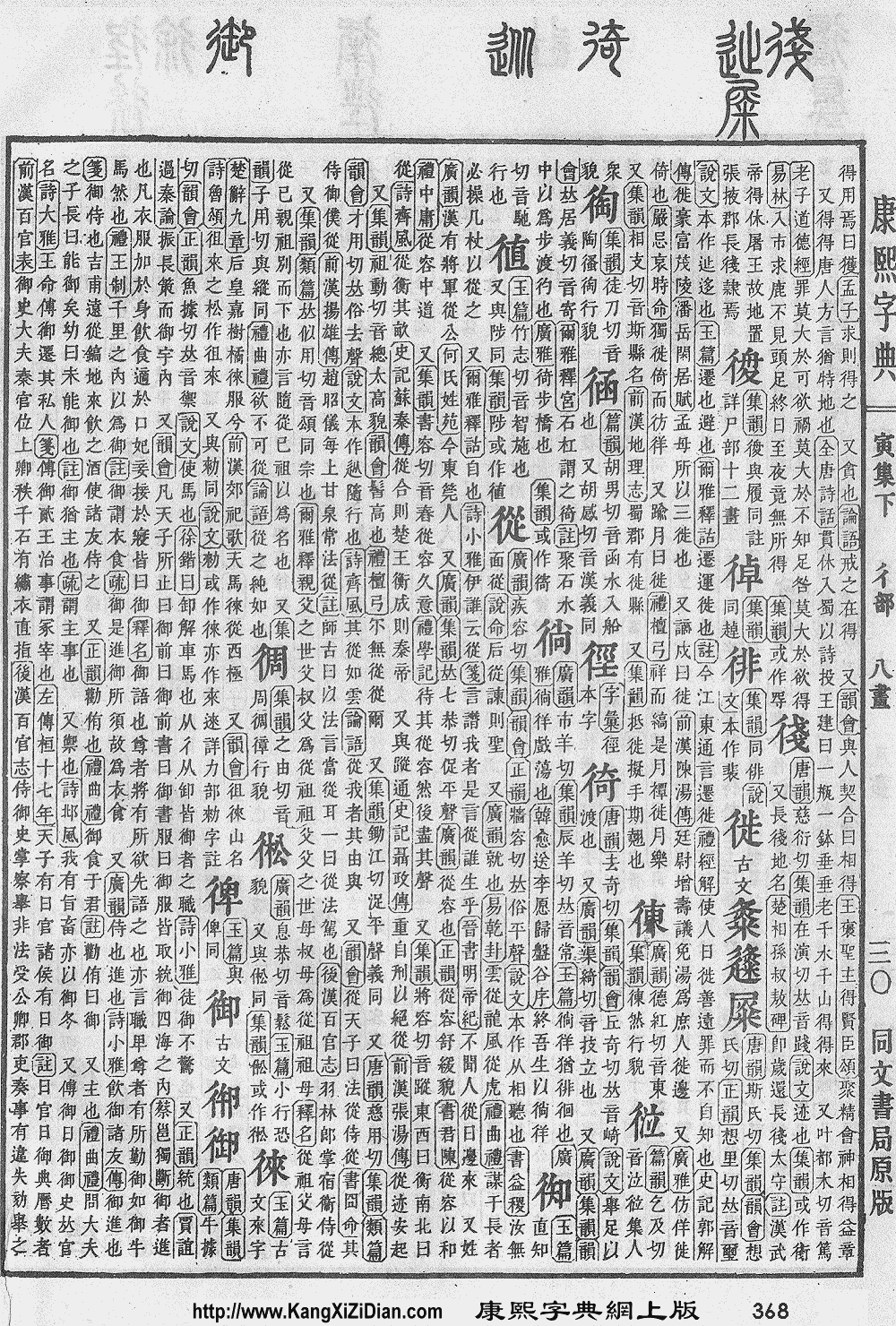
- Kangxi Dictionary: page 368, character 23
- Dai Kanwa Jiten: character 10157
- Dae Jaweon: page 693, character 5
- Hanyu Da Zidian (first edition): volume 2, page 832, character 16
- Unihan data for U+5FA1
Chinese edit
Glyph origin edit
Ideogrammic compound (會意/会意) : semantic 彳 + semantic 卸.
Etymology 1 edit
| trad. | 御 | |
|---|---|---|
| simp. # | 御 | |
| alternative forms | 𢕜 𢓷 馭/驭 䢩 䘘 | |
Sino-Tibetan. Schuessler (2007) compared 御 to Burmese မောင်း (maung:, “drive away, threaten”) and မောင်း (maung:, “driving”).
Pronunciation edit
Definitions edit
御
- (prefix) royal, imperial
- 只見那女王走近前來,一把扯住三藏,俏語嬌聲,叫道:「御弟哥哥,請上龍車,和我同上金鑾寶殿,匹配夫婦去來。」 [Written Vernacular Chinese, trad.]
- From: Wu Cheng'en, Journey to the West, 16th century CE, translation from The Journey to the West (2012), by Anthony C. Yu
- Zhǐjiàn nà nǚwáng zǒu jìnqián lái, yībǎ chězhù Sānzàng, qiàoyǔ jiāoshēng, jiàodào: “Yùdì gēgē, qǐng shàng lóngchē, hé wǒ tóng shàng jīnluán bǎodiàn, pǐpèi fūfù qùlái.” [Pinyin]
- The queen went forward and caught hold of Tripitaka. In a most seductive voice, she said, “Royal brother darling, please ascend the dragon chariot so that we may go to the Treasure Hall of Golden Chimes and become husband and wife.”
只见那女王走近前来,一把扯住三藏,俏语娇声,叫道:「御弟哥哥,请上龙车,和我同上金銮宝殿,匹配夫妇去来。」 [Written Vernacular Chinese, simp.]
- to manage; to govern; to control
- 無䟽其親,無怠其眾,撫其左右,御其四旁。 [Classical Chinese, trad.]
- From: Six Secret Teachings, c. 475 – 221 BCE
- Wú shū qí qīn, wú dài qí zhòng, fǔ qí zuǒyòu, yù qí sìpáng. [Pinyin]
- Do not estrange your relatives. Do not neglect the masses. Be conciliatory and solicitous toward nearby states and control the four quarters.
无䟽其亲,无怠其众,抚其左右,御其四旁。 [Classical Chinese, simp.]
- to drive a chariot or carriage; to ride (on an animal or a vehicle drawn by animals)
- 吾何執?執御乎?執射乎?吾執御矣。 [Classical Chinese, trad.]
- From: The Analects of Confucius, c. 475 – 221 BCE
- Wú hé zhí? Zhí yù hū? Zhí shè hū? Wú zhí yù yǐ. [Pinyin]
- "What shall I practice? Shall I practice charioteering, or shall I practice archery? I will practice charioteering."
吾何执?执御乎?执射乎?吾执御矣。 [Classical Chinese, simp.]
- driver of a carriage
- 徒御嘽嘽。 [Pre-Classical Chinese, trad.]
- From: The Classic of Poetry, c. 11th – 7th centuries BCE, translated based on James Legge's version
- Túyù chǎnchǎn. [Pinyin]
- His footmen and charioteers were numerous,
徒御啴啴。 [Pre-Classical Chinese, simp.]
- Alternative form of 禦 (yù, “to defend against”)
- 利用御寇,順相保也。 [Pre-Classical Chinese, trad.]
- From: I Ching, 11th – 8th century BCE, translated based on James Legge's version
- Lì yòng yù kòu, shùn xiàngbǎo yě. [Pinyin]
- 'It might be advantageous in resisting plunderers:' - by acting as here indicated men would preserve one another.
利用御寇,顺相保也。 [Pre-Classical Chinese, simp.]
Compounds edit
- 乘奔御風/乘奔御风
- 享御
- 侍御
- 僮御
- 告御狀/告御状 (gào yùzhuàng)
- 女御 (nǚyù)
- 媵御
- 嬪御/嫔御
- 御世 (yùshì)
- 御人
- 御仗 (yùzhàng)
- 御前 (yùqián)
- 御史 (yùshǐ)
- 御史大夫 (yùshǐ dàfū)
- 御史臺/御史台
- 御史雨
- 御夫座 (Yùfūzuò)
- 御宇 (yùyǔ)
- 御容
- 御寶/御宝 (yùbǎo)
- 御廚/御厨
- 御手 (yùshǒu)
- 御批 (yùpī)
- 御旨
- 御書/御书
- 御書房/御书房
- 御札 (yùzhá)
- 御林軍/御林军 (yùlínjūn)
- 御案
- 御極/御极 (yùjí)
- 御氣/御气
- 御河
- 御溝/御沟
- 御溝流葉/御沟流叶
- 御溝題葉/御沟题叶
- 御狀/御状 (yùzhuàng)
- 御用 (yùyòng)
- 御碑亭
- 御筆/御笔 (yùbǐ)
- 御者 (yùzhě)
- 御膳房 (yùshànfáng)
- 御花園/御花园 (yùhuāyuán)
- 御苑 (yùyuàn)
- 御製/御制 (yùzhì)
- 御覽/御览 (yùlǎn)
- 御賜/御赐 (yùcì)
- 御輪/御轮
- 御道 (yùdào)
- 御醫/御医 (yùyī)
- 御風/御风
- 御饌/御馔
- 御駕/御驾 (yùjià)
- 御駕親征/御驾亲征 (yùjiàqīnzhēng)
- 御龍/御龙
- 控御 (kòngyù)
- 日御 (rìyù)
- 晏御揚揚/晏御扬扬
- 月御
- 服御
- 盜御馬/盗御马
- 監察御史/监察御史
- 窺御激夫/窥御激夫
- 統御/统御 (tǒngyù)
- 繡衣御史/绣衣御史
- 耕御路
- 酌古御今
- 鐵面御史/铁面御史
- 長轡遠御/长辔远御
- 馮虛御風/冯虚御风
- 駕御/驾御 (jiàyù)
Etymology 2 edit
Pronunciation edit
Definitions edit
御
- (literary, obsolete) to meet, greet and welcome (someone)
- alt. forms: 迓 (yà)
- 之子于歸,百兩御之。 [Pre-Classical Chinese, trad.]
- From: The Classic of Poetry, c. 11th – 7th centuries BCE, translated based on James Legge's version
- Zhī zǐ yú guī, bǎi liǎng yà zhī. [Pinyin]
- This young lady is going to her future home;
A hundred carriages are meeting her.
之子于归,百两御之。 [Pre-Classical Chinese, simp.]
Etymology 3 edit
| For pronunciation and definitions of 御 – see 禦 (“to defend”). (This character is the simplified form of 禦). |
Notes:
|
Japanese edit
Kanji edit
Readings edit
- Go-on: ご (go, Jōyō)
- Kan-on: ぎょ (gyo, Jōyō)
- Kun: おん (on, 御, Jōyō); お (o, 御); おおん (ōn, 御)←おほん (ofon, 御, historical)←おほみ (ofomi, 御, ancient); み (mi, 御); おさめる (osameru, 御める)←をさめる (wosameru, 御める, historical)
As variant kanji of 禦:
Compounds edit
Etymology 1 edit
| Kanji in this term |
|---|
| 御 |
| お Grade: S |
| kun’yomi |
/oɴ/ → /o/
Already apparent since the 14th century.
Prefix edit
- indicates that the [word] is honorific; often used to indicate that the [word] belongs or is related to the listener (as opposed to the speaker)
Usage notes edit
Not to be confused with 大 (ō-, “great”), which is a less-commonly used prefix.
Almost exclusively written in hiragana, to disambiguate with the heteronyms below.
Prefixed to the native Japanese words, as in 御水 (o-mizu, “water”) (words read with kun'yomi). However, there are numerous exceptions such as お弁当 (o-bentō) and お電話 (o-denwa). In old use, prefixed short women's names regardless of the type of reading, for example お菊 (o-Kiku), おしん (o-Shin), お仙 (o-Sen), お妙 (o-Tae), etc. For 外来語 (gairaigo, “(non-Chinese) foreign loan words”), this prefix is seldom used, but somewhat preferred in the jargon of some kinds of industry, as in おビール (o-bīru, “beer”).
Usage varies between speakers, situations, and gender – more polite speech, especially by women, features more use of this prefix, while blunt speech, especially by men, uses it less or not at all (words where the prefix has become mandatory are replaced by blunter terms that do not have the prefix). In rare cases a prefixed term has become impolite, as in 御前 (omae, “you (familiar or derogatory)”).
Derived terms edit
- 御家 (oie)
- 御蔭 (okage), 御陰 (okage)
- お侠 (okyan)
- 御御 (ogo), 御御 (ogō)
- 御籠もり (okomori)
- お酒 (osake)
- 御師 (oshi)
- 白粉 (oshiroi)
- 御節 (osechi)
- 御膳立て (ozendate)
- 御達し (otasshi)
- お玉杓子 (o-tamajakushi)
- 御田 (oden)
- お転婆 (otenba)
- 御伽話 (otogibanashi), 御伽噺 (otogibanashi)
- お主 (onushi)
- 御披露目 (ohirome)
- お前 (omae)
- 御虎子 (omaru)
- 御襁褓 (omutsu)
- お御 (omi-)
- お休みなさい (oyasuminasai)
- お礼 (orei), 御礼 (orei)
- 御座す (owasu)
Etymology 2 edit
| Kanji in this term |
|---|
| 御 |
| おん Grade: S |
| kun’yomi |
/oɸomʉ/ → /owomʉ/ → /oːɴ/ → /oɴ/
Early-Late Middle Japanese shift from ōn- below.[2]
Prefix edit
- indicates that the [word] is honorific; often used to indicate that the [word] belongs or is related to the listener (as opposed to the speaker)
Derived terms edit
Etymology 3 edit
| Kanji in this term |
|---|
| 御 |
| おおん Grade: S |
| kun’yomi |
| Kanji in this term |
|---|
| 御 |
| おおむ Grade: S |
| kun’yomi |
⟨opomi1⟩ → */opomʲɨ/*/əpəmʲɨ/ → /oɸomʉ/ → /owoɴ/ → /oːɴ/
First attested in the Wamyō Ruijushō (938 CE), as man'yōgana form 於保无 (opomu- → ōmu-) within 於保无太加良 (opomutakara → ōmutakara, “people”, as a kun reading of 人民).
Shift from Old Japanese 大御 (⟨opomi1⟩ → ōmi-, prefix of maximum honorific).
Both ōmu- and ōn- readings likely existed in free variation until the development of the ん (n) grapheme.
Alternative forms edit
Prefix edit
御 • (ōn-) ←おほん (ofon)?
(alternative reading hiragana おおむ, rōmaji ōmu-, historical hiragana おほむ)
- (obsolete) indicates that the [word] is honorific; often used to indicate that the [word] belongs or is related to the listener (as opposed to the speaker)
Derived terms edit
Etymology 4 edit
| Kanji in this term |
|---|
| 御 |
| み Grade: S |
| kun’yomi |
⟨mi1⟩ → */mʲi/ → /mi/
From Old Japanese.
Cognate with 霊, 神 (mi, “spirit, god”), as this prefix was originally used to refer to gods and other spiritually important things.
Alternative forms edit
Prefix edit
- (honorific, archaic) added to gods and other spiritually important things
- (honorific, archaic) added to nouns to indicate godlike respect
- (honorific, archaic) added to placenames to emphasize beauty
Derived terms edit
- 御明 (miakashi, “oil lamp lit for Shinto or Buddhist purposes”)
- 御厳 (mi-itsu), 御稜威 (mi-itsu)
- 御食 (mike, “offering of food to a god or spirit”)
- 御子 (miko, “shrine maiden”)
- 御輿 (mikoshi), 神輿 (mikoshi, “portable shrine”)
- 尊 (mikoto), 命 (mikoto, title used for gods and emperors, and other exalted personages)
- 御坂 (misaka)
- 御簾 (misu)
- 御族 (mizō)
- 御台盤所 (mi-daibandokoro)
- 御手洗 (mitarashi)
- 道 (michi), 路 (michi), 途 (michi), 径 (michi)
- 峰 (mine)
- 御仏 (mihotoke)
- 御許 (mimoto, location of a god, Buddha, emperor, or other object of reverence)
- 御座 (mimashi, presence of a god, Buddha, emperor, or other object of reverence)
- 宮 (miya)
- 御息所 (miyasudokoro)
- 御吉野 (mi-Yoshino)
- お御 (omi-)
Usage notes edit
Primarily for the religious words, pertaining to gods or the emperor, as in 御輿 (mikoshi, “portable shrine”). However, in this context it is often replaced by 神 ("god", also pronounced mi-), and then a further 御 (o-) may be added, as in 御神輿 (o-mikoshi). The mi- prefix also became merged into other kanji, as in 宮 (miya, “imperial palace”).
Etymology 5 edit
| Kanji in this term |
|---|
| 御 |
| ご Grade: S |
| goon |
From Middle Chinese 御 (MC ngjoH).
The goon reading, so likely the initial borrowing.
Prefix edit
- indicates that the [word] is honorific; often used to indicate that the [word] belongs or is related to the listener (as opposed to the speaker)
Usage notes edit
Prefixed to the Sino-Japanese words, as in 御主人 (goshujin, “husband”).
While in general this prefix is optional, in many cases it is so commonly used that the base word can no longer be used in isolation, as in 御飯 (gohan, “rice”) – the form ×飯 (*han) is not used alone, though it can be used as parts of compounds (such as 炊飯, suihan, “rice cooking”), and the character can be read in isolation as meshi.
It may also be used with modern foreign borrowings.
- 本日はニコニコ動画に御アクセス頂き、ありがとうございます。
- Honjitsu wa Nikoniko Dōga ni go-akusesu-itadaki, arigatō gozaimasu.
- Thank you for accessing Niconico today.
ご (go-) also appears with a limited number of native words such as ごゆっくり (go-yukkuri) and ごもっとも (go-mottomo).
Derived terms edit
Etymology 6 edit
| Kanji in this term |
|---|
| 御 |
| ご Grade: S |
| goon |
Short form of 御前 (gozen, “noble person”).
Suffix edit
Derived terms edit
Noun edit
- (obsolete, archaic, honorific) a lady
- (obsolete, archaic, honorific) form of address to a woman or a court lady: my Lady
- used in the plural form 御達 (gotachi)
Derived terms edit
Etymology 7 edit
| Kanji in this term |
|---|
| 御 |
| ぎょ Grade: S |
| kan’on |
From Middle Chinese 御 (MC ngjoH).
The kan'on reading, so likely a later borrowing.
Alternative forms edit
- (horseriding, coachman): 馭
Noun edit
- equestrianism, horseriding
- a coachman
- (by extension) serving nearby (to an aristocrat, etc.)
Derived terms edit
Prefix edit
- prefixed to make an honorific kanji compound, especially used to indicate that the [word] belongs or is related to the emperor and/or the equivalents
Derived terms edit
Suffix edit
- suffixed to make an honorific kanji compound which means the action belongs or is related to the emperor and/or the equivalents
Derived terms edit
Affix edit
References edit
- ^ “御”, in 漢字ぺディア (Kanjipedia)[1] (in Japanese), 日本漢字能力検定協会, 2015–2024
- ↑ 2.0 2.1 Matsumura, Akira (1995) 大辞泉 (in Japanese), First edition, Tōkyō: Shogakukan, →ISBN
- ^ Matsumura, Akira, editor (2006), 大辞林 (in Japanese), Third edition, Tōkyō: Sanseidō, →ISBN
Korean edit
Hanja edit
御 • (eo, a) (hangeul 어, 아, revised eo, a, McCune–Reischauer ŏ, a, Yale e, a)
- This term needs a translation to English. Please help out and add a translation, then remove the text
{{rfdef}}.
Old Japanese edit
Etymology edit
Cognate with 霊, 神 (mi1, “spirit, god”), as this prefix was originally used to refer to gods and other spiritually important things.
Prefix edit
御 (mi1-) (kana み)
- (honorific) added to gods and other spiritually important things
- (honorific) added to nouns to indicate godlike respect
- (honorific) added to placenames to emphasize beauty
Derived terms edit
Descendants edit
Vietnamese edit
Han character edit
御: Hán Nôm readings: ngự, ngợ, ngừ, ngừa
- This term needs a translation to English. Please help out and add a translation, then remove the text
{{rfdef}}.