
花
| ||||||||
| ||||||||
Translingual edit
| Stroke order | |||
|---|---|---|---|

| |||
Han character edit

花 (Kangxi radical 140, 艸+4, 8 strokes in traditional Chinese and Korean, 7 strokes in simplified Chinese and Japanese, cangjie input 廿人心 (TOP), four-corner 44214, composition ⿱艹化)
Derived characters edit
References edit
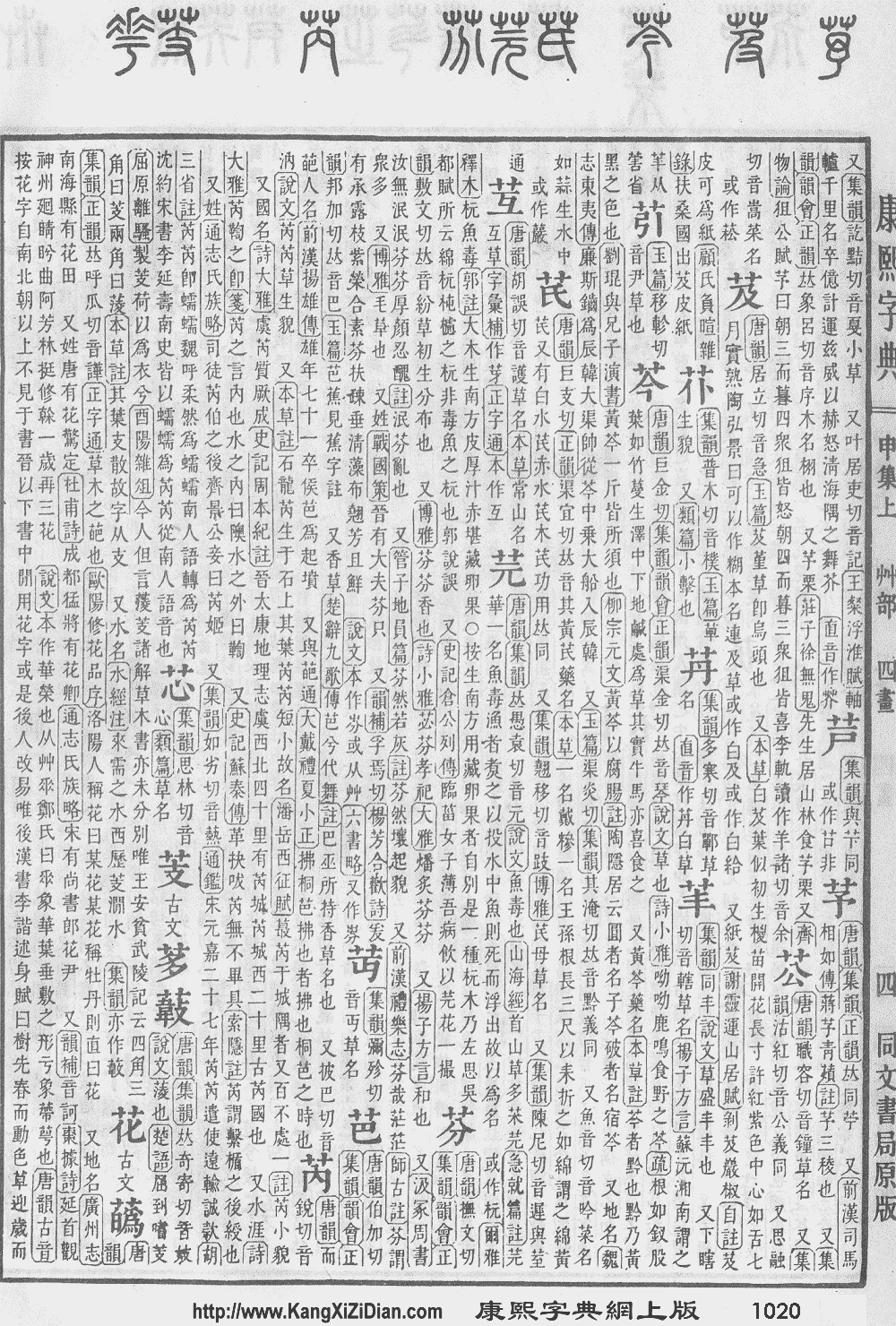
- Kangxi Dictionary: page 1020, character 21
- Dai Kanwa Jiten: character 30734
- Dae Jaweon: page 1478, character 5
- Hanyu Da Zidian (first edition): volume 5, page 3181, character 7
- Unihan data for U+82B1
Chinese edit
| trad. | 花 | |
|---|---|---|
| simp. # | 花 | |
| alternative forms | 華/华 蘤/花 芲 𠌶 | |

Glyph origin edit
| Historical forms of the character 花 | ||
|---|---|---|
| Western Zhou | Shuowen Jiezi (compiled in Han) | Liushutong (compiled in Ming) |
| Bronze inscriptions | Small seal script | Transcribed ancient scripts |

|

|

|
Phono-semantic compound (形聲/形声, OC *hʷraː) : semantic 艹 (“grass; plant”) + phonetic 化 (OC *hŋʷraːls). Originally 𠌶 or 華 before the Han dynasty.
Etymology edit
Unclear. According to Schuessler (2007), either from:
- Proto-Sino-Tibetan *baːr (“bloom, flower”) and thus an example of possible *b ~ *w variation, with final -r moved to medial position. If so, cognate with 葩 (OC *pʰraː); outside Sinitic, compare Burmese ပန်း (pan:), Lepcha ᰓᰫᰲ (búr), Mizo páar. Sagart (2021) also connects it to 葩 (OC *pʰˤra), modifying Baxter and Sagart's (2014) reconstruction to *Cə-pʰˤra and proposing the sound changes *Cə-pʰ- > *Cə-ɸ- > *ɸ- > xw-.
- Or from Austroasiatic; compare Proto-Mon-Khmer *pkaaw ~ *pkaʔ (“flower, blossom”).
華 (OC *ɡʷraː, “to flower”) is a derivative.
Pronunciation edit

Definitions edit
花
- flower; blossom (Classifier: 朵 m c; 支 m c; 蕊 h mn; 束 m c; 把 m; 盆 m c; 簇 m; 紮/扎 c)
- florid; flowery
- pattern; design
- blurred
- 眼花 ― yǎnhuā ― to have blurred vision
- fireworks
- essence; cream
- wound
- Short for 天花 (tiānhuā, “smallpox”).
- courtesan; prostitute
- to spend (money, time, etc.); to cost
- profligate
- (slang) randy; lecherous
- (slang) to be horny; to womanize
- false
- (Cantonese) scratched
- (Cantonese, of images, drawings, patterns, etc.) over-colorful; chaotic; messy
- (Cantonese, card games) flush
- (Hong Kong) pip (insignia) (Classifier: 粒 c)
- 1991, Fight Back to School, spoken by Police Commissioner (Scissor Legs) (Barry Wong):
- (Xiamen and Zhangzhou Hokkien) to extinguish; to put out (of fire)
- (Quanzhou Hokkien) to disappear (of a scar)
- (chiefly Northern Wu) Abbreviation of 棉花 (“cotton”).
- 張家裡囡兒末張家裡花 張家裡囡兒末登勒田中卸棉花 [Northern Wu, trad.]
- From: [1], "Of whose family's this daughter, of whose family these blooms" (啥人家囡兒啥人家花), Southern Wuxi folklore tune
- 1tsan-ka1-li0 6noe-gni2-meq8 1tsan-ka1-li0 1hu 1tsan-ka1-li0 6noe-gni2-meq8 1ten-leq8 2die-tson1 5sia 2mie-hu1 [Wugniu]
- Of the Chang family is this daughter; for the Chang family this cotton blooms. It is a daughter of the Chang family, who unloads cotton here in these fields.
张家里囡儿末张家里花 张家里囡儿末登勒田中卸棉花 [Northern Wu, simp.]
- (Shanghainese) to tease
- a surname. Hua
Synonyms edit
Compounds edit
- 串花
- 九花 (jiǔhuā)
- 乾花/干花
- 亂花/乱花
- 五花 (wǔhuā)
- 五花茶 (wǔhuāchá)
- 六花
- 冬花 (dōnghuā)
- 冰花 (bīnghuā)
- 加花 (jiāhuā)
- 印花 (yìnhuā)
- 名花 (mínghuā)
- 唐花 (tánghuā)
- 喜花
- 國花/国花 (guóhuā)
- 團花/团花
- 坐花廳/坐花厅
- 堆花
- 壁花
- 壓花/压花
- 夏花
- 多花
- 大花
- 大花筒
- 天花 (tiānhuā)
- 女花
- 好花
- 宮花/宫花
- 小五花
- 川蟬花/川蝉花
- 市花 (shìhuā)
- 帽花
- 心花 (xīnhuā)
- 扎花
- 打花
- 拗花
- 押花
- 拱花
- 挑花
- 拮花
- 探花 (tànhuā)
- 採花/采花 (cǎihuā)
- 捧花
- 掛花/挂花 (guàhuā)
- 插花 (chāhuā)
- 揚花/扬花
- 提花
- 摘花
- 撒花 (sǎhuā)
- 撲花/扑花
- 攀枝花 (pānzhīhuā)
- 放花
- 旗花
- 昏花 (hūnhuā)
- 春花
- 曇花/昙花 (tánhuā)
- 杏花 (xìnghuā)
- 松花 (sōnghuā)
- 桂花 (guìhuā)
- 校花 (xiàohuā)
- 桃花 (táohuā)
- 桃花山 (Táohuāshān)
- 梅花 (méihuā)
- 棉花
- 棣花 (Dìhuā)
- 棉花糖 (miánhuātáng)
- 楊花/杨花 (yánghuā)
- 槐花 (huáihuā)
- 榜花
- 榴花
- 橙花
- 櫻花/樱花 (yīnghuā)
- 水翁花
- 水花 (shuǐhuā)
- 油花
- 浪花 (lànghuā)
- 浮花
- 淚花/泪花 (lèihuā)
- 渾花/浑花
- 澆花/浇花 (jiāohuā)
- 火花 (huǒhuā)
- 炙棉花
- 烙花 (làohuā)
- 煙花/烟花 (yānhuā)
- 燙花/烫花 (tànghuā)
- 燈花/灯花
- 燭花/烛花
- 牙花
- 獻花/献花 (xiànhuā)
- 珠花
- 球花
- 璇花
- 生花 (shēnghuā)
- 番紅花/番红花 (fānhónghuā)
- 當花/当花
- 發花/发花
- 白花 (báihuā)
- 百花 (bǎihuā)
- 皮花
- 盆花
- 眼花 (yǎnhuā)
- 石花 (shíhuā)
- 碎花
- 禮花/礼花
- 秋花
- 種花/种花 (zhònghuā)
- 穎花/颖花
- 空花
- 窗花 (chuānghuā)
- 簪花
- 紅花/红花 (hónghuā)
- 紅花套/红花套 (Hónghuātào)
- 紫花 (zǐhuā)
- 繡花/绣花 (xiùhuā)
- 羞花
- 群花 (qúnhuā)
- 翎花
- 翠花鋪/翠花铺 (Cuìhuāpù)
- 背花
- 胸花
- 腦花/脑花 (nǎohuā)
- 腰花 (yāohuā)
- 腿花
- 花不棱登
- 花不起
- 花乳
- 花事
- 花令
- 花信
- 花俏 (huāqiào)
- 花假
- 花兒/花儿
- 花兒匠/花儿匠
- 花兒樣子/花儿样子
- 花兒洞子/花儿洞子
- 花兒針/花儿针
- 花冠 (huāguān)
- 花冰
- 花判
- 花利
- 花劍/花剑 (huājiàn)
- 花功
- 花勝/花胜
- 花匠 (huājiàng)
- 花卉 (huāhuì)
- 花叢/花丛 (huācóng)
- 花史
- 花古 (Huāgǔ)
- 花名 (huāmíng)
- 花名冊/花名册 (huāmíngcè)
- 花呢
- 花和尚 (huāhéshàng)
- 花品
- 花哄
- 花哨 (huāshào)
- 花器 (huāqì)
- 花圃 (huāpǔ)
- 花圈 (huāquān)
- 花國/花国
- 花園/花园 (huāyuán)
- 花團/花团
- 花團錦簇/花团锦簇 (huātuánjǐncù)
- 花坪 (Huāpíng)
- 花城 (Huāchéng)
- 花報/花报
- 花塢/花坞
- 花壇/花坛 (huātán)
- 花多眼亂/花多眼乱 (huāduōyǎnluàn)
- 花大姐 (huādàjiě)
- 花大著/花大着
- 花天酒地 (huātiānjiǔdì)
- 花好月圓/花好月圆 (huāhǎoyuèyuán)
- 花姑
- 花娘 (huāniáng)
- 花子
- 花字
- 花季
- 花容
- 花容月貌 (huāróngyuèmào)
- 花屋
- 花屋脊 (Huāwūjǐ)
- 花崗岩/花岗岩 (huāgāngyán)
- 花嶼/花屿 (Huāyǔ)
- 花巧
- 花布 (huābù)
- 花市 (huāshì)
- 花帳/花帐
- 花帽
- 花序 (huāxù)
- 花廠/花厂
- 花廳/花厅
- 花式 (huāshì)
- 花形
- 花彫/花雕
- 花徑/花径 (huājìng)
- 花心 (huāxīn)
- 花息
- 花戶/花户
- 花房 (huāfáng)
- 花打
- 花托 (huātuō)
- 花把勢/花把势
- 花招 (huāzhāo)
- 花押 (huāyā)
- 花拳
- 花拳繡腿/花拳绣腿 (huāquánxiùtuǐ)
- 花捐
- 花捲/花卷 (huājuǎn)
- 花掉
- 花插
- 花描
- 花教 (Huājiào)
- 花旗 (Huāqí)
- 花旦 (huādàn)
- 花星
- 花會/花会 (huāhuì)
- 花朝
- 花期 (huāqī)
- 花朝月夕
- 花木
- 花木蘭/花木兰
- 花朵 (huāduǒ)
- 花材
- 花束 (huāshù)
- 花果 (huāguǒ)
- 花枝 (huāzhī)
- 花林寺 (Huālínsì)
- 花枝招展 (huāzhīzhāozhǎn)
- 花柳 (huāliǔ)
- 花柱
- 花柄 (huābǐng)
- 花架 (huājià)
- 花格
- 花根
- 花梗 (huāgěng)
- 花梨
- 花棵
- 花棒
- 花椒 (huājiāo)
- 花楸
- 花椰菜 (huāyēcài)
- 花槍/花枪
- 花樓/花楼 (Huālóu)
- 花樣/花样 (huāyàng)
- 花機/花机
- 花櫚/花榈
- 花毽
- 花池子 (huāchízi)
- 花活 (huāhuó)
- 花海
- 花消
- 花湖 (Huāhú)
- 花炮 (huāpào)
- 花燈/花灯 (huādēng)
- 花燈戲/花灯戏
- 花燭/花烛 (huāzhú)
- 花牆/花墙
- 花片 (huāpiàn)
- 花牌 (huāpái)
- 花王 (huāwáng)
- 花環/花环 (huāhuán)
- 花瓜
- 花瓣 (huābàn)
- 花瓶 (huāpíng)
- 花生 (huāshēng)
- 花用
- 花田
- 花甲 (huājiǎ)
- 花界
- 花畦
- 花痴 (huāchī)
- 花白 (huābái)
- 花盆 (huāpén)
- 花盒
- 花盤/花盘 (huāpán)
- 花相
- 花眼 (huāyǎn)
- 花破
- 花磚/花砖 (huāzhuān)
- 花神
- 花稍
- 花童
- 花筒
- 花箋/花笺
- 花簇 (huācù)
- 花籃/花篮 (huālán)
- 花粉 (huāfěn)
- 花糊
- 花糕
- 花約/花约
- 花紅/花红 (huāhóng)
- 花紅柳綠/花红柳绿 (huāhóngliǔlǜ)
- 花紋/花纹 (huāwén)
- 花紗布/花纱布
- 花絲/花丝 (huāsī)
- 花絮 (huāxù)
- 花縣/花县 (Huāxiàn)
- 花繡/花绣
- 花罈/花坛
- 花翎
- 花翠
- 花肥
- 花脣/花唇
- 花腔 (huāqiāng)
- 花腿
- 花臉/花脸 (huāliǎn)
- 花臣
- 花臺/花台 (huātái)
- 花舌 (huāshé)
- 花船
- 花色 (huāsè)
- 花芽
- 芫花 (yuánhuā)
- 花花世界 (huāhuāshìjiè)
- 花花公子 (huāhuā gōngzǐ)
- 花花搭搭
- 花花綠綠/花花绿绿
- 花花腸子/花花肠子 (huāhua chángzi)
- 花苞 (huābāo)
- 花苗 (huāmiáo)
- 花草 (huācǎo)
- 花茶 (huāchá)
- 花莖/花茎 (huājīng)
- 花菜 (huācài)
- 花著/花着 (huāzhāo)
- 花葯/花药 (huāyào)
- 花萼 (huā'è)
- 花蓮/花莲 (Huālián, “Hualien”)
- 花蕩/花荡
- 花蕊 (huāruǐ)
- 花蕾 (huālěi)
- 花虻
- 花蚤
- 花蛤 (huāgé)
- 花蛢
- 花蜜 (huāmì)
- 花街 (huājiē)
- 花街柳巷
- 花衣
- 花衫
- 花被
- 花裀
- 花裡胡哨/花里胡哨 (huālihúshào)
- 花西 (Huāxī)
- 花言巧語/花言巧语 (huāyánqiǎoyǔ)
- 花語/花语 (huāyǔ)
- 花貓/花猫 (huāmāo)
- 花費/花费
- 花賊/花贼
- 花賬/花账
- 花車/花车 (huāchē)
- 花軸/花轴 (huāzhóu)
- 花轎/花轿 (huājiào)
- 花農/花农 (huānóng)
- 花道 (huādào)
- 花邊/花边 (huābiān)
- 花郎
- 花部
- 花都 (Huādū)
- 花酒
- 花釵/花钗
- 花鈿/花钿 (huādiàn)
- 花銀/花银
- 花銷/花销 (huāxiao)
- 花錢/花钱 (huāqián)
- 花鎗/花枪
- 花鏟/花铲
- 花鏡/花镜 (huājìng)
- 花門/花门
- 花開堪折直須折/花开堪折直须折 (huā kāi kān zhé zhí xū zhé)
- 花院
- 花陰/花阴 (huāyīn)
- 花障
- 花雕 (huādiāo)
- 花雞坡/花鸡坡 (Huājīpō)
- 花露 (huālù)
- 花露水 (huālùshuǐ)
- 花青
- 花面
- 花面狸
- 花面貓/花面猫
- 花鞋
- 花項/花项
- 花頭/花头
- 花飾/花饰 (huāshì)
- 花香 (huāxiāng)
- 花香鳥語/花香鸟语
- 花骨朵 (huāgūduo)
- 花體/花体 (huātǐ)
- 花鬚/花须
- 花鬨/花哄
- 花魁 (huākuí)
- 花魚湖/花鱼湖 (Huāyúhú)
- 花鯽/花鲫
- 花鳥/花鸟 (huāniǎo)
- 花鹽/花盐
- 花黃/花黄
- 花點子/花点子
- 花鼓 (huāgǔ)
- 花鼓戲/花鼓戏 (huāgǔxì)
- 茉莉花 (mòlìhuā)
- 茉莉花茶 (mòlìhuā chá)
- 茶花 (cháhuā)
- 荷花 (héhuā)
- 荷花堰 (Héhuāyàn)
- 菊花 (júhuā)
- 菱花
- 菜花 (càihuā)
- 著花
- 菊花茶 (júhuā chá)
- 萼花
- 萱花
- 落花 (luòhuā)
- 葵花 (kuíhuā)
- 蒔花/莳花
- 蓮花/莲花 (liánhuā)
- 蓼花 (liǎohuā)
- 蔥花/葱花 (cōnghuā)
- 蕘花/荛花
- 藏紅花/藏红花 (zànghónghuā)
- 藕花 (ǒuhuā)
- 蘆花/芦花
- 蘭花/兰花 (lánhuā)
- 蘚花/藓花
- 蠟花/蜡花
- 蠶花/蚕花
- 血花
- 補花/补花 (bǔhuā)
- 裸花
- 謊花/谎花
- 豆花 (dòuhuā)
- 豆蔻花
- 貪花/贪花
- 貼花/贴花
- 賞花/赏花 (shǎnghuā)
- 賣花/卖花
- 蹄花
- 郵花/邮花
- 酒花 (jiǔhuā)
- 野花 (yěhuā)
- 金銀花/金银花 (jīnyínhuā)
- 鉋花/刨花
- 銀花/银花
- 鏡花/镜花
- 鏤花/镂花
- 鐵花/铁花
- 開花/开花 (kāihuā)
- 雄花 (xiónghuā)
- 雌花 (cíhuā)
- 雕花
- 雪花 (xuěhuā)
- 零花 (línghuā)
- 青花 (qīnghuā)
- 風花雪月/风花雪月 (fēnghuāxuěyuè)
- 飛花/飞花 (fēihuā)
- 香花 (xiānghuā)
- 鬧羊花/闹羊花
- 魚花/鱼花 (yúhuā)
- 鮮花/鲜花 (xiānhuā)
- 鳥語花香/鸟语花香 (niǎoyǔhuāxiāng)
- 鶯花/莺花
- 鹽花/盐花
- 麻花 (máhuā)
- 黃花/黄花 (huánghuā)
- 墨花
Descendants edit
Others:
References edit
- “花”, in 漢語多功能字庫 (Multi-function Chinese Character Database)[2], 香港中文大學 (the Chinese University of Hong Kong), 2014–
- “Entry #4442”, in 臺灣閩南語常用詞辭典 (overall work in Mandarin and Hokkien), Ministry of Education, R.O.C., 2023.
Japanese edit

Kanji edit
Readings edit
- Go-on: け (ke)←け (ke, historical)←くゑ (kwe, ancient)
- Kan-on: か (ka, Jōyō)←くわ (kwa, historical)
- Kun: はな (hana, 花, Jōyō)
- Nanori: あや (aya); はる (haru)
Etymology 1 edit
| Kanji in this term |
|---|
| 花 |
| はな Grade: 1 |
| kun’yomi |
| Alternative spelling |
|---|
| 華 |
/pana/ → /fana/ → /hana/
From Old Japanese, from Proto-Japonic *pana.
Pronunciation edit
Noun edit
- a flower
- 花が咲く頃
- hana ga saku goro
- when the flowers bloom
- 1999 February 4, “火炎草”, in Vol.1, Konami:
- 火山の近くに生息する草。花から火炎を吹き攻撃する。
- Kazan no chikaku ni seisoku suru kusa. Hana kara kaen o fuki kōgeki suru.
- A grass that grows near volcanoes. It breathes fire from its flowers.
- 火山の近くに生息する草。花から火炎を吹き攻撃する。
- 1999 March 1, “ダーク・プラント [Dark Plant]”, in BOOSTER 1, Konami:
- 汚染された土と闇の力で育てられた花。とても凶暴。
- Osen sareta tsuchi to yami no chikara de sodaterareta hana. Totemo kyōbō.
- A flower that grows from polluted soil and dark powers. It is very nasty.
- 汚染された土と闇の力で育てられた花。とても凶暴。
- 1999 May 25, “深淵に咲く花”, in BOOSTER 2, Konami:
- 光の届かない深淵にひっそりと咲く、あまり見かけない花。
- Hikari no todokanai shin'en ni hissori to saku, amari mikakenai hana.
- A rarely seen flower that silently blooms in the depths of the abyss where the sun never shines.
- 光の届かない深淵にひっそりと咲く、あまり見かけない花。
- 1999 July 5, “命ある花瓶”, in BOOSTER 3, Konami:
- 生けてある花から、花粉を飛ばし噛みついてくる生きている花瓶。
- Iketearu hana kara, kafun o tobashi kamitsuitekuru ikiteiru kabin.
- A living vase that bites and releases pollen from its living flowers.
- 生けてある花から、花粉を飛ばし噛みついてくる生きている花瓶。
- 花が咲く頃
- Short for 生け花 (ikebana): flower arrangement
- Short for 花札 (hanafuda): Japanese playing cards
- the best days of one's life
- the best thing
- essence
Compounds edit
- 生け花 (ikebana), 生花 (ikebana, “Japanese flower arranging”)
- 花暦 (hanagoyomi, “flower calendar”)
- 花園 (hanazono, “flower garden”)
- 花束 (hanataba, “bouquet”)
- 花茶 (hanacha, “flower tea”)
- 花火 (hanabi, “fireworks”)
- 花びら (hanabira), 花弁 (hanabira, “flower petal”)
- 花見 (hanami, “flower viewing”)
- 花婿 (hanamuko, “bridegroom”)
- 花屋 (hanaya, “florist; flower shop”)
- 花嫁 (hanayome, “bride”)
- 花輪 (hanawa, “garland; wreath”)
- 火花 (hibana, “spark”, literally “fire flower”)
Etymology 2 edit
| Kanji in this term |
|---|
| 花 |
| か Grade: 1 |
| on’yomi |
Affix edit
Compounds edit
- 花被 (kahi, “perianth”)
- 紫陽花 (ajisai)
- 無花果 (ichijiku, “fig (tree)”)
- 桜花 (ōka, “cherry blossom”)
- 女郎花 (ominaeshi)
- 開花 (kaika, “flowering; blooming”)
- 花期 (kaki, “flowering season”)
- 燕子花 (kakitsubata)
- 花壇 (kadan, “flowerbed”)
- 花瓶 (kabin, “vase”)
- 花粉 (kafun, “pollen”)
- 花弁 (kaben, “petal”)
- 落花 (rakka, “falling leaves”)
- 花蜜 (kamitsu, “nectar”)
- 花梨 (karin)
- 花櫚 (karin)
- 花車 (kyasha, “dainty, delicate, fragile”, literally “flower car”)
- 鏡花水月 (kyōka suigetsu, “metaphor for something that can be seen but not touched”, literally “flower in a mirror, moon in the water”)
- 山茶花 (sazanka)
- 石楠花 (shakunage, “one of several species of rhododendron native to east Asia”)
- 桃花 (tōka, “peach blossom”)
- 浪花 (Naniwa, “old name for Osaka”)
- 凌霄花 (nōzenkazura)
Descendants edit
References edit
Kikai edit
Kanji edit
Readings edit
Etymology edit
Cognate to Japanese 花 (はな, hana).
Noun edit
花 (fana)
References edit
- “ふぁな【花】” in JLect - Japonic Languages and Dialects Database Dictionary, 2019.
Korean edit
Etymology edit
From Middle Chinese 花 (MC xwae).
| Historical Readings | ||
|---|---|---|
| Dongguk Jeongun Reading | ||
| Dongguk Jeongun, 1448 | 황 (Yale: hwà) | |
| Middle Korean | ||
| Text | Eumhun | |
| Gloss (hun) | Reading | |
| Hunmong Jahoe, 1527[3] | 곳 (Yale: kwòs) | 화 (Yale: hwà) |
Pronunciation edit
- (SK Standard/Seoul) IPA(key): [ɸwa̠]
- Phonetic hangul: [화]
Hanja edit

Compounds edit
References edit
- 국제퇴계학회 대구경북지부 (國際退溪學會 大邱慶北支部) (2007). Digital Hanja Dictionary, 전자사전/電子字典. [4]
Kunigami edit
Kanji edit
Readings edit
Pronunciation edit
Noun edit
花 (phanā)
Miyako edit
Kanji edit
Readings edit
Pronunciation edit
Noun edit
花 (pana)
Okinawan edit
Kanji edit
Readings edit
Etymology 1 edit
| Kanji in this term |
|---|
| 花 |
| はな Grade: 1 |
| kun’yomi |
Pronunciation edit
Noun edit
花 (hana)
- (Shuri, Naha) flower
Etymology 2 edit
| Kanji in this term |
|---|
| 花 |
| ふぁな Grade: 1 |
| kun’yomi |
Noun edit
花 (fana)
- (Tancha) flower
References edit
- “ふぁな【花】” in JLect - Japonic Languages and Dialects Database Dictionary, 2019.
Vietnamese edit
Han character edit
花: Hán Việt readings: hoa (
花: Nôm readings: hoa[1][2][3][4], huê[1][3][4], oa[1], ba[2]
Compounds edit
References edit
Yaeyama edit
Kanji edit
Readings edit
Pronunciation edit
Noun edit
花 (pana)
Yonaguni edit
Kanji edit
Readings edit
Pronunciation edit
Noun edit
花 (hana)