
女
| ||||||||
| ||||||||
| ||||||||
| ||||||||
Translingual edit
| Stroke order | |||
|---|---|---|---|

| |||
| Stroke order | |||
|---|---|---|---|

| |||
Han character edit

女 (Kangxi radical 38, 女+0, 3 strokes, cangjie input 女 (V), four-corner 40400, composition ⿻𡿨丆(GJKV) or ⿻𡿨𠂇(HT))
- Kangxi radical #38, ⼥.
Derived characters edit
- Appendix:Chinese radical/女, 奻, 㚣, 姦
- 㚢, 𠯆, 𡥃, 𢑒, 𫹌, 𢖵, 汝, 𣅓, 𪱴, 𤖩, 𤘙, 𤣷, 肗, 𤯕, 𫀁, 籹, 𦘽, 𫌜, 𫌳, 𧴱, 𧺜, 𨐎, 釹(钕), 𩖠, 𩚔, 𩨚, 𫶯, 𠚰, 邚, 䎟, 䶯
- 㣽, 𭴇, 𥁅, 𠕷, 𡉓, 安, 𢇘, 𦬑, 𢨭, 𣱘, 𥤨, 𥫭, 娄, 耍, 要, 𮡎, 𦯽, 𤕢, 𫒈, 𩁻, 蒆, 𫘺, 䆯, 䶒, 𨳐, 囡
- 佞, 𣍲, 㓂, 宼, 窛, 桜, 珱, 䋝, 䧪, 巕
Descendants edit
- め (Hiragana character derived from man'yōgana)
- メ (Katakana character derived from man'yōgana)
References edit
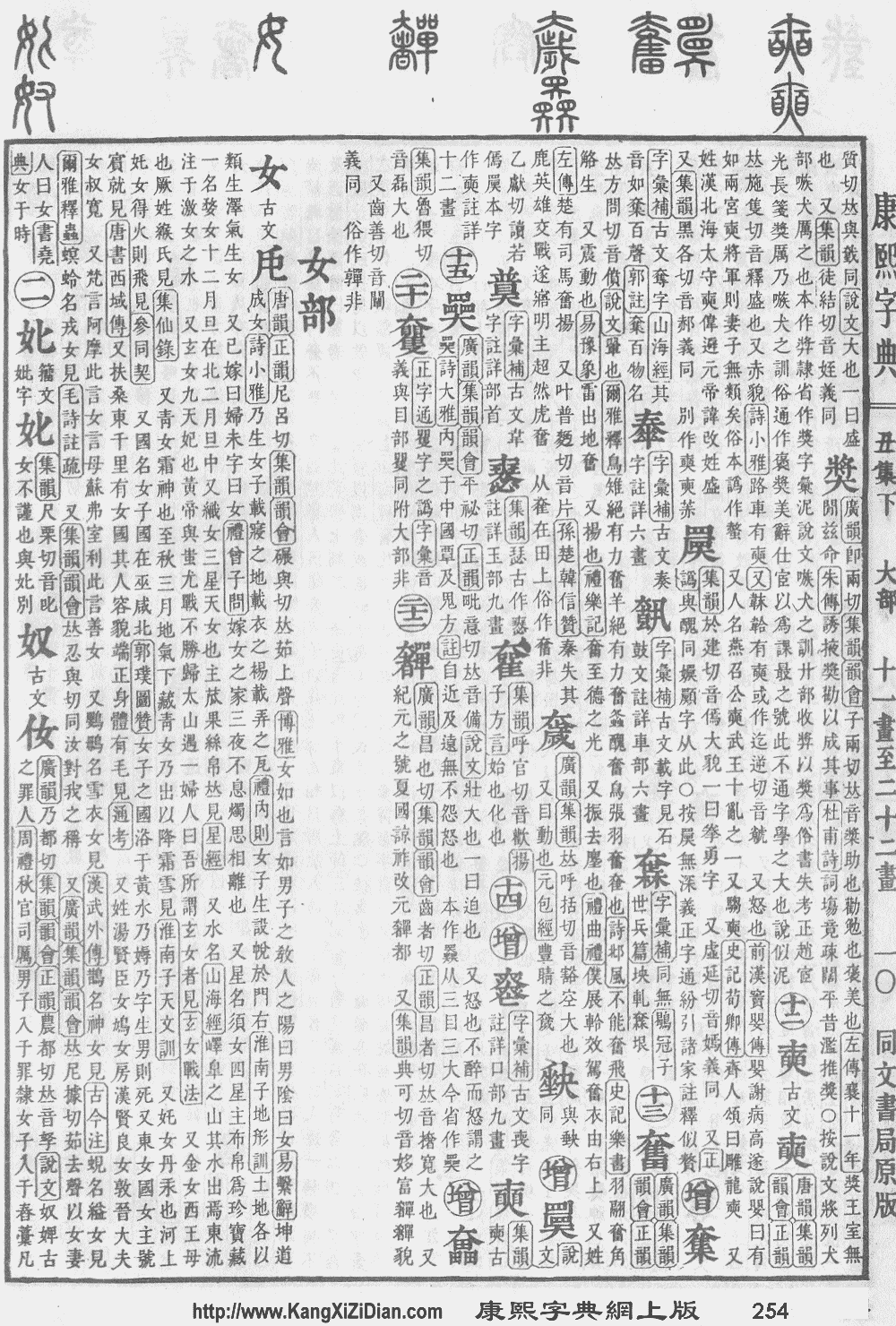
- Kangxi Dictionary: page 254, character 22
- Dai Kanwa Jiten: character 6036
- Dae Jaweon: page 516, character 19
- Hanyu Da Zidian (first edition): volume 2, page 1023, character 23
- Unihan data for U+5973
Chinese edit
Glyph origin edit
| Historical forms of the character 女 | ||||
|---|---|---|---|---|
| Shang | Western Zhou | Warring States | Shuowen Jiezi (compiled in Han) | Liushutong (compiled in Ming) |
| Oracle bone script | Bronze inscriptions | Chu slip and silk script | Small seal script | Transcribed ancient scripts |

|

|

|

|

|
| Old Chinese | |
|---|---|
| 拿 | *rnaː |
| 拏 | *rnaː |
| 詉 | *rnaː |
| 蒘 | *rnaː, *na |
| 笯 | *rnaː, *naː, *naːs |
| 挐 | *rnaː, *na |
| 絮 | *rnaːs, *nas, *snas, *nas |
| 呶 | *rnaːw |
| 怓 | *rnaːw |
| 帑 | *n̥ʰaːŋʔ, *naː |
| 奴 | *naː |
| 砮 | *naː, *naːʔ |
| 駑 | *naː |
| 孥 | *naː |
| 努 | *naːʔ |
| 弩 | *naːʔ |
| 怒 | *naːʔ, *naːs |
| 袽 | *na |
| 帤 | *na |
| 女 | *naʔ, *nas |
| 籹 | *naʔ |
| 恕 | *hnjas |
| 如 | *nja, *njas |
| 茹 | *nja, *njaʔ, *njas |
| 洳 | *nja, *njas |
| 鴽 | *nja |
| 蕠 | *nja |
| 汝 | *njaʔ |
| 肗 | *njaʔ |
Pictogram (象形) : a woman with breasts kneeling or standing. In modern form turned on left side: enclosed area is remnant of left breast (character's left, depicted woman's right), while right breast has disappeared. Graphically cognate to 母 (mǔ, “mother”), which has developed similarly, but also includes dots for nipples and has retained both breasts. Compare Egyptian 𓁐.
Etymology 1 edit
| trad. | 女 | |
|---|---|---|
| simp. # | 女 | |
| alternative forms | 𠨰 | |


From Proto-Sino-Tibetan *nja-ŋ/k (“woman”). Compare Tibetan ཉག་མོ (nyag mo, “woman”) (Hill, 2019).
Pronunciation 2 is an exoactive derivation of pronunciation 1 (Schuessler, 2007).
Pronunciation 1 edit
Definitions edit
女
- woman; (only of humans in Standard Chinese) female
- daughter (Classifier: 個/个 c; 粒 c)
- (Cantonese) girl; young female (Classifier: 條/条 c; 班 c)
- (Cantonese, Teochew, slang) girlfriend (Classifier: 條/条 c; 粒 mn-t)
- (Cantonese, card games) queen (Classifier: 張/张 c; 隻/只 c)
- (astronomy) the Girl (a Chinese constellation near Aquarius, 10th of the Twenty-Eight Mansions and part of the Black Turtle)
Synonyms edit
| Variety | Location | Words |
|---|---|---|
| Formal (Written Standard Chinese) | 女朋友, 女友 | |
| Mandarin | Beijing | 女朋友 |
| Taiwan | 女朋友, 女友, 馬子 humorous or derogatory | |
| Chengdu | 女娃子, 女娃娃, 女娃兒, 盤子 | |
| Guilin | 𧊅 | |
| Xuzhou | 女朋友 | |
| Nanjing | 女朋友, 攀西 | |
| Singapore | 女朋友 | |
| Cantonese | Guangzhou | 女朋友, 女 |
| Hong Kong | 女朋友, 女友, 女, 女女, 菜 derogatory | |
| Taishan | 女朋友, 女 | |
| Dongguan | 皮油 | |
| Singapore (Guangfu) | 女朋友 | |
| Hakka | Meixian | 女朋友 |
| Miaoli (N. Sixian) | 細妹朋友, 女朋友 | |
| Hsinchu County (Zhudong; Hailu) | 細妹朋友, 女朋友 | |
| Taichung (Dongshi; Dabu) | 細妹朋友, 女朋友 | |
| Hsinchu County (Qionglin; Raoping) | 細妹朋友, 女朋友 | |
| Yunlin (Lunbei; Zhao'an) | 妹子朋友, 女朋友 | |
| Eastern Min | Fuzhou | 女朋友 |
| Southern Min | Xiamen | 女朋友 |
| Shishi | 女朋友 | |
| Taipei | 姼仔 GT | |
| Penang (Hokkien) | 查某朋友 | |
| Singapore (Hokkien) | 查某朋友 | |
| Manila (Hokkien) | 女朋友, 查某朋友 | |
| Chaozhou | 女朋友 | |
| Haifeng | 女朋友 | |
| Singapore (Teochew) | 查某朋友 | |
| Leizhou | 女朋友 | |
| Singapore (Hainanese) | 女朋友 | |
| Wu | Shanghai | 女朋友 |
| Suzhou | 女朋友 | |
| Hangzhou | 女朋友 | |
| Ningbo | 女朋友 | |
| Zhoushan | 女朋友 | |
| Xiang | Changsha | 妹子 |
| Note | GT - General Taiwanese (no specific region identified) | |
| Variety | Location | Words |
|---|---|---|
| Mandarin | Beijing | 疙瘩, 疙瘩包 |
| Luoyang | 皮蛋, 十二 | |
| Zhengzhou | 十二, 圈 | |
| Xi'an | 圈子 | |
| Ürümqi | 皮蛋, 圈子 | |
| Wuhan | 皮蛋, 蛋, 環, 婆婆 | |
| Guiyang | 蛋, 蛋蛋 | |
| Liuzhou | 悶, 丘 | |
| Xuzhou | 皮蛋, 皮球, 球蛋 | |
| Yangzhou | 皮蛋 | |
| Nanjing | 皮蛋 | |
| Cantonese | Guangzhou | 女 |
| Hong Kong | 女 | |
| Taishan | 女 | |
| Nanning | 敏 | |
| Nanning (Tanka) | 文 | |
| Wuzhou | 敏 | |
| Yulin | 敏 | |
| Gan | Nanchang | 皮蛋 |
| Pengze | 箍 | |
| Lichuan | 皮蛋 | |
| Pingxiang | 蛋, 皮蛋架架 | |
| Hakka | Yudu | 圈子 |
| Huizhou | Jixi | 皮蛋 |
| Jin | Taiyuan | 圈兒 |
| Southern Min | Xiamen | Q, 卵 |
| Shantou | 箍, 𡚸, 妹 | |
| Wu | Shanghai | 皮蛋 |
| Shanghai (Chongming) | 皮蛋 | |
| Suzhou | 蛋, 皮蛋 | |
| Ningbo | 皮蛋, 蛋 |
Compounds edit
- 一男半女 (yīnánbànnǚ)
- 丁女
- 丈夫女
- 下女 (xiànǚ)
- 三男兩女/三男两女
- 三男四女
- 上門女婿/上门女婿
- 么女 (yāonǚ)
- 仕女 (shìnǚ)
- 仙女 (xiānnǚ)
- 仙女山 (Xiānnǚshān)
- 佚女
- 侍女 (shìnǚ)
- 使女 (shǐnǚ)
- 信女 (xìnnǚ)
- 倩女
- 倡女
- 修女 (xiūnǚ)
- 假女
- 兒女/儿女 (érnǚ)
- 內女/内女
- 兩娘女/两娘女
- 列女
- 剩女 (shèngnǚ)
- 北邙鄉女/北邙乡女
- 同人女
- 吧女 (bānǚ)
- 吧托女
- 商女 (shāngnǚ)
- 士女 (shìnǚ)
- 大男大女
- 天台女
- 天女 (tiānnǚ)
- 女丈夫
- 女丑
- 女中 (nǚzhōng)
- 女主 (nǚzhǔ)
- 女乘務員/女乘务员
- 女事 (nǚshì)
- 女人
- 女伎
- 女伶
- 女伴 (nǚbàn)
- 女低音 (nǚdīyīn)
- 女侍 (nǚshì)
- 女修士
- 女修道
- 女修道張/女修道张
- 女修道院
- 女傑/女杰
- 女傭/女佣 (nǚyōng)
- 女僕/女仆 (nǚpú)
- 女僧
- 女儐相/女傧相
- 女優/女优 (nǚyōu)
- 女兄
- 女先
- 女光棍
- 女兒/女儿 (nǚ'ér)
- 女公
- 女兵
- 女冠
- 女功
- 女博士
- 女友 (nǚyǒu)
- 女叔
- 女口
- 女史 (nǚshǐ)
- 女同胞
- 女君
- 女四書/女四书
- 女國/女国
- 女垣
- 女士 (nǚshì)
- 女大不中留 (nǚ dà bù zhōng liú)
- 女大十八變/女大十八变
- 女大難留/女大难留
- 女大須嫁/女大须嫁
- 女夷
- 女奴 (nǚnú)
- 女妐
- 女妹
- 女娃 (nǚwá)
- 女姪/女侄
- 女娘 (nǚniáng)
- 女婢 (nǚbì)
- 女婿
- 女媒
- 女媧/女娲 (Nǚwā)
- 女嫁男婚
- 女嬰/女婴 (nǚyīng)
- 女子 (nǚzǐ)
- 女孩 (nǚhái)
- 女孫/女孙
- 女學/女学
- 女宗
- 女官 (nǚguān)
- 女室
- 女客
- 女家 (nǚjiā)
- 女宮/女宫
- 女宿 (Nǚxiù)
- 女將/女将 (nǚjiàng)
- 女工 (nǚgōng)
- 女巫 (nǚwū)
- 女市
- 女師/女师 (nǚshī)
- 女床
- 女店員/女店员
- 女廁/女厕 (nǚcè)
- 女廚/女厨
- 女弟 (nǚdì)
- 女強人/女强人 (nǚqiángrén)
- 女御 (nǚyù)
- 女德
- 女性 (nǚxìng)
- 女戎
- 女戶/女户
- 女房東/女房东
- 女扮男裝/女扮男装
- 女扮男身
- 女招的
- 女排 (nǚpái)
- 女方 (nǚfāng)
- 女星
- 女曰雞鳴/女曰鸡鸣
- 女書/女书 (Nǚshū)
- 女朋友
- 女校 (nǚxiào)
- 女樂/女乐
- 女權/女权 (nǚquán)
- 女歧
- 女武神
- 女氣/女气 (nǚqi)
- 女流 (nǚliú)
- 女牆/女墙 (nǚqiáng)
- 女牢
- 女犯
- 女王 (nǚwáng)
- 女班頭/女班头
- 女生 (nǚshēng)
- 女用內衣/女用内衣
- 女男
- 女皇 (nǚhuáng)
- 女監/女监 (nǚjiān)
- 女直 (Nǚzhí)
- 女真 (Nǚzhēn)
- 女眷
- 女神 (nǚshén)
- 女禍/女祸 (nǚhuò)
- 女秀才
- 女科
- 女童 (nǚtóng)
- 女管家 (nǚguǎnjiā)
- 女紀/女纪
- 女紅/女红 (nǚgōng)
- 女給/女给
- 女織男耕/女织男耕
- 女繼承人/女继承人
- 女聲/女声 (nǚshēng)
- 女聯會/女联会
- 女舍監/女舍监
- 女色 (nǚsè)
- 女花
- 女落子
- 女蘿/女萝 (nǚluó)
- 女裝/女装 (nǚzhuāng)
- 女襯衫/女衬衫 (nǚchènshān)
- 女角
- 女誡/女诫
- 女謁/女谒
- 女警 (nǚjǐng)
- 女護士/女护士
- 女貌郎才
- 女貞酒/女贞酒
- 女賓/女宾 (nǚbīn)
- 女起解
- 女身
- 女車/女车
- 女轎/女轿
- 女郎 (nǚláng)
- 女酒
- 女錢/女钱
- 女長須嫁/女长须嫁
- 女閭/女闾
- 女陰/女阴 (nǚyīn)
- 女陪堂
- 女隸/女隶
- 女青年會/女青年会
- 女鞋
- 女高
- 女魃
- 奼女/姹女
- 妓女 (jìnǚ)
- 妖女 (yāonǚ)
- 妻女 (qīnǚ)
- 姪女/侄女 (zhínǚ)
- 婦女/妇女 (fùnǚ)
- 娼女 (chāngnǚ)
- 婢女 (bìnǚ)
- 媛女
- 婺女
- 嫁女 (jiànǚ)
- 嬌女/娇女 (jiāonǚ)
- 嬖女
- 子女 (zǐnǚ)
- 孝女 (xiàonǚ)
- 孤女 (gūnǚ)
- 季女
- 孟姜女 (Mèngjiāngnǚ)
- 孫女/孙女 (sūnnǚ)
- 宅女 (zháinǚ)
- 宗女
- 宦女
- 室女 (shìnǚ)
- 宮女/宫女 (gōngnǚ)
- 寒女
- 實女/实女
- 寡女
- 寸男尺女
- 小女 (xiǎonǚ)
- 少女 (shàonǚ)
- 工女
- 帝女
- 幼女 (yòunǚ)
- 彭女山
- 從女/从女
- 怨女 (yuànnǚ)
- 息女 (xīnǚ)
- 愛女/爱女 (àinǚ)
- 才女 (cáinǚ)
- 扣女
- 拖兒帶女/拖儿带女
- 拖男帶女/拖男带女
- 拖男挈女
- 拖男挾女/拖男挟女
- 攜男抱女/携男抱女
- 攜男挈女/携男挈女
- 暖女
- 有女同車/有女同车
- 有女懷春/有女怀春
- 榜女
- 檀郎謝女/檀郎谢女
- 次女 (cìnǚ)
- 欺男霸女 (qīnánbànǚ)
- 歌女 (gēnǚ)
- 歸女/归女
- 母女 (mǔnǚ)
- 河女之章
- 海女
- 浣女
- 淑女 (shūnǚ)
- 游女
- 港女 (gǎngnǚ)
- 烈女 (liènǚ)
- 煙花女/烟花女 (yānhuānǚ)
- 熟女 (shúnǚ)
- 燕女
- 父女 (fùnǚ)
- 牛女
- 狐女
- 獨生女/独生女 (dúshēngnǚ)
- 玄女 (Xuánnǚ)
- 王女 (wángnǚ)
- 玉女 (yùnǚ)
- 生兒育女/生儿育女 (shēng'éryùnǚ)
- 生男育女
- 甥女 (shēngnǚ)
- 男唱女隨/男唱女随
- 男女 (nánnǚ)
- 男婚女嫁
- 男婚女聘
- 男媒女妁
- 男尊女卑 (nánzūnnǚbēi)
- 男左女右 (nánzuǒnǚyòu)
- 男歡女愛/男欢女爱 (nánhuānnǚ'aì)
- 男男女女 (nánnánnǚnǚ)
- 男盜女娼/男盗女娼 (nándàonǚchāng)
- 男耕女織/男耕女织 (nángēngnǚzhī)
- 白毛女
- 相女配夫
- 石女 (shínǚ)
- 石女山 (Shínǚshān)
- 神女 (shénnǚ)
- 秀女
- 秦川女
- 稚女
- 童女 (tóngnǚ)
- 節女/节女
- 紅女/红女
- 紅男綠女/红男绿女
- 素女 (Sùnǚ)
- 納女/纳女
- 綵女/彩女
- 綠女紅男/绿女红男
- 縊女/缢女 (yìnǚ)
- 織女/织女 (zhīnǚ)
- 繼女/继女 (jìnǚ)
- 羅剎女/罗刹女
- 美女 (měinǚ)
- 美容女
- 義女/义女 (yìnǚ)
- 老女
- 老女歸宗/老女归宗
- 聖女貞德/圣女贞德 (Shèngnǚ Zhēndé)
- 舞女 (wǔnǚ)
- 茶花女
- 薄命女
- 處女/处女
- 蜑女
- 蠶女/蚕女
- 衒女
- 裸女
- 貞女/贞女 (zhēnnǚ)
- 貧女分光/贫女分光
- 貴女/贵女
- 賈女香/贾女香
- 賣兒鬻女/卖儿鬻女 (mài'éryùnǚ)
- 越女
- 農家女/农家女
- 逆女
- 郎才女姿
- 郎才女貌
- 鄰女窺牆/邻女窥墙
- 鄭衛之女/郑卫之女
- 酒家女
- 酒托女
- 醜女效顰/丑女效颦
- 采女 (cǎinǚ)
- 重男輕女/重男轻女 (zhòngnánqīngnǚ)
- 鑑湖女俠/鉴湖女侠
- 閨女/闺女
- 陪唱女 (péichàngnǚ)
- 青女
- 靚女/靓女
- 靜女/静女
- 養女/养女 (yǎngnǚ)
- 餪女/𫗬女
- 鬻兒賣女/鬻儿卖女
- 魔女 (mónǚ)
- 魯女憂葵/鲁女忧葵
- 黃花女/黄花女 (huánghuānǚ)
- 點繡女/点绣女
- 齊女/齐女
- 龍女/龙女
Descendants edit
Pronunciation 2 edit
Definitions edit
女
- † to give one's daughter in marriage; to give as wife
- 宋雍氏女於鄭莊公,曰雍姞。 [Classical Chinese, trad.]
- From: Commentary of Zuo, c. 4th century BCE
- Sòng Yōngshì nǜ yú Zhèng Zhuānggōng, yuē Yōng Jí. [Pinyin]
- The officer Yong of Song had married off a daughter, called Yong Ji [雍姞; Yong was the father's clan name (氏); Ji the surname (姓)] to duke Zhuang of Zheng.
宋雍氏女于郑庄公,曰雍姞。 [Classical Chinese, simp.]
Etymology 2 edit
| For pronunciation and definitions of 女 – see 汝 (“you”). (This character is a variant form of 汝). |
References edit
- “女”, in 漢語多功能字庫 (Multi-function Chinese Character Database)[2], 香港中文大學 (the Chinese University of Hong Kong), 2014–
Japanese edit
Kanji edit
Readings edit
- Go-on: にょ (nyo, Jōyō)
- Kan-on: じょ (jo, Jōyō)←ぢよ (dyo, historical)
- Kan’yō-on: にょう (nyō, Jōyō †)
- Kun: おんな (onna, 女, Jōyō)←をんな (wonna, 女, historical)←をみな (womina, 女, ancient); め (me, 女, Jōyō); むすめ (musume, 女); なんじ (nanji, 女)←なんぢ (nandi, 女, historical)
- Nanori: おな (ona); た (ta); つき (tsuki); な (na)
Compounds edit
- 女王 (joō), 女王 (jōō), 女王 (nyoō, “queen”)
- 女医 (joi, “female doctor”)
- 少女 (shōjo, “young girl, style of anime for young women”)
- 女系 (jokei, “woman-succession; matrilineal”)
- 女傑 (joketsu, “brave woman”)
- 女権 (joken, “women's rights”)
- 女史 (joshi, “Ms.”)
- 女中 (jochū, “maid”)
- 処女 (shojo, “virgin, maiden”)
- 女子 (joshi, “girl”)
- 女児 (joji, “female infant”)
- 女神 (joshin)
- 女性 (josei, “woman”)
- 女声 (josei, “female voice”)
- 女婿 (josei), 女壻 (josei, “son-in-law”)
- 女帝 (jotei, “empress”)
- 女優 (joyū, “actress”)
- 女流 (joryū, “female”)
- 女郎 (jorō, “prostitute”)
- 女官 (nyokan, “court lady”)
- 女性 (nyoshō)
- 女将 (nyoshō, “mistress, hostess”)
- 女人 (nyonin, “woman”)
- 女房 (nyōbō, “wife”)
- 悪女 (akujo)
- 王女 (ōjo), 王女 (ōnyo, “princess”)
- 皇女 (ōjo)
- 宮女 (kyūjo)
- 孝女 (kōjo, “filial daughter”)
- 工女 (kōjo, “female worker”)
- 皇女 (kōjo, “imperial princess”)
- 才女 (saijo)
- 子女 (shijo)
- 二女 (jijo)
- 次女 (jijo)
- 侍女 (jijo)
- 淑女 (shukujo)
- 信女 (shinnyo)
- 仙女 (sennyo), 仙女 (senjo, “fairy, nymph, elf”)
- 善女 (zennyo)
- 息女 (sokujo, “daughter”, honorific)
- 男女 (danjo)
- 男尊女卑 (dansonjohi)
- 痴女 (chijo, “slut, female libertine”)
- 長女 (chōjo, “eldest daughter”)
- 天女 (tennyo)
- 東女 (tonjo)
- 男女 (nannyo)
- 美女 (bijo, “beauty, belle”)
- 本女 (ponjo)
- 魔女 (majo, “witch”)
- 遊女 (yūjo)
- 幼女 (yōjo)
- 養女 (yōjo)
- 老女 (rōjo)
- 女将 (okami)
- 女形 (oyama)
- 貴女 (anata)
- 海女 (ama)
- 瞽女 (goze)
- 女衒 (zegen)
- 侍女 (makatachi), 従女 (makatachi)
- 巫女 (miko)
- 皇女 (miko)
- 湯女 (yuna)
Etymology 1 edit
| Kanji in this term |
|---|
| 女 |
| おんな Grade: 1 |
| kun’yomi |
⟨womi1na⟩ → */womʲina/ → /womʉna/ → /wonːa/ → /onːa/
Shift from Old Japanese womina → omina. See the 女 (omina) entry for further details.
Now one of the standard Japanese words for "a woman".
Pronunciation edit
Noun edit
- a female person
- Antonym: 男 (otoko)
- (specifically) a woman, an adult female
- Antonym: 男 (otoko)
- a wife
- a mistress, concubine
- a maid
- a prostitute
- a woman's appearance or quality
- a feminine object
- the object in a pairing which is smaller, gentler, etc. than the other
- (vulgar) girlfriend
Derived terms edit
- 女し (onnashi)
- 女親 (onnaoya, “female parent”)
- 女形 (onnagata, “male actor in female role of kabuki”)
- 女神 (onnagami)
- 女子 (onnago)
- 女心 (onna-gokoro, “woman's mind”)
- 女坂 (onnazaka)
- 女手 (onnade, “female worker”)
- 女友達 (onna tomodachi, “girlfriend, female friend”)
- 男女 (otoko-onna)
- 彼女 (kanojo, “girlfriend”, literally “she”)
- 下種女 (gesu onna)
- 雪女 (yuki onna, “snowwoman”)
Idioms edit
Proverbs edit
- 女氏無くして玉の輿に乗る (onna ujinakushite tama no koshi ni noru)
- 女賢しくて牛売り損なう (onna sakashikute ushi urisokonau)
- 女三界に家なし (onna sangai ni ie nashi)
- 女三人寄れば姦しい (onna sannin yoreba kashimashī)
- 女の足駄にて造れる笛には秋の鹿寄る (onna no ashida ni te tsukureru fue ni wa aki no shika yoru)
- 女の一念岩をも通す (onna no ichinen iwa o mo tōsu)
- 女の髪の毛には大象も繫がる (onna no kami no ke ni wa taizō mo tsunagaru)
Etymology 2 edit
| Kanji in this term |
|---|
| 女 |
| おみな Grade: 1 |
| kun’yomi |
⟨womi1na⟩ → */womʲina/ → /omina/
From Old Japanese.[3]
The initial /wo/ expressed "small, youth" and contrasted with /o/ "grown, old" (as in 嫗 (omina, “old woman”)), while the medial /mi/ is cognate with 女 (me, “female, woman”, see below). According to Frellesvig (2010), proto-Japonic /e/ became Old Japanese [je] in final position and [i] elsewhere; analogous with PJ /o/, which became OJ [wo] in final position and [u] elsewhere (though PJ /i/ and /u/ also existed, compare Old Japanese 火's two readings /po/ & /pu/ in Western & Eastern Old Japanese, respectively (Vovin, 2017)).
Pronunciation edit
Noun edit
Derived terms edit
- 女郎花 (ominaeshi), 女郎花 (ominameshi)
- 女神 (ominagami)
- 女髪長 (omina kaminaga)
- 女子 (ominago)
- 東女 (azuma-omina)
- 宮女 (miya-omina)
Proper noun edit
- a female given name
Etymology 3 edit
| Kanji in this term |
|---|
| 女 |
| め Grade: 1 |
| kun’yomi |
⟨me1⟩ → */mʲe/ → /me/
From Old Japanese,[4] from Proto-Japonic *mia.
Appears to be distinct from 目 (⟨me2⟩ → me, “eye”).
Alternative forms edit
Pronunciation edit
Noun edit
- a woman
- Antonym: 男 (o)
- 女神
- megami
- goddess
- a wife
- c. 890, Taketori Monogatari (page 3)[5]
- ...女の女にあづけてやしなはす。
- ...me no onna ni azukete yashinawasu.
- (please add an English translation of this example)
- ...女の女にあづけてやしなはす。
- c. 890, Taketori Monogatari (page 3)[5]
- a female
Usage notes edit
- Used more in compounds than on its own.
Derived terms edit
- 女女しい (memeshii), 女々しい (memeshii, “unmanly, effeminate, sissy”)
- 姪 (mei, “niece”)
- 夫婦 (meoto, “man and wife, married couple”)
- 女親 (meoya, “mother”, archaic)
- 女神 (megami, “goddess”)
- 女瓦 (megawara)
- 女木 (megi, “female tree; lower or receiving piece of wood in a join”)
- 女君 (megimi): polite term for another person's wife or daughter
- 女子 (meko, “woman and child; girl”)
- 雌 (mesu), 牝 (mesu, “female animal”)
- 女滝 (medaki): in a waterfall with two cataracts, the smaller of the two
- 女竹 (medake)
- 娶る (metoru, “get married”)
- 女波 (menami): the smaller waves
- 婚く (memaku, “get married”)
- 女の子 (me no ko, “girl; woman”)
- 乳母 (menoto), 傅 (menoto, “nanny; wetnurse; foster parent”)
- 郎女 (iratsume): (archaic) an ancient term of endearment for referring to a woman or girl
- 浮かれ女 (ukareme), 浮女 (ukareme, “female entertainer or prostitute”)
- 采女 (uneme)
- 乙女 (otome, “maiden”)
- 姑 (shūtome, “mother-in-law”)
- 手弱女 (taoyame), 手弱女 (tawayame)
- 端女 (hashitame, “servant girl”)
- 姫 (hime, “princess”)
- 日孁 (hirume), 日霊 (hirume), 日女 (Hirume)
- 娘 (musume, “daughter”)
- 嫁 (yome, “bride”)
Etymology 4 edit
| Kanji in this term |
|---|
| 女 |
| Grade: 1 |
| irregular |
| Alternative spelling |
|---|
| 嬢 |
⟨womi1na⟩ → */womʲina/ → /womʉna/ → /woũna/ → /woːna/ → /oːna/
Variant shift from Old Japanese womina → omina (see above).
Noun edit
Etymology 5 edit
| Kanji in this term |
|---|
| 女 |
| Grade: 1 |
| irregular |
/wonːa/ → /wona/ → /ona/
Shift from onna (see above).
Noun edit
Etymology 6 edit
| Kanji in this term |
|---|
| 女 |
| Grade: 1 |
| irregular |
/wona/ → /wonaː/ → /onaː/
Long-pronounced form of ona (see above).
Noun edit
Etymology 7 edit

| Kanji in this term |
|---|
| 女 |
| じょ Grade: 1 |
| kan’on |
/dɨo/ → /d͡ʑo/
From Middle Chinese 女 (MC nrjoX|nrjoH).
Noun edit
- a woman, especially an actress or a prostitute
Proper noun edit
- (Chinese astronomy) the Girl constellation, one of the Twenty-Eight Mansions
Suffix edit
- (historical) suffixed to names of female figures in the Edo period
See also edit
References edit
- ↑ 1.0 1.1 Matsumura, Akira, editor (2006), 大辞林 (in Japanese), Third edition, Tōkyō: Sanseidō, →ISBN
- ↑ 2.0 2.1 2.2 NHK Broadcasting Culture Research Institute, editor (1998), NHK日本語発音アクセント辞典 [NHK Japanese Pronunciation Accent Dictionary] (in Japanese), Tōkyō: NHK Publishing, →ISBN
- ^ womina at OxFord-NINJAL Corpus of Old Japanese
- ^ Frellesvig, Bjarke, Stephen Wright Horn, et al. (eds.) (2023) “Old Japanese mye”, in Oxford-NINJAL Corpus of Old Japanese[1]
- ^ Horiuchi, Hideaki with Ken Akiyama (1997) Taketori Monogatari, Ise Monogatari, Tōkyō: Iwanami Shoten, →ISBN
Korean edit

Etymology 1 edit
From Middle Chinese 女 (MC nrjoX|nrjoH). Recorded as Middle Korean 녀 (nye) (Yale: nye) in Hunmong Jahoe (訓蒙字會 / 훈몽자회), 1527.
Hanja edit
女 (eumhun 계집 녀 (gyejip nyeo), South Korea 계집 여 (gyejip yeo))
Compounds edit
- 여체 (女體, yeoche)
- 여인 (女人, yeoin)
- 여자 (女子, yeoja)
- 여장 (女裝, yeojang)
- 여진 (女眞, yeojin)
- 여성 (女性, yeoseong)
- 여신 (女神, yeosin)
- 여왕 (女王, yeowang)
- 여동생 (女同生, yeodongsaeng)
- 여학생 (女學生, yeohaksaeng)
- 차녀 (次女, chanyeo)
- 창녀 (娼女, changnyeo)
- 처녀 (處女, cheonyeo)
- 미녀 (美女, minyeo)
- 손녀 (孫女, sonnyeo)
- 소녀 (少女, sonyeo)
- 소녀 (小女, sonyeo)
- 수녀 (修女, sunyeo)
- 숙녀 (淑女, sungnyeo)
- 양녀 (養女, yangnyeo)
- 처녀막 (處女膜, cheonyeomak)
- 약혼녀 (約婚女, yakhonnyeo)
- 남존여비 (男尊女卑, namjonyeobi)
- 중남경녀 (重男輕女, jungnamgyeongnyeo)
Etymology 2 edit
From Middle Chinese 女 / 汝 (MC nyoX).
Hanja edit
References edit
- 국제퇴계학회 대구경북지부 (國際退溪學會 大邱慶北支部) (2007). Digital Hanja Dictionary, 전자사전/電子字典. [3]
Vietnamese edit
Han character edit
女: Hán Việt readings: nữ (
女: Nôm readings: nợ[1][2][3][6][4][5][7], nữa[1][2][3][4][5][7], nữ[1][2][6][4][7], nỡ[1][2][3][6], nớ[3][6][4][5], nhỡ[1][3][6], lỡ[2][3][6], nửa[1][3], nhớ[1], nự[3]
- chữ Hán form of nữ (“female”).
- Nôm form of nhớ (“to remember, to miss”).
- Nôm form of nỡ (“to be willing”).
- Nôm form of nữa (“furthermore”).
- Nôm form of nợ (“to owe; debt”).
- Nôm form of nửa (“half”).
Compounds edit
- 宮女 (cung nữ)
- 腐女 (hủ nữ)
- 閨女 (khuê nữ)
- 嬌女 (kiều nữ)
- 伎女 (kỹ nữ)
- 烈女 (liệt nữ)
- 魔女 (ma nữ)
- 美女 (mĩ nữ)
- 男女 (nam nữ)
- 男女授受不親 (nam nữ thụ thụ bất thân)
- 男清女秀 (nam thanh nữ tú)
- 男食如虎,女食如貓 (nam thực như hổ, nữ thực như miêu)
- 男尊女卑 (nam tôn nữ ti)
- 玉女 (ngọc nữ)
- 一男曰有,一女曰無 (nhất nam viết hữu, thập nữ viết vô)
- 兒女 (nhi nữ)
- 女眞 (Nữ Chân)
- 女正 (nữ chính)
- 女工 (nữ công)
- 女界 (nữ giới)
- 女皇 (nữ hoàng)
- 女郎 (nữ lang)
- 女流 (nữ lưu)
- 女儿 (nữ nhi)
- 女娲 (Nữ Oa)
- 女權 (nữ quyền)
- 女士 (nữ sĩ)
- 女生 (nữ sinh)
- 女神 (nữ thần)
- 女性 (nữ tính)
- 女妝 (nữ trang)
- 女子 (nữ tử)
- 女將 (nữ tướng)
- 女王 (nữ vương)
- 婦女 (phụ nữ)
- 士女 (sĩ nữ)
- 侍女 (thị nữ)
- 少女 (thiếu nữ)
- 庶女 (thứ nữ)
- 淑女 (thục nữ)
- 賤女 (tiện nữ)
- 信女 (tín nữ)
- 素女 (tố nữ)
- 孫女 (Tôn Nữ)
- 貞女 (trinh nữ)
- 重男輕女 (trọng nam khinh nữ)
- 長女 (trưởng nữ)
References edit
- ↑ 1.0 1.1 1.2 1.3 1.4 1.5 1.6 1.7 1.8 Nguyễn (2014).
- ↑ 2.0 2.1 2.2 2.3 2.4 2.5 Nguyễn et al. (2009).
- ↑ 3.0 3.1 3.2 3.3 3.4 3.5 3.6 3.7 3.8 Trần (2004).
- ↑ 4.0 4.1 4.2 4.3 4.4 Bonet (1899).
- ↑ 5.0 5.1 5.2 5.3 5.4 Génibrel (1898).
- ↑ 6.0 6.1 6.2 6.3 6.4 6.5 Hồ (1976).
- ↑ 7.0 7.1 7.2 Taberd & Pigneau de Béhaine (1838).