
愛
| ||||||||
Translingual edit
| Stroke order | |||
|---|---|---|---|

| |||
Han character edit

愛 (Kangxi radical 61, 心+9, 13 strokes, cangjie input 月月心水 (BBPE), four-corner 20247, composition ⿳爫冖𢖻)
Derived characters edit
- 僾(𫣊), 噯(嗳), 嬡(嫒), 懓(𭞄), 曖(暧), 燰(𬊺), 璦(瑷), 皧, 瞹, 薆(𫉁), 鑀, 靉(叆), 鱫, 𣜬(𪳗), 𤻅, 𥖦, 𥣁, 𥴨(𫂖), 𦆔, 𦡝(𫆫), 𧓁, 𧞇, 𨙤, 𨣥, 𩡣(𩡖), 𪇈, 𪒱, 𭩊, 𮙀
Related characters edit
Descendants edit
- 𛀃 (Hentaigana)
References edit
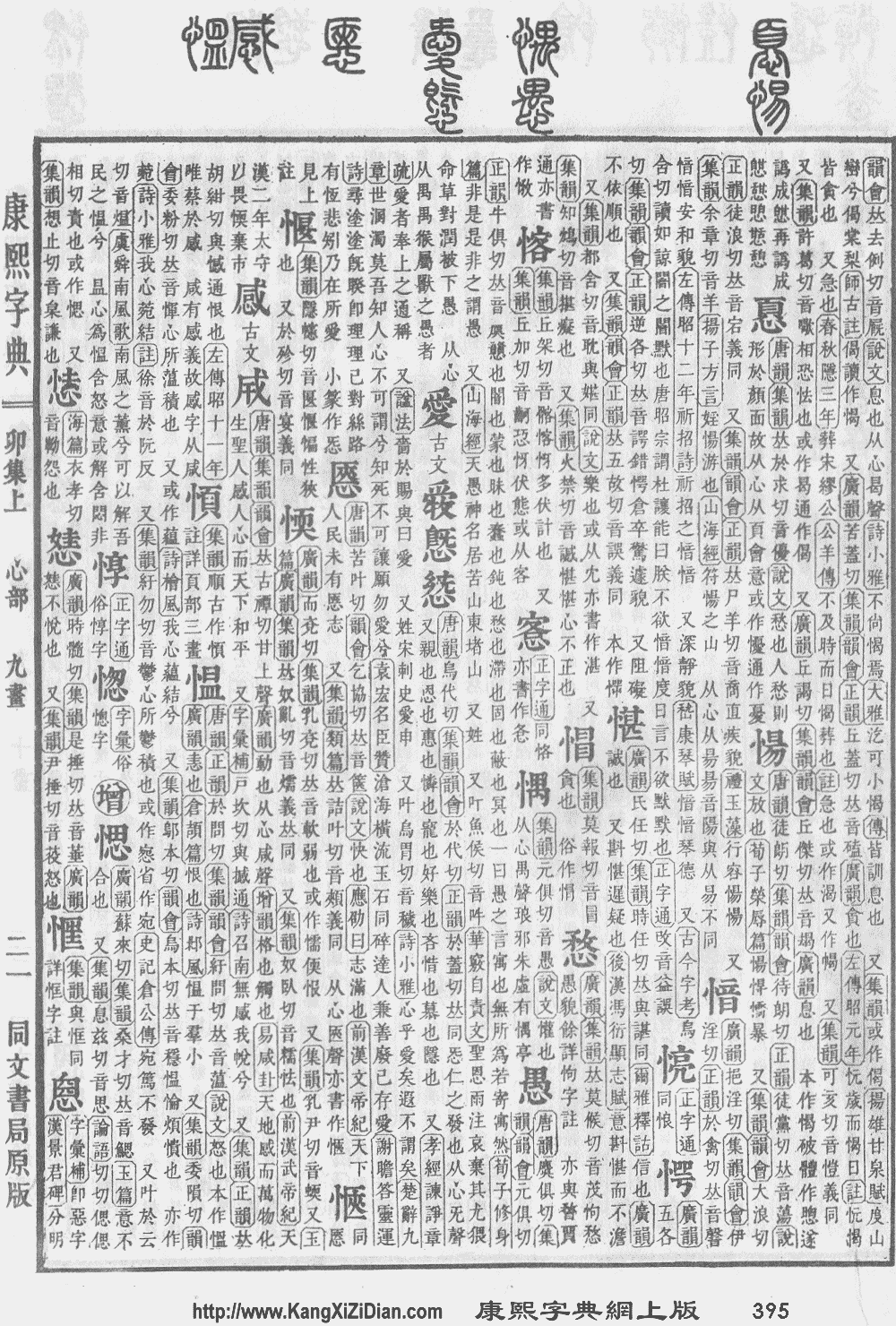
- Kangxi Dictionary: page 395, character 13
- Dai Kanwa Jiten: character 10947
- Dae Jaweon: page 732, character 2
- Hanyu Da Zidian (first edition): volume 4, page 2323, character 1
- Unihan data for U+611B
Chinese edit
| trad. | 愛 | |
|---|---|---|
| simp. | 爱 | |
| alternative forms | ||

Glyph origin edit
| Historical forms of the character 愛 | |
|---|---|
| Warring States | Shuowen Jiezi (compiled in Han) |
| Bronze inscriptions | Small seal script |

|

|
Originally 㤅 (xì), a phono-semantic compound (形聲/形声, OC *qɯːds) : phonetic 旡 (OC *kɯds) + semantic 心 (“heart”).
As early as the Qin dynasty, a meaningless component 夊 (suī, “foot”) was added to the bottom of the character, as with some other characters depicting people. Compare 憂/忧 (yōu) (from 㥑).
Further corruption turned the original phonetic 旡 (jì) into ⿱爫冖.
Etymology edit
Based on Baxter's (1992) Old Chinese reconstruction /*ʔɨts/, STEDT suggests that it is from Proto-Sino-Tibetan *ŋ-(w)aːj (“to copulate; to love; to be gentle”). Compare Proto-Karen *ʔai (“to love”), whence Pa'o Karen [script needed] (ʔái, “to love”), S'gaw Karen အဲၣ် (ʼeh̀, “to love”); Southern Bai e⁴⁴ (“love”); Mizo hma-ngaih (“to love, to like”); Jingpho nwai (“to respect, to love”), ngwi (“to be gentle”); Burmese ငွေ့ (ngwe., “to be gentle, moderate”). The Chinese word is related to a Tibeto-Burman allofam without initial *ŋ-. STEDT states that an Old Chinese reconstruction of /*ʔɨjs/ for 愛 is also possible because Old Chinese rhyming does not provide direct evidence of contacts with *-t.
However, Baxter and Sagart (2014) reconstructs /*[q]ˁə[p]-s/, which ends in *-p-s instead. The Old Chinese contrast between *-p-s and *-t-s was lost at a late stage of Old Chinese. The final *-p is not reflected in the Tibeto-Burman comparandum provided by STEDT, making the likelihood that the Chinese form is related to the rest very low (Sagart, 2019). Behr (2016) suggests a derivation from a verbal root meaning "to draw in; to inhale; to suck in", relating it to 吸 (OC *qʰ(r)əp, “to inhale”), 欱 (OC *qʰˁ[ə]p, “o sip”), 愾 (OC *qʰəp-s, “to sigh with regret”), 僾 (OC *qˁəp-s, “to pant”), 氣 (OC *C.qʰəp-s, “vapour; breath”).
Pronunciation edit
Definitions edit
愛
- to love
- 愛而不見、搔首踟躕。 [Pre-Classical Chinese, trad.]
- From: The Classic of Poetry, c. 11th – 7th centuries BCE, translated based on James Legge's version
- Ài ér bùjiàn, sāoshǒu chíchú. [Pinyin]
- Loving yet not seeing her, I scratch my head, and walk back and forth in perplexity.
爱而不见、搔首踟蹰。 [Pre-Classical Chinese, simp.]- 仁者愛人,有禮者敬人。愛人者人恆愛之,敬人者人恆敬之。 [Classical Chinese, trad.]
- From: Mencius, c. 4th century BCE, translated based on James Legge's version
- Rén zhě ài rén, yǒulǐ zhě jìng rén. Ài rén zhě rén héng ài zhī, jìng rén zhě rén héng jìng zhī. [Pinyin]
- A benevolent person loves others. A person of propriety shows respect to others. Those who love others are constantly loved by them. Those who respect others are constantly respected by them.
仁者爱人,有礼者敬人。爱人者人恒爱之,敬人者人恒敬之。 [Classical Chinese, simp.]- 吾至愛汝,即此愛汝一念,使吾勇於就死也。 [Classical Chinese, trad.]
- From: 1911, Lin Juemin, Farewell Letter to Yiying (《與妻訣別書》)
- Wú zhì ài rǔ, jí cǐ ài rǔ yī niàn, shǐ wú yǒngyú jiù sǐ yě. [Pinyin]
- I love you deeply, and it is this single thought of loving you that enables me to take courage in the face of imminent death.
吾至爱汝,即此爱汝一念,使吾勇于就死也。 [Classical Chinese, simp.]
- to treasure; to value
- 夏不衣裘,非愛裘也,暖有餘也。 [Classical Chinese, trad.]
- From: Lü Buwei, Master Lü's Spring and Autumn Annals, 239 BCE
- Xià bù yì qiú, fēi ài qiú yě, nuǎn yǒuyú yě. [Pinyin]
- One does not wear fur in summer not because he treasures fur, but because it is already more than warm.
夏不衣裘,非爱裘也,暖有余也。 [Classical Chinese, simp.]
- to like; to be fond of; to be keen on
- 他愛說話。/他爱说话。 ― Tā ài shuōhuà. ― He likes to talk.
- 我不愛吃豬肉。/我不爱吃猪肉。 ― Wǒ bù ài chī zhūròu. ― I don't like to eat pork.
- to begrudge; to be reluctant
- 申生不敢愛其死。 [Classical Chinese, trad.]
- From: The Book of Rites, c. 4th – 2nd century BCE, translated based on James Legge's version
- Shēnshēng bùgǎn ài qí sǐ. [Pinyin]
- I, Shensheng, do not presume to grudge dying.
申生不敢爱其死。 [Classical Chinese, simp.]
- to be prone; to be easy to
- love; affection
- 世上決沒有無緣無故的愛,也沒有無緣無故的恨。 [MSC, trad.]
- From: 1942, 毛澤東 (Mao Zedong), 《在延安文藝座談會上的講話》 (Talks at the Yenan Forum on Literature and Art), 《毛澤東選集》. English translation based on the Foreign Languages Press edition
- Shìshàng jué méiyǒu wúyuánwúgù de ài, yě méiyǒu wúyuánwúgù de hèn. [Pinyin]
- There is absolutely no such thing in the world as love or hatred with out reason or cause.
世上决没有无缘无故的爱,也没有无缘无故的恨。 [MSC, simp.]
- love; benevolence
- something one loves; someone whom one loves
- Honorific for someone else's daughter; variant of 嬡/嫒 (ài).
- beloved
- (Cantonese, Hakka, Wu, Teochew) to want (an object)
- 快樂就係 想愛麼個就得著 [Sixian Hakka, trad.]
- From: (Can we date this quote?), 饒瑞軍 (lyrics), Tetsurō Oda (music), 《快樂希望》 (Hakka version of Yume Ippai), performed by 龔心怡
- khoai-lo̍k chhiu he sióng oi mak-ke chhiu tet-tó [Pha̍k-fa-sṳ]
- (please add an English translation of this usage example)
快乐就系 想爱么个就得着 [Sixian Hakka, simp.]
- (Hakka, Min) to want (to do)
- (Hakka, Min) to need to; must
- 有一點愛注意的。 [Taiwanese Hokkien, trad.]
- Ū chi̍t tiám ài chù-ì--ê. [Pe̍h-ōe-jī]
- There's one thing you must bear in mind.
有一点爱注意的。 [Taiwanese Hokkien, simp.]
- (archaic) Alternative form of 薆/𫉁 (ài, “ài”)
- a surname
Usage notes edit
- When used for people, 愛/爱 usually refers to romantic love. When used like this, older Mandarin speakers often describe the use of this term as overly 肉麻 (ròumá, “overly romantic; corny; cheesy”). For this reason, the word 喜歡/喜欢 (xǐhuan, “to like”) might be used instead. Using the word 喜歡/喜欢 (xǐhuan) literally means like, but when used in a romantic context (especially boyfriend/girlfriend), it actually means love. Compare Japanese 好き (suki). However, younger Mandarin speakers, especially those who have been in love for some time, seem to have been influenced somewhat by Western culture, and are now using the verb 愛/爱 much more often than was socially acceptable in the past.
Synonyms edit
- (love):
- (to want an object):
| Variety | Location | Words |
|---|---|---|
| Formal (Written Standard Chinese) | 要 | |
| Mandarin | Beijing | 要 |
| Taiwan | 要 | |
| Yantai (Muping) | 要 | |
| Jinan | 要 | |
| Wanrong | 要 | |
| Xi'an | 要 | |
| Wuhan | 要 | |
| Chengdu | 要 | |
| Guiyang | 要 | |
| Guilin | 要 | |
| Hefei | 要 | |
| Singapore | 要 | |
| Cantonese | Guangzhou | 要, 愛 |
| Hong Kong | 要, 愛 | |
| Yangjiang | 愛, 捰 | |
| Singapore (Guangfu) | 要 | |
| Gan | Nanchang | 要 |
| Lichuan | 要 | |
| Hakka | Meixian | 愛 |
| Longmen (Luxi Bendihua) | 愛 | |
| Miaoli (N. Sixian) | 愛 | |
| Hsinchu County (Zhudong; Hailu) | 愛 | |
| Taichung (Dongshi; Dabu) | 愛 | |
| Hsinchu County (Qionglin; Raoping) | 愛 | |
| Yunlin (Lunbei; Zhao'an) | 愛 | |
| Huizhou | Jixi | 要 |
| Jin | Taiyuan | 要 |
| Northern Min | Jian'ou | 讓 |
| Eastern Min | Fuzhou | 欲挃, 挃 |
| Southern Min | Xiamen | 欲挃 |
| Quanzhou | 欲挃 | |
| Zhangzhou | 欲挃 | |
| Tainan | 欲挃 | |
| Singapore (Hokkien) | 愛 | |
| Manila (Hokkien) | 欲挃, 挃, 愛 | |
| Chaozhou | 愛 | |
| Jieyang | 愛 | |
| Singapore (Teochew) | 愛 | |
| Wenchang | 要 | |
| Singapore (Hainanese) | 要 | |
| Wu | Suzhou | 要 |
| Wenzhou | 要 | |
| Xiang | Changsha | 要 |
| Loudi | 要 | |
- (to want to do something):
Compounds edit
- 三角戀愛/三角恋爱 (sānjiǎo liàn'ài)
- 人見人愛/人见人爱 (rénjiànrén'ài)
- 仁愛/仁爱 (rén'ài)
- 仁愛之家/仁爱之家
- 仁民愛物/仁民爱物
- 令愛/令爱 (lìng'ài)
- 作愛/作爱 (zuò'ài)
- 信愛/信爱
- 偏愛/偏爱 (piān'ài)
- 兼愛/兼爱 (jiān'ài)
- 冬日可愛/冬日可爱
- 切愛/切爱
- 割愛/割爱
- 勤政愛民/勤政爱民 (qínzhèng'àimín)
- 北愛爾蘭/北爱尔兰 (Běi-Ài'ěrlán)
- 博愛/博爱 (bó'ài)
- 博愛座/博爱座 (bó'àizuò)
- 博愛濟群/博爱济群
- 厚愛/厚爱 (hòu'ài)
- 友愛/友爱 (yǒu'ài)
- 可愛/可爱 (kě'ài)
- 吾愛/吾爱
- 喜愛/喜爱 (xǐ'ài)
- 垂愛/垂爱
- 墜入愛河/坠入爱河
- 大愛/大爱 (dà'ài)
- 嫌貧愛富/嫌贫爱富
- 寵愛/宠爱 (chǒng'ài)
- 寶愛/宝爱 (bǎo'ài)
- 將愛/将爱
- 尊賢愛物/尊贤爱物
- 屋烏推愛/屋乌推爱
- 廝敬廝愛/厮敬厮爱
- 心愛/心爱 (xīn'ài)
- 忠君愛國/忠君爱国 (zhōngjūn'àiguó)
- 忝在愛末/忝在爱末
- 性愛/性爱 (xìng'ài)
- 恩愛/恩爱 (ēn'ài)
- 恃愛/恃爱
- 情愛/情爱 (qíng'ài)
- 愛丁堡/爱丁堡 (Àidīngbǎo)
- 愛上/爱上 (àishàng)
- 愛不忍釋/爱不忍释
- 愛不釋手/爱不释手 (àibùshìshǒu)
- 愛人/爱人 (àirén)
- 愛人以德/爱人以德
- 愛人兒/爱人儿
- 愛人好士/爱人好士
- 愛人如己/爱人如己 (àirénrújǐ)
- 惹人憐愛/惹人怜爱 (rěrénlián'ài)
- 愛侶/爱侣 (àilǚ)
- 愛克斯光/爱克斯光 (àikèsī guāng)
- 愛克斯射線/爱克斯射线 (àikèsī shèxiàn)
- 愛八哥兒/爱八哥儿
- 愛別離苦/爱别离苦
- 愛勢貪財/爱势贪财
- 愛卿/爱卿 (àiqīng)
- 愛國/爱国 (àiguó)
- 愛國主義/爱国主义 (àiguó zhǔyì)
- 愛國如家/爱国如家
- 愛國獎券/爱国奖券
- 愛國者/爱国者 (àiguózhě)
- 愛奧尼亞/爱奥尼亚
- 愛女/爱女 (àinǚ)
- 愛好/爱好 (àihào)
- 愛好兒/爱好儿
- 愛妾/爱妾
- 愛妻/爱妻 (àiqī)
- 愛妾換馬/爱妾换马
- 愛姬/爱姬 (àijī)
- 愛子/爱子 (àizǐ)
- 愛富嫌貧/爱富嫌贫
- 愛寵/爱宠 (àichǒng)
- 愛將/爱将 (àijiàng)
- 愛小/爱小 (àixiǎo)
- 愛屋及烏/爱屋及乌 (àiwūjíwū)
- 愛巢/爱巢 (àicháo)
- 愛巴物兒/爱巴物儿
- 愛幸/爱幸
- 愛彌兒/爱弥儿
- 愛德華島/爱德华岛 (Àidéhuá Dǎo)
- 愛德華湖/爱德华湖
- 愛心/爱心 (àixīn)
- 愛心券/爱心券
- 愛心彩券/爱心彩券
- 愛怎麼著怎麼著/爱怎么着怎么着 (ài zěnme zhāo zěnme zhāo)
- 愛恨交織/爱恨交织
- 愛悅/爱悦
- 愛惜/爱惜 (àixī)
- 愛情/爱情 (àiqíng)
- 愛惜羽毛/爱惜羽毛 (àixīyǔmáo)
- 愛意/爱意 (àiyì)
- 愛慕/爱慕 (àimù)
- 愛憐/爱怜 (àilián)
- 愛憎/爱憎 (àizēng)
- 愛憎分明/爱憎分明 (àizēngfēnmíng)
- 愛戀/爱恋 (àiliàn)
- 愛戴/爱戴 (àidài)
- 愛才/爱才
- 愛才如命/爱才如命 (àicáirúmìng)
- 愛才好士/爱才好士
- 愛才若渴/爱才若渴
- 愛撫/爱抚 (àifǔ)
- 愛斯/爱斯
- 愛斯基摩/爱斯基摩 (Àisījīmó)
- 愛斯基摩人/爱斯基摩人 (àisījīmórén)
- 愛新覺羅/爱新觉罗 (Àixīnjuéluó)
- 愛日/爱日
- 愛日惜力/爱日惜力
- 愛染/爱染
- 愛樹/爱树
- 愛毛反裘/爱毛反裘
- 愛民如子/爱民如子 (àimínrúzǐ)
- 愛沙尼亞/爱沙尼亚 (Àishāníyà)
- 愛河/爱河 (àihé)
- 愛洛娜/爱洛娜
- 愛海/爱海
- 愛滋病/爱滋病 (àizībìng)
- 愛火/爱火
- 愛爾蘭/爱尔兰 (Ài'ěrlán)
- 愛爾蘭海/爱尔兰海 (Ài'ěrlán hǎi)
- 愛物兒/爱物儿
- 愛玉/爱玉 (àiyù)
- 愛玉冰/爱玉冰 (àiyùbīng)
- 愛玉凍/爱玉冻 (àiyùdòng)
- 愛玩/爱玩
- 愛現/爱现 (àixiàn)
- 愛理不理/爱理不理
- 愛琴文化/爱琴文化
- 愛琴海/爱琴海 (Àiqín Hǎi)
- 愛的教育/爱的教育
- 愛的鼓勵/爱的鼓励
- 愛睏/爱困 (àikùn)
- 愛神/爱神 (àishén)
- 愛稱/爱称 (àichēng)
- 愛窩窩/爱窝窝 (àiwōwo)
- 愛答不理/爱答不理 (àidābùlǐ)
- 愛筵/爱筵 (àiyán)
- 愛羅斯/爱罗斯
- 愛美/爱美 (àiměi)
- 愛群/爱群
- 愛老憐貧/爱老怜贫
- 愛莫之助/爱莫之助
- 愛莫能助/爱莫能助 (àimònéngzhù)
- 愛荷華州/爱荷华州
- 愛親做親/爱亲做亲
- 愛護/爱护 (àihù)
- 愛財/爱财 (àicái)
- 愛財如命/爱财如命 (àicáirúmìng)
- 愛達荷州/爱达荷州
- 愛遠惡近/爱远恶近
- 愛錢如命/爱钱如命
- 愛面子/爱面子 (ài miànzi)
- 愛顧/爱顾 (àigù)
- 慈愛/慈爱 (cí'ài)
- 憂國愛民/忧国爱民
- 憐愛/怜爱 (lián'ài)
- 戀愛/恋爱 (liàn'ài)
- 拊愛/拊爱
- 抬愛/抬爱
- 拉愛麥/拉爱麦
- 推誠愛物/推诚爱物
- 摯愛/挚爱 (zhì'ài)
- 撫愛/抚爱 (fǔ'ài)
- 教育愛/教育爱
- 敬上愛下/敬上爱下
- 敬天愛民/敬天爱民
- 敬愛/敬爱 (jìng'ài)
- 敬時愛日/敬时爱日
- 昵愛
- 暱愛/昵爱
- 杭愛山/杭爱山 (Háng'àishān)
- 橫刀奪愛/横刀夺爱 (héngdāoduó'ài)
- 母性愛/母性爱
- 母愛/母爱 (mǔ'ài)
- 永浴愛河/永浴爱河
- 求愛/求爱 (qiú'ài)
- 氾愛/氾爱
- 汎愛/泛爱
- 渴愛/渴爱 (kě'ài)
- 溺愛/溺爱 (nì'ài)
- 潔己愛人/洁己爱人
- 潔身自愛/洁身自爱 (jiéshēnzì'ài)
- 濟世愛民/济世爱民
- 熱愛/热爱 (rè'ài)
- 熾愛/炽爱
- 父愛/父爱 (fù'ài)
- 珍愛/珍爱 (zhēn'ài)
- 甘棠遺愛/甘棠遗爱
- 男歡女愛/男欢女爱 (nánhuānnǚ'aì)
- 畏天愛民/畏天爱民
- 疼愛/疼爱 (téng'ài)
- 痛愛/痛爱
- 百般恩愛/百般恩爱
- 相愛/相爱 (xiāng'ài)
- 相親相愛/相亲相爱 (xiāngqīnxiāng'ài)
- 眷愛/眷爱 (juàn'ài)
- 示愛/示爱 (shì'ài)
- 禽犢之愛/禽犊之爱
- 秦歡晉愛/秦欢晋爱
- 節用愛人/节用爱人
- 篤志愛古/笃志爱古
- 篤愛/笃爱
- 簡愛/简爱
- 純愛/纯爱 (chún'ài)
- 綈袍垂愛/绨袍垂爱
- 肌膚之愛/肌肤之爱
- 自愛/自爱 (zì'ài)
- 自由戀愛/自由恋爱
- 舊愛宿恩/旧爱宿恩
- 舐犢之愛/舐犊之爱
- 色衰愛寢/色衰爱寝
- 色衰愛弛/色衰爱弛
- 著愛/著爱 (tio̍h-ài) (Min Nan)
- 蒙愛/蒙爱
- 見愛/见爱 (jiàn'ài)
- 覓愛追歡/觅爱追欢
- 親愛/亲爱 (qīn'ài)
- 親愛的/亲爱的 (qīn'ài de)
- 親愛精誠/亲爱精诚
- 談情說愛/谈情说爱 (tánqíngshuō'ài)
- 談戀愛/谈恋爱 (tán liàn'ài)
- 謬愛/谬爱
- 貪愛/贪爱
- 速食戀愛/速食恋爱
- 過愛/过爱
- 遺愛/遗爱
- 酷愛/酷爱 (kù'ài)
- 錯愛/错爱 (cuò'ài)
- 鍾愛/钟爱 (zhōng'ài)
- 關愛/关爱 (guān'ài)
- 隆愛/隆爱
- 雅愛/雅爱
- 高情厚愛/高情厚爱
Descendants edit
Others:
- →? Proto-Hlai: *ʔəːp (“to love”)
Further reading edit
- “Entry #9456”, in 臺灣閩南語常用詞辭典 (overall work in Mandarin and Hokkien), Ministry of Education, R.O.C., 2023.
Japanese edit
Kanji edit
Readings edit
- Go-on: あい (ai, Jōyō); お (o)
- Kan-on: あい (ai, Jōyō)
- Kun: いつくしむ (itsukushimu, 愛しむ); いとしい (itoshii, 愛しい); いとおしむ (itooshimu, 愛おしむ); かなしい (kanashii, 愛しい); おしむ (oshimu, 愛しむ); まな (mana, 愛); めでる (mederu, 愛でる); うい (ui, 愛い)
- Nanori: あ (a); あい (ai); あし (ashi); え (e); かな (kana); なる (naru); めぐ (megu); めぐみ (megumi); よし (yoshi); ちか (chika)
Compounds edit
- 愛玩 (aigan)
- 愛機 (aiki)
- 愛敬 (aikyō)
- 愛顧 (aiko)
- 愛護 (aigo)
- 愛国 (aikoku)
- 愛妻 (aisai, “one's beloved wife”)
- 愛児 (aiji)
- 愛車 (aisha, “one's beloved car”)
- 愛社 (aisha)
- 愛唱 (aishō)
- 愛称 (aishō)
- 愛人 (aijin)
- 愛想 (aisō)
- 愛憎 (aizō)
- 愛着 (aichaku, “affection (to things)”)
- 愛鳥 (aichō)
- 愛読 (aidoku, “loving to read”)
- 愛用 (aiyō, “loving to use”)
- 性愛 (seiai, “eros”)
- 聖愛 (seiai, “pure love”)
- 寵愛 (chōai)
- 可愛い (kawaii)
Etymology 1 edit
| Kanji in this term |
|---|
| 愛 |
| あい Grade: 4 |
| on’yomi |
From Middle Chinese 愛 (MC 'ojH).
Compare modern Mandarin 愛/爱 (ài).
Pronunciation edit
Noun edit
- love
- 愛は強い。
- Ai wa tsuyoi.
- The love is strong.
- 愛は勝つ。
- Ai wa katsu.
- The love wins.
- 愛は強い。
- affection
- Synonym: 愛情 (aijō)
- tenderness
- fondness, liking
- Synonym: 愛想 (aiso)
- (Buddhism) This term needs a translation to English. Please help out and add a translation, then remove the text
{{rfdef}}. - (Christianity) agape
Synonyms edit
Derived terms edit
Proper noun edit
- a female given name
- a surname
Affix edit
- love
- (US) Short for 愛州 (“Idaho (a state of the United States)”).
Etymology 2 edit
| Kanji in this term |
|---|
| 愛 |
| まな Grade: 4 |
| kun’yomi |
| Alternative spelling |
|---|
| 真 |
Originally a compound of 真 (ma, “true, genuine”) + な (na), an Old Japanese version of modern Japanese の (no, possessive particle).[3]
The use of 愛 here is an example of ateji (当て字).
Pronunciation edit
Prefix edit
- before a common noun, expresses a sense of admiration or value: good, genuine; compare English the real deal
- before a noun describing a person, expresses praise or fondness: dear, beloved
Derived terms edit
- 愛弟子 (manadeshi)
- 愛娘 (manamusume)
Noun edit
Proper noun edit
- a female given name
Etymology 3 edit
Used as nanori in various names. 愛 is a very common element in many names.
Proper noun edit
愛 or 愛 or 愛 or 愛 or 愛 or 愛 or 愛 or 愛 or 愛 or 愛 or 愛 or 愛 or 愛 or 愛 or 愛 or 愛 or 愛 or 愛 or 愛 or 愛 or 愛 or 愛 or 愛 or 愛 or 愛 or 愛 or 愛 or 愛 or 愛 or 愛 or 愛 or 愛 or 愛 or 愛 or 愛 or 愛 or 愛 or 愛 or 愛 or 愛 or 愛 or 愛 or 愛 or 愛 or 愛 or 愛 or 愛 or 愛 or 愛 or 愛 or 愛 • (Azumi or Āi or Aika or Aisu or Aki or Ako or Amika or Aoi or Arisa or Aya or Ayu or Chigiri or Chika or Chikashi or Erina or Hāto or Hikari or Ito or Itoshi or Itsumi or Izumi or Kana or Kanae or Kanasa or Kizuna or Kokoro or Konomu or Madoka or Manabu or Manami or Mezuru or Mego or Megu or Megumi or Megumu or Mei or Naru or Naruko or Nozomi or Rabu or Rui or Sara or Saran or Tsugumi or Tsukumi or Ui or Yoshi or Yoshiki or Yoshimi)
- a female given name
References edit
- ^ Matsumura, Akira, editor (2006), 大辞林 (in Japanese), Third edition, Tōkyō: Sanseidō, →ISBN
- ^ NHK Broadcasting Culture Research Institute, editor (1998), NHK日本語発音アクセント辞典 [NHK Japanese Pronunciation Accent Dictionary] (in Japanese), Tōkyō: NHK Publishing, →ISBN
- ^ Shōgaku Tosho (1988) 国語大辞典(新装版) [Unabridged Dictionary of Japanese (Revised Edition)] (in Japanese), Tōkyō: Shogakukan, →ISBN
Korean edit
Etymology edit
From Middle Chinese 愛 (MC 'ojH).
| Historical Readings | ||
|---|---|---|
| Dongguk Jeongun Reading | ||
| Dongguk Jeongun, 1448 | ᅙᆡᆼ〮 (Yale: qóy) | |
| Middle Korean | ||
| Text | Eumhun | |
| Gloss (hun) | Reading | |
| Hunmong Jahoe, 1527[1] | ᄃᆞᅀᆞᆯ〮 (Yale: dòzól) | ᄋᆡ〯 (Yale: ǒy) |
Pronunciation edit
- (SK Standard/Seoul) IPA(key): [ɛ(ː)] ~ [e̞(ː)]
- Phonetic hangul: [애(ː)/에(ː)]
- Though still prescribed in Standard Korean, most speakers in both Koreas no longer distinguish vowel length.
Hanja edit

Compounds edit
- 애차 (愛車, aecha)
- 애착 (愛着, aechak)
- 애처 (愛妻, aecheo)
- 애칭 (愛稱, aeching)
- 애독 (愛讀, aedok)
- 애고 (愛顧, aego)
- 애국 (愛國, aeguk)
- 애견 (愛犬, aegyeon)
- 애교 (愛嬌, aegyo)
- 애호 (愛好, aeho)
- 애호 (愛護, aeho)
- 애인 (愛人, aein)
- 애정 (愛情, aejeong)
- 애증 (愛憎, aejeung)
- 애마 (愛馬, aema)
- 애무 (愛撫, aemu)
- 애식 (愛息, aesik)
- 애월 (愛月, aewol)
- 가애 (可愛, gaae)
- 갈애 (渴愛, garae)
- 경애 (敬愛, gyeong'ae)
- 할애 (割愛, harae)
- 친애 (親愛, chinae)
- 동성애 (同性愛, dongseong'ae)
- 애장판 (愛藏版, aejangpan)
- 이성애 (異性愛, iseong'ae)
- 자기애 (自己愛, jagiae)
- 무성애 (無性愛, museong'ae)
- 애완동물 (愛玩動物, aewandongmul)
References edit
- 국제퇴계학회 대구경북지부 (國際退溪學會 大邱慶北支部) (2007). Digital Hanja Dictionary, 전자사전/電子字典. [2]
Okinawan edit
Kanji edit
Readings edit
Old Japanese edit
Alternative forms edit
Etymology edit
Originally a compound of 眞 (ma, “true, genuine”) + な (na, apophonic form of possessive particle の (no2)).
Noun edit
愛 (mana) (kana まな)
- something dear or loved
- c. 759, Man’yōshū, book 14, poem 3462:
- 安志比奇乃夜末佐波妣登乃比登佐波爾麻奈登伊布児我安夜爾可奈思佐
- asi-pi1ki2 no2 yamasapabi1to2 no2 pi1to2 sapa ni mana to2 ipu ko1 ga aya ni kanasisa
- (please add an English translation of this quotation)
Derived terms edit
Descendants edit
- Japanese: 愛 (mana-)
Tày edit
Noun edit
愛 (ái)
Vietnamese edit
Han character edit
愛: Hán Việt readings: ái[1][2][3][4][5], áy[4]
愛: Nôm readings: ái[1][2][3][4][5][6], áy[1][2][3][4][5][6], ải[1]
Compounds edit
- 愛恩 (ái ân)
- 愛友 (ái hữu)
- 愛卿 (ái khanh)
- 愛力 (ái lực)
- 愛慕 (ái mộ)
- 愛乃 (áy náy)
- 愛國 (ái quốc)
- 愛情 (ái tình)
- 恩愛 (ân ái)
- 博愛 (bác ái)
- 喜怒愛惡 (hỉ nộ ái ố)
- 會愛友 (hội ái hữu)
- 友愛 (hữu ái)
- 可愛 (khả ái)
- 兼愛 (kiêm ái)
- 敬愛 (kính ái)
- 令愛 (lệnh ái)
- 戀愛 (luyến ái)
- 仁愛 (nhân ái)
- 泛愛 (phiếm ái)
- 寵愛 (sủng ái)
- 親愛 (thân ái)
- 情愛 (tình ái)
- 自愛 (tự ái)
- 相親相愛 (tương thân tương ái)
- 憂愛 (ưu ái)