
老
| ||||||||
| ||||||||
| ||||||||
Translingual edit
| Stroke order | |||
|---|---|---|---|

| |||
| Stroke order | |||
|---|---|---|---|

| |||
Han character edit

老 (Kangxi radical 125, 老+0, 6 strokes, cangjie input 十大心 (JKP), four-corner 44711, composition ⿱耂匕)
- Kangxi radical #125, ⽼.
Derived characters edit
- Appendix:Chinese radical/老
- 佬, 咾, 𡋎, 姥, 峔, 𢂢, 恅, 㧯, 㳣, 狫, 𫐥, 栳, 珯, 𦚱, 𥙕, 𤶁, 𬑑, 硓, 𥞠, 粩, 𮋨, 𦕳, 蛯, 𭈱, 𧻩, 𨀼, 𨈺, 𨠬, 𫦶, 銠(铑), 𭕮, 鮱
- 𣭢, 𦓜, 䳓, 㐗, 㖈, 𪸦, 𣴐, 𭾀, 𨚻, 𮧹, 𪀧, 𭓮, 𡶰, 荖, 𪰚, 𥥧, 䇭, 𮫃, 𬴖, 𧂕, 𨴛
References edit
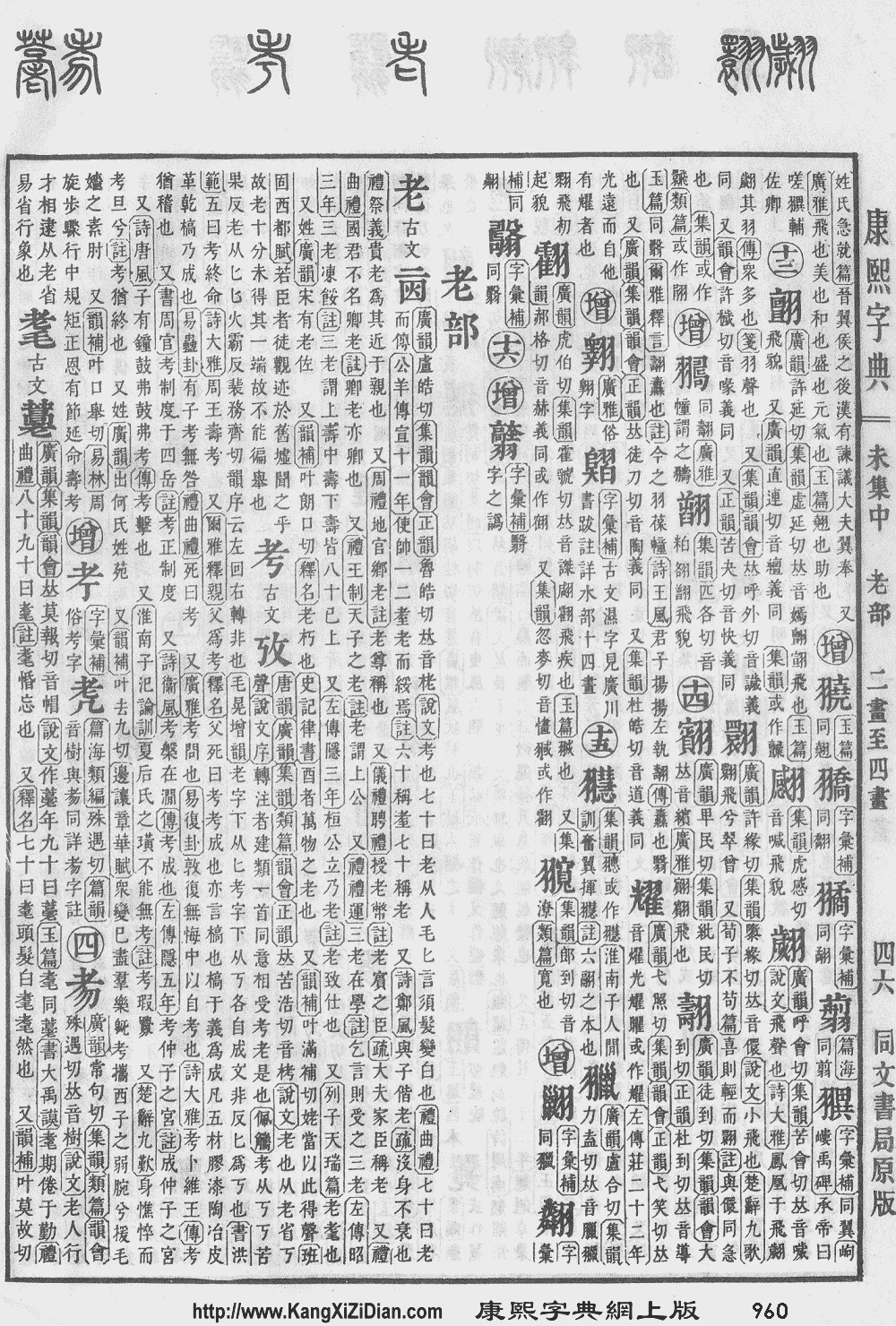
- Kangxi Dictionary: page 960, character 25
- Dai Kanwa Jiten: character 28842
- Dae Jaweon: page 1407, character 8
- Hanyu Da Zidian (first edition): volume 4, page 2778, character 1
- Unihan data for U+8001
Chinese edit
| trad. | 老 | |
|---|---|---|
| simp. # | 老 | |
| alternative forms | 𠄰 𦒳 𠈣 | |
Glyph origin edit
| Historical forms of the character 老 | |||||||||
|---|---|---|---|---|---|---|---|---|---|
| Shang | Western Zhou | Spring and Autumn | Warring States | Shuowen Jiezi (compiled in Han) | Liushutong (compiled in Ming) | Libian (compiled in Qing) | Kangxi Dictionary (compiled in Qing) | ||
| Oracle bone script | Bronze inscriptions | Bronze inscriptions | Bronze inscriptions | Chu slip and silk script | Qin slip script | Small seal script | Transcribed ancient scripts | Clerical script | Ming typeface |

|

|

|

|

|

|

|

|

|

|
Ideogrammic compound (會意/会意) : 人 (“man”) + 毛 (“hair”) + 匕 (“cane”) – a man with long hair (an old man), leaning on a cane. Compare top component to 孝 (OC *qʰruːs).
Cognate to 考 (OC *kʰluːʔ); the most commonly cited example of 轉注 (“reciprocal meaning”).
Etymology edit
Unknown. Compare Proto-Sino-Tibetan *s-raw (“withered, residue, corpse”), *rwat (“stiff, tough”), whence Burmese ရော် (rau, “wither, become overripe; age”), ရွတ် (rwat, “old, stiff, tough”). See also 古 (gǔ), 故 (gù).
An old Sino-Vietnamese borrowing is rệu (“overripe, pulpy”).
Pronunciation edit
Definitions edit
老
- old; aged; elderly
- old (as opposed to new); of long standing
- outdated; old-fashioned
- original; former
- the elderly; one's elders
- 敬老 ― jìnglǎo ― to respect the elderly
- Used after the surname of an old person to address a venerable old person
- 王老 ― Wáng lǎo ― revered old Wang
- (figurative) experienced
- 樊遲請學稼,子曰:「吾不如老農。」 [Classical Chinese, trad.]
- From: The Analects of Confucius, c. 475 – 221 BCE, translated based on James Legge's version
- Fán Chí qǐng xué jià, Zǐ yuē: “Wú bùrú lǎonóng.” [Pinyin]
- Fan Chi asked (Confucius) to teach him husbandry. The Master said, "I'm nowhere as good as an experienced farmhand."
樊迟请学稼,子曰:「吾不如老农。」 [Classical Chinese, simp.]
- (literary) to respect (the elderly, one's elders)
- (of cooked food) overcooked; tough; stringy; hard
- (of food or potable liquids) stale; not fresh
- always; all the time
- (chiefly dialectal) very; quite
- (euphemistic, of an elderly person) to die; to pass away (usually with 了 (le) or 掉 (diào))
- 她教給我的道理還很多,例如說人死了,不該說死掉,必須說「老掉了」。 [MSC, trad.]
- From: 1928, Lu Xun, 阿長與山海經 (Ah-Chang and the Classic of Mountains and Seas)
- Tā jiào gěi wǒ de dàolǐ hái hěnduō, lìrú shuō rén sǐle, bùgāi shuō sǐdiào, bìxū shuō “lǎo diào le”. [Pinyin]
- She's taught me many more such lessons, for example, when someone dies, one ought not speak of their "death", but rather their "passing".
她教给我的道理还很多,例如说人死了,不该说死掉,必须说「老掉了」。 [MSC, simp.]
- (endearing, respectful) Used before surnames to refer to heads or elder members of families.
- (usually respectful and endearing) Used by analogy in several other relationship terms.
- (obsolete, originally honorific) Prefix for animals or people considered senior, fierce, and often awe-inspiring.
- 老鷹/老鹰 ― lǎoyīng ― eagle
- 老虎 ― lǎohǔ ― tiger
- 老鼠 ― lǎoshǔ ― mouse, rat; (obsolete) bat
- 老狼 ― lǎoláng ― (rare) elder and experienced wolf
- 老貓/老猫 ― lǎomāo ― (rare) elder (potentially annoying) cat
- 老狐狸 ― lǎohúlí ― (surviving usage) elder, cunning and experienced fox
- 老傢夥/老家伙 ― lǎojiāhuǒ ― (please add an English translation of this usage example)
- 老東西/老东西 ― lǎodōngxī ― (please add an English translation of this usage example)
- 老雜碎/老杂碎 ― lǎozásuì ― (please add an English translation of this usage example)
- (Cantonese, colloquial) Prefix for nouns with negative impressions or connotations.
- 老強/老强 [Hong Kong Cantonese] ― lou5 koeng4-2 [Jyutping] ― rape
- 發老脾/发老脾 [Cantonese] ― faat3 lou5 pei4-2 [Jyutping] ― to get angry
- 老解 [Hong Kong Cantonese] ― lou5 gaai2 [Jyutping] ― People's Liberation Army
- (Cantonese, colloquial) Prefix for nouns to express familiarity.
- 老尖 [Hong Kong Cantonese] ― lou5 zim1 [Jyutping] ― Tsim Sha Tsui
- 老銅/老铜 [Hong Kong Cantonese] ― lou5 tung4-2 [Jyutping] ― Causeway Bay
- (colloquial) Used before nouns, especially names of ethnicities, places and countries, to form nouns.
- 老外 ― lǎowài ― foreigner; (pejorative) layman, one who lacks knowledge of a subject
- 老美 ― lǎoměi ― Yank
- 老表 ― lǎobiǎo ― a friend (direct speech, may be intimate or offensive depending on provinces)
- 老毛子 ― lǎomáozi ― (pejorative) Russian person
- 老蒙古 ― lǎoménggǔ ― (pejorative) Mongols
- 老北京 ― lǎoběijīng ― indigenous Beijing person
- 老山東/老山东 ― lǎoshāndōng ― indigenous Shandong person
- 老西兒/老西儿 ― lǎoxīr ― (affectionate) Shanxi person
- 老回回 ― lǎohuíhuí ― Hui person (affectionate in some cases, pejorative in other cases, never neutral, depend on the region, speaker, listener situation and speaking mood)
- Short for 老子 (Lǎozǐ, “Laozi; Lao Tzu”).
- (Mainland China, Hong Kong) Short for 老撾/老挝 (Lǎowō, “Laos”).
Synonyms edit
- (old):
- (very):
- (to die):
Antonyms edit
Compounds edit
- 一家老小 (yījiālǎoxiǎo)
- 一老
- 一老一實/一老一实
- 丁老
- 七老八倒
- 七老八十 (qīlǎobāshí)
- 七老八老
- 七老會/七老会
- 三朝元老 (sāncháoyuánlǎo)
- 三老
- 上老
- 三老五更
- 三老四嚴/三老四严
- 三老四少
- 不伏老
- 不服老
- 不老 (bùlǎo)
- 不老少 (bùlǎoshǎo)
- 不老春
- 不老氣/不老气
- 不老藥/不老药
- 不老衣
- 不老長生/不老长生
- 乃老
- 久慣老成/久惯老成
- 久慣老誠/久惯老诚
- 九老
- 九老圖/九老图
- 九老會/九老会
- 乾老子/干老子
- 二十五老
- 二老 (èrlǎo)
- 五老
- 五老峰
- 五老會/五老会
- 五老榜
- 人口老化
- 人老珠黄
- 人老珠黃/人老珠黄
- 介老
- 以老賣老/以老卖老
- 伏櫪老驥/伏枥老骥
- 伏老
- 休老
- 伍老
- 佛老 (fólǎo)
- 你老 (nǐlǎo)
- 佚老
- 你老子
- 俊老
- 倚老賣老/倚老卖老 (yǐlǎomàilǎo)
- 做大老
- 偕老 (xiélǎo)
- 僻老
- 優老/优老
- 元老 (yuánlǎo)
- 元老院 (yuánlǎoyuàn)
- 光老
- 先老
- 兜老底
- 內老板/内老板
- 兩老/两老 (liǎnglǎo)
- 八老
- 六一老
- 六老
- 公老兒/公老儿
- 出窩老/出窝老
- 到老
- 十全老人
- 半老徐娘 (bànlǎoxúniáng)
- 半老頭/半老头
- 南極老/南极老
- 南極老人/南极老人
- 南華老仙/南华老仙 (Nán Huá lǎo xiān)
- 卜老
- 卻老/却老
- 卻老先生/却老先生
- 卻老還童/却老还童
- 卻老霜/却老霜
- 卿老
- 反老還童/反老还童
- 古老 (gǔlǎo)
- 古老錢/古老钱
- 吃老本 (chīlǎoběn)
- 君子偕老
- 君山老父
- 告老 (gàolǎo)
- 告老打罷/告老打罢
- 呆老漢/呆老汉
- 告老還鄉/告老还乡 (gàolǎohuánxiāng)
- 和事老
- 周老嘴 (Zhōulǎozuǐ)
- 哥老會/哥老会 (Gēlǎohuì)
- 唐老鴨/唐老鸭 (Tánglǎoyā)
- 商山老
- 商老
- 單老/单老
- 喬軀老/乔躯老
- 四老
- 回老
- 回老家 (huí lǎojiā)
- 國老/国老 (guólǎo)
- 土老兒/土老儿
- 土老肥
- 圯下老
- 圯上老人
- 地老天昏
- 地老天荒 (dìlǎotiānhuāng)
- 地老虎 (dìlǎohǔ)
- 地老鼠
- 坡老
- 垂老 (chuílǎo)
- 堂老
- 堯老/尧老
- 壺關老/壶关老
- 壽星老兒/寿星老儿
- 外江老
- 大好老
- 大清老早
- 大老 (dàlǎo)
- 大老婆 (dàlǎopo)
- 大老子
- 大老官
- 大老母
- 大老爹
- 大老爺/大老爷
- 大老粗 (dàlǎocū)
- 大老遠/大老远 (dàlǎoyuǎn)
- 大老闆/大老板
- 太上老君 (Tàishàng Lǎojūn)
- 天王老子
- 天老
- 太老先生
- 天老兒/天老儿 (tiānlǎor)
- 天老地荒
- 太老師/太老师
- 太老爺/太老爷
- 天老爺/天老爷
- 天荒地老 (tiānhuāngdìlǎo)
- 天長地老/天长地老
- 奄老
- 妻兒老小/妻儿老小
- 妻兒老少/妻儿老少
- 姑老
- 姑老爺/姑老爷
- 娛老/娱老
- 娘老子 (niánglǎozi)
- 婆老
- 孔老 (Kǒng-Lǎo)
- 孛老 (bólǎo)
- 孤老 (gūlǎo)
- 孤老院
- 學老於年/学老于年
- 學老話/学老话 (ho̍k-ló-fa) (Hakka)
- 安老懷少/安老怀少
- 安老院 (ānlǎoyuàn)
- 定策國老/定策国老
- 宗老 (zōnglǎo)
- 官老爺/官老爷 (guānlǎoyé)
- 室老
- 家姑老
- 家老 (jiālǎo)
- 家老兒/家老儿
- 家老爺/家老爷
- 家過老/家过老
- 宿老
- 寄老
- 富老
- 寡老
- 寶刀不老/宝刀不老 (bǎodāobùlǎo)
- 寶刀未老/宝刀未老 (bǎodāowèilǎo)
- 尊老
- 小老
- 小老兒/小老儿
- 小老婆 (xiǎolǎopo)
- 小老婆子
- 小老媽/小老妈
- 小老板
- 小老母
- 小老爹
- 小老爺/小老爷
- 小老虎 (xiǎolǎohǔ)
- 小老闆/小老板
- 小老頭/小老头
- 小老頭兒/小老头儿
- 小范老子
- 小赤老
- 少年老成
- 少年老誠/少年老诚
- 尪老
- 山老鼠 (shānlǎoshǔ)
- 岳老子
- 崆峒老
- 師老兵疲/师老兵疲
- 年老 (niánlǎo)
- 幸老
- 底老
- 庠老
- 庶老
- 康老子
- 引老
- 張果老/张果老
- 張老/张老
- 強老/强老
- 張老師/张老师
- 張老樂/张老乐
- 後老子/后老子
- 後臺老板/后台老板
- 後臺老闆/后台老板
- 徐娘半老 (xúniángbànlǎo)
- 忠厚老實/忠厚老实
- 恤老憐貧/恤老怜贫
- 您老
- 悉老
- 惜老憐貧/惜老怜贫
- 愛老/爱老
- 愚老
- 愛老憐貧/爱老怜贫
- 慣老/惯老
- 憊老/惫老
- 憐貧恤老/怜贫恤老
- 憐貧惜老/怜贫惜老
- 憐貧敬老/怜贫敬老
- 懸車告老/悬车告老
- 房老
- 扎老女墳
- 打死老虎
- 打老兒/打老儿
- 打阿老
- 托老中心
- 托老實/托老实
- 托老院
- 投老
- 扶老
- 扶老攜幼/扶老携幼 (fúlǎoxiéyòu)
- 拐老
- 拚老命
- 拍老腔
- 拍老腔兒/拍老腔儿
- 拿老
- 挖老根
- 揭老底 (jiē lǎodǐ)
- 摤老
- 摔老盆
- 擲老羊/掷老羊
- 擺老資格/摆老资格 (bǎi lǎo zīgé)
- 攜幼扶老/携幼扶老
- 攜老扶幼/携老扶幼
- 攜老扶弱/携老扶弱
- 攜老挈幼/携老挈幼
- 故老
- 教老者
- 敬老 (jìnglǎo)
- 敬老尊賢/敬老尊贤
- 敬老恤貧/敬老恤贫
- 敬老慈少
- 敬老慈幼
- 敬老慈稚
- 敬老憐貧/敬老怜贫
- 敬老節/敬老节
- 敬老院 (jìnglǎoyuàn)
- 文章宿老
- 斫輪老手/斫轮老手
- 斲輪老手/斲轮老手
- 昏老
- 春不老
- 春歸人老/春归人老
- 春老
- 晚老公
- 晚老子
- 普庵老祖
- 暮老
- 更老
- 月下老
- 月下老人 (Yuèxià Lǎorén)
- 月下老兒/月下老儿
- 月老 (yuèlǎo)
- 服老 (fúlǎo)
- 望梅閣老/望梅阁老
- 期頤偕老/期颐偕老
- 木老老
- 木老鴉/木老鸦
- 木訥老人/木讷老人
- 未老先衰 (wèilǎoxiānshuāi)
- 朽老
- 村夫野老
- 村父老
- 村老
- 李老
- 村老子
- 村老老
- 杜陵老
- 杜陵遺老/杜陵遗老
- 杜陵野老
- 果老
- 東老/东老
- 柳老悲桓
- 格老子
- 格老子的
- 棒老二
- 楚老
- 標老兒/标老儿
- 歎老嗟卑/叹老嗟卑
- 歷練老成/历练老成
- 歸老/归老 (guīlǎo)
- 歸老菟裘/归老菟裘
- 母老子幼
- 母老虎 (mǔlǎohǔ)
- 水浸老鼠
- 水渰老鼠
- 水老鴉/水老鸦
- 水老鼠
- 水老鼠花
- 江北老
- 江山不老
- 江東父老/江东父老
- 沒老沒小/没老没小
- 波瀾老成/波澜老成
- 況老/况老
- 法老 (fǎlǎo)
- 波老兒/波老儿
- 海老 (hǎilǎo)
- 深山老林 (shēnshānlǎolín)
- 淥老/渌老
- 清老
- 滄浪老人/沧浪老人
- 潁濱遺老/颍滨遗老
- 漢陰老/汉阴老
- 漢陰老父/汉阴老父
- 火老
- 灶前老虎
- 烏老/乌老
- 煖老/暖老
- 煗老/暖老
- 爐神老君/炉神老君
- 爪老
- 父老 (fùlǎo)
- 牛不老
- 犁老
- 狂吟老監/狂吟老监
- 狗逮老鼠
- 王老
- 王老五 (wánglǎowǔ)
- 王老莊/王老庄 (Wánglǎozhuāng)
- 玉關人老/玉关人老
- 甘國老/甘国老
- 生老病死 (shēnglǎobìngsǐ)
- 田夫野老
- 田父野老
- 田畯野老
- 田翁野老
- 男女老小
- 男女老少 (nánnǚlǎoshào)
- 男女老幼 (nánnǚlǎoyòu)
- 男婦老幼/男妇老幼
- 畢老/毕老
- 疲老
- 癃老
- 癡頑老/痴顽老
- 癡頑老子/痴顽老子
- 發老狠/发老狠
- 白老
- 白頭偕老/白头偕老 (báitóuxiélǎo)
- 白頭到老/白头到老
- 百年偕老
- 百年到老
- 百年歸老/百年归老 (bǎiniánguīlǎo)
- 百年諧老/百年谐老
- 百老匯/百老汇 (Bǎilǎohuì)
- 皂王老爺/皂王老爷
- 皂隸老官/皂隶老官
- 皇帝老子
- 皇帝老爺/皇帝老爷
- 皤皤國老/皤皤国老
- 直頭老虎/直头老虎
- 看文老眼
- 睩老
- 瞿老
- 矑老/𪾦老
- 石枯松老
- 破老
- 碩老/硕老
- 科任老師/科任老师
- 秋老虎 (qiūlǎohǔ)
- 程老
- 稚老
- 空大老脬
- 空心大老
- 窮老/穷老
- 竈界老爺/灶界老爷
- 笠澤老翁/笠泽老翁
- 筆老墨秀/笔老墨秀
- 篤老/笃老
- 簡老/简老
- 米奇老鼠 (Mǐqí Lǎoshǔ)
- 米老鼠 (Mǐlǎoshǔ)
- 糟老頭兒/糟老头儿
- 級任老師/级任老师
- 紙老虎/纸老虎 (zhǐlǎohǔ)
- 紙老鴟/纸老鸱
- 終老/终老 (zhōnglǎo)
- 絳縣老人/绛县老人
- 絳老/绛老
- 練川三老/练川三老
- 練達老成/练达老成
- 罷老/罢老
- 美男破老
- 羸老
- 翻老帳/翻老帐
- 老K (lǎokāi)
- 老一套 (lǎoyītào)
- 老一巴掌
- 老一輩/老一辈 (lǎoyībèi)
- 老一輩子/老一辈子
- 老一門兒/老一门儿
- 老丈
- 老上
- 老丈人
- 老三大件
- 老三老四
- 老三色
- 老不才
- 老不拘禮/老不拘礼
- 老不曉事/老不晓事
- 老不死 (lǎobùsǐ)
- 老不著
- 老世
- 老世交
- 老世陳/老世陈 (Lǎoshìchén)
- 老丫
- 老丫頭/老丫头
- 老主顧/老主顾
- 老么 (lǎoyāo)
- 老九
- 老乞婆
- 老乾/老干
- 老于世故
- 老亞公/老亚公
- 老交情
- 老人 (lǎorén)
- 老人問題/老人问题
- 老人婆
- 老人學/老人学 (lǎorénxué)
- 老人家
- 老人年金
- 老人星 (Lǎorénxīng)
- 老人星圖/老人星图
- 老人會/老人会
- 老人福利
- 老人節/老人节
- 老人與海/老人与海
- 老人茶
- 老人院 (lǎorényuàn)
- 老令婆
- 老仙長/老仙长
- 老休
- 老伯 (lǎobó)
- 老伴 (láobàn)
- 老佛
- 老作人
- 老伯伯 (lǎobóbo)
- 老伯呆
- 老作家
- 老佛爺/老佛爷 (lǎofóyé)
- 老來/老来
- 老例 (lǎolì)
- 老來俏/老来俏 (lǎoláiqiào)
- 老來子/老来子
- 老來寶/老来宝
- 老保兒/老保儿
- 老俵
- 老倒
- 老倭瓜
- 老健
- 老傖/老伧
- 老傭/老佣
- 老債/老债
- 老僕/老仆 (lǎopú)
- 老僧 (lǎosēng)
- 老僧入定
- 老儒
- 老兄 (lǎoxiōng)
- 老兄弟
- 老光
- 老先
- 老先兒/老先儿
- 老光棍
- 老先生 (lǎoxiānshēng)
- 老兔
- 老兒/老儿
- 老兒子/老儿子
- 老兒當/老儿当
- 老兩口/老两口 (lǎoliǎngkǒu)
- 老八板兒/老八板儿 (lǎobābǎnr)
- 老八股
- 老八路
- 老八輩子/老八辈子
- 老公
- 老公事
- 老公公 (lǎogōnggong)
- 老公嘴兒/老公嘴儿
- 老公祖
- 老共 (lǎogòng)
- 老兵 (lǎobīng)
- 老冤
- 老到 (lǎodào)
- 老前輩/老前辈
- 老剝皮/老剥皮
- 老劣
- 老勁/老劲
- 老勿大
- 老包
- 老化 (lǎohuà)
- 老匹夫
- 老區/老区 (lǎoqū)
- 老千 (lǎoqiān)
- 老半天
- 老厭物/老厌物
- 老去
- 老參/老参
- 老友 (lǎoyǒu)
- 老叔
- 老叟
- 老口
- 老口兒/老口儿
- 老古板
- 老古董 (lǎogǔdǒng)
- 老吃
- 老同
- 老吏
- 老合兒/老合儿
- 老同學/老同学
- 老君 (Lǎojūn)
- 老君廟/老君庙
- 老君眉
- 老吾老以及人之老 (lǎo wú lǎo yǐjí rén zhī lǎo)
- 老命 (lǎomìng)
- 老咬蟲/老咬虫
- 老哥 (lǎogē)
- 老哥兒倆/老哥儿俩
- 老哥兒們/老哥儿们
- 老哥哥
- 老商
- 老喬民/老乔民
- 老器
- 老嚴/老严
- 老四大件
- 老圃 (lǎopǔ)
- 老土 (lǎotǔ)
- 老地方
- 老在行
- 老坡
- 老城 (lǎochéng)
- 老堂臺/老堂台
- 老塘
- 老墈
- 老境 (lǎojìng)
- 老壽/老寿
- 老壽星/老寿星 (lǎoshòuxīng)
- 老外 (lǎowài)
- 老夥計/老伙计
- 老大 (lǎodà)
- 老大不小
- 老大人
- 老大伯
- 老大兒/老大儿
- 老大吃驚/老大吃惊 (lǎodà chījīng)
- 老大哥 (lǎodàgē)
- 老大姐 (lǎodàjiě)
- 老大娘 (lǎodàniáng)
- 老大小 (lǎodàxiǎo)
- 老大帝國/老大帝国
- 老大徒傷/老大徒伤
- 老大晌
- 老大無成/老大无成
- 老大爺/老大爷 (lǎodàye)
- 老大蟲/老大虫
- 老大難/老大难
- 老夫 (lǎofū)
- 老太
- 老天 (lǎotiān)
- 老太公
- 老太太 (lǎotàitai)
- 老夫妻
- 老太婆 (lǎotàipó)
- 老夫子
- 老天巴地
- 老天拔地
- 老天有眼
- 老太爺/老太爷 (lǎotàiyé)
- 老天爺/老天爷 (lǎotiānyé)
- 老夫老妻 (lǎofūlǎoqī)
- 老契
- 老套 (lǎotào)
- 老套筒
- 老套頭/老套头
- 老女
- 老女歸宗/老女归宗
- 老奴
- 老奶奶 (lǎonǎinai)
- 老奸
- 老好
- 老好人 (lǎohǎorén)
- 老奸巨猾
- 老妖精
- 老妾
- 老姏
- 老妹 (lǎomèi)
- 老姐妹兒/老姐妹儿
- 老姑娘 (lǎogūniang)
- 老姦/老奸
- 老姥
- 老姦巨猾/老奸巨猾
- 老娘
- 老娘們/老娘们
- 老娘兒/老娘儿
- 老娘婆
- 老娘家
- 老娘親/老娘亲
- 老婆
- 老婢
- 老婦/老妇 (lǎofù)
- 老婦人/老妇人 (lǎofùrén)
- 老婆兒/老婆儿 (lǎopór)
- 老婆娘
- 老婆婆 (lǎopópo)
- 老婢子
- 老婆子 (lǎopózi)
- 老婆心
- 老婆漢/老婆汉
- 老婆當軍/老婆当军
- 老婆禪/老婆禅
- 老婆舌頭/老婆舌头
- 老婆餅/老婆饼 (lǎopobǐng)
- 老媼/老媪 (lǎo'ǎo)
- 老媽/老妈 (lǎomā)
- 老媳婦/老媳妇
- 老媽子/老妈子 (lǎomāzi)
- 老嫗/老妪 (lǎoyù)
- 老嫗吹篪/老妪吹篪
- 老嫗能解/老妪能解
- 老嬤/老嬷
- 老嬤嬤/老嬷嬷
- 老子
- 老子娘 (lǎoziniáng)
- 老子婆娑
- 老子道君
- 老子長孫/老子长孙
- 老字號/老字号 (lǎozìhào)
- 老字頭/老字头 (lǎozìtóu)
- 老學/老学
- 老學究/老学究 (lǎoxuéjiū)
- 老學菴/老学庵
- 老孺
- 老宋體/老宋体
- 老官 (lǎoguān)
- 老官兒/老官儿
- 老客 (lǎokè)
- 老家 (lǎojiā)
- 老家人
- 老家兒/老家儿
- 老家公
- 老宿
- 老寅臺/老寅台
- 老寋
- 老寨
- 老寡
- 老實/老实 (lǎoshí)
- 老實人/老实人
- 老實八焦/老实八焦
- 老實圪蛋/老实圪蛋
- 老實巴交/老实巴交 (lǎoshibājiāo)
- 老實巴焦/老实巴焦
- 老實巴腳/老实巴脚
- 老實疙瘩/老实疙瘩
- 老實羅/老实罗
- 老實話/老实话
- 老實頭/老实头
- 老封君
- 老將/老将 (lǎojiàng)
- 老將行/老将行
- 老尊
- 老尊堂
- 老小 (lǎoxiǎo)
- 老少 (lǎoshào)
- 老少一同
- 老少咸宜 (lǎoshàoxiányí)
- 老少年
- 老少無欺/老少无欺
- 老少男女 (lǎoshàonánnǚ)
- 老少配
- 老屋 (lǎowū)
- 老屋基 (Lǎowūjī)
- 老山
- 老山東/老山东
- 老山漢/老山汉
- 老巢 (lǎocháo)
- 老己
- 老巴巴
- 老師/老师 (lǎoshī)
- 老師傅/老师傅
- 老師夫/老师夫
- 老師宿儒/老师宿儒
- 老師父/老师父
- 老帳/老帐
- 老幫閒/老帮闲
- 老年 (lǎonián)
- 老年人 (lǎoniánrén)
- 老年人口
- 老年兄
- 老年尊
- 老年得子
- 老年時期/老年时期
- 老年期 (lǎoniánqī)
- 老年福利
- 老年醫學/老年医学
- 老年間/老年间
- 老幺/老么 (lǎoyāo)
- 老幼 (lǎoyòu)
- 老幼咸宜
- 老幾/老几 (lǎojǐ)
- 老店
- 老底 (lǎodǐ)
- 老底兒/老底儿
- 老底子 (lǎodǐzi)
- 老廣廣/老广广
- 老廣文/老广文
- 老廢物/老废物
- 老弊
- 老式 (lǎoshì)
- 老弗大
- 老弟 (lǎodì)
- 老弦
- 老弱 (lǎoruò)
- 老弱殘兵/老弱残兵
- 老彭
- 老很
- 老復丁/老复丁
- 老忘渾/老忘浑
- 老怯
- 老悖
- 老患
- 老惛
- 老悴
- 老態/老态
- 老態龍鍾/老态龙钟 (lǎotàilóngzhōng)
- 老慵
- 老慳/老悭
- 老憨
- 老憊/老惫
- 老懷/老怀
- 老成 (lǎochéng)
- 老成之見/老成之见
- 老成人
- 老成凋謝/老成凋谢
- 老成持重 (lǎochéng chízhòng)
- 老成煉達/老成炼达
- 老成穩重/老成稳重
- 老成練達/老成练达
- 老成見到/老成见到
- 老我
- 老戲迷/老戏迷
- 老扈
- 老手 (lǎoshǒu)
- 老扎
- 老把勢/老把势 (lǎobǎshi)
- 老把式
- 老把戲/老把戏 (lǎobǎxì)
- 老拙 (lǎozhuō)
- 老挑
- 老拳 (lǎoquán)
- 老措大
- 老掉牙 (lǎodiàoyá)
- 老搭檔/老搭档
- 老摳/老抠
- 老撾/老挝 (Lǎowō)
- 老攫
- 老教
- 老教頭/老教头
- 老斗
- 老斲
- 老斲輪/老斲轮
- 老方子
- 老於世故/老于世故
- 老旦
- 老早 (lǎozǎo)
- 老易
- 老昏
- 老是 (lǎoshì)
- 老春
- 老昧
- 老景
- 老更
- 老書/老书
- 老有所終/老有所终
- 老朋友
- 老本 (lǎoběn)
- 老本行
- 老朽 (lǎoxiǔ)
- 老朽無用/老朽无用
- 老杜
- 老林 (lǎolín)
- 老東/老东
- 老板 (lǎobǎn)
- 老東人/老东人
- 老板娘 (lǎobǎnniáng)
- 老東家/老东家
- 老東西/老东西 (lǎodōngxi)
- 老校
- 老根
- 老格
- 老根人家
- 老根子
- 老框框
- 老梗
- 老梅 (Lǎoméi)
- 老梟/老枭
- 老梆子 (lǎobāngzi)
- 老棺材
- 老椿
- 老業人/老业人
- 老槍/老枪 (lǎoqiāng)
- 老樣/老样
- 老樣子/老样子 (lǎoyàngzi)
- 老樞能解/老枢能解
- 老樹枯柴/老树枯柴
- 老樹盤根/老树盘根
- 老橛話兒/老橛话儿
- 老歌 (lǎogē)
- 老歐/老欧
- 老歸/老归
- 老死 (lǎosǐ)
- 老死溝壑/老死沟壑
- 老死牖下
- 老死魅
- 老殘/老残
- 老殘遊記/老残游记
- 老母
- 老母雞/老母鸡
- 老毛
- 老毛子 (lǎomáozi)
- 老毛病 (lǎomáobìng)
- 老氏
- 老民
- 老氣/老气
- 老氣橫秋/老气横秋 (lǎoqìhéngqiū)
- 老汗
- 老江湖 (lǎojiānghu)
- 老泥 (lǎoní)
- 老泉
- 老法
- 老況/老况
- 老河口 (Lǎohékǒu)
- 老法子
- 老油子 (lǎoyóuzi)
- 老油條/老油条 (lǎoyóutiáo)
- 老派 (lǎopài)
- 老洲 (Lǎozhōu)
- 老海 (lǎohǎi)
- 老淚/老泪
- 老混忘
- 老淚縱橫/老泪纵横 (lǎolèizōnghéng)
- 老湫
- 老湯/老汤
- 老溝/老沟 (Lǎogōu)
- 老溜
- 老滑頭/老滑头
- 老漢/老汉 (lǎohàn)
- 老滿/老满
- 老滿兒/老满儿
- 老潑狗/老泼狗
- 老濞
- 老灣/老湾 (Lǎowān)
- 老火
- 老無知/老无知
- 老熊當道/老熊当道
- 老營/老营
- 老營兒/老营儿
- 老營生/老营生
- 老父 (lǎofù)
- 老父母
- 老父臺/老父台 (lǎofùtái)
- 老爸 (lǎobà)
- 老爹 (lǎodiē)
- 老爺/老爷 (lǎoye)
- 老爺們/老爷们 (lǎoyémen)
- 老爺兒/老爷儿
- 老爺子/老爷子
- 老爺廟/老爷庙
- 老爺爺/老爷爷 (lǎoyéye)
- 老爺車/老爷车 (lǎoyéchē)
- 老版
- 老牌 (lǎopái)
- 老牌子
- 老牛 (lǎoniú)
- 老牛破車/老牛破车
- 老牛筋
- 老牛箝嘴
- 老牛箍嘴
- 老牛舐犢/老牛舐犊
- 老牧
- 老物
- 老狗
- 老狐狸
- 老獪/老狯
- 老獾叼的
- 老王賣瓜/老王卖瓜
- 老班
- 老班子
- 老班底
- 老瓜
- 老瓢
- 老瓦
- 老瓦盆
- 老生 (lǎoshēng)
- 老生兒/老生儿
- 老生子
- 老生常談/老生常谈 (lǎoshēngchángtán)
- 老生常譚/老生常谭 (lǎoshēngchángtán)
- 老甲魚/老甲鱼
- 老畜生
- 老番
- 老當/老当
- 老當益壯/老当益壮 (lǎodāngyìzhuàng)
- 老疙疸
- 老疙瘩 (lǎogēda)
- 老疾
- 老病
- 老癃
- 老白相
- 老白賞/老白赏
- 老百姓 (lǎobǎixìng)
- 老的
- 老的少的
- 老皇曆/老皇历 (lǎohuánglì)
- 老盆
- 老盡/老尽
- 老直
- 老相 (lǎoxiàng)
- 老眊 (lǎomào)
- 老相交
- 老相公
- 老相好
- 老相與/老相与
- 老相識/老相识 (lǎoxiāngshí)
- 老眼
- 老眼昏花
- 老着臉
- 老瞞/老瞒
- 老砍頭/老砍头
- 老硬
- 老確/老确
- 老祖
- 老祖先
- 老祖兒/老祖儿
- 老神在在 (lǎoshénzàizài)
- 老祖太爺/老祖太爷
- 老祖宗
- 老視眼/老视眼
- 老秀才
- 老秋
- 老稚
- 老積年/老积年
- 老空人
- 老窩/老窝
- 老窮/老穷
- 老童
- 老筆/老笔
- 老等
- 老米 (lǎomǐ)
- 老米飯/老米饭
- 老粗 (lǎocū)
- 老糊塗/老糊涂 (lǎohútú)
- 老糟頭/老糟头
- 老紅/老红
- 老絕戶/老绝户
- 老經綸/老经纶
- 老緊/老紧
- 老練/老练 (lǎoliàn)
- 老緣/老缘
- 老繃/老绷
- 老總/老总 (lǎozǒng)
- 老繭/老茧 (lǎojiǎn)
- 老罷/老罢
- 老羆當道/老罴当道
- 老羊皮
- 老羞成怒 (lǎoxiūchéngnù)
- 老羞變怒/老羞变怒
- 老羸
- 老翁 (lǎowēng)
- 老習慣/老习惯
- 老老
- 老老大大
- 老老實實/老老实实
- 老老小小
- 老老少少
- 老老成成
- 老耄 (lǎomào)
- 老耆
- 老者 (lǎozhě)
- 老耋
- 老而不死
- 老而彌堅/老而弥坚
- 老聃 (Lǎodān)
- 老聲老氣/老声老气
- 老聵/老聩
- 老背悔
- 老背晦
- 老脫/老脱
- 老腐
- 老腐敗/老腐败
- 老腳/老脚
- 老腦筋/老脑筋 (lǎonǎojīn)
- 老臉/老脸
- 老臉皮/老脸皮
- 老臊胡
- 老臞
- 老臣 (lǎochén)
- 老舉/老举 (lǎojǔ)
- 老舊/老旧 (lǎojiù)
- 老舍
- 老色
- 老艾
- 老花子 (lǎohuāzi)
- 老花根
- 老花眼 (lǎohuāyǎn)
- 老花眼鏡/老花眼镜 (lǎohuā yǎnjìng)
- 老花鏡/老花镜 (lǎohuājìng)
- 老苗
- 老苦
- 老草
- 老荊/老荆
- 老莊/老庄 (Lǎo-Zhuāng)
- 老莊哲學/老庄哲学
- 老莊思想/老庄思想
- 老萊/老莱
- 老萊妻/老莱妻
- 老萊娛親/老莱娱亲
- 老萊子/老莱子
- 老萊服/老莱服
- 老著臉/老著脸
- 老著臉皮/老著脸皮
- 老萊衣/老莱衣
- 老萊裾/老莱裾
- 老落
- 老蒼/老苍
- 老蒼頭/老苍头
- 老蔥/老葱
- 老蘇/老苏
- 老虎 (lǎohǔ)
- 老虎凳
- 老虎攤兒/老虎摊儿
- 老虎灶
- 老虎班
- 老虎皮
- 老虎窗 (lǎohǔchuāng)
- 老虎竈/老虎灶
- 老虎車/老虎车
- 老虎鉗/老虎钳 (lǎohǔqián)
- 老虔婆
- 老處女/老处女
- 老虜/老虏
- 老蚌
- 老蚌珠胎
- 老蚌生珠
- 老蟆
- 老蠢
- 老蠶作繭/老蚕作茧
- 老行伍
- 老行家
- 老行尊
- 老衍
- 老街 (lǎojiē)
- 老街坊
- 老街舊鄰/老街旧邻
- 老衣
- 老表 (lǎobiǎo)
- 老衲 (lǎonà)
- 老衰
- 老西兒/老西儿
- 老規矩/老规矩 (lǎoguījǔ)
- 老親/老亲 (lǎoqīn)
- 老親娘/老亲娘 (lǎoqīnniáng)
- 老話/老话 (lǎohuà)
- 老誠/老诚
- 老話題/老话题
- 老語/老语
- 老誖
- 老調/老调 (lǎodiào)
- 老調子/老调子
- 老調重彈/老调重弹 (lǎodiàochóngtán)
- 老謀/老谋
- 老謀深算/老谋深算 (lǎomóushēnsuàn)
- 老謬/老谬
- 老譜/老谱 (lǎopǔ)
- 老豆
- 老豆腐 (lǎodòufu)
- 老貌
- 老財/老财
- 老貨/老货
- 老賊/老贼 (lǎozéi)
- 老賬/老账
- 老賣/老卖
- 老賢姪/老贤侄
- 老賭腳/老赌脚
- 老走硝
- 老走道兒/老走道儿
- 老起面皮
- 老趕/老赶
- 老趙/老赵
- 老路 (lǎolù)
- 老趼
- 老躄
- 老身 (lǎoshēn)
- 老身長子/老身长子
- 老軍/老军
- 老輩/老辈 (lǎobèi)
- 老辣 (lǎolà)
- 老辦/老办
- 老農/老农 (lǎonóng)
- 老退居
- 老道 (lǎodào)
- 老運/老运
- 老運亨通/老运亨通
- 老道長/老道长
- 老遠/老远 (lǎoyuǎn)
- 老邁/老迈 (lǎomài)
- 老邁龍鍾/老迈龙钟
- 老郎
- 老郎庵
- 老郎神
- 老鄉/老乡 (lǎoxiāng)
- 老都爺/老都爷
- 老鄙
- 老鄰居/老邻居
- 老酒 (lǎojiǔ)
- 老醋
- 老醃兒/老腌儿
- 老醃瓜/老腌瓜
- 老醫少卜/老医少卜
- 老醬棚/老酱棚
- 老鈍/老钝
- 老錢/老钱
- 老門檻/老门槛
- 老開/老开 (lǎokāi)
- 老闆/老板 (lǎobǎn)
- 老闆娘/老板娘 (lǎobǎnniáng)
- 老闆子/老板子
- 老阿呆
- 老阿媽/老阿妈
- 老阿者
- 老院公
- 老陰/老阴
- 老陽/老阳 (lǎoyáng)
- 老雇
- 老雕
- 老雞頭/老鸡头
- 老雲頭/老云头
- 老靠
- 老面 (lǎomiàn)
- 老面子
- 老面孔
- 老面皮
- 老革
- 老革命 (lǎogémìng)
- 老章程
- 老頑固/老顽固 (lǎowángù)
- 老頑童/老顽童
- 老頭/老头 (lǎotóu)
- 老頭兒/老头儿 (lǎotóur)
- 老頭兒樂/老头儿乐
- 老頭子/老头子 (lǎotóuzi)
- 老頭巾/老头巾
- 老頭皮/老头皮
- 老頭票/老头票
- 老風流/老风流
- 老饕 (lǎotāo)
- 老饞/老馋
- 老馬嘶風/老马嘶风
- 老馬為駒/老马为驹
- 老馬識途/老马识途 (lǎomǎshítú)
- 老駝/老驼
- 老駕/老驾
- 老驢/老驴
- 老驥/老骥
- 老驥伏櫪/老骥伏枥 (lǎojìfúlì)
- 老驥嘶風/老骥嘶风
- 老骨
- 老骨頭/老骨头
- 老體面/老体面
- 老鬼 (lǎoguǐ)
- 老魚跳波/老鱼跳波 (lǎoyútiàobō)
- 老鯽溜/老鲫溜
- 老鰥/老鳏
- 老鳥/老鸟 (lǎoniǎo)
- 老鳳/老凤
- 老鴇/老鸨 (lǎobǎo)
- 老鴉/老鸦 (lǎoyā)
- 老鴇婆/老鸨婆
- 老鴇子/老鸨子 (lǎobǎozi)
- 老鴰/老鸹 (lǎoguā)
- 老鴰翎/老鸹翎
- 老鵵/老𱊆
- 老鶴乘軒/老鹤乘轩
- 老鷹/老鹰 (lǎoyīng)
- 老麻汗
- 老黃牛/老黄牛 (lǎohuángniú)
- 老黃請醫/老黄请医
- 老黑 (lǎohēi)
- 老黿/老鼋
- 老鼠 (lǎoshǔ)
- 老鼠會/老鼠会
- 老鼠見貓/老鼠见猫
- 老鼠過街/老鼠过街
- 老鼻子
- 老齡/老龄 (lǎolíng)
- 老齡問題/老龄问题
- 老龍/老龙
- 老龜刳腸/老龟刳肠
- 耆儒碩老/耆儒硕老
- 耆壽耇老/耆寿耇老
- 耆德碩老/耆德硕老
- 耄老
- 耆老
- 耇老
- 耋老
- 耍老千
- 耶誕老人/耶诞老人 (yēdàn Lǎorén)
- 聖誕老人/圣诞老人 (Shèngdàn Lǎorén)
- 聽老/听老
- 胡老
- 腌軀老
- 自老
- 舅老爺/舅老爷
- 船老大
- 艾老 (àilǎo)
- 莊老/庄老
- 莘老
- 菊老荷枯
- 蓋老/盖老
- 蒼老/苍老 (cānglǎo)
- 薑桂老辣/姜桂老辣 (jiāngguìlǎolà)
- 虛老/虚老
- 行老
- 衰老 (shuāilǎo)
- 袍皮老
- 裝老/装老
- 西老
- 親家老爺/亲家老爷 (qìngjiā lǎoyé)
- 討老腳/讨老脚
- 詩老/诗老
- 請老/请老
- 諧老/谐老
- 諱老/讳老
- 謝老/谢老
- 識塗老馬/识涂老马
- 識途老馬/识途老马
- 貓哭老鼠/猫哭老鼠
- 負老提幼/负老提幼
- 負老攜幼/负老携幼
- 貴壯賤老/贵壮贱老
- 貴少賤老/贵少贱老
- 賀老/贺老
- 貴老/贵老
- 賀老湖/贺老湖
- 賒老/赊老
- 賓老/宾老
- 賤老/贱老
- 賣老/卖老
- 賠老本/赔老本
- 賭老春/赌老春
- 贊老子/赞老子
- 贍老/赡老
- 赤老 (chìlǎo)
- 走老路
- 趕老羊/赶老羊
- 跳鮑老/跳鲍老
- 軀老/躯老
- 辭老/辞老
- 返老
- 返老歸童/返老归童
- 返老還童/返老还童 (fǎnlǎohuántóng)
- 迦老
- 送老
- 退老
- 逸老
- 達老/达老
- 過街老鼠/过街老鼠 (guòjiē lǎoshǔ)
- 遼天老鶴/辽天老鹤
- 遺老/遗老
- 遺老孤臣/遗老孤臣
- 遺黎故老/遗黎故老
- 還年卻老/还年却老
- 邊老便便/边老便便
- 邑老
- 邦老
- 鄉下老/乡下老
- 鄉老/乡老
- 都老
- 鄉老兒/乡老儿
- 鄉老書/乡老书
- 都老爺/都老爷
- 鄙老
- 鄰老/邻老
- 鄭老/郑老
- 醃軀老/腌躯老
- 釋老/释老
- 里老
- 野老 (yělǎo)
- 野老兒/野老儿
- 野老公
- 金谷老
- 釣璜老/钓璜老
- 長天老日/长天老日
- 長年三老/长年三老
- 長春不老/长春不老
- 長樂老/长乐老
- 長生不老/长生不老 (chángshēngbùlǎo)
- 長老/长老 (zhǎnglǎo)
- 長老教會/长老教会 (Zhǎnglǎo Jiàohuì)
- 長老會/长老会 (Zhǎnglǎohuì)
- 開山老祖/开山老祖
- 閣老/阁老
- 閻王老子/阎王老子
- 閻羅包老/阎罗包老
- 閻羅老子/阎罗老子
- 閻老/阎老
- 閻老五/阎老五
- 閻老王/阎老王
- 闊老/阔老 (kuòlǎo)
- 關老爺/关老爷
- 阜老
- 防老
- 阿老
- 陸家老屋/陆家老屋
- 陳言老套/陈言老套
- 雋老/隽老
- 雌老虎
- 難老/难老
- 雨老煙荒/雨老烟荒
- 電老虎/电老虎
- 響老/响老
- 頂老/顶老
- 頓老/顿老
- 頤老/颐老
- 頹老/颓老
- 頹老子/颓老子
- 食老 (chia̍h-lāu) (Hokkien)
- 飽以老拳/饱以老拳 (bǎoyǐlǎoquán)
- 飽饗老拳/饱飨老拳
- 養兒備老/养儿备老
- 養兒防老/养儿防老 (yǎng'érfánglǎo)
- 養老/养老 (yǎnglǎo)
- 養老乞言/养老乞言
- 養老堂/养老堂
- 養老女/养老女
- 養老禮/养老礼
- 養老送終/养老送终
- 養老金/养老金 (yǎnglǎojīn)
- 養老院/养老院 (yǎnglǎoyuàn)
- 養老馬/养老马
- 餓老鴟/饿老鸱
- 馬捉老鼠/马捉老鼠
- 馮公老/冯公老
- 馮唐已老/冯唐已老
- 馮唐易老/冯唐易老
- 馮唐老/冯唐老
- 騎上老虎/骑上老虎
- 驪山老母/骊山老母
- 魚老鴉/鱼老鸦
- 鮑老/鲍老
- 鮑老兒/鲍老儿
- 鰥老/鳏老
- 鶴老/鹤老
- 麥丘老人/麦丘老人
- 麵老鼠/面老鼠
- 黃不老/黄不老
- 黃石老/黄石老
- 黃老/黄老 (Huáng-Lǎo)
- 黃老君/黄老君
- 黃老治術/黄老治术
- 黃老術/黄老术
- 黃面老/黄面老
- 黃面老子/黄面老子
- 黃面老禪/黄面老禅
- 黎山老姆
- 黎老
- 黑老包
- 黑老烏/黑老乌
- 黧老
- 黨老爺/党老爷
- 鼓老
- 龍圖老子/龙图老子
- 龍山三老/龙山三老
- 龍頭老大/龙头老大
Descendants edit
References edit
- “老”, in 漢語多功能字庫 (Multi-function Chinese Character Database)[1], 香港中文大學 (the Chinese University of Hong Kong), 2014–
- Dictionary of Chinese Character Variants (教育部異體字字典), A03251
Japanese edit
Kanji edit
Readings edit
- Go-on: ろう (rō, Jōyō)←らう (rau, historical)
- Kan-on: ろう (rō, Jōyō)←らう (rau, historical)
- Kun: おいる (oiru, 老いる, Jōyō); ふける (fukeru, 老ける, Jōyō); おい (oi)
- Nanori: えび (ebi); おい (oi); び (bi)
Compounds edit
Korean edit
Etymology edit
From Middle Chinese 老 (MC lawX).
| Historical Readings | ||
|---|---|---|
| Dongguk Jeongun Reading | ||
| Dongguk Jeongun, 1448 | 로ᇢ〯 (Yale: lwǒw) | |
| Middle Korean | ||
| Text | Eumhun | |
| Gloss (hun) | Reading | |
| Hunmong Jahoe, 1527[2] | 늘글〮 (Yale: nùlkúl) | 로〯 (Yale: lwŏ) |
Pronunciation edit
- (SK Standard/Seoul) IPA(key): [ɾo̞(ː)] ~ [no̞(ː)]
- Phonetic hangul: [로(ː)/노(ː)]
- Though still prescribed in Standard Korean, most speakers in both Koreas no longer distinguish vowel length.
Hanja edit
老 (eumhun 늙을 로 (neulgeul ro), South Korea 늙을 노 (neulgeul no))
Compounds edit
- 경로 (敬老, gyeongno)
- 노년 (老年, nonyeon)
- 노련 (老鍊, noryeon)
- 노령 (老齡, noryeong)
- 노모 (老母, nomo)
- 노사 (老師, nosa)
- 노소 (老少, noso)
- 노안 (老眼, noan)
- 노안 (老顔, noan)
- 노인 (老人, noin)
- 노장 (老將, nojang)
- 노파 (老婆, nopa)
- 노폐 (老廢, nopye)
- 노화 (老化, nohwa)
- 노환 (老患, nohwan)
- 노후 (老後, nohu)
- 불로 (不老, bullo)
- 연로 (年老, yeollo)
- 원로 (元老, wollo)
- 장로 (長老, jangno)
- 노익장 (老益壯, noikjang)
- 남녀노소 (男女老少, namnyeonoso)
- 백년해로 (百年偕老, baengnyeonhaero)
Vietnamese edit
Han character edit
老: Hán Việt readings: lão[1][2][3]
老: Nôm readings: lảo[1][3][4], lảu[1][3][4], lão[1][2], lẽo[1][3], láu[3][4], rảu[3][4], láo[1], lạo[1], não[1], rau[1], sáu[1], lểu[2], lếu[3], lẩu[3]